
Foreclosure Rules: What Mortgage Lenders Can and Cannot Do
Understand how foreclosure works, what your mortgage lender is legally allowed to do, and the rights you keep before, during, and after a foreclosure.
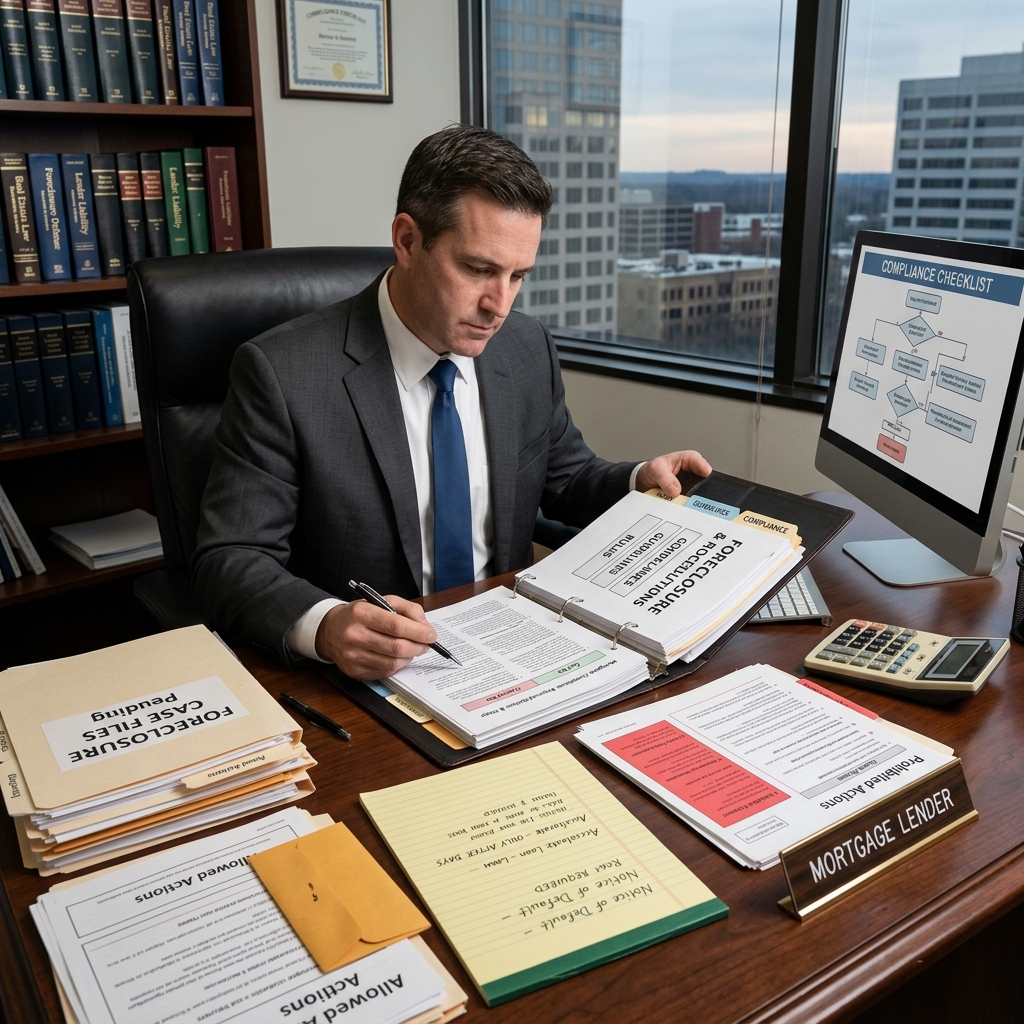
Foreclosure is a legal process that allows a mortgage lender to sell a home when the borrower stops making payments, but lenders must follow strict rules and homeowners keep important rights at every step. Understanding those rules makes it easier to respond early, protect your home when possible, and avoid illegal or abusive practices.
1. Foreclosure Basics: What It Is and Why It Happens
At its core, foreclosure is a way for a lender to recover the unpaid balance of a mortgage loan by selling the property that secures that loan. If you stop paying, the lender cannot simply walk in and take your house; it must use a legally defined foreclosure procedure, and that procedure varies by state.
1.1 How Foreclosure Is Triggered
The foreclosure process usually begins after repeated missed payments. Federal mortgage servicing rules for most residential loans require key steps before a lender can start foreclosing.
- Early contact after a missed payment – When you miss a payment, the mortgage servicer must attempt to contact you by phone within 36 days to discuss options to avoid foreclosure.
- Written notice about options – Within 45 days of a missed payment, the servicer must send a written notice describing available loss mitigation options, such as loan modification, repayment plans, or other alternatives.
- Waiting period before foreclosure – In most cases, the servicer cannot start foreclosure until your loan is more than 120 days delinquent, giving you time to apply for relief and work out solutions.
These rules help ensure you receive notice and a meaningful opportunity to fix the problem before the lender resorts to foreclosing.
1.2 Judicial vs. Nonjudicial Foreclosure
States generally use one of two main systems for home foreclosures: judicial foreclosure or nonjudicial foreclosure.
| Feature | Judicial Foreclosure | Nonjudicial Foreclosure |
|---|---|---|
| How it starts | Lender files a lawsuit in court against the homeowner. | Lender or trustee follows steps in a “power of sale” clause, without filing a lawsuit. |
| Role of the court | Judge oversees the case and must issue a foreclosure judgment before sale. | No court approval is required unless the homeowner files a separate lawsuit. |
| Homeowner’s opportunity to defend | Homeowner can respond to the complaint and raise defenses within the court process. | Homeowner typically must sue or use other state procedures to contest the foreclosure. |
| Speed | Usually slower and more formal because it goes through the courts. | Often faster because it follows statutory notice and sale steps rather than full litigation. |
Whether your case is judicial or nonjudicial depends on state law and the terms of your mortgage or deed of trust. Checking your loan documents and state foreclosure rules is critical for understanding what notices, deadlines, and options apply to you.
2. What Mortgage Lenders Are Allowed to Do
Even though foreclosure is stressful, lenders are not free to act however they wish. They must follow contracts, state statutes, and federal consumer protection regulations. The following are actions lenders are typically allowed to take, provided they comply with those rules.
2.1 Charge Interest, Late Fees, and Certain Costs
Your mortgage contract usually authorizes the lender to apply interest, late charges, and specified fees when payments are missed. During foreclosure, additional costs may be added:
- Late fees for missed or partial payments, within limits set by the loan documents.
- Legal fees and court costs in judicial foreclosures, to the extent permitted by contract and state law.
- Publication and sale costs associated with advertising and conducting a foreclosure auction.
These amounts are usually included in the total debt that must be paid to reinstate or redeem the loan, or are recovered from the sale proceeds.
2.2 Start Foreclosure After Required Notice and Waiting Period
Once the 120-day delinquency threshold is met and required notices have been given, the lender or servicer may initiate foreclosure.
- In a judicial foreclosure, the lender files a complaint (lawsuit) in court and serves you with a summons and complaint.
- In a nonjudicial foreclosure, the lender or trustee sends legally required written notices, such as a notice of default and notice of sale, and records documents where state law requires.
These steps are lawful as long as they follow your state’s foreclosure statutes and the terms of your loan documents.
2.3 Sell the Property at a Public Auction
The end point of most foreclosures is a public sale of the home, usually conducted by a court officer, trustee, or other authorized party.
- The property is generally sold to the highest bidder at a public auction.
- The opening bid usually reflects the unpaid loan balance plus allowable fees, interest, and costs.
- If no third party bids high enough, the lender may bid and take title to the property itself.
After a valid foreclosure sale, the winning bidder receives title subject to any additional rights you may have, such as a redemption period in certain states.
2.4 Seek a Deficiency Judgment (Sometimes)
If the sale price is not enough to cover what you owe and all related costs, the lender may try to collect the remaining balance through a deficiency judgment, depending on your state.
- A deficiency judgment is a court order requiring you to pay the shortfall between the sale proceeds and the total debt.
- Some states limit or prohibit deficiency judgments on certain residential mortgages or after nonjudicial sales.
Checking state law and any anti-deficiency protections can help you understand how much financial exposure you face after a foreclosure sale.
3. What Mortgage Lenders Cannot Do
Equally important are the limits on lender behavior. Consumer protection laws, fair lending rules, and state foreclosure statutes put clear boundaries on what lenders may and may not do to collect mortgage debts.
3.1 Foreclose Without Required Notices and Procedures
Lenders are generally barred from skipping legally required steps.
- They cannot start foreclosure before giving early outreach and written notice of loss mitigation options required by federal servicing rules.
- They cannot legally foreclose before the loan is more than 120 days delinquent, with limited exceptions.
- They must comply with state notice, publication, and timing rules for judicial or nonjudicial foreclosures.
Failure to follow these procedures can be a defense to foreclosure or grounds for challenging the sale.
3.2 Ignore Your Right to Defend or Seek Mediation
You have the right to raise defenses and, in some states, to participate in foreclosure mediation, and lenders cannot lawfully block these processes.
- In judicial foreclosures, you are entitled to respond to the complaint and assert legal defenses in court.
- In nonjudicial foreclosures, you may be able to file a lawsuit to challenge improper practices or halt a sale.
- Some states also provide a structured mediation process, where you and the lender meet with a neutral mediator to explore alternatives; the lender must participate in good faith when such programs apply.
Blocking these rights or providing misleading information about them can violate state law or consumer protection rules.
3.3 Engage in Fraud, Misrepresentation, or Unfair Practices
Foreclosure does not give lenders permission to act dishonestly or abusively. Laws at both the federal and state level prohibit deceptive and unfair acts in servicing and foreclosure.
- Lenders cannot falsify documents, misstate your payment record, or misrepresent the amount owed.
- They cannot promise to delay foreclosure while you complete a loss mitigation application and then proceed with a sale without evaluating that application consistent with legal requirements.
- They cannot use threats or harassment that violate debt collection standards.
When these types of violations occur, homeowners may have legal claims for damages or for stopping the foreclosure.
3.4 Take More Than the Law Allows From Sale Proceeds
After the foreclosure sale, lenders must apply the proceeds to the loan and fees properly and cannot keep money that legally belongs to you.
- If a foreclosure sale generates more money than necessary to pay the loan and any other liens, the surplus belongs to the former homeowner, not the lender.
- Lenders cannot retain that surplus or distribute it improperly; it should be returned to you, often after a court or trustee accounting.
Knowing about surplus rights can be critical in hot real estate markets where auction sales may exceed the mortgage balance.
4. Key Homeowner Rights in Foreclosure
Even when you are behind on payments, you retain substantial rights. Using them promptly can make the difference between losing your home and resolving the problem.
4.1 Right to Loss Mitigation Consideration
Federal rules require mortgage servicers for most loans to consider you for loss mitigation if you submit a complete application by certain deadlines.
- Options may include loan modification, repayment plans, temporary forbearance, or other alternatives.
- The servicer must review a complete application and provide a written decision, including appeal rights in some cases.
Submitting a complete application early in the delinquency can pause or delay foreclosure while the servicer evaluates solutions.
4.2 Right to Reinstate in Some States
Many states recognize a right to reinstatement, which allows you to bring the loan current by paying all past-due amounts and allowable fees in a lump sum.
- Reinstatement usually must occur before a specified deadline, often before the foreclosure sale date.
- Once reinstated, the loan continues as if you had never defaulted, and you resume your regular monthly payments.
Check your mortgage and state law to see whether, and up to when, reinstatement is available.
4.3 Right to Redeem the Property
Redemption is another important protection. It refers to your right to recover ownership of the property by paying specified amounts within a set period.
- Redemption before sale: In many states, you can stop the foreclosure by paying the entire loan balance, plus costs and interest, before the auction occurs.
- Post-sale redemption: Some states allow a period after the sale during which you can reclaim the property by paying the full amount owed or reimbursing the buyer for the sale price plus additional costs.
Redemption periods and conditions are highly state-specific, so it is wise to obtain legal advice promptly if you plan to pursue this option.
4.4 Right to Surplus Proceeds
Homeowners also have rights in the financial outcome of the sale:
- If the sale price exceeds the total amount owed, the extra funds are surplus proceeds that belong to you, subject to other liens.
- You may need to file paperwork or claim forms to receive surplus funds, depending on state procedure.
This right exists even though you no longer own the home after foreclosure.
5. Practical Steps If You Are Facing Foreclosure
Knowing the law is important, but taking practical action is just as critical. If you are behind on payments or have already received foreclosure notices, consider the following steps.
5.1 Respond Early and Keep Records
- Open and read all mail from your lender or servicer immediately.
- Keep copies of statements, notices, and any letters you send.
- Document phone calls with dates, times, and names of representatives.
Clear records help you spot errors and support any defenses or complaints later.
5.2 Contact Your Lender and Housing Counselor
The Consumer Financial Protection Bureau recommends working with a HUD-approved housing counseling agency if you are facing foreclosure.
- Housing counselors can review your budget, help complete loss mitigation applications, and discuss alternatives like modification, short sale, or deed in lieu.
- You can locate approved counselors through federal tools and hotlines described by the CFPB.
Combined with direct communication with your servicer, counseling can increase your chances of finding a sustainable solution.
5.3 Talk to a Lawyer About Your State’s Rules
Because foreclosure laws vary significantly among states, personalized legal advice is often essential.
- A lawyer can explain whether your case is judicial or nonjudicial and what deadlines apply.
- They can help you file responses to lawsuits, seek mediation, or challenge improper practices.
- They can advise whether you face deficiency judgment risk and what protections may be available.
Acting quickly after receiving foreclosure papers gives you more options and stronger defenses.
6. Frequently Asked Questions About Foreclosure and Lender Powers
FAQ 1: Can my lender start foreclosure after just one missed payment?
For most residential mortgages covered by federal servicing rules, the lender usually cannot start foreclosure until your loan is more than 120 days past due. You should still contact your servicer immediately after a first missed payment, but the formal foreclosure process cannot ordinarily begin right away.
FAQ 2: Is it legal for a lender to foreclose without going to court?
Yes, in many states lenders may use nonjudicial foreclosure, which allows foreclosure under a power-of-sale clause without a court case, as long as they follow state statutes and required notices. You still have rights to challenge improper actions, but the process itself can lawfully occur outside of court.
FAQ 3: If my home sells for more than I owe, do I get any money back?
In general, if the sale proceeds exceed the amount needed to pay your loan and other liens, the remaining funds are called a surplus and belong to you. You may have to follow specific state procedures to claim those surplus funds.
FAQ 4: Can I stop foreclosure by catching up on missed payments?
Many homeowners have a right to reinstate their mortgage by paying all past-due amounts and allowed fees in a lump sum before a deadline, often before the sale date. Whether reinstatement is available, and until when, depends on your state law and loan documents.
FAQ 5: What if I think my lender made a mistake in my account?
You can raise errors as a defense in judicial foreclosure or bring a separate lawsuit in nonjudicial foreclosure, and federal servicing rules provide mechanisms to dispute account mistakes. Consulting a housing counselor or attorney can help you document the error and choose the best way to challenge it.
References
- How does foreclosure work? — Consumer Financial Protection Bureau. 2023-03-29. https://www.consumerfinance.gov/ask-cfpb/how-does-foreclosure-work-en-287/
- foreclosure | Wex | US Law — Legal Information Institute, Cornell Law School. 2022-10-01. https://www.law.cornell.edu/wex/foreclosure
- Homeowners’ Legal Rights Before, During, and After Foreclosure — Justia. 2022-05-10. https://www.justia.com/foreclosure/rights-in-foreclosure/
- Foreclosure | Law | Research Starters — EBSCO Information Services. 2021-09-01. https://www.ebsco.com/research-starters/law/foreclosure
- General Information – Foreclosure — Texas State Law Library. 2023-01-15. https://guides.sll.texas.gov/foreclosure
Similar Articles








Read full bio of medha deb


