
Criminal Negligence: 7 Defense Strategies To Defeat Charges Now
A clear guide to the defenses, elements, and proof issues in criminal negligence cases.
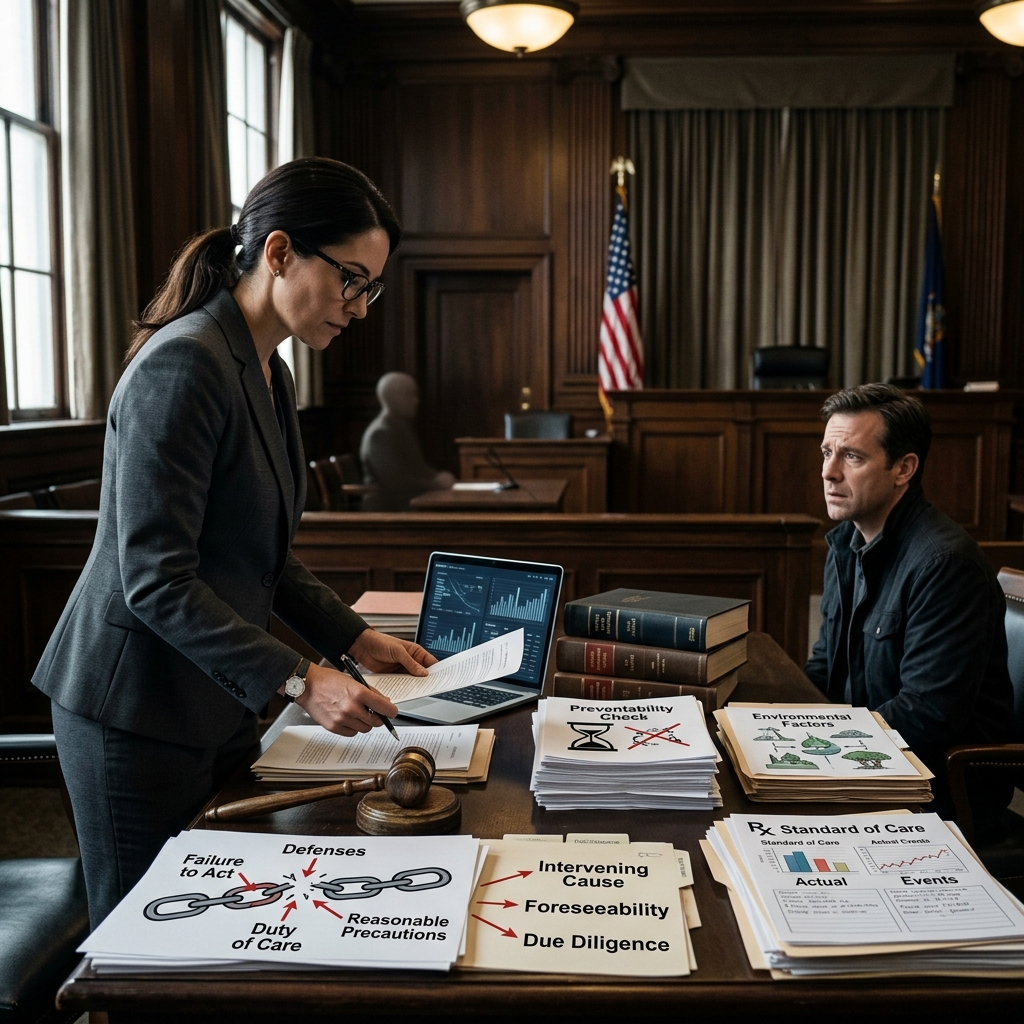
Criminal negligence cases turn on more than a bad outcome. Prosecutors must show that a person’s conduct crossed the line from ordinary carelessness into a serious failure to perceive a substantial and unjustifiable risk. In practice, that means a defense often succeeds by attacking the alleged duty, the risk, the mental state, or the claimed link between the conduct and the harm.
This article explains how criminal negligence is different from civil negligence, what the government usually has to prove, and which defense strategies are commonly used to challenge the charge. It also covers practical steps that can matter early in a case, when evidence is still fresh and the facts are still being sorted out.
What criminal negligence means
Criminal negligence is not the same as a simple mistake. It refers to conduct that falls so far below the standard of a reasonable person that the law treats it as a criminal matter rather than a private dispute. The core idea is that the person failed to notice a significant risk that should have been obvious under the circumstances.
Most criminal negligence statutes focus on a gross deviation from reasonable care. That phrase matters because it sets a much higher threshold than ordinary negligence in a civil case. A person may be careless and still not be criminally negligent if the conduct does not show the kind of extreme disregard that criminal law requires.
Courts and prosecutors often look at the surrounding facts: the person’s role, the setting, the foreseeability of harm, and whether the risk was substantial enough that a reasonable person would have recognized it. The more unusual or dangerous the situation, the more carefully those facts are examined.
How criminal negligence differs from civil negligence
People often hear the word negligence and assume it means the same thing in every context. It does not. Civil negligence usually involves an injury claim and a question of compensation. Criminal negligence involves the possibility of punishment, including jail, fines, probation, or other court-imposed consequences.
In civil cases, the question is often whether someone failed to act as a reasonably prudent person would have acted. In criminal cases, the law usually asks whether the failure was so serious that it became blameworthy enough to support criminal liability. That distinction raises the proof burden for the government and opens the door to defenses that challenge the seriousness of the conduct.
| Issue | Civil Negligence | Criminal Negligence |
|---|---|---|
| Main purpose | Compensation for harm | Punishment for blameworthy conduct |
| Level of fault | Carelessness or failure to use reasonable care | Gross deviation from reasonable care |
| Burden of proof | Usually preponderance of the evidence | Beyond a reasonable doubt |
| Possible result | Damages or settlement | Criminal penalties and record consequences |
What prosecutors usually must prove
Although exact elements vary by jurisdiction, a criminal negligence case commonly requires proof of several basic components. The prosecution generally needs to show a duty, a serious failure to meet that duty, and a causal connection between the conduct and the injury or death.
- A legal duty existed under the circumstances.
- The defendant failed to perceive a substantial risk that a reasonable person would have recognized.
- The failure amounted to a gross deviation from ordinary care.
- The conduct caused the harm in a legally meaningful way.
Because the standard is criminal, the government cannot rely on speculation or a tragic result alone. It must prove the necessary mental state and the facts supporting liability. If there is a credible alternative explanation, a defense may be able to create reasonable doubt.
Defense strategies that often matter most
The strongest defenses in criminal negligence cases typically target the same points the prosecutor must prove. Instead of arguing that nothing bad happened, the defense usually shows that the conduct was not criminally blameworthy, or that the harm did not flow from the defendant’s actions in the way the state claims.
1. The conduct was not a gross deviation
A common defense is that the accused may have been mistaken, distracted, or even careless, but not criminally negligent. This argument tries to show that the conduct stayed within the range of ordinary human error rather than becoming a gross departure from what a reasonable person would do.
Evidence that can support this defense includes proof of standard precautions, compliance with routine safety practices, prior safe behavior, or testimony showing that the situation was less dangerous than the prosecution suggests. If the facts support only ordinary negligence, the criminal case may fail even if a civil claim could still exist.
2. There was no clear legal duty
Another defense is that the defendant did not owe the specific duty the prosecution is trying to impose. Criminal negligence cases often arise in situations involving drivers, caregivers, property owners, gun owners, or others who may have duties based on law or relationship. But the existence and scope of that duty still must be shown.
If the defendant was not in a position of responsibility, or if the state is stretching the law beyond its intended scope, the defense can argue that the duty element is missing. In many cases, the legal argument is less about what happened and more about whether the law applies to those facts at all.
3. The risk was not substantial or obvious
To support criminal negligence, the government usually has to show a risk that was substantial, unjustifiable, and objectively apparent under the circumstances. A defense may succeed by showing that the danger was minor, unusual, hidden, or not something a reasonable person would have recognized.
This defense often depends on context. A risk that seems obvious in hindsight may not have been obvious in the moment. The defense may use expert testimony, timelines, photographs, or witness accounts to show that the hazard was not as clear as the prosecution claims.
4. The defendant acted reasonably under the circumstances
Reasonableness is often the central issue. If the defendant took meaningful precautions, followed common practices, or responded to the situation in a way that others would view as sensible, the case may not meet the criminal standard.
This defense is especially useful when the event involved fast-changing conditions, incomplete information, or competing responsibilities. The law does not demand perfection. It asks whether the conduct was so far outside the norm that criminal punishment is justified.
5. Another event broke the causal chain
Even when a person acted carelessly, the prosecution still has to show causation. A defense may argue that some other event, person, or force actually caused the injury or death. If an intervening event was independent and unforeseeable enough, it may break the chain between the accused conduct and the result.
This type of defense is sometimes called an intervening cause or superseding cause argument. For example, if another person’s unpredictable conduct became the real source of harm, the defendant’s behavior may no longer be the legal cause of the outcome.
6. The victim’s own actions changed the outcome
In some cases, the defense can point to the victim’s conduct as a significant contributor to the harm. While this does not automatically end a criminal case, it may undermine the prosecution’s theory that the defendant was primarily responsible.
Evidence that the victim ignored warnings, violated safety rules, made an independent choice, or acted recklessly can be important. The more the facts show shared responsibility or an unexpected reaction by the victim, the harder it may be for the state to prove criminal negligence beyond a reasonable doubt.
7. The evidence was obtained unfairly or is unreliable
Even strong facts can be weakened if the state’s evidence has constitutional or reliability problems. A defense may challenge statements taken without proper warnings, searches conducted without a valid basis, or forensic evidence that has gaps in chain of custody or testing.
Suppressing key evidence can make a major difference in a criminal negligence case. If the strongest proof is excluded, the remaining evidence may be too thin to support a conviction.
Special facts that can strengthen a defense
Criminal negligence cases often turn on details that are easy to overlook at first. Careful defense work usually focuses on gathering records, witness statements, digital evidence, and timelines that show how the incident actually unfolded.
- Photos or video from the scene.
- Messages, phone records, or smart-device data.
- Receipts, maintenance logs, or repair records.
- Medical or accident reports.
- Witness statements collected quickly after the event.
Experts can also be valuable. A specialist may explain safety practices, accident reconstruction, industry standards, or how a reasonable person would have perceived the risk. That kind of testimony can help separate ordinary carelessness from criminal conduct.
What to do after a criminal negligence accusation
Early decisions often affect the rest of the case. A person accused of criminal negligence should avoid casual explanations to police, insurers, employers, or other third parties until legal advice is obtained. A statement that sounds innocent can later be used to support the prosecution’s theory.
Preserving evidence is just as important. If there are videos, messages, logs, photographs, or potential witnesses, they should be identified quickly. In many cases, those details matter more than broad arguments made later in court.
It is also important to follow any release conditions, no-contact orders, or protective orders exactly as written. A technical violation can create new problems and weaken negotiations even if it does not relate directly to the original charge.
How defense lawyers usually approach these cases
An effective defense usually begins with a careful reconstruction of the events. The lawyer may examine the timeline, the physical setting, the applicable law, and the exact duty the state says was violated. From there, the defense can identify whether the better argument is lack of duty, lack of risk, lack of causation, or lack of gross deviation.
In many criminal negligence matters, the best result comes from showing that the case does not belong in criminal court at all. If the facts support only a mistake, an accident, or a civil dispute, the defense can press for dismissal, reduction, or a more favorable resolution.
Frequently asked questions
Is criminal negligence the same as ordinary negligence?
No. Ordinary negligence usually means a failure to use reasonable care. Criminal negligence requires a much more serious departure from reasonable conduct, often described as a gross deviation.
Can a person be convicted even without intent to harm?
Yes. Criminal negligence typically does not require a specific intent to injure. The issue is whether the person failed to perceive a substantial and unjustifiable risk in a way the law treats as blameworthy.
Does a bad result automatically prove criminal negligence?
No. A tragic outcome is not enough by itself. The prosecution still must prove the required mental state, duty, and causation.
Can the victim’s actions matter?
Yes. The victim’s conduct may help show that the defendant was not the primary cause of the harm, or that the event unfolded in a way that was not reasonably foreseeable.
What is usually the most important defense issue?
In many cases, the most important issue is whether the conduct truly amounted to a gross deviation from reasonable care. If it did not, the charge may not fit even if the event caused serious harm.
When a criminal negligence case may be reduced or dismissed
Some cases are not won by proving complete innocence but by showing that the prosecution has overcharged the conduct. If the evidence shows only ordinary carelessness, weak causation, or a lack of clear legal duty, the charge may be reduced or dismissed.
That is why criminal negligence cases often depend on a combination of facts and legal analysis. The defense does not need to prove perfection. It needs to create enough doubt about the prosecution’s version of the event to prevent a criminal conviction.
References
- State v. [general criminal negligence standard in Louisiana statute] — Louisiana State Legislature. 2026-07-10. https://legis.la.gov/
- Criminal Negligence Attorney Overview — Rhode Island criminal defense law firm resource. 2026-07-10. https://johngrassolaw.com/ri-criminal-negligence-attorney/
- Criminal Negligence — Texas criminal injury law firm resource. 2026-07-10. https://www.sutliffstout.com/criminal-negligence/
- Criminal Negligence Charge Baton Rouge — Louisiana defense law firm resource. 2026-07-10. https://ossiebrown.com/blog/criminal-negligence/
- Criminally Negligent Homicide Defense Lawyer in Houston — Texas defense law firm resource. 2026-07-10. https://sharpcriminalattorney.com/practice-areas/criminally-negligent-homicide/
Similar Articles








Read full bio of Sneha Tete




