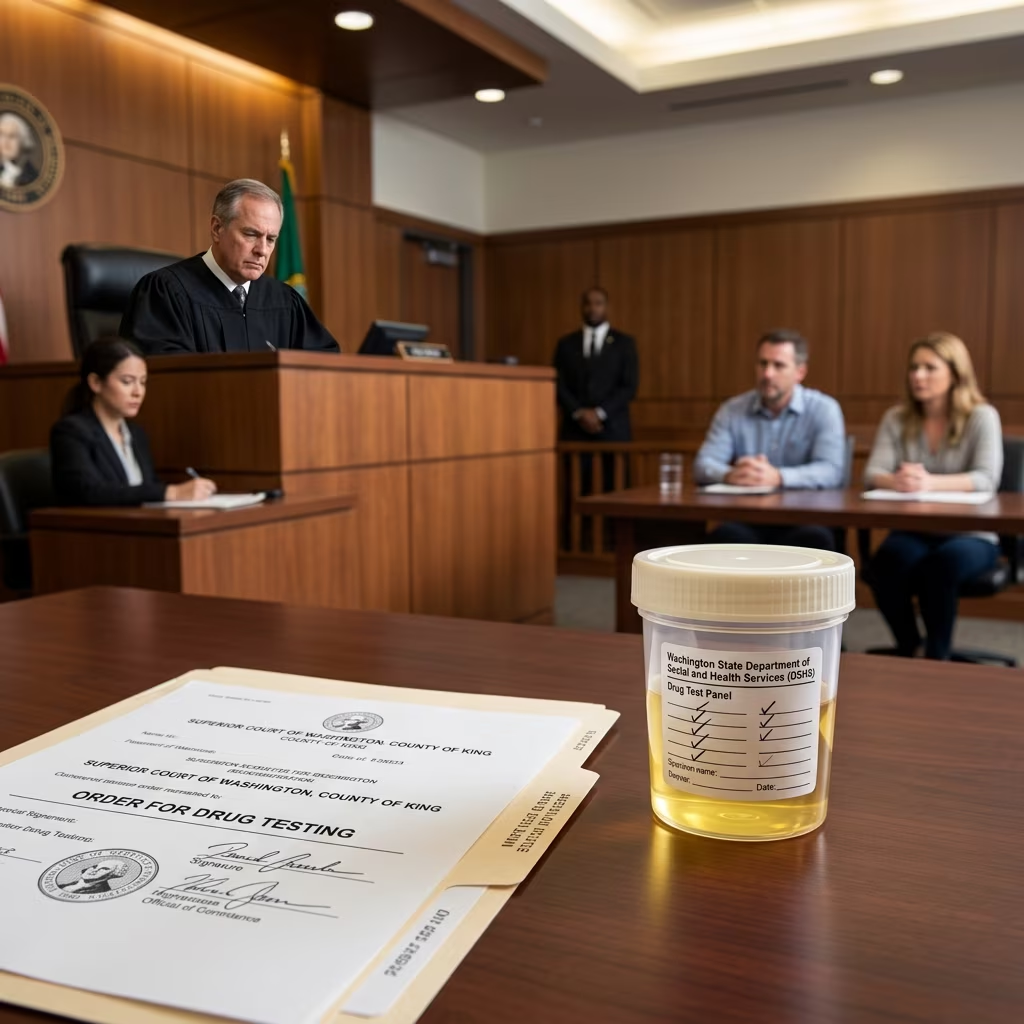
Substance abuse can significantly affect how Washington courts decide child custody and parenting time. When a parent’s use of drugs or alcohol raises safety concerns, judges may order formal drug testing as part of their evaluation of what arrangement is in the child’s best interests.
This article explains how court-ordered drug testing works in Washington child custody disputes, what evidence judges look for, the types of tests commonly used, and how positive or negative results can influence custody and visitation outcomes.
Why Drug Use Matters in Washington Custody Decisions
Washington family courts are required to prioritize the best interests of the child when determining custody and residential schedules. Safety, stability, and a nurturing environment are core components of that standard.
Substance abuse becomes legally relevant when it interferes with a parent’s ability to provide:
- A safe physical environment (free from impaired driving, neglect, or exposure to dangerous situations)
- Consistent supervision and caregiving
- Emotional stability and reliable presence
- Protection from illegal activity and harmful individuals
Washington courts do not penalize parents merely for past use or isolated mistakes; instead, judges focus on patterns of behavior and whether there is an ongoing risk to the child. Drug testing is one way to clarify whether a parent’s substance use is current, recurring, and serious enough to warrant restrictions.
Legal Basis for Court-Ordered Drug Testing in Washington
Washington statutes give family court judges authority to order services and evaluations that help them make informed decisions about custody, including drug and alcohol assessments and monitoring. When substance abuse is alleged, this authority may be used to require a parent to submit to drug testing.
In practice, drug testing arises in several types of proceedings:
- Initial parenting plan or custody determinations in divorce or parentage cases
- Modifications of existing parenting plans when new substance issues emerge
- Contempt or enforcement actions involving violations tied to substance use
- Cases overlapping with child protective services investigations
Judges rely on the evidence presented to decide whether testing is justified. They generally require more than suspicion; there must be a concrete basis to believe substance use could endanger the child.
When Washington Courts Are Likely to Order Drug Testing
A parent cannot simply demand that the other parent be tested and expect the court to grant the request automatically. The judge must see credible information suggesting that drug or alcohol use is impairing parenting or putting the child at risk.
Common Triggers for Testing Requests
Courts are more inclined to order drug testing when the requesting parent or agency presents specific evidence, such as:
- Criminal history related to substances – DUI convictions, drug possession charges, or arrests that involve intoxication.
- Documented incidents – Police reports, hospital records, or CPS reports that describe substance-related harm or risk to the child.
- Witness testimony – Statements from relatives, teachers, neighbors, or professionals who observed the parent impaired while caring for the child.
- Prior addiction or treatment history – Evidence of diagnosed substance use disorder, failed rehabilitation, or repeated relapses.
- Self-incriminating communications – Texts, social media posts, or messages referencing drug use or intoxication around parenting time.
General accusations without documentation—such as a parent simply claiming “I know they use drugs”—are usually not enough. Courts look for corroboration or objective indicators that make testing reasonable.
Risk Levels and Judicial Response
| Level of Concern | Typical Evidence | Possible Court Response |
|---|---|---|
| Low (unsubstantiated suspicion) | Vague allegations, no documentation | Judge may decline testing but monitor case; encourage documentation |
| Moderate (recent concerning incidents) | Witness accounts, text messages, minor police contact | Targeted or periodic drug tests; possible temporary safeguards |
| High (clear pattern or criminal history) | DUIs, drug charges, CPS findings, treatment records | Mandatory ongoing testing, supervised visitation, treatment conditions |
How to Request Court-Ordered Drug Testing
A parent who believes the other parent’s drug use is endangering the child typically must file a formal motion with the court. This is often done through a family law attorney, but self-represented parents may also file motions if they follow the procedural rules.
Key Steps in Making a Request
- Consult with a lawyer (if possible) – A Washington family law attorney can help assess whether the evidence is strong enough and draft an effective motion.
- Prepare a written motion – The document should state clearly that you are requesting drug testing, explain why, and specify what type of testing and schedule you are asking the court to order.
- Attach supporting evidence – Include police reports, medical records, prior court orders, screenshots of messages, or witness statements that support your allegations.
- File and serve the motion – The motion is filed with the court and legally served on the other parent, who has a chance to respond.
- Attend the hearing – At the hearing, you must explain your concerns, answer questions, and may present witnesses or documents. The other parent can contest your claims.
Judges evaluate whether testing is necessary and, if so, will issue an order describing the conditions: who must be tested, what type of tests, how often, and who pays for them.
Types of Drug Tests Used in Family Law Cases
Courts aim to use testing methods that are reliable, appropriately intrusive, and suited to the kind of substance use alleged. Many jurisdictions require that testing be performed according to standardized procedures to ensure accuracy.
Common Testing Methods
- Urine tests – Frequently used because they are relatively inexpensive and can detect many drugs over a short window of time.
- Hair follicle tests – Provide a longer history of drug use, often covering weeks or months, and can be useful when past use patterns are disputed.
- Blood tests – Less common due to cost and invasiveness but can offer very precise information about current intoxication.
- Alcohol-specific tests (e.g., EtG) – Designed to detect recent alcohol consumption even after the substance has left the bloodstream.
In many cases, a combination of test types may be used over time—such as an initial hair test followed by random urine screens—to build a reliable picture of a parent’s sobriety.
Random vs. Scheduled Testing
Washington judges often give more weight to random testing than to strictly scheduled tests. Random testing makes it harder for a parent to abstain only right before a known test date and provides a more realistic view of everyday behavior.
However, scheduled tests may still be ordered when the goal is long-term monitoring or when logistics make random testing difficult.
Who Pays for Court-Ordered Drug Tests?
The cost of drug testing can be a practical concern, especially if tests are frequent or use advanced methods. The allocation of costs often depends on the type of case and the court’s discretion.
- Private custody disputes – The parent requesting the test may initially be required to pay, though the court can later adjust cost-sharing.
- CPS or dependency cases – Government agencies or legal aid may cover testing as part of child protection efforts.
- Ongoing monitoring – Courts may order the tested parent to bear some or all of the costs, especially when their conduct created the need for supervision.
Parents should discuss costs with their attorneys in advance and be prepared to address this issue at hearings, as judges can consider financial hardship alongside safety concerns.
How Test Results Influence Custody and Visitation
Drug test results are evidence—not automatic verdicts. Washington judges consider them alongside other information, such as parenting history, criminal records, and testimony, before modifying or creating a parenting plan.
If Tests Are Negative
Consistent negative results can strengthen a parent’s position by showing:
- Current sobriety and compliance with court orders
- Willingness to cooperate with safety measures
- Ability to provide a stable environment
In some cases, negative tests may lead to:
- Gradual increase in unsupervised parenting time
- Relaxation or eventual removal of testing requirements
- Improved standing in future custody discussions
If Tests Are Positive
A positive test does not automatically sever parental rights, but it raises serious concerns about safety. Courts examine the substance involved, the level of use, the timing, and whether the parent is seeking treatment.
Depending on the severity, a positive test may result in:
- Supervised visitation only – Parenting time occurs under the oversight of another adult or a professional supervisor.
- Restrictions on contact – Reduced parenting time or temporary suspension of visits in high-risk situations.
- Mandatory treatment – Requirements to enroll in and complete substance abuse treatment programs, with documentation provided to the court.
- Ongoing testing – Continued random or scheduled tests as a condition of any contact with the child.
In extreme cases involving persistent, dangerous use and failure to engage in treatment, courts may consider more drastic measures, including long-term limitations or changes in primary residential care.
Washington’s Focus on Rehabilitation and Long-Term Safety
Family law in Washington generally favors maintaining a child’s relationship with both parents when it is safe to do so. Judges often view substance abuse as a problem to be managed and treated, not necessarily a permanent bar to parenting.
Parents who struggle with addiction but demonstrate genuine progress may be given a structured path to rebuild parenting time. This often includes:
- Documented participation in treatment or recovery programs
- Consistent negative test results over a defined period
- Stable housing and employment or reliable support systems
- Positive feedback from supervisors, counselors, and other professionals
Courts may use “step-up” parenting plans, gradually increasing time with the child as the parent proves sustained sobriety and responsible behavior. The ultimate goal is to protect the child while encouraging lasting recovery.
Refusing or Interfering With Court-Ordered Testing
Refusing to comply with a valid court order for drug testing can have serious legal consequences. Courts may interpret refusal as an indicator that the parent has something to hide, and it can undermine that parent’s position in custody litigation.
Possible outcomes of refusal or tampering include:
- Adverse inferences about substance use
- Restrictions or suspension of parenting time
- Findings of contempt of court, which can lead to fines or other sanctions
- Damage to credibility in all related family law matters
Parents who have legitimate concerns about a specific testing method (for example, medical issues or privacy questions) should raise them with the court through their attorney rather than simply refusing to participate.
Practical Tips for Parents Facing Drug Testing in Washington
Whether you are requesting testing or being ordered to test, navigating this process can be stressful. The following practical steps can help protect both your rights and your child’s well-being.
If You Are Requesting Tests
- Keep detailed records of incidents, dates, and witnesses.
- Gather documents early: police reports, messages, photos, treatment records.
- Avoid exaggeration; present facts calmly and clearly.
- Work with a lawyer to craft a focused request, including specific test types and frequency.
- Be prepared to explain how the proposed testing will improve safety for your child.
If You Are Ordered to Test
- Follow the order carefully; missed or late tests can be treated as serious violations.
- Keep copies of all test results and any treatment documentation.
- Consider consulting a substance abuse professional if you are struggling with use.
- Communicate with your attorney about any practical or medical concerns related to testing.
- Focus on long-term sobriety; consistent negative tests over time are powerful evidence in your favor.
FAQs: Drug Testing and Child Custody in Washington
Can I demand that my co-parent take a drug test?
No. You cannot unilaterally require testing. You may ask the court to order drug testing, but you must present evidence showing that the other parent’s substance use may endanger the child.
Does a single positive drug test mean I will lose custody?
Not necessarily. Courts consider the type of substance, frequency of use, surrounding circumstances, and whether you are taking steps to address the issue. A single positive test often leads to increased monitoring or temporary restrictions rather than immediate loss of all rights.
How long will I have to undergo testing?
The duration of testing depends on the facts of your case and the judge’s orders. Some parents face short-term testing after an incident; others undergo long-term monitoring as part of a structured plan to regain parenting time.
Will the results be used in other legal proceedings?
Yes, drug test results can be considered in related family law matters and may be relevant in child protection or criminal cases if those proceedings are connected. Always assume that test results will form part of your legal record.
Do Washington courts treat alcohol and illegal drugs differently?
Both can be grounds for concern if they impair parenting or create safety risks. Courts view illegal drug use seriously due to its criminal nature but also impose conditions for alcohol abuse, especially when it leads to impaired driving or neglect.
References
- RCW 26.12.170 Family court services, evaluations, and monitoring — Washington State Legislature. 2023-01-01. https://app.leg.wa.gov/rcw/default.aspx?cite=26.12.170
- How Substance Abuse Affects Child Custody Decisions in Washington State — Sean John Law. 2026-03-01. https://www.seanjohnlaw.com/2026/03/how-substance-abuse-affects-child-custody-decisions-in-washington-state/
- Court-Ordered Drug Testing in Family Law Cases — Phamatech Inc. 2024-05-15. https://www.phamatech.com/blog-posts/understanding-the-court-ordered-drug-test-procedure-in-family-law-cases
- Custody: When can a judge order that a parent be drug tested? — WomensLaw.org. 2023-06-10. https://www.womenslaw.org/laws/in/custody/custody-process/when-can-judge-order-parent-be-drug-tested
- Drug and Alcohol Testing in Child Custody Cases — Judicial Council of California. 2007-05-23. https://courts.ca.gov/sites/default/files/courts/default/2024-12/ab1108report052307final.pdf
- How Drug Testing Impacts Family Law Cases — Hunt Law Firm, PLLC. 2022-09-01. https://www.familylawyerkaty.com/family-law/how-drug-testing-impacts-family-law-cases/