
Contempt of Court for Custody Orders in New York
Understand how contempt of court works when a New York custody or visitation order is violated, and what parents can do to protect their rights.
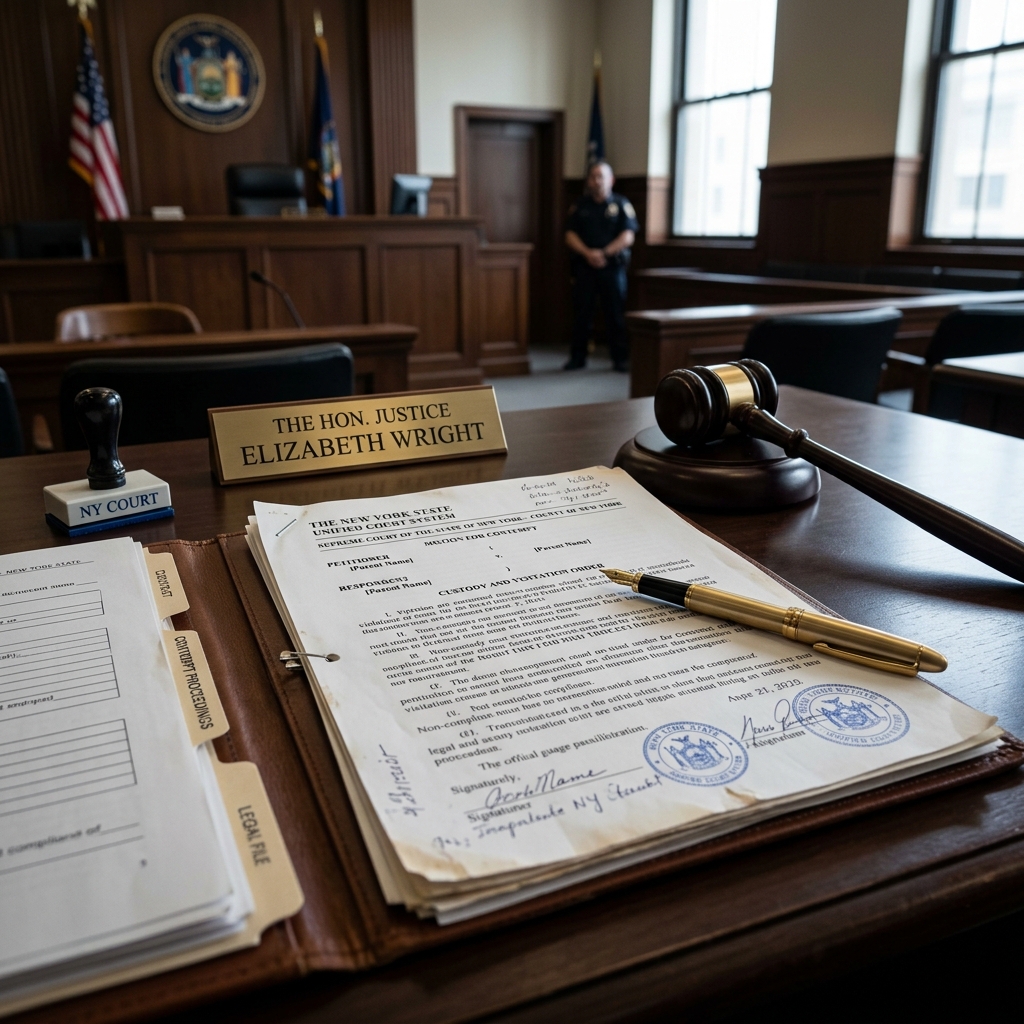
When a New York court issues a child custody or visitation order, both parents are legally obligated to follow it. If one parent deliberately ignores the order, the other parent may ask the court to enforce it through a contempt proceeding. Understanding how contempt works, what must be proven, and what remedies are available is critical for protecting your parenting time and your child’s stability.
Why Contempt Matters in Custody and Visitation Disputes
Contempt of court is a powerful enforcement tool in New York family law. It is designed not only to punish non-compliance, but more importantly to compel obedience to existing court orders. In the context of custody and visitation, contempt proceedings exist to safeguard:
- Consistent parenting time for both parents.
- Children’s emotional well-being and routine.
- Respect for court authority and final orders.
- Fairness when one parent’s rights are repeatedly ignored.
New York courts treat interference with custody and visitation very seriously. Repeated or intentional violations can lead to sanctions, fines, and in extreme cases, incarceration, or even changes to the underlying custody arrangement.
Understanding Contempt of Court in New York Family Law
In New York, family law disputes typically involve civil contempt rather than criminal contempt. Civil contempt focuses on enforcing compliance and compensating the aggrieved parent, not on punishing past behavior for its own sake.
What Is Civil Contempt?
Under New York law, a court may find a person in civil contempt when they violate a clear and lawful court order, and that violation causes harm to another party. The key features of civil contempt include:
- Lawful court order: The order must have been properly issued by a court with jurisdiction.
- Unequivocal mandate: The order’s terms must be clear, specific, and not subject to reasonable misunderstanding.
- Knowledge of the order: The person accused of contempt must have been aware of the order, which is often proven through service documents or prior appearances in court.
- Willful disobedience: The violation must be deliberate rather than accidental, and the parent must have had the ability to comply.
- Prejudice to the other party: The violation must cause harm or disadvantage to the complaining parent, such as missed parenting time or additional legal expenses.
Burden of Proof in Civil Contempt Cases
Civil contempt in New York requires a heightened evidentiary standard. The parent asking for contempt must provide clear and convincing evidence that all elements of contempt are satisfied. Once those elements are established, the burden shifts to the accused parent to show they were unable to comply or that the violation was not willful.
| Element | What Must Be Shown |
|---|---|
| Valid, lawful order | Custody/visitation order issued by a New York court with clear terms. |
| Unequivocal mandate | Order specifies obligations (dates, times, exchanges) without ambiguity. |
| Knowledge of order | Service proof, prior participation, or acknowledgment that parent knew terms. |
| Ability to comply | No legitimate barrier (such as impossibility or emergency) prevented compliance. |
| Willful disobedience | Parent intentionally chose not to follow the order. |
| Prejudice to other parent | Harm occurred, such as missed visits or financial loss. |
Common Violations Leading to Custody Contempt Motions
Almost any deliberate disregard of a custody or visitation order can potentially support a contempt application. Typical scenarios include:
- Refusing to produce the child at scheduled pick-ups or drop-offs.
- Unilaterally changing the schedule or denying court-ordered parenting time.
- Relocating with the child without permission when the order restricts relocation.
- Interfering with phone or video contact ordered by the court.
- Alienating behavior that effectively blocks the child’s relationship with the other parent.
Willful interference with custody and visitation not only burdens the other parent, it can significantly harm the child’s relationship with both parents. That is why courts are willing to impose sanctions when necessary to restore compliance.
Preparing to Enforce a New York Custody Order Through Contempt
Before filing a formal contempt motion, it is wise to carefully review your situation and gather evidence. New York judges expect clear documentation and a good-faith effort to address problems, especially in ongoing co-parenting relationships.
Step 1: Review the Custody or Visitation Order
Begin by reading the existing order in detail. Pay particular attention to:
- Exact exchange times and locations.
- Holiday and vacation schedules.
- Conditions on relocation or travel.
- Any special communication requirements between parents.
You must be able to point to specific language that has been violated; vague or flexible arrangements are harder to enforce through contempt.
Step 2: Document Each Violation
Contempt proceedings rely heavily on evidence. Useful documentation may include:
- Calendar entries or logs describing each missed visit.
- Text messages, emails, or messages in parenting apps about exchanges.
- Witness statements from relatives or caregivers present at exchange locations.
- Travel records or school records showing the child’s whereabouts.
Detailed records help demonstrate a pattern of non-compliance, rather than isolated misunderstandings.
Step 3: Consider Informal or Alternative Steps
In some cases, a direct conversation or a letter from an attorney reminding the other parent of their obligations can resolve the problem without litigation. Many parents choose to:
- Send a written warning that clearly references the order.
- Propose make-up parenting time for missed visits.
- Explore mediation to address ongoing scheduling or communication issues.
If the other parent continues to disregard the order or the violations are serious, it may be time to seek court intervention.
Filing a Contempt Petition for Custody in New York
New York has specific procedures for enforcing custody and visitation orders through contempt. While the exact forms and steps vary slightly by county, the overall process is similar.
Using New York Family Court Forms
Parents commonly initiate enforcement by filing a petition for enforcement of an order of custody or visitation. New York’s Unified Court System provides standardized forms for these proceedings, such as General Form GF-41 for enforcement of custody/visitation orders issued by Supreme Court or Family Court. Other resources, such as Family Legal Care, also reference specialized forms for notifying the court of custody or visitation violations.
Core Steps in the Contempt Process
Across many jurisdictions, child custody contempt proceedings follow a similar pattern, and New York is no exception.
- Filing a petition or motion: The moving parent files a document describing the order, the alleged violations, and the relief requested.
- Service on the other parent: The accused parent must be formally notified of the contempt allegations and the hearing date, often via personal service.
- Court scheduling: The court sets a hearing where both sides can present evidence and testimony.
- The hearing: The moving parent has the initial burden of proving contempt, after which the other parent can explain defenses or mitigating circumstances.
In New York, family courts and Supreme Court both have authority over custody orders, so enforcement may occur in the same court that issued the original order.
Your Rights and Obligations During a Contempt Hearing
Contempt hearings are formal legal proceedings with serious potential consequences. Parents involved should understand their rights and obligations.
Right to Counsel
New York law recognizes the importance of legal representation in family court contempt proceedings. For example, New York Family Court Act § 262(a)(vi) requires that any person subject to contempt for failure to comply with a child support order (or other family court order) be advised of the right to counsel and, if indigent, to assigned counsel. Similarly, New York Family Court Act § 453(b) specifies that notices in child support enforcement proceedings must inform the respondent of their right to counsel and, if necessary, appointed counsel.
While these provisions specifically reference support enforcement, they reflect a broader principle: when liberty interests or serious sanctions are on the line, courts often ensure parties know they may be represented by counsel.
Presenting Evidence and Defenses
At the hearing, the moving parent must present evidence of the violation. This may include testimony, documents, and digital communications. The accused parent can respond with:
- Evidence of compliance or partial compliance.
- Explanations of inability to comply, such as medical emergencies, unexpected travel restrictions, or other documented obstacles.
- Requests to modify the order if the current arrangement is no longer feasible.
The court’s goal is not to take sides but to determine whether a clear, willful violation occurred and what relief is appropriate.
Possible Outcomes and Sanctions in Custody Contempt Cases
If a New York court finds a parent in civil contempt, it has broad authority to craft remedies that encourage future compliance and compensate the harmed party.
Common Sanctions and Remedies
- Fines or monetary sanctions intended to compensate for losses, such as attorney’s fees or extra travel costs.
- Make-up parenting time to restore parental access after missed visits.
- Modification of custody or visitation orders in cases of repeated or severe non-compliance, potentially shifting primary residential custody or reducing one parent’s parenting time.
- Payment of attorney’s fees and court costs by the violating parent.
- Imprisonment for civil contempt, typically for up to six months or until compliance or payment of a compensatory fine, where warranted.
New York courts use these tools with caution, particularly where incarceration is concerned. Judges carefully weigh the impact on the child and on the parent’s ability to comply with future orders.
Contempt vs. Modification: Choosing the Correct Legal Path
Parents sometimes stop obeying custody or support orders because their circumstances change. For example, a parent may develop a new work schedule that conflicts with existing exchange times or lose income needed to meet ordered support payments. In such cases, non-compliance can still lead to contempt, but it may also signal that the underlying order needs to be updated.
When Modification Is More Appropriate
If a parent genuinely cannot comply due to a significant change in circumstances, the legally correct step is usually to request a formal modification of the order instead of unilaterally ignoring it. Situations that may justify modification rather than contempt include:
- Serious changes in health or disability affecting parenting capacity.
- New employment schedule unable to be reconciled with the existing order.
- Relocation for safety or employment reasons requiring different visitation arrangements.
Courts are more likely to consider a parent’s difficulties sympathetically when they seek modification promptly rather than accumulate violations.
Practical Tips for Parents Facing Custody Contempt Issues
Whether you believe your co-parent is violating an order or you are accused of contempt, the following practical steps can help you navigate New York’s custody enforcement framework more effectively:
- Maintain detailed records of all exchanges, missed visits, and communications.
- Stay child-focused in discussions and avoid inflammatory language.
- Consult an experienced family law attorney to understand your rights and options.
- Use parenting apps or written communication to reduce ambiguity and maintain a record.
- Address problems early rather than allowing a pattern of violations to develop.
Frequently Asked Questions (FAQs)
Can I represent myself in a New York custody contempt case?
Yes, parties may represent themselves in family court contempt proceedings. However, because contempt can involve complex legal standards and serious consequences, many parents find that consulting or retaining a family law attorney is highly beneficial.
Do I need a formal order before the court can find contempt?
Yes. Contempt requires a valid, existing court order with clear terms. Informal agreements or unrecorded understandings generally cannot be enforced through contempt.
What if the other parent claims they did not understand the order?
Courts expect parents to understand orders, especially those discussed in open court. If the order’s language is clear and the parent had notice of it, lack of understanding is rarely an effective defense.
Could repeated contempt lead to a change in custody?
Yes. When a parent repeatedly and willfully interferes with court-ordered parenting time, judges may modify custody or visitation arrangements to protect the child’s relationship with the other parent and to ensure compliance.
Is contempt the only way to enforce a custody order?
No. Courts may use other enforcement tools, such as clarification orders, parenting-time adjustments, or referrals to mediation. Contempt is used when violations are serious or persistent, or when milder remedies have failed.
References
- Contempt Proceedings in Child Custody and Support Cases — Justia. 2023-06-01. https://www.justia.com/family/child-custody-and-support/enforcing-a-child-custody-or-support-order/contempt-proceedings/
- What is Contempt of a Court Order in New York Divorce and Family Law? — Long Island Family Law & Mediation. 2022-11-10. https://www.longislandfamilylawandmediation.com/what-is-contempt-of-a-court-order-in-new-york-divorce-and-family-law/
- Enforcing Family Court Orders With Contempt Actions — Cordell & Cordell. 2021-09-15. https://cordellcordell.com/blog/enforcing-family-court-orders-with-contempt-actions/
- Right to Counsel in Civil and Family Contempt Proceedings — National Coalition for a Civil Right to Counsel. 2020-08-20. https://civilrighttocounsel.org/major_developments/right-to-counsel-313/
- General Form GF-41: Petition for Enforcement of Order of Custody or Visitation — New York State Unified Court System. 2025-04-01. https://www.nycourts.gov/LegacyPDFS/FORMS/familycourt/pdfs/GF-41.pdf
- Court Forms: Custody & Visitation — Family Legal Care. 2024-03-14. https://familylegalcare.org/courtforms/
Similar Articles








Read full bio of Sneha Tete


