
When Church Confessions Collide with Courtrooms
Exploring when statements to clergy stay confidential—and when they may surface in criminal court.
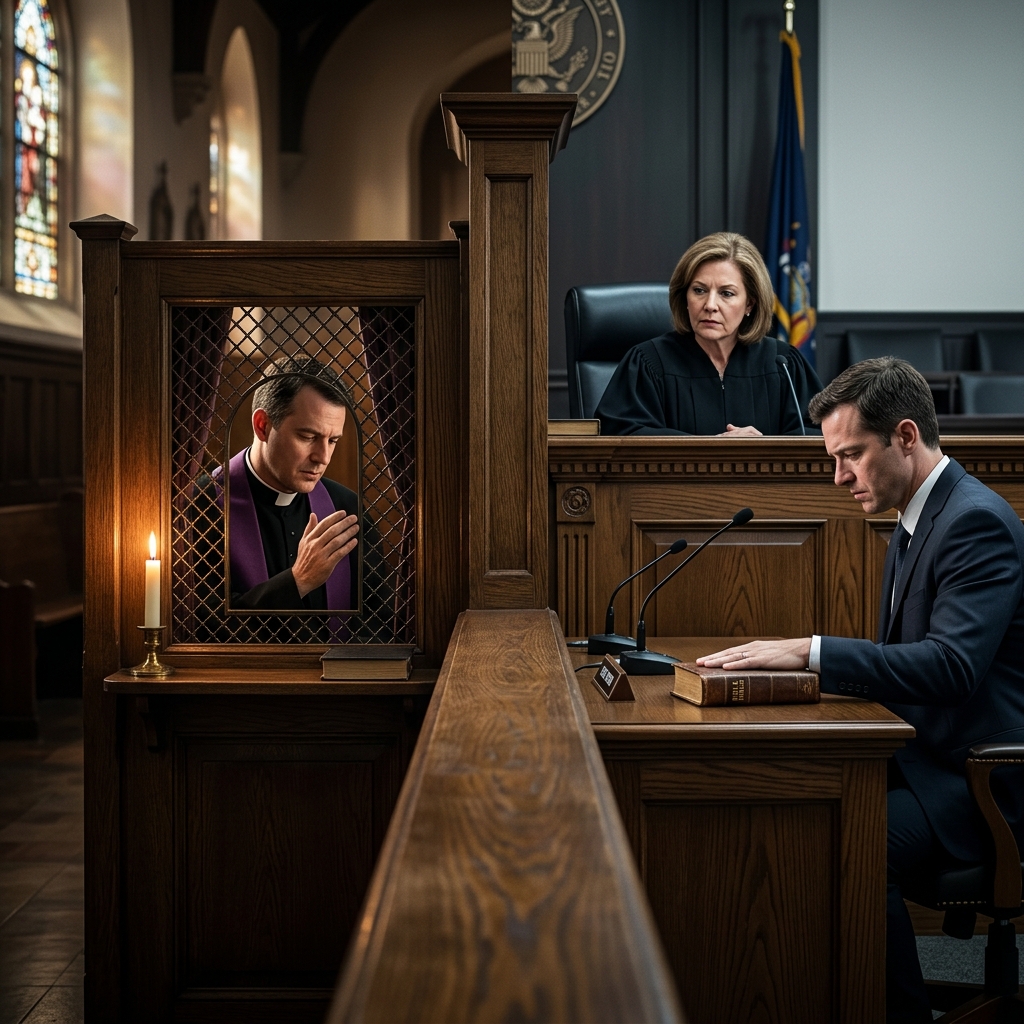
Many people assume that what they say to a priest, pastor, rabbi, imam, or other spiritual leader is absolutely secret. In practice, clergy–penitent privilege does protect most private spiritual conversations from being exposed in criminal court, but the protection is neither unlimited nor uniform across jurisdictions.
This article explains how church-related confessions interact with criminal investigations and trials in the United States, why some statements are shielded and others are not, and what practical issues arise when religious confidentiality meets legal obligations.
Understanding Clergy–Penitent Privilege
In American law, a privilege is a rule that allows certain communications to remain confidential and to be excluded from evidence in court, even when those statements might otherwise be relevant. Familiar examples include attorney–client, psychotherapist–patient, and spousal privileges.
Clergy–penitent privilege (often called priest–penitent privilege in Christian contexts) protects confidential communications made to a religious leader acting in a spiritual role, by someone seeking spiritual counsel, confession, or guidance.
- Purpose: To preserve the integrity of spiritual counseling and sacramental confession, and to respect free exercise of religion.
- Effect: The clergy member usually cannot be forced to testify about those communications, and the penitent may block disclosure in court.
- Source: Recognized in federal evidence law and in the majority of state evidence or privilege statutes, though wording and scope differ.
Most privilege rules focus on whether a communication is confidential and spiritual in nature—not on whether the communication includes admissions of criminal activity.
What Counts as a Protected Church Confession?
The starting point in most jurisdictions is that confidential spiritual conversations are privileged. However, not every statement made on religious property or to a religious person qualifies. Courts typically look at several factors.
Key elements courts consider
- Role of the listener: The recipient must be acting in a recognized clergy or religious-leader capacity, not simply as a friend or supervisor.
- Expectation of confidentiality: The penitent must reasonably believe the conversation is private and will not be shared beyond the spiritual context.
- Spiritual purpose: The communication typically must be made for spiritual advice, absolution, or moral guidance, rather than for purely practical or business reasons.
- Formality vs. informality: A formal sacrament (such as Catholic confession) almost always qualifies, but informal conversations may also be protected if the other elements are present.
| Scenario | Likely Privileged? | Why |
|---|---|---|
| Formal confession to a Catholic priest in a confessional booth | Yes | Priest acting in sacramental role; absolute expectation of secrecy; religious law demands confidentiality. |
| Private counseling with a pastor about guilt over a crime | Usually yes | Pastor providing spiritual guidance; mutual expectation of privacy. |
| Casual conversation at a church picnic about past illegal behavior | Uncertain | Setting may be public; no clear spiritual counseling role; limited expectation of confidentiality. |
| Email to a clergy member seeking moral advice about ongoing criminal activity | Sometimes | May be treated as a confidential spiritual communication; depends on church practice and local law. |
| Statement to a lay church volunteer who is not clergy | Often no | Privilege statutes often focus on ordained clergy or recognized religious leaders. |
Even when a conversation fits these elements, courts may still have to decide whether the privilege applies in a given case, especially if the facts are disputed or if statutory exceptions exist.
Can Church Confessions Be Used as Evidence?
From an evidence-law perspective, a confession is any self-incriminating statement about a criminal offense, whether spoken or written. In federal criminal prosecutions, a confession may be admissible if it is voluntary and not excluded by another rule—such as privilege.
In general:
- If a communication is privileged, the court should not allow it to be introduced as evidence against the penitent.
- If the communication is not privileged, it may be treated like any other confession, subject to standard admissibility rules (voluntariness, reliability, and compliance with constitutional protections).
Privilege may be raised by either the clergy person, the penitent, or both, depending on the jurisdiction’s statute. If the court finds that the privilege applies and has not been waived, testimony based on the confession will be excluded.
Voluntary versus coerced statements
Even outside the privilege context, courts will evaluate whether a confession was voluntary. Under federal law, a confession is admissible only if the judge concludes it was given voluntarily, after a hearing outside the presence of the jury.
- If a statement is made freely in a spiritual setting, without police involvement, it is usually deemed voluntary for evidentiary purposes.
- If law enforcement uses clergy or religious settings to pressure or trick someone into confessing, constitutional issues may arise.
The existence of clergy–penitent privilege operates as a separate shield on top of these voluntariness requirements.
When the Privilege May Not Apply
Despite broad protections, there are important situations where church confessions may become admissible or discoverable, or where clergy may be legally required to act. The three most significant areas are statutory exceptions, waiver, and mandatory reporting—especially involving child abuse.
1. Statutory exceptions in some states
Most state laws explicitly recognize clergy–penitent privilege, but some carve out exceptions for particular types of crimes or proceedings. Legislatures have increasingly focused on allegations of child abuse and neglect, in light of widespread concern about underreporting.
- According to data cited by the U.S. Department of Health and Human Services, at least several states deny or limit clergy privilege in child-abuse cases where reporting duties apply.
- Other states have yet to address the issue explicitly, creating uncertainty that courts must resolve case by case.
In practice, this means that a confession related to child mistreatment may not be fully protected if local law requires clergy to report or testify in certain circumstances.
2. Waiver by the penitent or clergy
Privilege can often be waived, meaning that the protected party gives up the right to keep the communication confidential. Rules differ:
- Some states require both the clergy member and the penitent to agree to waive privilege before testimony is allowed.
- Other jurisdictions allow either party to waive, especially if the statute frames the privilege as belonging to one side more than the other.
- Voluntarily repeating the content of the confession to third parties can sometimes be treated as implied waiver of confidentiality.
Clergy may also face religious-law consequences if they choose to disclose. For example, under Catholic canon law, breaking the sacramental seal of confession can lead to automatic excommunication. This religious penalty exists independently of civil or criminal law.
3. Mandatory child-abuse reporting and related duties
Mandatory reporting statutes require certain professionals to report suspected child abuse or neglect to civil authorities. In many states, clergy are either explicitly listed as mandated reporters or treated as such when they work in institutional settings.
- Some statutes attempt to reconcile reporting duties with clergy privilege, allowing spiritual confidentiality in sacramental contexts but not in general counseling roles.
- Other laws place reporting obligations above privilege, at least for the purpose of alerting child protection agencies.
- Recent litigation in several states has challenged laws that appear to require priests to violate the confessional seal, with courts weighing free exercise rights and public safety.
One federal court, for example, blocked enforcement of a Washington state law that would have forced Catholic priests to choose between jail time and violating the seal of confession in some child-abuse reporting situations. Such cases illustrate how unsettled the boundary between religious confidentiality and mandatory reporting remains.
Clergy Duties Under Religious Law vs. Civil Law
Religious traditions often impose stricter confidentiality rules than civil law requires. Catholic canon law, for instance, treats the seal of confession as absolutely inviolable; priests are forbidden to reveal the identity or the sins of a penitent to anyone, for any reason.
When a serious crime is confessed, priests and other clergy may try to balance moral and legal responsibilities without breaking confidentiality.
- Encouraging self-reporting: Priests may counsel a penitent to turn themselves in to authorities as part of genuine repentance.
- Withholding spiritual absolution: If the offender refuses to address ongoing harm, clergy may withhold absolution or continued counseling until the penitent takes steps to remedy the situation.
- Protecting potential victims indirectly: Some clergy may warn third parties of danger in general terms or take preventive steps, without revealing confessional details or identities.
These religious responses do not change whether a statement is legally admissible, but they shape how confessions are handled and may influence whether the offender ultimately reveals the crime outside the privileged context.
Practical Issues in Criminal Investigations
When a criminal case involves a possible confession to clergy, several practical questions arise for defense attorneys, prosecutors, and law enforcement.
For defendants and penitents
- Confessing a crime to clergy may be morally important but does not guarantee legal immunity; privilege protects confidentiality, not prosecution.
- Sharing the same information later with police, friends, or on social media is not protected by clergy–penitent privilege and can be used as evidence.
- Defendants should discuss any past spiritual confessions with their attorney so counsel can assess potential privilege issues and risks.
For clergy
- Clergy must understand local privilege statutes and reporting laws, especially if they routinely counsel vulnerable persons or families.
- Documentation practices (such as written counseling notes) can affect whether privilege applies and how courts view the communication.
- Religious leaders may wish to seek legal advice when faced with subpoenas, search warrants, or requests to testify about confessional communications.
For law enforcement and prosecutors
- Investigators typically cannot compel testimony about privileged confidential spiritual communications, but may use other evidence developed independently.
- Where statutes limit privilege for child-abuse reporting, authorities must balance enforcement with constitutional protections for religious practice.
- Evidence from non-privileged sources—such as a penitent’s own later statements or physical evidence—remains admissible even if the investigation was triggered by a confidential confession the clergy did not disclose directly.
Frequently Asked Questions
Are all church confessions automatically protected from use in court?
No. Only confidential spiritual communications made to clergy acting in a religious role are typically protected. Casual conversations, statements to lay volunteers, or admissions made in public or semi-public settings may fall outside clergy–penitent privilege.
Can a priest or pastor be forced to testify about what someone confessed?
In many jurisdictions, clergy cannot be compelled to reveal privileged confessional communications. However, some state laws impose exceptions, particularly related to child-abuse reporting, and courts may interpret those statutes differently.
If I confess a crime to my pastor, can I still be prosecuted?
Yes. Privilege does not erase criminal liability; it simply restricts use of that specific confidential communication as evidence. Prosecutors may rely on other sources of evidence, including your own statements outside the privileged context or physical and witness evidence.
What happens if I later tell police the same details I told my priest?
Your statements to law enforcement are not covered by clergy–penitent privilege. If they are voluntary and obtained in compliance with constitutional protections, those admissions can be used against you in court like any other confession.
Do mandatory child-abuse reporting laws override clergy–penitent privilege?
Some states have attempted to limit or override privilege for child-abuse reporting, while others preserve sacramental confidentiality. Courts have sometimes blocked laws that directly target the confessional seal, citing constitutional concerns. The answer depends heavily on the specific state statute and recent case law.
Is the federal government’s view the same as the states’?
Federal evidence law recognizes clergy–penitent privilege in criminal cases, but most practical disputes arise under state law, where statutes and case decisions vary considerably. Confessions must still be voluntary to be admissible, regardless of privilege.
Key Takeaways
- Clergy–penitent privilege generally protects confidential spiritual communications from disclosure in court, but its scope is defined by specific statutes and cases.
- Not every statement made in a church setting is privileged; courts examine the role of the listener, the expectation of confidentiality, and the spiritual purpose of the conversation.
- Child-abuse reporting laws and other statutory exceptions create complex situations where privilege may be limited or contested.
- Both civil law and religious law influence how clergy handle serious crimes revealed in confession, often leading to strong encouragement for penitent self-reporting rather than direct disclosure by clergy.
- Anyone facing criminal investigation who has made a church confession should consult a qualified criminal defense attorney to understand how privilege might apply in their specific jurisdiction.
- Church Confessions Admissible in Court? — FindLaw. 2019-07-10. https://www.findlaw.com/legalblogs/criminal-defense/church-confessions-admissible-in-court/
- 18 U.S. Code § 3501 – Admissibility of confessions — Legal Information Institute, Cornell Law School. Accessed 2026. https://www.law.cornell.edu/uscode/text/18/3501
- Can a Confession to a Priest be Used in Court? — Peter Liss, Vista Criminal Law. 2023-03-01. https://vistacriminallaw.com/religious-confession-protections/
- Federal court blocks Washington law targeting seal of confession — Becket Fund for Religious Liberty. 2024-03-04. https://becketfund.org/media/federal-court-blocks-washington-law-targeting-seal-of-confession/
- Priestly Responsibility Regarding Crimes Confessed — Catholic Answers. 2017-08-10. https://www.catholic.com/qa/priestly-responsibility-regarding-crimes-confessed
References
Similar Articles








Read full bio of medha deb




