
Can You Be Arrested for Unpaid Student Loans?
Understand when student loan problems stay civil, when courts get involved, and why unpaid loans almost never lead directly to jail.
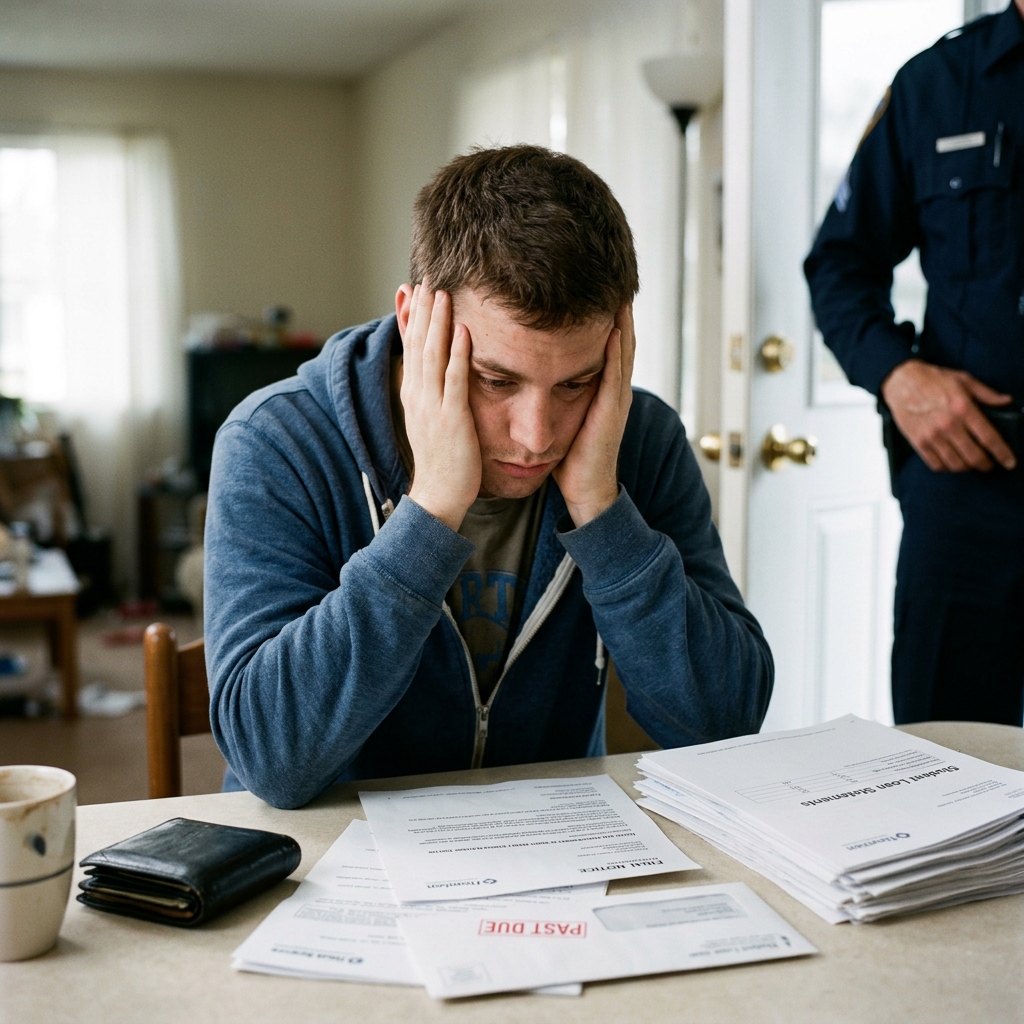
Many borrowers with overwhelming student loan balances worry that missing payments could land them in jail. The idea of modern debtors’ prisons is frightening, and stories about people arrested in connection with student loan debt often circulate on social media. In reality, unpaid student loans are a civil debt, not a crime, and simply falling behind on payments does not lead to arrest.
However, there are limited situations where ignoring the legal process surrounding your debt can lead to a warrant and possible jail time—for example, when you disobey a court order. Understanding this distinction is critical so you can protect both your rights and your finances.
Arrest vs. Debt: Understanding the Core Rule
Under U.S. law, you cannot be jailed merely for failing to pay a typical consumer debt such as a student loan, credit card, or personal loan. Debtors’ prisons were abolished in the 19th century, and defaulting on a loan is handled through civil procedures, not criminal prosecution. The government and private lenders can pursue powerful collection tools, but they cannot send you to jail solely because you missed payments.
What Cannot Get You Arrested
- Missing monthly student loan payments
- Falling into delinquency or default on federal or private student loans
- Owing large balances or being unable to pay due to hardship
- Refusing to answer collection calls or letters (though this can have other consequences)
What May Lead to Arrest
- Ignoring a lawfully issued court summons related to your debt
- Failing to appear at a court-ordered deposition or debtor examination
- Refusing to comply with a court order, such as an order to provide financial information or pay a specific judgment amount
- Being held in contempt of court due to noncompliance with those orders
In other words, any risk of arrest arises from contempt of court and disobeying a judge, not from the underlying student loan balance itself.
How Student Loan Default Really Works
Before reaching any court involvement, student loans typically pass through two key stages: delinquency and default. These terms have specific legal and financial meanings.
Delinquency and Default for Federal Loans
For federal student loans, your account is considered delinquent as soon as you miss a payment. If the delinquency reaches roughly 90 days, the loan servicer will typically report it to the national credit bureaus, which can damage your credit score.
A federal loan is usually placed in default when you fail to make payments for about 270 days (roughly nine months), and you have not made other arrangements such as deferment or income-driven repayment.
| Stage | Typical Federal Loan Timing | Main Consequences |
|---|---|---|
| Delinquent | Immediately after missed payment; reported after about 90 days | Late fees, negative credit reporting |
| Default | Generally after 270 days of nonpayment | Collections, wage garnishment, tax refund and federal benefit offset, possible lawsuit |
Default for Private Student Loans
Private student loans operate under contract terms set by the lender, but default often occurs after three or more missed payments. Once in default, private lenders are more likely than the federal government to file a lawsuit to obtain a judgment authorizing collection measures such as wage garnishment or bank account levies.
Serious Consequences That Fall Short of Jail
Even though jail is not a typical consequence for missed student loan payments, the financial and legal fallout of default can be severe. For both federal and private loans, the creditor or government has access to several tools to collect the debt.
Common Collection Tools for Federal Loans
- Administrative wage garnishment: The federal government can order your employer to withhold up to about 15% of your disposable pay without first going to court.
- Tax refund seizure: Your federal income tax refund can be intercepted and applied to your defaulted federal student loans.
- Offset of federal benefits: Certain federal benefit payments, such as Social Security, may be reduced to pay defaulted student loans.
- Collection agencies: Loans in default may be transferred to a collection agency that aggressively seeks payment.
Collection Tools for Private Loans
- Lawsuits: Private lenders commonly sue in civil court to obtain a judgment.
- Wage garnishment and bank levies: With a judgment, the lender may be able to garnish wages or freeze and take funds from bank accounts, depending on state law.
- Credit damage: Late payments and default severely impact your credit file, affecting your ability to borrow, rent, or even get certain jobs.
None of these steps involve criminal charges or jail time. They are civil enforcement tools authorized by statutes and court judgments.
When Does the Court Become Involved?
The key shift from private collection to potential exposure to arrest occurs when a court steps into the process. For federal loans, many collection actions happen without court involvement. For private loans and some government actions, a lawsuit may be filed.
Court Summons and Judgments
If a lender sues you, the court will issue a summons requiring you to respond or appear at a hearing. If you ignore that summons, the court may enter a default judgment against you. A judgment gives the creditor expanded rights to collect, including wage garnishment and property liens.
Courts may also require you to attend a deposition or debtor’s examination, where you must answer questions under oath about your finances and assets. Failing to attend after proper notice can lead the judge to issue a warrant for your arrest for contempt of court, not for the debt itself.
Contempt of Court: How Arrest Can Occur
Contempt of court occurs when someone willfully disobeys a court order. In the context of debt collection, this might include:
- Ignoring a subpoena or summons to appear in court
- Failing to attend a scheduled deposition or debtor exam
- Refusing to provide required documents or information ordered by the court
- Disobeying an explicit payment or compliance order
If the judge finds you in contempt, the court may issue a bench warrant. Law enforcement—sometimes even U.S. Marshals in federal cases—may then be tasked with bringing you before the court. The focus of the arrest is your failure to follow court orders, which is treated as an offense against the justice system.
Debt Collectors and Illegal Threats of Jail
Some collection agencies attempt to pressure borrowers by threatening arrest or criminal charges if they do not pay. For most consumer debts, including student loans, such threats are illegal under federal law.
The Fair Debt Collection Practices Act (FDCPA) prohibits debt collectors from using abusive, deceptive, or unfair practices. Threatening arrest for nonpayment of a civil debt is considered a deceptive practice because collectors have no authority to jail you solely for defaulting on a loan.
What You Can Do if Threatened
- Document the threat: Save voicemails, messages, and letters.
- Report the collector: You can complain to your state attorney general, your state financial regulator, and the Consumer Financial Protection Bureau (CFPB).
- Ask for written validation: Request written confirmation of the debt rather than reacting to aggressive calls.
- Consider legal advice: A consumer protection attorney may help you respond and potentially recover damages for FDCPA violations.
State Law Nuances and Rare Jail Situations
Although the broad rule is that you cannot be jailed for private debt, some states still have mechanisms that can indirectly result in jail time in connection with unpaid obligations, particularly when a debtor ignores court proceedings.
Legal analyses note that a number of states permit jail in limited circumstances when a person fails to comply with court orders in debt cases, such as repeatedly missing hearings or refusing to submit financial information. Even then, the jail time is tied to contempt, not the unpaid loan itself.
Key Takeaways About Jail Risk
- Jail for student loan default is extremely rare and not a standard collection tool.
- Any arrest is almost always related to ignoring judges or court orders, not missed payments.
- Showing up in court and responding to legal notices dramatically reduces the risk of any criminal-style consequences.
How to Avoid Legal Trouble When You Cannot Pay
If you are struggling to pay your student loans, the best way to protect yourself from both financial harm and legal escalation is to be proactive. The earlier you act, the more options you usually have.
For Federal Student Loans
Federal student loans come with a range of relief programs designed to prevent default and help you keep payments manageable.
- Income-driven repayment (IDR): Plans that tie your monthly payment to your income, sometimes reducing payments to a very low amount or even to $0 if your income is low enough.
- Deferment: A temporary pause on payments based on conditions such as unemployment, economic hardship, or enrollment in school at least half-time.
- Forbearance: Another form of temporary payment suspension or reduction, often used for short-term difficulties.
- Rehabilitation and fresh start-type programs: For borrowers already in default, certain programs allow you to make a series of agreed payments to bring the loan back into good standing.
- Loan forgiveness or cancellation: Some borrowers may qualify for forgiveness programs, depending on their employment or other criteria.
For Private Student Loans
Private lenders are not required to offer the same protections as federal programs, but communication is still crucial.
- Contact your lender to ask about hardship programs or temporary reduced payments.
- Review your promissory note to understand default triggers and rights.
- Consult a nonprofit credit counselor or attorney about options such as negotiation or, in extreme cases, bankruptcy-related strategies.
Always Respond to Court Documents
The single most important step to prevent arrest-related problems is to never ignore court paperwork.
- Open all mail from courts, government agencies, and lenders.
- Note hearing dates and deadlines for responses.
- Attend scheduled hearings, depositions, and debtor examinations.
- If you cannot attend, contact the court or your attorney immediately to request a change.
Even if you do not have money to pay the debt, showing up and participating in the process usually keeps the matter within civil channels and prevents contempt findings.
Special Situation: Borrowers Who Are Already Incarcerated
Some borrowers end up in prison for reasons unrelated to their student loans, and they may wonder what happens to their debt while they are incarcerated. Being in prison does not automatically pause your federal student loan payments, but special relief may be available.
According to guidance for incarcerated borrowers, those serving long sentences may be able to request that defaulted federal loans be written off in certain circumstances, particularly for sentences of 10 years or more. For shorter terms, borrowers can request that collections be suspended while they are incarcerated.
These programs require submitting documentation from prison officials and communicating with the U.S. Department of Education. They are designed to prevent aggressive collection, not to create criminal penalties for the debt itself.
Frequently Asked Questions (FAQ)
Can I be arrested just because I stopped paying my student loans?
No. Defaulting on student loans is a civil matter, not a criminal offense. You cannot be jailed simply for missing payments, regardless of how large your balance is.
Why do news stories claim people were arrested over student loans?
In most widely reported cases, borrowers were arrested because they ignored court orders, such as failing to attend a deposition or debtor examination related to their student loan lawsuit. The arrest was for contempt of court, not for the unpaid loan itself.
Can debt collectors legally threaten to have me jailed?
Generally no. For ordinary consumer debts, including student loans, collectors cannot lawfully threaten arrest for nonpayment. Such threats may violate the Fair Debt Collection Practices Act. You can report these collectors to state and federal regulators.
Could I be arrested if I ignore a court summons about my loans?
If you ignore a court summons, the judge may issue a default judgment and, in some situations, a warrant if you later fail to appear for required proceedings. The risk comes from disobeying the court, not the debt itself. Always respond to court notices.
Is student loan default ever treated as fraud?
Simply being unable to pay does not equal fraud. Fraud generally requires intentional deception, such as lying on an application to obtain a loan. Default alone is not a criminal fraud charge.
What should I do if I know I am going to miss payments?
Contact your servicer or lender as early as possible. For federal loans, ask about income-driven repayment, deferment, or forbearance. For private loans, inquire about hardship options. Early communication can prevent default and reduce long-term damage.
Practical Checklist to Stay Safe and Informed
If you are worried about legal consequences from your student loans, use this quick checklist:
- ✔ Recognize that missed student loan payments themselves will not send you to jail.
- ✔ Do not ignore letters or summonses from courts or government agencies.
- ✔ Attend all hearings, depositions, and debtor examinations if you are sued.
- ✔ Report any collector who threatens arrest to regulators.
- ✔ Explore federal relief programs or negotiate with private lenders to manage your payments.
- ✔ Seek legal or nonprofit counseling if you receive court paperwork or a lawsuit.
References
- Student Loan Delinquency and Default — Federal Student Aid, U.S. Department of Education. 2023-08-01. https://studentaid.gov/manage-loans/default
- Student Loans — Maryland People’s Law Library. 2022-11-15. https://www.peoples-law.org/student-loans
- Can I Go to Jail For Not Paying a Student Loan? — Tate Law. 2023-06-10. https://www.tateesq.com/learn/jail-for-not-paying-student-loan
- Could I be arrested if I don’t pay back my payday loan? — Consumer Financial Protection Bureau. 2017-02-28. https://www.consumerfinance.gov/ask-cfpb/could-i-be-arrested-if-i-dont-pay-back-my-payday-loan-en-1631/
- Incarcerated Borrowers — Student Loan Borrower Assistance. 2024-01-05. https://studentloanborrowerassistance.org/for-borrowers/dealing-with-student-loan-debt/pausing-student-loan-payments/deferment/incarcerated-borrowers/
- Can You Be Arrested for Past Due Student Loan Debts? — The Student Loan Show (podcast summary). 2016-02-16. https://www.studentloanshow.com/sls046/
- Can I Be Arrested for Failing to Pay Back Student Loans in AZ? — McCarthy Law PLC. 2021-05-21. https://mccarthylawyer.com/2021/05/21/can-i-be-arrested-for-failing-to-pay-back-student-loans-in-az/
Similar Articles








Read full bio of Sneha Tete




