
Can a DUI Rely Only on an Officer’s Statement?
How much weight courts give to police observations in DUI cases and what that means for your defense.
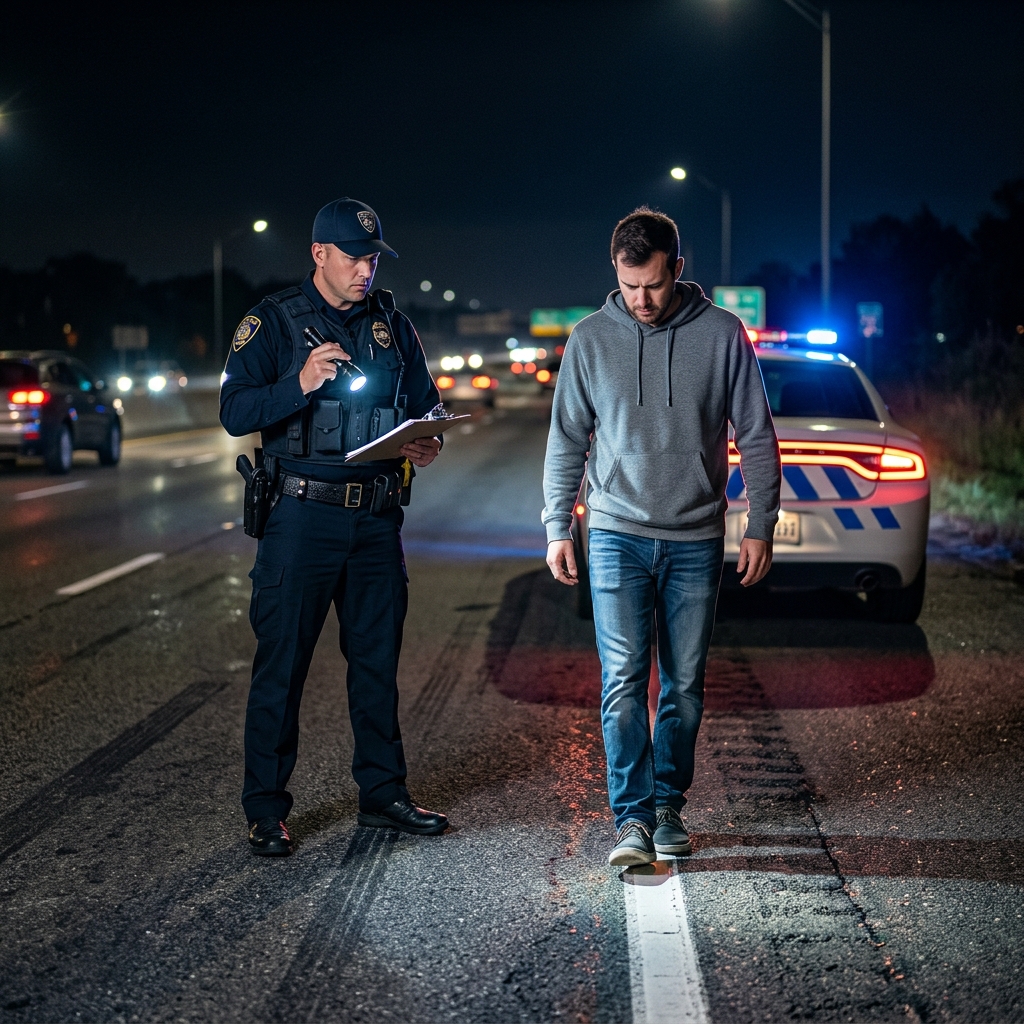
Drivers often assume that a drunk driving charge requires a failed breath test or a lab-confirmed blood alcohol concentration. In reality, a DUI or DWI case can be built largely, and sometimes entirely, on a police officer’s observations and statements. Whether that evidence is enough to convict you is a different question—but it can certainly be enough to arrest you and move a case forward.
This article explains how courts treat officer testimony, when it may be sufficient by itself, and what defense strategies can be used to challenge a DUI based primarily on what an officer claims to have seen or heard.
Understanding the Legal Foundations: Probable Cause vs. Proof
To make sense of DUI cases based on officer statements, it is essential to separate two core legal concepts: probable cause and proof beyond a reasonable doubt.
- Probable cause for arrest – The officer needs enough facts to reasonably believe you are impaired while driving. This is a lower standard than what is required to convict you.
- Proof beyond a reasonable doubt – At trial, the prosecution must convince a judge or jury that you were under the influence, using legally admissible evidence and testimony.
Officer observations often play a major role in meeting both standards. A court may accept testimony about your behavior, speech, and appearance as evidence of impairment even where chemical testing is weak or unavailable.
Common Officer Observations Used in DUI Cases
Police officers are trained to look for physical and behavioral signs that suggest alcohol or drug impairment. These observations are documented in reports and later presented in court as evidence.
Typical observations include:
- Driving behavior – Weaving between lanes, drifting over the center line, sudden stops, or failing to maintain speed.
- Physical appearance – Bloodshot or glassy eyes, flushed face, disheveled clothing, or difficulty maintaining balance.
- Speech – Slurred words, slow responses, or difficulty following instructions.
- Odor – Smell of alcoholic beverages or marijuana from the vehicle, your breath, or your clothing.
- Behavior – Confusion, irritability, exaggerated politeness, or unusual emotional reactions.
- Performance on roadside tests – Problems with walking heel-to-toe, standing on one leg, or following eye-movement tests.
These factors together can be enough for an officer to conclude that you are under the influence, and in some jurisdictions a court may uphold a conviction based primarily on such testimony if it is considered credible.
Other Evidence Commonly Used Alongside Officer Statements
Although a DUI may proceed on officer observations alone, prosecutors frequently rely on additional evidence to strengthen the case. The main categories are:
| Type of Evidence | Typical Content | How It Supports the Case |
|---|---|---|
| Breath Tests | Numerical blood alcohol content (BAC) from a breathalyzer machine | Objective measurement of alcohol in the body, often central to DUI prosecutions |
| Blood or Urine Tests | Lab analysis for alcohol or drugs | Used to confirm impairment or detect substances not captured by breath tests |
| Video Recordings | Dashcam or bodycam footage of driving, stop, and field tests | Visual record that can either back up or contradict an officer’s narrative |
| Witness Statements | Accounts from passengers, bystanders, or employees | Can reinforce or challenge the officer’s impression of your condition |
When these forms of evidence are missing, inconsistent, or ruled inadmissible, the case may narrow down to what the officer observed and wrote in the report.
Can an Officer’s Statement Alone Support a DUI Charge?
In many states, an officer’s observations can be sufficient to justify an arrest for impaired driving if they amount to probable cause. Whether those observations alone can carry a conviction depends on the specific law and the strength of the testimony.
Key points to understand:
- Arrest threshold is relatively low – Officers do not need chemical test results before making a DUI arrest as long as they can articulate reasonable grounds based on your behavior.
- Some statutes focus on impairment, not numbers – Laws often prohibit driving “under the influence” or “while impaired,” independent of a specific BAC value. That allows prosecutors to rely on qualitative evidence.
- Courtroom credibility is crucial – If the judge or jury finds the officer’s account detailed, consistent, and aligned with the circumstances, it may be enough to support a guilty verdict in the absence of other evidence.
However, the more a case relies on a single officer’s observations, the more vulnerable it becomes to rigorous cross-examination and alternative explanations, especially if no video or objective testing backs up the claims.
Challenging Officer-Based Evidence in DUI Cases
Defense strategies in DUI cases often focus on undermining the reliability of the officer’s observations and statements. Because officers are human and can misinterpret or misremember events, their testimony is not beyond challenge.
1. Questioning the Basis for the Traffic Stop
If the initial stop was illegal, much of the subsequent evidence may be excluded. Common arguments include:
- The officer lacked reasonable suspicion to initiate the stop.
- The alleged driving violation does not match video footage.
- The stop was based solely on an unverified anonymous tip.
Successful challenges to the legality of the stop can lead to suppression of both the officer’s observations and later test results, significantly weakening the prosecution’s case.
2. Highlighting Inconsistencies and Memory Problems
Defense attorneys routinely compare:
- Incident reports to later testimony in court.
- Dashcam/bodycam recordings to the officer’s narrative.
Discrepancies may suggest that the officer’s recollection evolved over time or that key details were exaggerated or omitted. This can cast doubt on whether the observations reliably show impairment, especially when video evidence tells a different story.
3. Using Witnesses to Offer Alternative Explanations
People who saw you shortly before or during the stop can provide context that counters assumptions of intoxication. Witness testimony may be particularly helpful when:
- Passengers can explain apparent unsteadiness due to fatigue, injury, or medical conditions.
- Bystanders recall normal speech and behavior that contradicts claims of impairment.
- Employees, like bartenders or cashiers, remember you consuming little or no alcohol.
Such testimony can erode the prosecution’s reliance on officer observations and suggest other reasonable interpretations of the same behavior.
4. Challenging Field Sobriety Test Results
Field sobriety tests (FSTs) are a frequent focus in officer reports, yet they are not foolproof indicators of intoxication. Factors that may undermine their value include:
- Poor instructions or improper demonstration by the officer.
- Environmental conditions, such as uneven pavement, darkness, or bad weather.
- Physical limitations, age, weight, or medical issues that affect balance or coordination.
Expert testimony or cross-examination can highlight these limitations, arguing that the tests say more about the circumstances than the driver’s sobriety.
Your Statements to Police: A Double-Edged Sword
Words you speak during a traffic stop and after arrest can become powerful evidence in a DUI case. Police reports often quote or summarize your admissions, explanations, and responses, which can be combined with officer observations to strengthen the claim of impairment.
How Your Statements Are Used
- Pre-arrest comments – Statements made before arrest, such as admitting to “a few drinks,” can be introduced at trial unless excluded for other reasons.
- Post-arrest interrogation – Once you are formally in custody, officers must advise you of your Miranda rights before questioning.
- Incriminating admissions – Saying you are “too drunk to drive” or describing heavy drinking may be used to reinforce officer observations of impairment.
If officers interrogate you after arrest without giving proper warnings, your responses may be suppressed and cannot be used by the prosecution.
Why Remaining Silent Often Protects You
Legal guidance from multiple jurisdictions stresses that you are generally not required to volunteer information that can incriminate you. While you must usually provide basic identification, you can decline to answer questions about drinking, medication, or where you came from.
Key protective steps if you are stopped on suspicion of DUI include:
- Politely declining to discuss how much you have had to drink or use of drugs.
- Refusing optional field sobriety tests, where allowed by law, after considering the consequences.
- Requesting an attorney before answering further questions once you are under arrest.
Limiting statements reduces the amount of verbal evidence officers can use to corroborate their observations of impairment.
Suppression Motions: Removing Weak or Unlawful Evidence
One of the most important tools in DUI defense is the motion to suppress. This is a formal request asking the court to exclude certain evidence because it was obtained in violation of legal requirements or constitutional rights.
Evidence potentially subject to suppression includes:
- Statements taken without required Miranda warnings after arrest.
- Breath or blood test results obtained without proper consent or statutory warnings.
- Observations made after an unlawful stop or search.
If the court grants a suppression motion, the prosecution may be left with far less evidence. In some cases, this can reduce the case to a narrow set of officer observations that are easier to challenge at trial.
When Officer Testimony Is Strongest—and Weakest
Officer statements do not carry the same weight in every situation. Certain conditions tend to make observational evidence more convincing, while others undermine it.
Situations That Strengthen Officer Testimony
- Detailed, contemporaneous reports documenting specific behaviors rather than general impressions.
- Consistency between the officer’s narrative, video footage, and any test results.
- Clear, stable driving patterns showing obvious risk (high speeds, near collisions, or serious lane violations).
- Absence of plausible alternative explanations such as fatigue, injury, or medical conditions.
Situations That Weaken Officer Testimony
- Vague language such as “appeared intoxicated” without concrete supporting details.
- Significant differences between the officer’s report and later courtroom testimony.
- Video recordings showing better coordination or speech than claimed in the report.
- Independent witnesses who observed you acting normally or consuming little alcohol.
In borderline cases, these weaknesses can create reasonable doubt and lead to acquittal even when officer observations were the main basis for the charge.
Practical Takeaways for Drivers
You cannot control how an officer interprets your behavior, but you can make more informed decisions during and after a DUI stop. Consider the following practical guidance based on widely recognized legal principles:
- Stay calm and respectful – Agitated behavior can be misread as impairment or defiance.
- Provide required identification – Offer license, registration, and insurance as required by law.
- Limit voluntary statements – Do not feel obligated to explain yourself or discuss alcohol use.
- Know your rights around tests – Understand that field sobriety tests may be optional, while chemical tests may carry legal consequences if refused, depending on your state.
- Contact a lawyer promptly – Legal advice is critical once you are arrested or formally charged.
Ultimately, even if a DUI case initially rests almost entirely on an officer’s statement, the legal system provides mechanisms to scrutinize and challenge that evidence. Effective defense often focuses on exposing gaps, inconsistencies, and alternative explanations that show why observation alone may not be enough to prove impairment beyond a reasonable doubt.
Frequently Asked Questions (FAQs)
1. Can I be convicted of DUI without a breath or blood test?
Yes. Many DUI laws focus on whether you were “under the influence” or “impaired” while driving, which can be proven through officer observations and other non-chemical evidence. However, convictions based solely on observations may be more open to challenge.
2. Is it legal for an officer to arrest me before any tests are done?
Yes. If the officer has probable cause based on your driving, appearance, speech, and behavior, they may arrest you before administering chemical tests. Test results typically come later and either support or undermine the initial decision.
3. What if the bodycam video contradicts the officer’s report?
If video footage shows you performing better than the report claims, this discrepancy can be used to challenge the officer’s credibility and the reliability of their observations. Courts often take such conflicts seriously because video is considered objective evidence.
4. Do I have to answer questions about how much I drank?
No. You generally must provide basic identification information, but you are not required to answer questions that may incriminate you, such as admitting to drinking or drug use. Politely declining and asking for an attorney can help protect your rights.
5. Can my statements be thrown out if officers didn’t read my Miranda rights?
Potentially. If you were in custody and interrogated without receiving Miranda warnings, your answers may be excluded from evidence in court. This does not automatically dismiss the case, but it can remove a key piece of incriminating evidence.
References
- Massachusetts DUI Arrests – Physical Observations — OUI Attorneys. 2023-05-01. https://ouiattorneys.com/oui-massachusetts/dui-arrests-physical-observations/
- What Evidence Can Be Challenged in a DUI Case? — Matt Bodman Law. 2022-09-15. https://www.mattbodmanlaw.com/posts/what-evidence-can-be-challenged-in-a-dui-case/
- Evidence in DUI Cases — Ellis & Bryant, Jacksonville Drunk Driving Defense. 2021-06-10. https://www.ellisandbryant.com/practice-areas/dui-defense/evidence-in-dui-cases/
- 5 Facts You Must Know if You’re Pulled Over for OUI in Massachusetts — Kevin R. Collins Law. 2020-11-20. https://www.kevinrcollinslaw.com/publications/5-facts-you-must-know-if-you-re-pulled-over-for-oui-in-massachusetts/
- How To Defend Against Your DWI In New Jersey — Dughi, Hewit & Domalakis. 2022-03-05. https://www.dughihewit.com/how-to-defend-against-your-dwi-in-new-jersey/
- Understanding Your Legal Rights in Michigan DUI Cases — Michigan Drunk Driving Lawyer. 2021-04-18. https://www.michigan-drunk-driving-lawyer.com/understanding-your-legal-rights-in-dui-cases.html
Similar Articles








Read full bio of Sneha Tete




