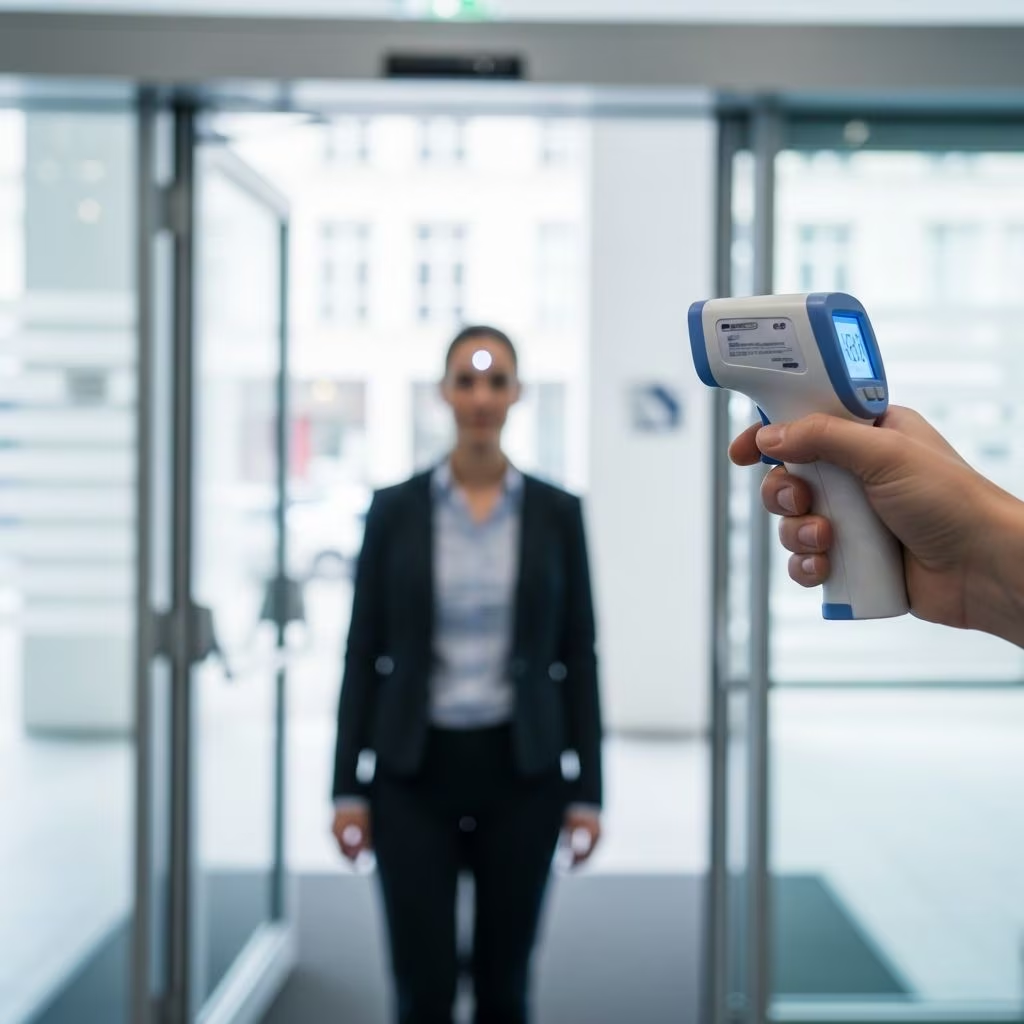
Temperature screening has become a common practice in businesses responding to public health emergencies like pandemics. Retailers, offices, and public venues often implement these measures to limit virus transmission. But do they have the legal authority to enforce them on customers or employees? This article breaks down the legal framework, drawing from federal guidelines, state regulations, and privacy considerations to provide clarity.
Legal Foundation for Health Screenings in Private Businesses
Private businesses generally possess broad discretion to establish entry conditions, including health-related protocols during health crises. The U.S. Equal Employment Opportunity Commission (EEOC) has explicitly permitted temperature measurements for employees amid pandemics, a stance first outlined during the 2009 H1N1 outbreak and reaffirmed for COVID-19. This guidance allows employers to send home workers exhibiting fever or related symptoms, treating such actions as reasonable under the Americans with Disabilities Act (ADA).
For customers, property owners hold similar rights to control access. Absent specific prohibitions, stores can deny entry to those refusing screenings or showing elevated temperatures. This stems from basic property rights, where businesses set uniform policies for all visitors to ensure safety. However, these policies must apply consistently to avoid discrimination claims.
Federal Guidelines: ADA and EEOC Permissions
The ADA typically restricts employers from inquiring into employees’ medical conditions, but pandemics create exceptions. EEOC enforcement guidance confirms that measuring body temperature is permissible when community spread is acknowledged by health authorities like the CDC. Businesses must handle resulting data confidentially, storing it separately from personnel files and limiting access to designated individuals.
Key principles include:
- Use non-invasive tools like no-touch infrared thermometers to minimize intrusion.
- Provide advance notice of screening policies via signage or emails.
- Define clear thresholds, such as 100.4°F, aligned with CDC recommendations.
These steps help mitigate legal risks while promoting workplace safety.
State-Specific Mandates and Variations
While federal law sets a baseline, states impose diverse requirements. Some localities mandate screenings for certain sectors, reflecting local outbreak severity. For instance, specific states required essential businesses to screen workers daily, often specifying symptom checklists alongside temperatures.
| State Category | Screening Requirement | Details |
|---|---|---|
| Required | Daily temperature checks for employees | On-site with non-touch devices; authentication needed for self-checks |
| Recommended | Best practice for retail and gyms | No entry if over 100.4°F; self-monitoring if feasible |
| No Requirement | Voluntary | Encouraged for high-risk venues like restaurants |
Businesses must monitor evolving orders, as some cities and counties enforced screenings during peak pandemic periods. Non-compliance could lead to fines or shutdowns.
Employee Screenings: Permissions and Best Practices
Employers enjoy wide latitude to implement temperature protocols. They may require self-checks before arrival or conduct on-site scans, provided equipment access doesn’t disadvantage workers. Refusal to comply can justify sending employees home, especially under uniform policies applied to all staff.
Recorded data does not automatically qualify as a medical record under HIPAA, as it forms part of routine health screenings rather than treatment documentation. Nonetheless, ADA confidentiality rules apply: positive results must be kept private, shared only on a need-to-know basis.
To optimize implementation:
- Post clear notices outlining procedures and thresholds.
- Train staff on device use and data handling.
- Consider third-party vendors for screenings to offload compliance burdens.
Customer Screenings: Rights and Limitations
Stores targeting customers face nuanced considerations. While they can require temperatures for entry, customers retain the right to refuse and shop elsewhere. No federal law compels participation, but during emergencies, some jurisdictions authorized mandatory checks for public spaces.
Privacy concerns arise if results are logged. States like California demand disclosures under consumer protection laws like the CCPA for biometric data collection. Best practices include anonymous screenings without records, focusing solely on real-time entry decisions.
Individuals uncomfortable with checks can politely decline, invoking privacy preferences, though stores may uphold their policy.
Privacy and Data Handling Obligations
Any recorded temperatures trigger data protection duties. Under ADA for employees, information must be isolated and access-restricted. For customers, general privacy statutes apply, varying by jurisdiction.
Non-HIPAA applicability simplifies matters for routine screens. Businesses should:
- Avoid unnecessary retention; delete data promptly.
- Secure digital logs against breaches.
- Inform subjects of collection purposes upfront.
Failure to comply risks lawsuits, particularly in privacy-strict states.
Potential Legal Challenges and Discrimination Risks
Uniform policies shield against most claims, but accommodations may be needed for disabilities affecting temperature readings. EEOC advises case-by-case evaluations without compromising overall safety.
Refusals based on religion or other protected traits require dialogue, potentially allowing alternatives like symptom attestations. Consistent enforcement remains key to defending against disparate treatment allegations.
Practical Implementation Strategies
Successful programs prioritize minimal intrusion and clear communication. Flowcharts can guide processes:
- Greet entrant and explain policy.
- Conduct scan (self or assisted).
- Approve entry if below threshold; otherwise, provide next steps like self-isolation guidance.
Invest in reliable thermometers and train for accuracy, calibrating devices regularly. signage reinforces expectations, reducing confrontations.
Post-Pandemic Perspectives and Future Trends
As health threats evolve, temperature screening may persist in high-contact industries. Lessons from COVID-19 emphasize balancing safety with rights. Ongoing EEOC and CDC updates will shape practices, urging businesses to stay informed.
Hybrid approaches, like app-based self-reporting, could emerge, blending convenience with compliance.
Frequently Asked Questions
Can employers legally measure employee temperatures daily?
Yes, EEOC guidance permits this during pandemics, with confidentiality safeguards under ADA.
Does recording temperatures create HIPAA obligations?
No, routine screenings do not qualify as medical records under HIPAA.
What if a customer refuses a temperature check?
Stores can deny entry under property rights, but cannot force compliance.
Are there states mandating customer screenings?
Some did for specific venues during COVID-19; check local orders.
How should businesses store screening data?
Separately and securely, per ADA and state privacy laws; minimize retention.
References
- Can you ask for and record temperatures of employees or does that become a medical record? — Savance Workplace. 2020. https://www.savanceworkplace.com/knowledge-base/can-you-ask-for-and-record-temperatures-of-employees-or-does-that-become-a-medical-record/
- Frequently Asked Questions when taking employee temperatures as a COVID-19 precaution in the United States — Constangy. 2020-03-20. https://www.constangy.com/newsroom/newsletters/Frequently-Asked-Questions-when-taking-employee-temperatures-as-a-COVID-19-precaution-in-the-United-States
- Employee Temperature and Health Screenings – A List of Statewide Orders — Procuro. 2020. https://procuro.com/employee-temperature-and-health-screenings-a-list-of-statewide-orders/
- Return to Work: Can Employers Take Workers’ Temperatures? — Conner Strong. 2020. https://www.connerstrong.com/blog/insights-detail/return-to-work-can-employers-take-workers-temperatures/
- Legal Implications Of Implementing Temperature Screening Procedures — McGrath North. 2020-06-16. https://www.mcgrathnorth.com/publications/legal-implications-of-implementing-temperature-screening-procedures
- Employee Temperature Checks and Confidentiality: Separating Fact — McBrayer Firm. 2020. https://www.mcbrayerfirm.com/blogs-Employment-Law-Blog,employee-temperature-checks-and-confidentiality-separating-fact