
Border Phone Searches and the Fourth Amendment
How U.S. border agents search phones without warrants, and what courts say about your digital privacy at ports of entry.
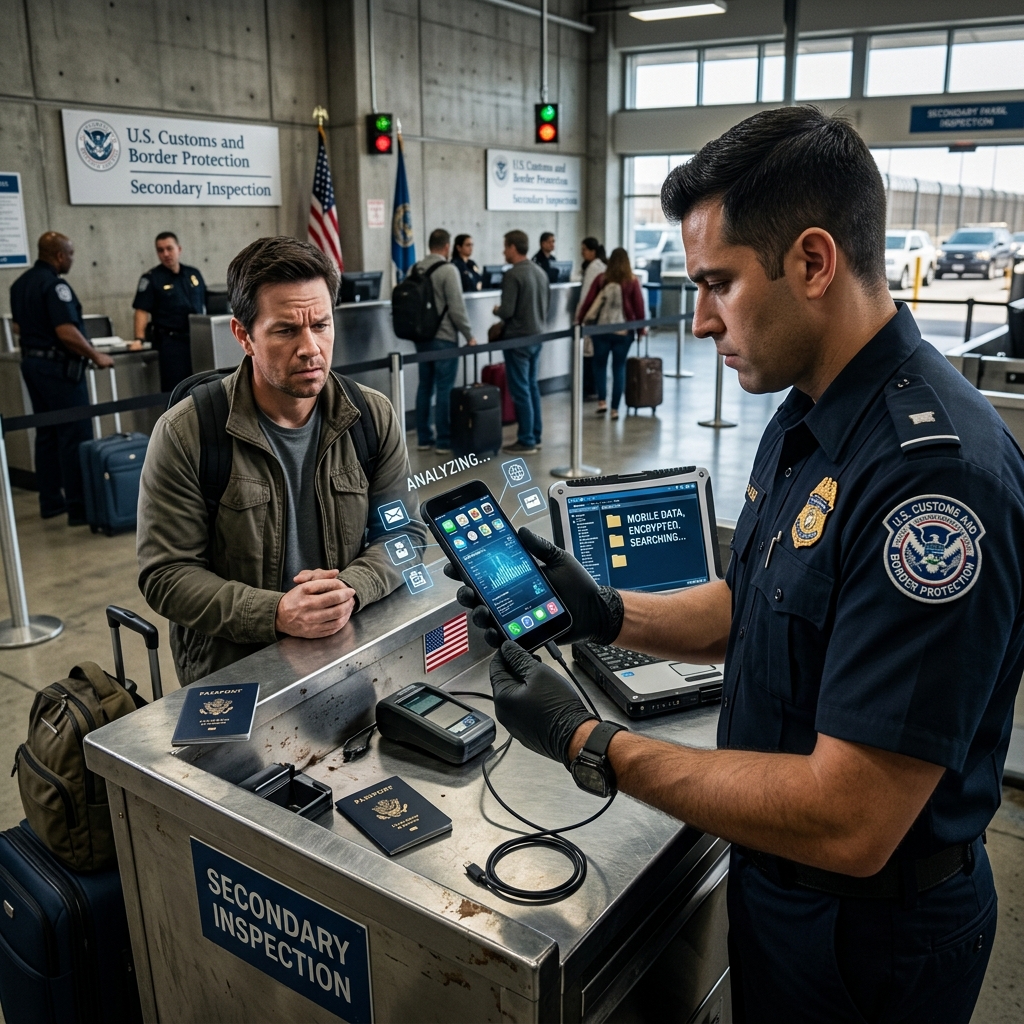
The rapid growth of smartphones and cloud-connected devices has transformed routine border inspections into complex constitutional questions. At U.S. ports of entry, Customs and Border Protection (CBP) officers may search travelers’ phones, laptops, and other electronic devices without a traditional warrant, relying on the long-standing border search exception to the Fourth Amendment. Courts are now grappling with whether these digital searches should be treated the same way as the inspection of luggage or whether the uniquely revealing nature of electronic data demands stronger protections.
Why the Border Is Different Under the Fourth Amendment
The Fourth Amendment generally requires that government searches be reasonable, which usually means obtaining a warrant supported by probable cause. At the international border and its functional equivalents (such as international airports), however, courts have recognized a special doctrine known as the border search exception. This doctrine reflects the government’s heightened interest in regulating who and what enters the country, including preventing the importation of contraband and security threats.
Under this exception:
- Routine searches of people, baggage, and personal effects may be conducted without a warrant and without individualized suspicion of wrongdoing.
- More intrusive searches (such as strip searches or highly invasive inspections) may require at least reasonable suspicion or probable cause, depending on their nature and scope.
For much of modern history, this framework applied fairly straightforwardly to physical items like suitcases and cargo. The challenge now is how to fit smartphones and other digital devices into this legal structure.
Electronic Devices at the Border: Basic Concepts
Electronic devices carry vast amounts of personal information. A single smartphone can contain years of messages, photographs, location history, banking records, and access to cloud accounts. Recognizing this, the Supreme Court has held in domestic law enforcement contexts that officers generally need a warrant before searching a phone seized during an arrest, emphasizing that such searches reveal far more than traditional containers.
At the border, however, the legal landscape is different. Federal law authorizes CBP to “inspect, search or detain” persons and items entering or leaving the United States, and agencies interpret this authority to include electronic devices. CBP guidance describes two broad types of device searches:
- Basic (manual) searches – An officer looks through the device by hand, viewing locally stored content such as photos, messages, and documents.
- Advanced (forensic) searches – Specialized tools are used to copy, analyze, and extract large volumes of data, sometimes including deleted or hidden files.
Courts and policymakers increasingly distinguish between these two categories, often treating forensic examinations as more intrusive and more constitutionally sensitive than manual inspections.
Government Policy: What CBP Says It Can Do
CBP’s own public guidance states that officers may, “on rare occasions,” examine electronic devices as part of border inspections. According to CBP statistics, fewer than 0.01% of arriving international travelers had their devices searched in Fiscal Year 2024, suggesting that most travelers will not encounter a device search in practice. Nonetheless, CBP asserts broad legal authority for such searches.
Under CBP policy and related guidance:
- Routine, manual inspection of a device may be conducted without a warrant and without individualized suspicion.
- For more intrusive forensic examinations, CBP policy references a reasonable suspicion standard, though the exact requirements and implementation can vary.
- Devices or copies of their contents may be detained for a “brief, reasonable” period, typically up to five days, with possible extensions in exceptional circumstances.
- Cloud data accessed via the Internet is not supposed to be searched under CBP policy; searches should focus on information stored on the device itself.
These policies operate against a background of case law that is not uniform across the United States, creating different legal expectations depending on geographic region and court precedent.
How Courts Differ on Border Device Searches
Federal appellate courts have taken varied approaches when applying the border search exception to phones and computers. The central questions are whether device searches are “routine” and what level of suspicion, if any, is required for different types of searches.
| Federal Circuit | Basic / Manual Search | Forensic / Advanced Search | Key Point |
|---|---|---|---|
| Eleventh Circuit | No suspicion required; treated as routine border search. | Historically, also permitted with minimal suspicion; focus on border authority. | Strong deference to government’s border power; manual phone searches may occur without individualized suspicion. |
| Fourth & Ninth Circuits | Manual inspections of devices generally allowed under border search exception. | Forensic analyses require at least reasonable suspicion of criminal activity. | Draw a line between routine manual checks and nonroutine forensic examinations. |
| First Circuit | Basic, manual searches are considered routine and do not require reasonable suspicion. | More invasive searches may demand heightened justification. | Affirms broad authority for manual device searches while approving limits on highly intrusive methods. |
| Selected District Courts | Some rulings question whether device searches are truly “routine.” | At least one court has required a warrant based on probable cause for certain border device searches. | Signals growing judicial skepticism toward unrestricted digital searches, especially forensic ones. |
A notable development is a federal court decision in New York (Eastern District), which held that border agents must obtain a warrant based on probable cause before searching electronic devices. That court reasoned that the depth and sensitivity of digital information make such searches “nonroutine,” placing them outside the traditional border search exception. While this ruling does not yet represent nationwide law, it indicates a trend toward stronger protections in some jurisdictions.
Routine vs. Nonroutine: Why the Label Matters
Whether a search is labeled “routine” or “nonroutine” has significant legal consequences. Under the border search exception:
- Routine searches – No warrant and no individualized suspicion required.
- Nonroutine searches – Often require reasonable suspicion or, in some contexts, probable cause and a warrant.
Courts generally accept that simple, manual checks of luggage or physical items are routine. The controversy is whether scrolling through a phone’s contents should be treated similarly to opening a suitcase or instead considered a qualitatively different intrusion.
Several appellate courts have treated manual device inspections as routine, particularly when limited to locally stored data and conducted in a non-forensic manner. By contrast, forensic extractions—where large quantities of data are copied and analyzed using specialized tools—are more likely to be classified as nonroutine and thus subject to higher standards.
Privacy Concerns Raised by Border Device Searches
Civil liberties organizations argue that warrantless border searches of electronic devices can expose intimate details of a person’s life far beyond what is necessary to enforce customs or immigration laws. Because phones often serve as gateways to social media, email, and cloud storage, accessing a device can reveal information about third parties who have never crossed the border.
Major privacy concerns include:
- Volume of data – A typical smartphone may hold years of communications, location logs, and personal notes.
- Third-party information – Contacts, clients, patients, and research subjects may have their information exposed without any direct interaction with border authorities.
- Sensitive or privileged material – Devices can contain attorney–client communications, medical records, or confidential research data, none of which are categorically exempt from search.
- Retention and sharing – Some policies allow copies of device contents to be retained and shared within government databases, raising long-term surveillance concerns.
These issues have prompted calls for clearer statutory protections and more uniform standards that reflect the realities of modern digital life.
Practical Implications for Travelers
For individuals crossing the U.S. border, the legal landscape translates into concrete risks and choices. Although most travelers will not experience a device search, the possibility exists, and outcomes can vary depending on citizenship status and the nature of the information stored.
Some practical implications include:
- Authority to search devices – CBP officials are permitted to manually inspect phones and other devices when a traveler enters the country. They may also, in some circumstances, perform more advanced analyses or detain devices for further review.
- Consequences of refusal – U.S. citizens and lawful permanent residents cannot be denied entry solely for refusing to unlock a device, but they may face prolonged questioning or device seizure.
- Temporary device detention – Devices may be held for several days, along with copies of their contents, when CBP claims a need for additional analysis.
- Limited cloud access – Keeping devices in airplane mode reduces the risk that border agents will access data stored exclusively in the cloud, consistent with CBP’s stated policies.
Risk-Reduction Strategies for Crossing the Border
While no approach can fully eliminate the possibility of a device search, travelers can take steps to reduce exposure of highly sensitive information. Civil liberties organizations and university security offices offer practical guidance for those who carry research data, privileged materials, or other confidential content across borders.
Commonly suggested strategies include:
- Minimize data – Travel with a device that holds only the information you need. Consider using temporary or “travel” devices for international trips.
- Disable network connections – Keep devices powered off or in airplane mode with Wi‑Fi and Bluetooth turned off when approaching border checkpoints. This helps ensure that only locally stored data is accessible.
- Segregate sensitive information – Store privileged or highly confidential data in secure environments that are not directly synced to your travel device.
- Use strong authentication – Enable robust passcodes instead of simple biometric unlocking methods, while recognizing that officers may still request access.
- Inform officers about privileged material – If a device contains attorney–client work product or similarly sensitive information, clearly state this before any search begins; CBP policy calls for special handling procedures in such cases.
Emerging Legal Debates and Possible Future Directions
Legal scholarship and policy analysis increasingly question whether the traditional border search doctrine adequately protects digital privacy in the smartphone era. Scholars propose frameworks that distinguish among types of data, levels of intrusion, and the reasons for the search, aiming to balance national security and customs enforcement with constitutional rights.
Emerging debates focus on issues such as:
- Data volume thresholds – Whether searches that expose extensive chronologies of personal life should be treated differently from brief inspections.
- Device vs. cloud data – How to regulate access to remote accounts and cloud storage linked to a device, given the potentially unlimited scope of such searches.
- Uniform national standard – Whether Congress or the Supreme Court should establish a single, clear rule for border device searches, rather than leaving the issue to varying regional interpretations.
- Warrant requirements – To what extent forensic or highly intrusive searches should be conditioned on probable cause and judicial authorization, as some district courts have begun to require.
Until a nationwide rule emerges, tensions will likely continue between expansive government interpretations of border authority and evolving judicial views on the constitutional significance of digital privacy.
FAQs About Cell Phone Searches at the U.S. Border
Can border agents search my phone without a warrant?
At present, CBP generally claims the authority to conduct basic, manual searches of phones and other devices at the border without a warrant and without individualized suspicion of wrongdoing. Some courts have imposed additional requirements for forensic or highly intrusive searches, and at least one federal court has required a warrant for certain device searches, but those rulings are not yet uniform nationwide.
Do border agents need any suspicion to scroll through my phone?
In several circuits, manual inspection of a device is treated as a routine border search and does not require individualized suspicion. Other courts have required at least reasonable suspicion for forensic analyses that go beyond simple viewing of locally stored content.
What happens if I refuse to unlock my device?
U.S. citizens and lawful permanent residents cannot be barred from entering the country solely for refusing to unlock a device, but CBP may detain the device, subject the traveler to additional questioning, or pursue other lawful measures. Non-citizens may face different consequences depending on immigration status and circumstances.
Can border agents access my cloud accounts through my phone?
CBP policy indicates that officers should focus on data stored on the device itself and not search information stored solely in the cloud. Keeping devices in airplane mode, with network connections disabled, helps limit access to remote data and aligns with this policy.
Are legal, medical, and research records on my device protected?
Such materials are not categorically exempt from border searches. However, CBP guidance includes special procedures for handling attorney–client and other privileged materials, and travelers can request that those procedures be followed by notifying officers before a search begins.
References
- Do Warrantless Searches of Electronic Devices at the Border Violate the Fourth Amendment? — Congressional Research Service. 2024-02-21. https://www.congress.gov/crs_external_products/LSB/PDF/LSB10387/LSB10387.pdf
- Border Search of Electronic Devices at Ports of Entry — U.S. Customs and Border Protection. 2024-11-01. https://www.cbp.gov/travel/cbp-search-authority/border-search-electronic-devices
- Returning to the U.S. – Border Search — University of California Office of the President, UC IT Security. 2023-08-15. https://security.ucop.edu/resources/traveling-with-electronic-devices/border-search.html
- Can Border Agents Search Your Electronic Devices? It’s Complicated. — American Civil Liberties Union. 2022-03-10. https://www.aclu.org/news/privacy-technology/can-border-agents-search-your-electronic
- Is Exception to Warrantless Searches at Border Changing for Electronic Devices? — Jackson Lewis P.C. Global Immigration Blog. 2024-10-30. https://www.globalimmigrationblog.com/2024/10/is-exception-to-warrantless-searches-at-border-changing-for-electronic-devices/
- Federal Court Says Warrant Required for Device Searches at the Border — Knight First Amendment Institute at Columbia University. 2024-11-05. https://knightcolumbia.org/content/federal-court-says-warrant-required-for-device-searches-at-the-border
- Today’s Reasonable Application of the Border Search Exception — Fordham Urban Law Journal. 2021-05-01. https://ir.lawnet.fordham.edu/cgi/viewcontent.cgi?article=3009&context=ulj
Similar Articles








Read full bio of Sneha Tete


