
Are Handwritten Wills Valid in Michigan?
A practical look at holographic wills, probate disputes, and why clear estate planning matters.
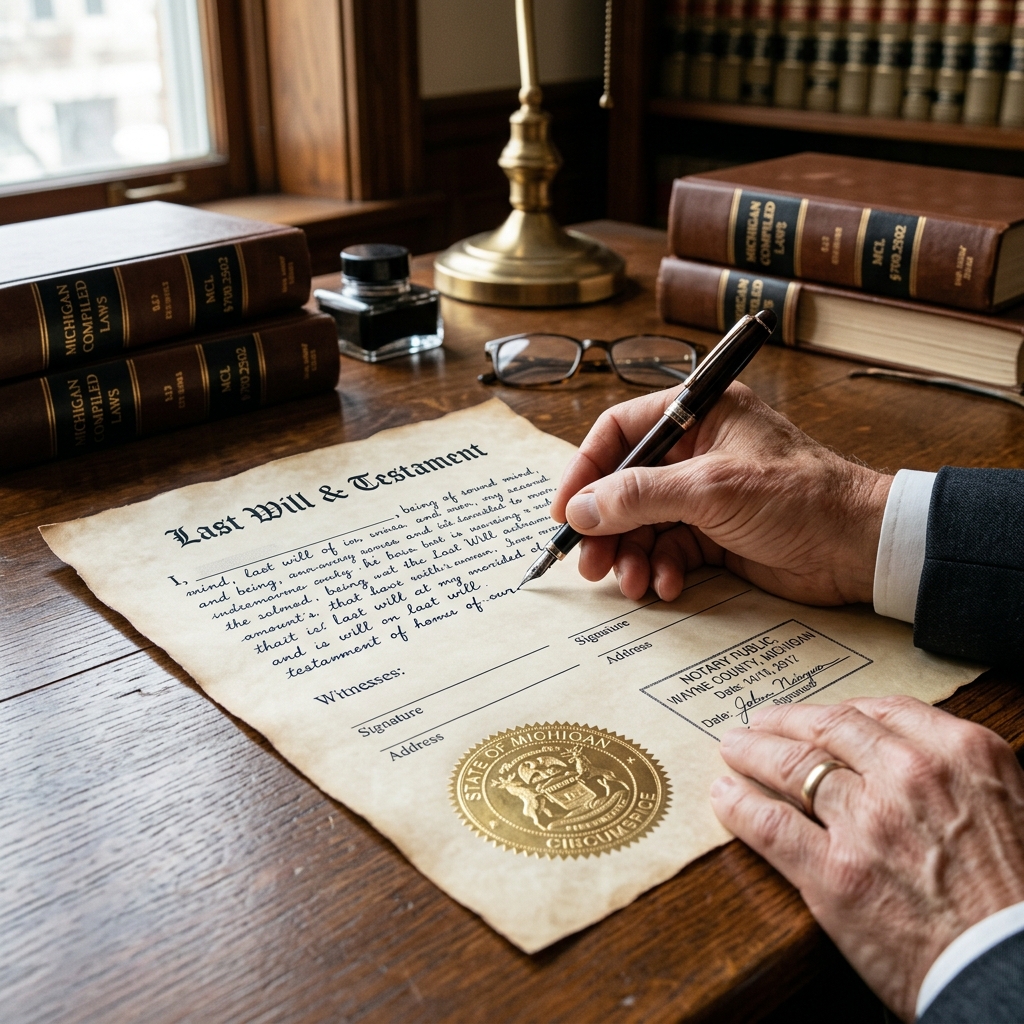
Handwritten wills can be legally effective in Michigan, but only if they satisfy the state’s rules for a holographic will and clearly show that the writer intended the document to serve as a final testament. The well-known dispute involving Aretha Franklin’s estate illustrates how informal documents can trigger years of litigation when they are incomplete, conflicting, or hard to interpret.
Why this issue matters
Many people assume a will must be typed by a lawyer and signed in a formal ceremony to count. Michigan law is more flexible than that in some situations, but flexibility does not mean simplicity. A handwritten document may still be challenged if heirs argue that it was only a draft, a personal note, or an incomplete expression of wishes rather than a binding will.
That distinction matters because probate courts are asked to enforce the decedent’s actual intent, not merely the existence of words on paper. When the wording is unclear or multiple versions exist, family conflict often follows.
What makes a holographic will different?
A holographic will is a will written in the testator’s own handwriting. In many states, including Michigan, such a document can be valid even if it was not witnessed in the traditional way, provided it meets the legal requirements that the state imposes.
The practical appeal is easy to understand. A person may write instructions quickly, without a lawyer, when access to legal help is limited or when circumstances feel urgent. Courts, however, are careful not to treat every handwritten note as a final will. The document still must reflect a genuine testamentary act.
| Feature | Formal will | Handwritten will |
|---|---|---|
| Prepared with legal formality | Usually yes | Not necessarily |
| Witnesses | Typically required | May not be required in holographic form |
| Risk of dispute | Lower if properly executed | Higher if wording is unclear |
| Best use case | Clear, durable estate plan | Emergency or temporary expression of intent |
Michigan’s basic legal test
Michigan generally requires a will to be in writing, signed by the testator or by another person at the testator’s direction in the testator’s presence, and signed by at least two witnesses within a reasonable time after the signing or acknowledgment. A holographic will is treated differently, but it still has to satisfy the state’s separate requirements for such informal testamentary documents.
One core issue is authenticity. The handwritten portions must be shown to be the testator’s own work, and the document must include the material terms of the will in handwriting. The proponent of the will must also show that the testator intended the document to operate as a will.
In practice, that intent requirement is often the hardest part. A note that says who should receive property may still fail if the surrounding circumstances suggest it was only a temporary draft or a set of instructions to be turned into a formal will later.
The Aretha Franklin dispute as a cautionary example
After Aretha Franklin died, multiple handwritten documents were discovered, and they did not all say the same thing. Reports described one 2010 handwritten document and a later 2014 notebook-style document, both of which were found after her death and became the center of a long probate fight among family members.
According to reporting on the case, the 2014 document was eventually found to be valid by a jury, and that verdict later affected how property in the estate was distributed. The controversy shows what can happen when a person leaves behind more than one informal document and does not use a formal estate plan to prevent ambiguity.
That kind of dispute is not unique to celebrities. The same legal problems can arise in ordinary families when a parent, spouse, or adult child leaves several handwritten papers that do not perfectly match one another.
Why handwritten wills often create litigation
Handwritten wills can be contested for several reasons. First, family members may disagree about whether the document was actually intended to be final. Second, the paper itself may be hard to read or incomplete. Third, multiple handwritten documents may appear, each seeming to direct property in a different way.
Another complication is timing. If a handwritten will is found long after death, heirs may question whether the document reflects a serious, considered plan or a temporary note that was never meant to govern the estate. Courts then must sift through testimony, handwriting evidence, and surrounding circumstances to reconstruct intent.
- Unclear handwriting can make interpretation difficult.
- Conflicting versions can create competing claims.
- Missing signatures or dates can weaken the document.
- Extra language may suggest the writing was only a draft.
- Family tension can intensify once a dispute reaches probate court.
When a handwritten will may be enough
A handwritten will may work best when it is complete, clearly signed, and unmistakably intended as a final estate plan. The more a document looks like a finished testament rather than a note to self, the more likely a court is to take it seriously. Supporting details, such as dates and property descriptions, can also help show that the person was making a deliberate final decision.
Still, a valid holographic will is not the same as an ideal estate plan. It may resolve some questions while leaving others open, especially if the writer did not address all assets, named no executor, or failed to account for changing family relationships.
Common mistakes people make
People who rely on handwritten wills often do so to save time or avoid legal fees, but that shortcut can become expensive later. Courts and heirs may spend months or years debating whether the handwriting is authentic, whether the language is complete, and whether the writer meant the document to be final.
Some of the most common mistakes include leaving out the date, failing to sign, writing only partial instructions, or storing the document in a place where no one can find it. Another frequent problem is assuming that a casual note will be treated as a legal will simply because it mentions property and heirs.
How to reduce the chance of a probate fight
The safest option is a properly drafted estate plan that uses clear language and follows the formalities required by state law. For many people, that means a professionally prepared will, and in some cases a revocable trust or other planning tools that reduce uncertainty and protect privacy.
At a minimum, a thoughtful estate plan should do more than list names. It should identify who will serve as executor, explain how major assets should be handled, and be updated whenever major life events occur. Marriage, divorce, births, deaths, and major changes in wealth can all make an old will unreliable.
- Use a formal will when possible.
- Review the document after major life changes.
- Keep copies in a secure but accessible place.
- Tell trusted people where the original is stored.
- Work with counsel if family dynamics are likely to create conflict.
What the law tries to balance
Probate law tries to balance two goals: honoring a person’s actual wishes and preventing fraud or confusion. That is why courts may accept a handwritten will if the evidence is strong enough, but still demand proof that the document was truly meant as a final directive. The law is flexible enough to recognize human reality, yet structured enough to discourage opportunistic claims after death.
That balance explains why cases like Franklin’s attract so much attention. They sit at the intersection of personal autonomy, family conflict, and procedural rules, and they show how much weight a simple page of handwriting can carry once a person is no longer alive to explain it.
Frequently asked questions
Can a handwritten will be valid in Michigan?
Yes, Michigan can recognize a handwritten will if it satisfies the state’s requirements for a holographic will and clearly shows that the testator intended it to operate as a will.
Does a handwritten will need witnesses?
Traditional wills usually require witnesses, but holographic wills are treated differently. Even so, they still must satisfy the legal standards that apply under Michigan law.
Is a handwritten note about property automatically a will?
No. A note may mention property or beneficiaries and still fail if it does not clearly show testamentary intent or does not meet the legal requirements for a holographic will.
Why did Aretha Franklin’s estate end up in court?
Reports describe multiple handwritten documents found after her death, which led family members to dispute which one controlled the estate. A jury later found one of the documents valid under Michigan law.
What is the safest way to avoid this kind of dispute?
The safest approach is a formal estate plan prepared with clear language and regular updates. That reduces ambiguity and lowers the risk of a costly probate contest.
What people can learn from the case
The biggest lesson is not that handwritten wills are useless. It is that informal documents can work only when they are unmistakably final and legally defensible. Where there is any doubt, a formal estate plan provides far more certainty for loved ones left behind.
For families, that certainty often matters more than speed. A few hours spent creating a clear plan can prevent years of uncertainty, preserve relationships, and make it far easier for a court to carry out the person’s wishes.
References
- Aretha Franklin’s Estate: Are Handwritten Documents Valid Wills? — WILaw. 2018-08-22. https://www.wilaw.com/aretha-franklins-estate-handwritten-documents-valid-wills/
- Lessons From Aretha Franklin’s Holographic Will — Church Law & Tax. 2023-07-20. https://www.churchlawandtax.com/stay-legal/clergy-law/aretha-franklins-holographic-will-lessons-for-church-leaders/
- Holographic Will — The Ohio State University Farm Office. 2024-02-14. https://farmoffice.osu.edu/blog-tags/holographic-will
- Judge awards Aretha Franklin’s property to her sons — NPR. 2023-11-29. https://www.npr.org/2023/11/29/1215757780/judge-awards-aretha-franklin-properties-sons-handwritten-will
- Estate Planning Lessons from Aretha Franklin’s Probate Case — Elder Law Center of Brevard. 2025-06-20. https://elderlawcenterbrevard.com/2025/06/20/aretha-franklins-estate-and-proper-estate-planning/
Similar Articles








Read full bio of medha deb


