
Are College Athletes Employees? The Emerging Legal Debate
A deep dive into how courts, regulators, and lawmakers are reshaping the legal status of college athletes in the age of billion‑dollar collegiate sports.
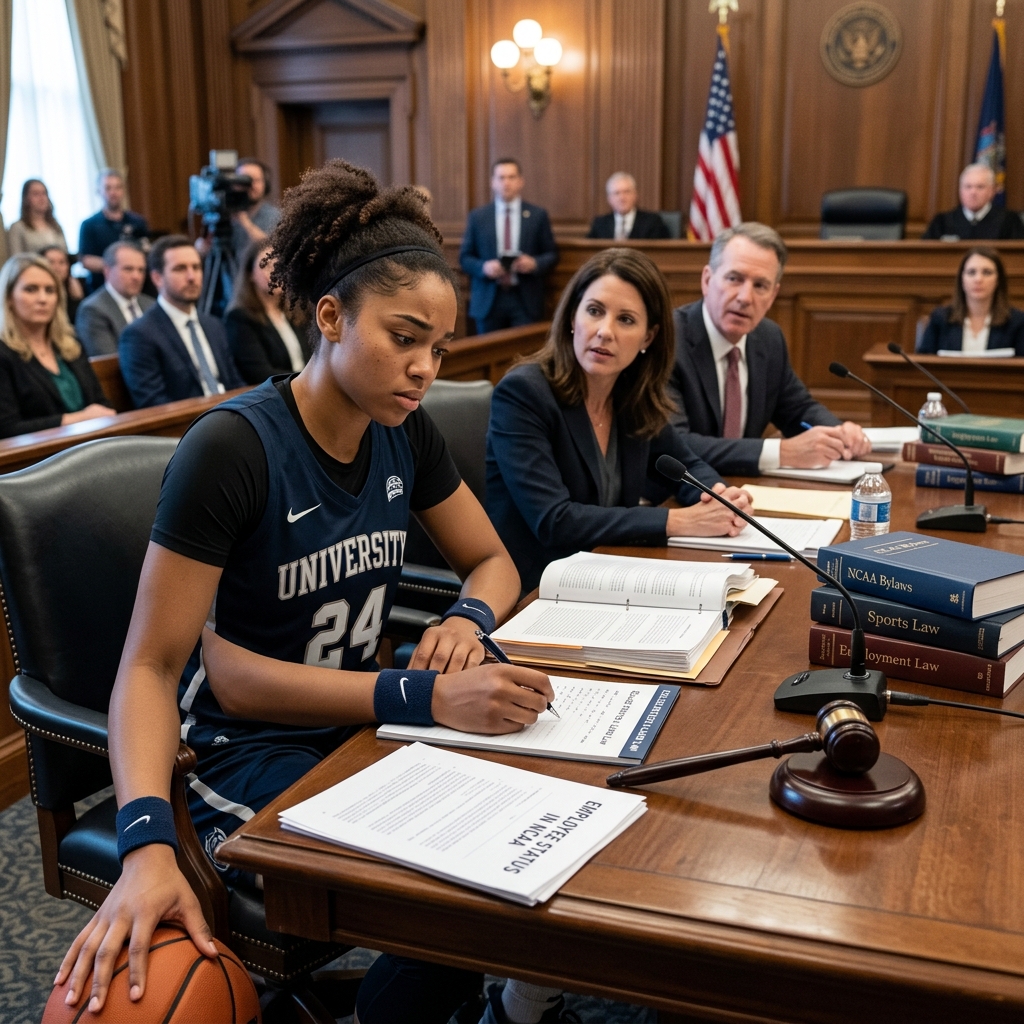
For decades, the phrase student‑athlete has been used to emphasize that college sports are an extension of education, not employment. At the same time, major collegiate programs generate enormous revenues and demand professional‑level time commitments from their athletes. The gap between the amateur label and the commercial reality has now become the focus of intense legal scrutiny, raising a central question: should some college athletes be legally treated as employees?
Recent litigation, regulatory actions, and congressional hearings suggest that the answer may increasingly be yes, at least for certain athletes and certain institutions. This article explains the legal standards courts use, describes why the debate intensified after key cases such as Johnson v. NCAA, and explores what employee status could mean for pay, benefits, and gender equity in college sports.
From Amateur Ideals to Billion‑Dollar Business
The National Collegiate Athletic Association (NCAA) has long defended a vision of amateurism, arguing that players are students first and should not be paid wages for playing. In this model, scholarships, training, and educational opportunities are framed as educational benefits rather than compensation for labor.
That narrative is increasingly difficult to maintain. Division I football and basketball programs now attract massive broadcast contracts and sponsorships, and the NCAA itself has grown into a multi‑billion‑dollar enterprise. At many schools:
- Coaches and athletic directors are among the highest‑paid employees.
- Games are nationally televised and subject to complex media deals.
- Athletes face year‑round training, travel, and media obligations that resemble professional work.
These realities have pushed courts and regulators to ask whether athletes are, in economic terms, more like workers than volunteers, especially when their performance drives institutional revenue.
The Legal Framework: What Counts as an “Employee”?
Under U.S. law, whether a person is an employee depends on the context and the statute being applied. For college athletes, the most important laws in current litigation include:
- Fair Labor Standards Act (FLSA) – Federal law that sets minimum wage and overtime requirements.
- National Labor Relations Act (NLRA) – Governs private‑sector collective bargaining and union rights.
- Title IX – Prohibits sex‑based discrimination in education programs receiving federal funding, including athletics.
- Equal Pay Act and Title VII – Address wage discrimination and employment discrimination more broadly.
Each law uses tests to distinguish employees from students, volunteers, or independent contractors. Courts often rely on an economic realities approach, asking whether the relationship in practice looks like an employer‑employee arrangement, regardless of the label used by the institution.
The Johnson Case: A Turning Point for Athlete Wage Claims
In Johnson v. NCAA, a group of former college athletes brought a lawsuit claiming that they were employees under the FLSA and entitled to unpaid wages. The U.S. Court of Appeals for the Third Circuit allowed their claims to move forward and articulated a detailed test to analyze whether certain athletes can be classified as employees.
Rather than relying solely on older assumptions about amateurism, the court focused on the concrete economic structure of the relationship. This marked a shift from prior decisions in other circuits that had rejected FLSA coverage for athletes based largely on tradition and the idea that college sports were extracurricular.
Johnson’s Four‑Factor Economic Realities Test
The Third Circuit crafted a four‑part test to determine if a college athlete may qualify as an employee under the FLSA:
- Services: Does the athlete perform services for another party (such as a university or the NCAA)?
- Benefit: Are those services necessarily and primarily for that party’s benefit?
- Control: Is the athlete under the party’s control or right to control the manner in which services are performed?
- Compensation or In‑Kind Benefits: Is there express or implied compensation, including in‑kind benefits, in return for these services?
The court stressed that the “cumulative circumstances” of the relationship are decisive: no single factor is dispositive, and the analysis must be grounded in how the program actually operates, not just how it is described.
| Aspect | Johnson Economic Realities Test | Traditional NCAA Amateur Framing |
|---|---|---|
| Primary focus | Actual services, control, and compensation structure | Educational experience and extracurricular participation |
| Services provided | Treated as labor that may directly benefit the institution | Seen as part of holistic student development |
| Compensation | Includes scholarships, in‑kind benefits, and expected rewards | Scholarships viewed as educational aid, not wages |
| Legal outcome | Potential recognition of employee status under FLSA | Maintenance of non‑employee “student‑athlete” status |
Circuit Split and Evolving Judicial Attitudes
Not all federal appellate courts agree that athletes may be employees. Earlier decisions in other circuits had concluded that college athletes are not covered by the FLSA, often relying heavily on the tradition of amateurism and the educational character of sports programs. The Third Circuit’s approach therefore creates a circuit split—different legal standards in different parts of the country.
This split increases the likelihood that the U.S. Supreme Court may eventually address the issue. The Court has already signaled skepticism toward rigid amateurism rules in cases such as NCAA v. Alston, where it allowed schools to provide certain education‑related benefits to athletes and criticized the NCAA’s broad claims of immunity from antitrust law.
Scholars argue that, after Alston, it is harder for the NCAA to rely on tradition alone to justify treating athletes differently from other workers whose labor produces substantial economic value.
Regulators and Lawmakers Enter the Debate
NLRB and Labor Rights
The National Labor Relations Board (NLRB), which oversees private‑sector collective bargaining rights, has also moved toward viewing certain college athletes as employees. In a widely discussed memorandum, the NLRB’s General Counsel stated that some athletes at private universities, particularly in revenue‑generating sports, meet the legal definition of employees under labor law.
If this view is implemented through formal decisions, it could permit athletes at covered schools to unionize and negotiate over wages, hours, and working conditions, much like professional players do through players’ associations.
Congressional Hearings and Proposed Legislation
Congress has also begun examining whether student‑athletes should be treated as employees. A 2024 hearing of the House Subcommittee on Health, Employment, Labor, and Pensions featured testimony both supporting and opposing employee status, highlighting the complexity of the issue.
Key points raised in that hearing included:
- Legal standards for employee classification do not turn on how much revenue an organization earns.
- College athletes are not a monolithic group; the facts of each sport and institution matter.
- Any employment model would likely require individualized assessments rather than automatic classification of all athletes.
Congressional research services have further analyzed Johnson v. NCAA, noting that lawmakers may consider new federal rules to address athlete status, particularly given the growing economic stakes and the potential patchwork of state and federal decisions.
Implications of Employee Status for College Athletes
If courts or lawmakers ultimately classify some college athletes as employees, the consequences would be far‑reaching. Among the most immediate effects:
- Minimum wage and overtime: Athletes could be entitled to hourly pay and overtime under the FLSA, subject to how their work hours are defined.
- Workers’ compensation and safety protections: Injury protections could be strengthened if athletes are recognized as employees rather than students engaged in voluntary extracurricular activity.
- Union representation: At private institutions, NLRA coverage might allow athletes to form unions and negotiate over schedules, health resources, and compensation.
- Tax and benefits implications: Payments and benefits could be treated as wages subject to payroll taxes, potentially affecting scholarship structures and financial planning.
These changes would also affect universities, which would have to manage payroll, compliance, and collective bargaining across sports. Athletic departments might need to redesign rosters, scholarship rules, and competitive structures to align with employment laws.
Title IX, Equal Pay, and Gender Equity Concerns
Recognizing athletes as employees interacts in complex ways with Title IX, which currently plays a central role in ensuring gender equity in college athletics. Title IX requires equal opportunities and treatment for men’s and women’s programs, including areas such as participation slots, facilities, and scholarships.
Legal scholars have argued that, if athletes are treated as employees and paid wages for their work, those payments might fall outside the scope of Title IX’s equal opportunity mandate, because Title IX is currently structured around educational programs rather than employment relationships.
Other employment statutes, such as the Equal Pay Act and Title VII, could then become the primary tools for addressing gender‑based disparities in athlete compensation. This shift raises several questions:
- Would revenue differences between sports justify different pay scales, or would equal work requirements require comparable wages?
- How would courts measure “equal work” across sports with different physical demands and market values?
- Could schools concentrate employment in a few sports, thereby reducing opportunities for athletes in lower‑revenue or emerging women’s sports?
These debates extend beyond law into policy and ethics, challenging institutions to balance financial realities with commitments to educational access and gender fairness.
Not All Athletes, Not All Schools: Individualized Analysis
Courts and policymakers repeatedly emphasize that college athletes are not all similarly situated. A walk‑on player at a small program may have a very different relationship with their school than a scholarship starter in a nationally televised sport.
The Johnson framework anticipates this complexity by requiring an individualized, fact‑specific analysis. Factors that can vary between athletes and programs include:
- The level of control over daily schedules and off‑season activities.
- The extent of commercial revenue tied to the sport.
- Whether scholarships and stipends are contingent on athletic performance.
- The degree to which participation primarily benefits the institution rather than the athlete’s educational development.
Consequently, even if the legal door opens to employee status, it is unlikely that every college athlete nationwide will be automatically classified as an employee. Instead, courts and agencies may draw distinctions based on division, conference, and sport‑specific conditions.
Looking Ahead: Possible Paths for Reform
The future of college athlete status could evolve along several paths:
- Judicial resolution: Supreme Court review of conflicting circuit decisions could impose a nationwide standard for FLSA coverage of athletes.
- Congressional action: Federal legislation could either define athlete status explicitly or create special rules tailored to collegiate sports.
- Regulatory guidance: NLRB and Department of Labor interpretations might clarify how existing statutes apply without new legislation.
- Institutional change: Universities and the NCAA may voluntarily redesign compensation systems, including revenue sharing or expanded benefits, to address fairness concerns and reduce litigation risk.
Whatever path is chosen, the central tension will remain: how to reconcile the educational mission of universities with the realities of a commercial sports environment in which athletes’ performances generate substantial economic value.
Key Takeaways for Athletes, Schools, and Fans
- Courts are increasingly willing to treat some college athletes as potential employees under federal labor and wage laws.
- The Johnson v. NCAA decision introduces a structured test focused on services, benefit, control, and compensation.
- Regulators and lawmakers are actively considering the implications of employee status, including union rights and minimum wage rules.
- Classifying athletes as employees could alter how Title IX applies to compensation, shifting gender equity debates into employment law frameworks.
- Not all athletes will be treated the same; individualized analysis will likely drive future decisions.
Frequently Asked Questions (FAQs)
Do recent court decisions mean all college athletes are now employees?
No. Decisions like Johnson v. NCAA have not declared all athletes to be employees. Instead, they allow wage claims to proceed and provide a test to evaluate athlete status on a case‑by‑case basis.
What practical rights would employee status give college athletes?
Employee status could provide access to minimum wage and overtime protections under the FLSA, potential workers’ compensation coverage, and—at private schools—union rights under the NLRA. It may also bring anti‑discrimination and equal pay protections squarely into play for athlete compensation.
How does the Johnson test differ from earlier approaches?
Earlier cases often relied heavily on the idea of amateurism and treated sports as part of the educational experience. The Johnson test instead examines economic realities—what services athletes provide, who benefits, who controls their work, and what compensation or in‑kind benefits they receive.
Could recognizing athletes as employees reduce opportunities in non‑revenue sports?
Some critics argue that paying athletes wages could pressure schools to focus resources on high‑revenue sports, potentially affecting funding and roster sizes in other programs. Supporters counter that thoughtful regulation and institutional planning can protect broad participation while addressing exploitation concerns.
What role does Congress play in resolving this issue?
Congress can enact legislation to clarify whether and when college athletes are employees under federal law, or create tailored rules specific to collegiate sports. Congressional hearings and research reports already indicate significant interest in shaping the legal framework for athlete status.
References
- Third Circuit Allows College Athletes’ Claim for Wages to Move Forward — Congressional Research Service. 2024-09-24. https://www.congress.gov/crs-product/LSB11223
- Third Circuit Affirms College Athletes May Qualify as Employees Under FLSA — Husch Blackwell (HR Law Watch). 2024-07-17. https://www.hrlawwatch.com/2024/07/17/third-circuit-affirms-college-athletes-may-qualify-as-employees-under-flsa/
- College Athletes As Employees: Implications for Title IX and Unequal Pay — The University of Chicago Law Review Online. 2024-10-10. https://lawreview.uchicago.edu/online-archive/college-athletes-employees-implications-title-ix-and-unequal-pay
- Johnson v. NCAA: Student-Athlete Employment Status in the Third Circuit — Venable LLP. 2025-01-15. https://www.venable.com/insights/publications/2025/01/johnson-v-ncaa-student-athlete-employment
- College Athlete Employment Status After Johnson and House — OnLabor (Harvard Law School Program on Labor and Worklife). 2025-02-03. https://onlabor.org/college-athlete-employment-status-after-johnson-and-house/
- The Path to Employee Status for College Athletes Post-Alston — Vanderbilt Journal of Entertainment & Technology Law. 2022. https://scholarship.law.vanderbilt.edu/jetlaw/vol24/iss4/4/
- Congress Weighs Pros, Cons of Calling Student-Athletes Employees — Society for Human Resource Management (SHRM). 2024-04-15. https://www.shrm.org/topics-tools/employment-law-compliance/congress-weighs-pros-cons-of-calling-student-athletes-employees
Similar Articles








Read full bio of Sneha Tete




