
Alaska Vehicle Collision Regulations: Comprehensive Guide 2025
Essential guide to Alaska's rules on car crashes, insurance mandates, fault rules, and victim compensation pathways.
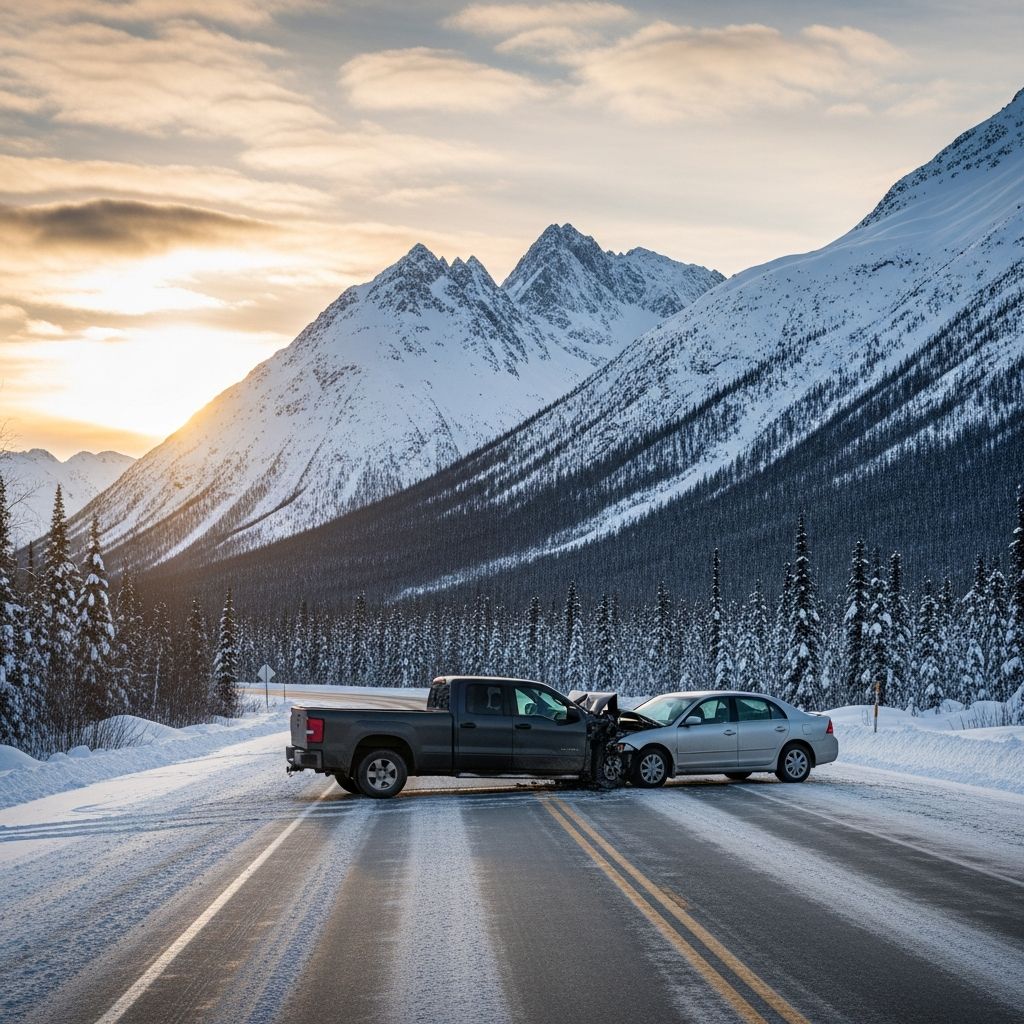
Vehicle collisions in Alaska demand swift adherence to state-specific protocols to safeguard rights and facilitate recovery. This guide details legal obligations, fault assessment, insurance frameworks, and compensation mechanisms under Alaska law.
Core Legal Duties Following a Collision
Drivers involved in any crash must prioritize safety and compliance immediately. Alaska mandates stopping at the scene, particularly when injuries, fatalities, or property damage occur. Provide personal details including name, address, and vehicle license to all parties involved, and offer reasonable aid such as arranging medical transport if needed.
Notification to authorities is required via the quickest communication method for incidents causing injury, death, or substantial property loss. If no police investigation ensues, submit a detailed written report within 10 days using the SR-13 form to the DMV, applicable for damages exceeding $2,000, injuries, or deaths. Non-compliance constitutes a misdemeanor, potentially leading to fines up to $200, up to 90 days imprisonment, or license suspension.
Reports filed under these rules cannot serve as evidence in civil or criminal proceedings, protecting honest disclosures. Vehicle owners must file if the driver is incapacitated. Rural exemptions may apply to insurance but not core reporting duties.
Mandatory Insurance Coverage Standards
Alaska enforces minimum liability insurance: $50,000 bodily injury per person, $100,000 per accident for bodily injury or death, and $25,000 property damage per accident. Uninsured/underinsured motorist coverage supplements claims against insufficiently covered at-fault drivers per AS 28.22.201.
These thresholds ensure financial accountability. Failure invites penalties including license suspension. Victims can pursue their policy’s uninsured motorist benefits if the responsible party lacks adequate coverage. Certain remote areas hold insurance exemptions, but standard mandates prevail statewide.
Fault Determination: Pure Comparative Negligence Framework
Alaska employs pure comparative negligence, allocating fault percentages without barring recovery if over 50% responsible. Compensation reduces proportionally; 20% fault yields 20% damage deduction.
Insurers often contest fault citing distractions, weather, or speed. Key evidence includes police reports noting officer insights, witness accounts, impact damage photos, and black box data. This system promotes equitable resolutions reflecting true causation.
| Fault Percentage | Damage Recovery Example ($100,000 Total) |
|---|---|
| 0% | $100,000 |
| 30% | $70,000 |
| 49% | $51,000 |
| 51%+ | $0 (No Recovery) |
This table illustrates reduction mechanics under pure comparative rules.
Time Constraints for Legal Action
The statute of limitations mandates filing personal injury or property damage suits within two years from the incident date per AS 09.10.070. Wrongful death claims follow a parallel two-year window from fatality under AS 09.55.580.
Out-of-state defendants toll the period during absence. Missing deadlines typically bars claims, though exceptions like discovery rules may extend marginally—consult counsel promptly. Nationwide, Alaska aligns with many states’ two-year norm.
Documenting and Proving Crash-Related Harm
Post-collision, summon emergency services even for minor impacts, as delayed symptoms like whiplash emerge later. Medical records establish causation links essential for claims.
- Photograph scene, vehicles, injuries comprehensively.
- Collect witness contacts and statements.
- Obtain police report for official narrative.
- Track all treatments, bills, wage losses.
- Retain expert reconstructions if disputed liability.
These steps fortify negotiations or litigation, countering adjuster minimizations.
Categories of Recoverable Compensation
Victims seek compensatory damages covering tangible and intangible losses:
- Economic: Medical expenses, repairs, lost income, future care.
- Noneconomic: Pain, suffering, emotional distress, life quality loss.
- Punitive: Rare, for egregious recklessness like DUI impairment.
Alaska imposes noneconomic caps: $400,000 or total economic damages x5 (whichever greater) absent permanent impairment/disfigurement. Severe cases elevate to $1,137,000 (inflation-adjusted) or economic x5. No economic caps exist.
Navigating Insurance Settlements
Adjusters aim for lowball offers pre-litigation. Strategies include:
- Delay signing releases until full recovery assessment.
- Demand policy limits if liabilities exceed.
- Use attorney letters preserving evidence.
- Counter with detailed damage computations.
Professionals leverage negotiations yielding higher payouts via proven tactics.
Prevalent Injury Types and Evidence Needs
Collisions inflict:
- Soft tissue: Whiplash, strains.
- Fractures, TBI from impacts.
- Spinal, internal via deceleration.
- PTSD, chronic pain lingering.
Document via MRIs, specialist notes, wage verifications. Quantify pain via daily impacts. Alaska’s harsh weather amplifies severity.
Role of Legal Counsel in Recovery
Attorneys manage complexities: investigations, insurer battles, court filings. They maximize values, especially under comparative rules or caps. Initial consultations often free; contingency fees align incentives. For Anchorage-area crashes on highways or streets, local expertise navigates nuances.
Frequently Asked Questions
What insurance minimums apply in Alaska?
$50K/person, $100K/accident bodily injury; $25K property.
How long to file a lawsuit after a crash?
Two years from injury date.
Does partial fault prevent compensation?
No, pure comparative reduces award by fault share.
Must I report minor accidents?
Yes, if damages >$2,000, injury, or death—within 10 days.
Are noneconomic damages capped?
Yes, $400K base or 5x economic; higher for permanency.
Preventive Insights from Safety Data
Alaska reports rising speeding fatalities, underscoring caution on icy roads. Compliance averts legal pitfalls.
(Word count: 1678)
References
- Reliable Car Crash Attorney in Anchorage, AK for Accident Claim — BFQ Law. 2024. https://bfqlaw.com/car-crash-attorney-in-anchorage-alaska-a-comprehensive-guide-to-legal-representation-and-claims/
- Alaska Car Accident Statute of Limitations — Crowson Law Group. 2024. https://www.crowsonlaw.com/auto-accidents/alaska-personal-injury-statute-limitations/
- Alaska Car Accident Laws — Nolo. 2024. https://www.nolo.com/legal-encyclopedia/alaska-car-accident-laws.html
- Financial Responsibility and Mandatory Insurance — Alaska Bar Association. 2024. https://alaskabar.org/youth/cars-and-weapons/driving-in-alaska/financial-responsibility-and-mandatory-insurance/
- Three Alaska Car Accident Laws Every Victim Should Know — AK Power Law. 2021-03-31. https://akpowerlaw.com/blog/2021/03/31/three-alaska-car-accident-laws-every-victim-should-know/
- Alaska Highway Safety Plan FY24-26 — Alaska DOT. 2024. https://dot.alaska.gov/dmio/hwysafety/assets/pdf/AKDOT_FY24-26_3HSP.pdf
Similar Articles








Read full bio of medha deb


