
YouTube’s COPPA Case: What the $170M Fine Really Means
How Google and YouTube’s record COPPA settlement reshaped online advertising, child data protection, and platform compliance rules.
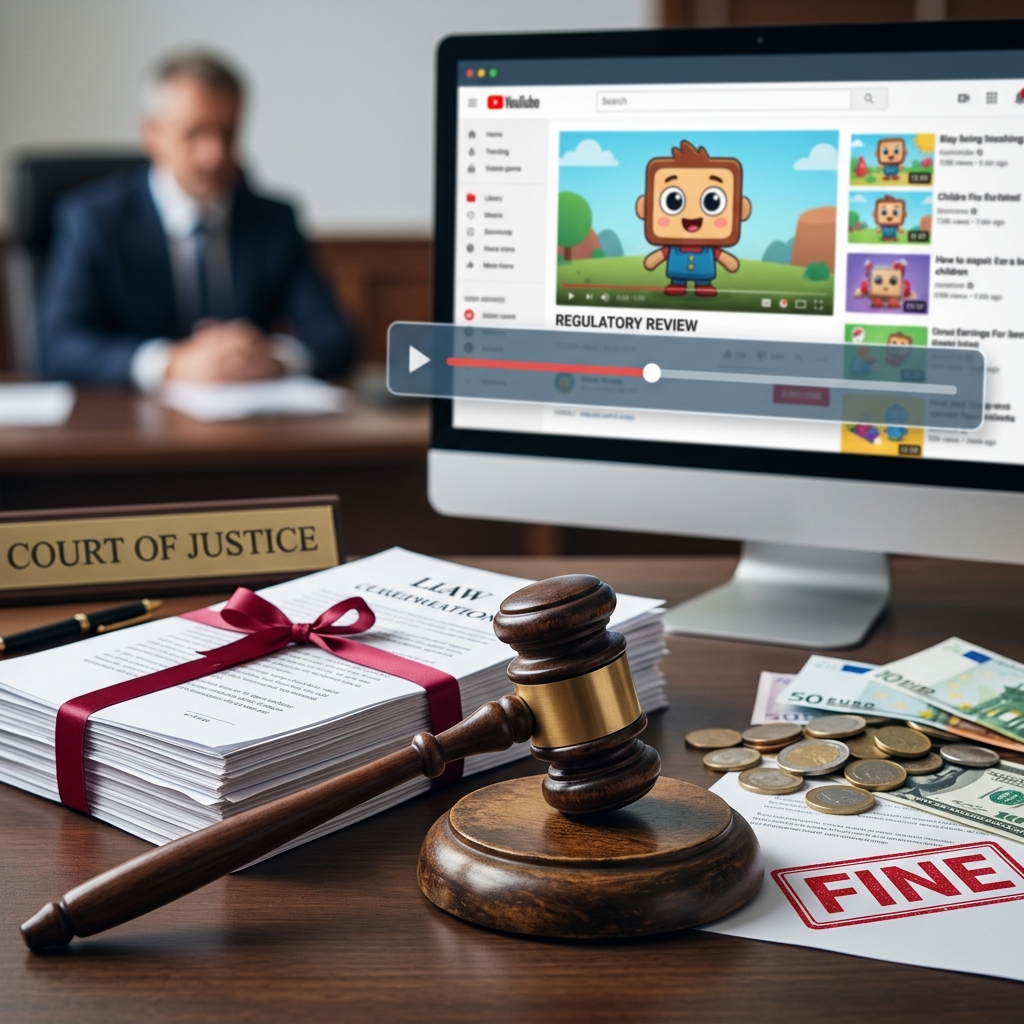
Google’s video platform YouTube agreed to pay a record $170 million to resolve allegations that it violated U.S. children’s privacy law by collecting data from kids under 13 without parental consent. The case, brought by the Federal Trade Commission (FTC) and the New York Attorney General, has become a landmark in how online platforms treat data from young users.
This article explains what happened, why regulators stepped in, what changes YouTube had to make, and how the case affects parents, advertisers, and content creators.
Background: Children’s Privacy Rules on the Internet
The key law at the center of the case is the Children’s Online Privacy Protection Act (COPPA), a U.S. federal statute that governs how websites and online services handle personal information from children under 13. COPPA requires child‑directed services to:
- Provide clear notice of their data collection practices for children.
- Obtain verifiable parental consent before collecting, using, or disclosing a child’s personal information.
- Limit data collection to what is reasonably necessary for the service.
- Maintain reasonable security for the data they collect.
Under COPPA, personal information includes identifiers such as cookies or device IDs when they are used to track users over time and across websites for purposes like targeted advertising.
What Regulators Alleged Against Google and YouTube
According to the FTC and the New York Attorney General, YouTube positioned itself to advertisers as a leading destination for children while at the same time claiming publicly that YouTube was intended for users aged 13 and older.
Authorities alleged that:
- YouTube knowingly attracted and hosted videos specifically aimed at children under 13, including content featuring familiar kids’ characters and toys.
- The platform collected persistent identifiers (like cookies) from viewers of this child‑directed content without first obtaining parental consent.
- These identifiers were then used for behavioral advertising—serving targeted ads based on users’ online activity over time.
- YouTube profited from this data‑driven ad targeting, even though collecting such data from children without parental permission violates COPPA.
The investigation found that this was not a marginal practice. Regulators described it as systematic tracking and targeted advertising on content clearly aimed at young children.
The $170 Million Settlement: How the Money Was Allocated
The September 2019 settlement required Google and YouTube to pay a combined $170 million in penalties.
| Recipient | Amount | Role in the Case |
|---|---|---|
| Federal Trade Commission (FTC) | $136 million | Lead federal regulator enforcing COPPA rules. |
| New York State | $34 million | State enforcement by the New York Attorney General. |
| Total | $170 million | Largest COPPA penalty ever obtained. |
The FTC described the $136 million portion as the largest amount it had ever obtained in a COPPA case since the law was enacted in 1998. New York officials also framed the settlement as one of the largest privacy settlements in U.S. history.
Changes YouTube Was Required to Make
Beyond the monetary penalty, the settlement included extensive compliance obligations. Regulators focused on making sure child‑directed content could be identified and treated differently from other videos.
New System to Label Child‑Directed Content
YouTube agreed to build and maintain a system that allows channel owners to indicate whether their videos are made for children. This labelling is critical because it determines whether COPPA protections apply. Under the settlement, YouTube must:
- Provide a mechanism for uploaders to mark content as directed at children.
- Inform creators that child‑directed content is subject to COPPA requirements.
- Use additional methods (including automated tools) to help identify content clearly targeting young audiences.
For videos flagged as child‑directed, YouTube committed to limiting data collection and disabling certain features that rely on personal information, such as personalized ads.
Restrictions on Data Collection and Targeted Ads
A key reform was YouTube’s commitment to treat data from anyone watching children’s content as though it comes from a child, regardless of the viewer’s actual age. In practical terms, this means:
- No behavioral advertising based on viewing history for child‑directed videos.
- Limiting data collection to what is necessary to operate the service.
- Not using personal information previously collected from children for targeted advertising going forward.
YouTube also stated publicly that it would stop serving personalized ads on children’s videos and shift to more privacy‑preserving formats.
Compliance Programs and Staff Training
The settlement required structural changes inside Google and YouTube to reduce the risk of future violations. These include:
- Providing annual COPPA compliance training to employees who manage relationships with channel owners.
- Implementing internal procedures to review and oversee child‑directed content and advertising practices.
- Obtaining verifiable parental consent before collecting, using, or disclosing personal information from children in any context covered by COPPA.
These obligations are designed to embed privacy considerations into YouTube’s ongoing operations rather than treating them as a one‑time fix.
Why the Case Matters: Broader Implications
The YouTube settlement is more than a single enforcement action. It reshaped expectations for how major platforms handle children’s data and clarified that regulators are willing to impose substantial penalties for non‑compliance.
Signal to Tech Platforms
The scale of the fine and the highly public nature of the settlement sent a message to the broader technology industry:
- Platforms that host child‑directed content must actively manage and police data collection, not simply disclaim that their services are “not for children.”
- Behavioral ad targeting that depends on tracking younger users is a high‑risk practice from a regulatory perspective.
- Regulators expect concrete technical and organizational measures, not only policy statements.
Other platforms offering kid‑friendly content or games have faced COPPA scrutiny as well, and the YouTube case has become a benchmark for evaluating compliance programs.
Effects on Creators and Advertising Revenue
For YouTube creators, especially those who produce kids’ entertainment, the settlement changed the economic landscape. While the agreement itself is between regulators and YouTube, the platform’s response affected creators by:
- Reducing access to personalized ad revenue on children’s content.
- Restricting features such as comments and notifications on child‑directed videos to enhance safety and privacy.
- Introducing stricter rules around labelling videos as “made for kids,” with potential enforcement for mislabeling.
These changes aimed to align the platform’s business model with COPPA’s requirements but also forced many channels to rethink how they monetize children’s content.
Implications for Parents and Guardians
From a parent’s perspective, the settlement underscores how children’s data can be used in sophisticated advertising systems. The case highlighted that:
- Even seemingly harmless kids’ videos can be tied into extensive tracking networks.
- Privacy protections often depend not only on individual behavior but also on platform‑level controls.
- Regulatory enforcement can help shift industry practices when individual consent models are difficult to implement.
The reforms pushed YouTube to limit data collection on children’s content by default, reducing the burden on parents to constantly monitor consent mechanisms.
Key Legal Concepts Explained Simply
Two legal concepts are central to understanding the YouTube COPPA case: “child‑directed content” and “personal information”.
What Counts as Child‑Directed Content?
Regulators consider a range of factors when deciding whether content is directed to children. These include:
- Use of animated characters or kids’ celebrities.
- The presence of child‑oriented activities (such as toy unboxing or nursery rhymes).
- Language, music, and visual style appealing primarily to under‑13 audiences.
- Marketing materials that describe the content as suitable or designed for children.
If content is child‑directed, COPPA standards apply regardless of the uploader’s stated intent.
How Online Identifiers Become “Personal”
In a modern advertising ecosystem, seemingly technical data like cookies or device IDs become personal information when they are used to recognize a user across time and multiple sites. This allows advertisers to build profiles and target ads based on previous behavior.
COPPA treats these persistent identifiers as personal information when used for anything beyond basic operations (for example, analytics necessary to run the site). Using them to track children for ad targeting requires parental consent.
Comparing COPPA Enforcement: Why YouTube Stands Out
YouTube’s penalty dwarfed prior COPPA cases, which were typically in the millions rather than hundreds of millions of dollars. By way of comparison, an earlier enforcement action against the operator of the TikTok platform resulted in a $5.7 million civil penalty—then a record COPPA fine, later surpassed by the YouTube settlement.
This escalation reflects a few factors:
- YouTube’s scale as one of the world’s largest online video platforms.
- The depth and duration of the alleged data collection from children.
- The significant revenue associated with targeted advertising around popular kids’ content.
For regulators, a larger penalty matched the size of the company and the scope of the alleged violations.
Practical Takeaways for Different Audiences
For Parents
- Use dedicated children’s apps or profiles where available, which often come with stronger privacy defaults.
- Discuss with children what it means to share information online and why some videos are treated differently.
- Review platform settings periodically, as companies may update privacy controls in response to cases like this.
For Creators
- Understand how your platform defines and enforces rules for child‑directed content.
- Be accurate when labeling videos, as misclassification can trigger enforcement or loss of features.
- Plan for revenue models that do not depend solely on personalized ads if you focus on content for kids.
For Businesses and Developers
- Design services with children’s privacy in mind from the outset, especially if your product may appeal to younger audiences.
- Map out what data you collect, how it is used, and whether any portion relates to users under 13.
- Implement transparent notices and mechanisms for parental consent where applicable.
Frequently Asked Questions (FAQ)
1. What law did YouTube allegedly violate?
The case centered on the Children’s Online Privacy Protection Act (COPPA), a U.S. federal law that regulates online collection of personal information from children under 13.
2. Why was the fine so large?
Regulators argued that YouTube knowingly collected data from children on a massive scale and used it to power targeted advertising around kids’ content, generating significant revenue. The $170 million penalty was intended to reflect the scale of the violations and to serve as a deterrent for similar conduct.
3. Did YouTube admit wrongdoing?
As is common in such settlements, Google and YouTube agreed to pay the fine and implement reforms without undergoing a full trial. The settlement resolves the allegations but focuses primarily on forward‑looking compliance measures rather than formal admissions of liability.
4. What changes will viewers actually notice?
On child‑directed videos, viewers may see fewer personalized ads and different platform features. Some interactive elements, such as comments and personalized recommendations, can be limited or removed to reduce data collection from children.
5. Does COPPA apply outside the United States?
COPPA is a U.S. law, but many large platforms operate globally and adopt uniform or similar protections for practical and legal reasons. Other jurisdictions, especially in Europe, rely on separate frameworks such as the General Data Protection Regulation (GDPR) to regulate children’s data.
6. Could similar cases happen again?
Yes. As children use more online services, regulators continue to scrutinize how companies collect and monetize their data. The YouTube settlement provides a template, but it is unlikely to be the last significant enforcement action involving children’s privacy.
References
- Google Is Fined $170 Million for Violating Children’s Privacy on YouTube — The New York Times. 2019-09-04. https://www.nytimes.com/2019/09/04/technology/google-youtube-fine-ftc.html
- Google and YouTube Will Pay Record $170 Million for Alleged Violations of Children’s Privacy Law — Federal Trade Commission. 2019-09-04. https://www.ftc.gov/news-events/news/press-releases/2019/09/google-youtube-will-pay-record-170-million-alleged-violations-childrens-privacy-law
- Google and YouTube Pay Record $170 Million Fine for Allegedly Violating Children’s Privacy Law — Paul, Weiss, Rifkind, Wharton & Garrison LLP. 2019-09-11. https://www.paulweiss.com/insights/client-memos/google-and-youtube-pay-record-170-million-fine-for-allegedly-violating-children-s-privacy-law-in-settlement
- YouTube fined $170m in US over children’s privacy violation — BBC News. 2019-09-04. https://www.bbc.com/news/technology-49578971
- AG James: Google and YouTube to Pay Record Figure for Illegally Tracking and Collecting Personal Information from Children — New York Attorney General. 2019-09-04. https://ag.ny.gov/press-release/2019/ag-james-google-and-youtube-pay-record-figure-illegally-tracking-and-collecting
- YouTube fined $170 million for violating kids’ privacy law — PBS NewsHour / Associated Press. 2019-09-04. https://www.pbs.org/newshour/economy/youtube-fined-170-million-for-violating-kids-privacy-law
Similar Articles








Read full bio of Sneha Tete


