
Your Rights and Responsibilities in a Colorado Traffic Stop
Understand what police can and cannot do at Colorado traffic stops, and how to protect your rights without escalating the situation.
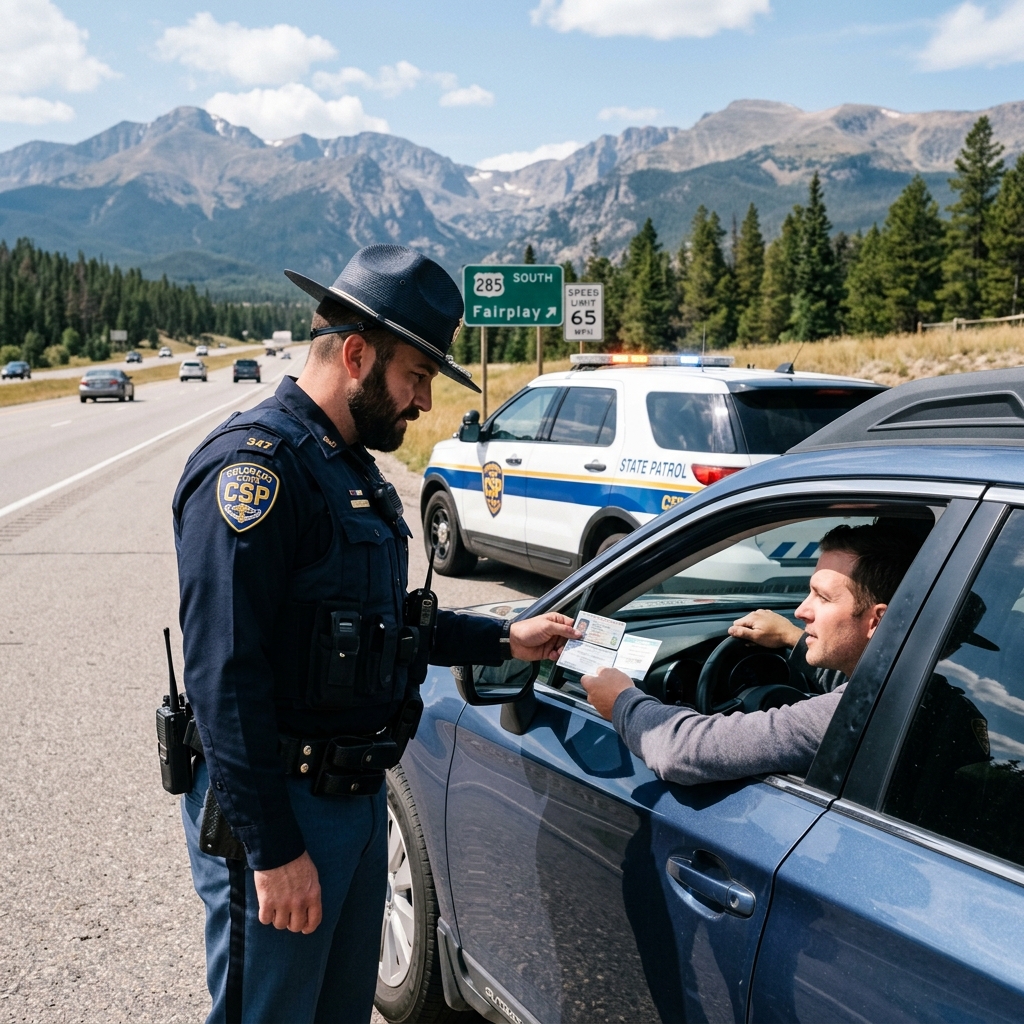
Being pulled over by law enforcement can be stressful and confusing, but understanding your rights and obligations during a Colorado traffic stop can greatly reduce the risk of legal problems and unsafe encounters. This guide explains what officers are allowed to do, what you must do as a driver, and how to assert your rights respectfully and effectively.
Why You Can Be Stopped: The Legal Basis
In Colorado, police may stop a vehicle only when they have a legally recognized reason to do so. Two important concepts govern traffic stops:
- Reasonable suspicion: An officer must have specific, articulable facts suggesting you committed a traffic infraction or are involved in a crime.
- Probable cause: A higher standard, meaning there is a reasonable belief that evidence of a crime will be found, such as contraband in your vehicle.
Colorado law restricts officers from detaining you longer than necessary to complete the purpose of the stop unless they have additional grounds to suspect a crime is occurring. This limitation helps prevent arbitrary or excessively long detentions.
Immediate Steps When You See Police Lights
How you react in the first moments of a stop can affect both safety and the officer’s perception of you. Take the following steps calmly and promptly:
- Use your turn signal and move safely to the right-hand side of the road.
- Slow down smoothly without braking so hard that the police vehicle must react abruptly.
- Stop in a place where the officer can approach your vehicle without standing in fast-moving traffic, if reasonably possible.
- Once stopped, remain inside the vehicle unless instructed otherwise.
These actions demonstrate cooperation and help minimize safety risks to you, the officer, and other motorists.
Documents You Must Provide
Regardless of the reason for the stop, Colorado drivers have certain mandatory obligations. When an officer lawfully stops your vehicle, you are required to present specific documents upon request.
- Driver’s license – proof that you are legally allowed to drive.
- Vehicle registration – showing ownership or authorized use of the vehicle.
- Proof of insurance – evidence of valid insurance coverage, as required by Colorado law.
Refusing to provide these documents can lead to additional legal consequences, separate from the original reason for the stop.
Your Right to Remain Silent
Colorado drivers and passengers have a strong constitutional right to remain silent during a traffic stop, beyond basic identifying information.
Key points regarding silence include:
- You generally are not required to answer questions about where you are going, where you have been, or what you were doing.
- To assert your right, clearly state something like: “I do not wish to answer any questions” or “I choose to remain silent”.
- Except where a valid “stop and identify” law applies to your identity, you can decline to answer further investigative questions.
- Silence is not an admission of guilt and cannot be used against you in court as evidence that you committed an offense.
Officers may continue to ask questions, but you may repeat your assertion of silence as needed.
Requests Versus Commands: Knowing the Difference
During a traffic stop, officers may use both requests and orders. Understanding the distinction helps you decide when you may legally refuse and when you must comply.
| Type of Statement | Example Phrase | Do You Have to Comply? |
|---|---|---|
| Request | “Would you mind answering a few questions?” | No, you may politely decline. |
| Request | “Do you mind if I look in your car?” | No, you can refuse consent to a search. |
| Command | “Stop” / “Stay in the car” / “Step out of the vehicle” | Yes, you must obey lawful commands. |
| Command | “Hand me your license and registration” | Yes, you must provide required documents. |
If you are uncertain whether the officer is making a request or giving a command, you may calmly ask: “Am I required to do that?” or “Am I free to leave?”
Leaving the Vehicle: When You Must Step Out
Under Colorado law, if an officer lawfully stops you, they may instruct you and your passengers to exit the vehicle, and you generally do not have a right to refuse.
- Officers may order you out for safety reasons or investigative purposes.
- Failure to comply with a lawful order to exit can result in physical removal from the vehicle or additional charges.
- If told to exit, do so slowly, keep your hands visible, and close the door unless the officer instructs otherwise.
Keeping your movements calm and predictable reduces tension and potential misunderstandings.
Searches of Your Vehicle: When You Can Say No
Search and seizure protections apply strongly during traffic stops. Officers may not freely search your vehicle without legal justification.
In general, a vehicle search is lawful only if one of the following applies:
- Your consent – you say yes to a search, which you are never required to do.
- Probable cause – officers reasonably believe evidence of a crime is present, such as the smell of illegal drugs or visible contraband.
- Warrant – a judge has authorized a search of the vehicle, often in connection with an ongoing investigation.
You have a clear right to refuse a consent-based search. If an officer asks to search your vehicle, you may respond with a firm but respectful statement, such as:
- “I do not consent to a search of my car.”
Refusing consent does not create probable cause and does not imply guilt. If the officer proceeds anyway, remain calm, do not physically interfere, and note the details of the encounter. Any unlawful search can later be challenged in court.
How Long Can the Stop Last?
Colorado law limits how long officers may detain you for a traffic matter. The detention must not extend beyond the time reasonably necessary to complete the purpose of the stop, such as issuing a citation or verifying documents.
Once the original reason has been addressed, officers need new reasonable suspicion or probable cause to continue holding you or expanding the investigation. Without that, you should be allowed to leave.
Recording a Colorado Traffic Stop
Recording police can provide an objective account of what happened and may be legally important later. In Colorado, individuals generally have the right to visually and audibly record police officers performing their duties in public.
- You may video record the stop using a phone or dashcam, as long as you do not interfere with police activity.
- You may audio record conversations with officers when you are present and visible; secretly recording from hiding may violate state law.
- Officers may object if recording hinders their work or creates safety concerns, but they cannot lawfully seize or delete recordings without legal authority.
If you choose to record, inform the officer calmly, keep the device in a safe and visible position, and do not make sudden movements.
Interacting Respectfully While Asserting Your Rights
Exercising your rights does not require hostility. In fact, remaining polite often leads to better outcomes.
- Keep your hands visible, such as on the steering wheel, and avoid reaching into pockets or bags without notifying the officer.
- Speak in a calm, neutral tone; avoid arguing, raising your voice, or making threats.
- Use respectful language when declining a search or asserting silence, such as “with respect” or “I prefer not to”.
- If you disagree with the officer’s actions, note your concerns and consult an attorney afterward, rather than resisting on the roadside.
Passengers’ Rights During a Colorado Traffic Stop
Passengers have rights similar to drivers, though they are not responsible for producing driving documents.
- Passengers may assert the right to remain silent and decline to answer investigative questions.
- If officers have lawful grounds, they may order passengers to exit the vehicle for safety reasons.
- Passengers may be subject to a brief detention while the stop is underway but cannot be held indefinitely without independent suspicion or probable cause.
After the Stop: When to Seek Legal Help
Some stops end with a warning or citation; others may lead to searches, arrests, or ongoing investigations. If you believe your rights were violated, consult a qualified Colorado attorney as soon as possible.
Legal counsel can help you:
- Challenge the basis of the stop if there was no valid reasonable suspicion.
- Seek suppression of evidence obtained through unlawful searches or prolonged detentions.
- Evaluate whether officers complied with constitutional and state-law requirements during the encounter.
Frequently Asked Questions (FAQs)
Can an officer ask me if I know why I was stopped?
Colorado has considered limiting certain questioning practices so that officers inform drivers of the reason for the stop rather than asking if they “know” why they were stopped. Regardless, you are not required to speculate or admit wrongdoing. You may simply listen to the officer’s explanation or assert your right to remain silent about details.
Do I have to identify myself?
Colorado is a “stop and identify” state in certain circumstances. If an officer reasonably suspects you are committing, have committed, or are about to commit a crime, they may require you to provide your name and some identifying information. However, officers are restricted from requesting your Social Security number during a traffic stop.
What if I think the officer is not really law enforcement?
If you are concerned about whether the person who stopped you is an officer, you may request to see official photo identification and a badge. You may also ask that a supervisor come to the scene or that you drive to a nearby police station, if this can be done safely and with the officer’s agreement.
Is it a good idea to argue about the ticket at the roadside?
Arguing about a citation during the stop rarely changes the outcome and can escalate the situation. It is usually safer to accept the ticket calmly and later challenge it in court if you believe it was issued improperly.
Can officers pat me down during a traffic stop?
If officers reasonably suspect you may be armed and dangerous, they may perform a limited pat-down for weapons, even without consent. This “frisk” is narrower than a full search and must be justified by specific safety concerns.
References
- Know Your Rights During a Colorado Traffic Stop — Super Lawyers. 2023-05-01. https://www.superlawyers.com/resources/traffic-violations/colorado/know-your-rights-during-a-colorado-traffic-stop/
- Understanding Search and Seizure Rights During Traffic Stops in Colorado — Juba Law Office. 2022-11-10. https://jubalawoffice.com/search-and-seizure-rights-during-traffic-stops-in-colorado/
- What Are My Rights if I Am Pulled Over? — Michael T. Kossen, P.C. 2021-08-15. https://www.michaeltkossenpc.com/What-Are-My-Rights-if-I-Am-Pulled-Over
- If You Are Stopped for a Traffic Matter — Criminal Lawyer Colorado. 2020-04-20. https://www.criminal-lawyer-colorado.com/your-legal-rights/if-you-are-stopped-for-a-traffic-matter.html
- Tips for Interacting with Police in Colorado — University of Colorado Boulder Student Legal Services. 2023-02-01. https://www.colorado.edu/studentlegal/tips-interacting-police-colorado
- Stopped by Police: Know Your Rights — American Civil Liberties Union (ACLU). 2022-06-01. https://www.aclu.org/know-your-rights/stopped-by-police
- HB25-1243 Peace Officer Questions During Traffic Stop — Colorado General Assembly. 2025-01-15. https://leg.colorado.gov/bills/hb25-1243
Similar Articles








Read full bio of Sneha Tete


