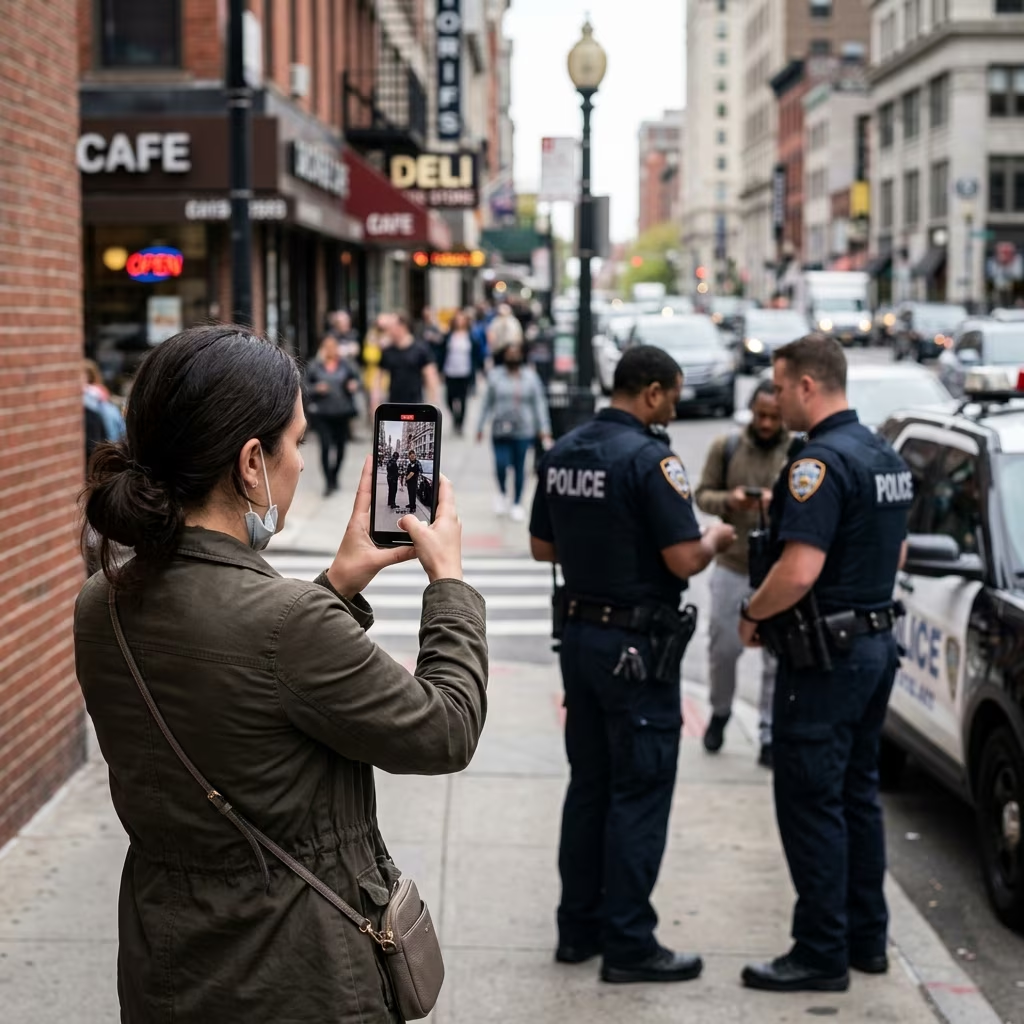
Filming and photographing police officers in public is more than a modern habit—it is a legally protected form of public oversight and free expression. Recording official conduct helps document what happens in real time, informs public debate, and can become critical evidence when rights are violated.
This guide explains the legal foundations of your right to record, where that right applies, what limits you must respect, and how to protect yourself and your footage if you encounter law enforcement while using a camera or phone.
Why Recording Police Matters in a Free Society
In the United States, the ability to observe and criticize government officials is central to a free and democratic society. Courts and civil liberties organizations recognize that capturing images and video of police on duty is a way for ordinary people to monitor how power is exercised.
- Transparency: Recordings provide an independent record of police actions and interactions with the public.
- Accountability: Video and images can reveal misconduct, but also confirm when officers act properly.
- Public debate: Footage of police encounters can shape public understanding and policy discussions.
- Evidence: In some cases, recorded material becomes crucial evidence in court, investigations, or complaints.
For these reasons, photographing and recording police in public is widely treated as a form of protected expression and journalism, whether you are a professional reporter or simply using your phone on the street.
The Legal Foundation: First Amendment and Public Spaces
The primary legal basis for recording police is the First Amendment to the U.S. Constitution. Courts have consistently held that the First Amendment protects the right to gather information about public officials performing their duties, including through photography and video.
According to the American Civil Liberties Union (ACLU), taking photographs and video of things plainly visible in public spaces—such as streets, sidewalks, and parks—is a constitutional right that extends to police officers and other government officials on duty.
Public vs. Private Space: A Quick Comparison
| Location Type | Typical Right to Record | Key Considerations |
|---|---|---|
| Public streets, sidewalks, parks | Strong right to film and photograph police and other visible scenes. | Must not obstruct or interfere with police work; follow lawful orders related to safety. |
| Exterior of government buildings | Generally allowed to record from public vantage points. | Security may question you; still protected if you are in a public area and not violating other laws. |
| Private property (stores, homes, offices) | Owner or manager may set rules on photography. | Refusing to follow rules can lead to being asked to leave and possible trespass charges if you refuse. |
| Restricted areas (ticketed events, secure facilities) | Recording may be limited by contract, posted rules, or security regulations. | Violating conditions can result in removal or other legal consequences distinct from free-speech rights. |
Core Rights When Recording Police
While details can vary by state or city, several core protections are widely recognized by courts and civil liberties organizations.
- Right to record in public: When you are lawfully present in a public space, you generally may photograph and film anything in plain view, including police officers and government buildings.
- No permit required: Members of the public and the press generally do not need a special permit to record police in public places.
- Right to keep your footage: Police may not simply demand to see or confiscate your camera or phone without a lawful basis such as a warrant, except in limited circumstances.
- No deletion of images or video: Officers may not delete your photos or videos under any circumstances. Doing so can implicate evidence tampering and other serious violations.
- Freedom from retaliation: You are not required to stop recording merely because your activity is critical of the police, so long as you are not interfering with their duties.
Important Limits: What Your Right to Record Does Not Allow
Your right to photograph and film is powerful, but it does not override all other laws. You must respect boundaries that protect safety, privacy, and lawful police operations.
- No right to trespass: Recording does not excuse entering private or restricted property without permission. If you are trespassing to take photos, you can still be charged with trespass.
- No obstruction of police work: You may observe and record, but must not physically interfere with officers, block their movement, or stand between them and someone they are detaining or arresting.
- Obey safety-related orders: Officers can order you to move back or stand in a safer location if you are too close or creating a risk at the scene.
- Follow time, place, and manner limits: Some reasonable limits on recording may be allowed, as long as they are not designed to censor criticism or target specific viewpoints.
In practice, this means you should focus on documenting from a reasonable distance, staying calm, and avoiding any conduct that could be interpreted as obstruction.
Protecting Your Device and Your Footage
Many disputes around recording the police involve not only the right to film, but what officers may do with your device and data. Courts have strengthened privacy protections around digital devices.
- Searches of phones usually require a warrant: The U.S. Supreme Court has held that police typically must obtain a warrant before searching the contents of a cell phone taken from someone who has been arrested.
- No general right to confiscate: Officers may not generally confiscate or demand to view your photographs or video without lawful authority such as a warrant or specific legal justification.
- Use strong device security: A robust password or biometric lock helps protect your footage from unauthorized access, even if the phone is seized temporarily.
- Back up important recordings: When possible, upload or send copies of crucial footage to secure storage or trusted contacts so it cannot be easily lost or destroyed.
Staying Safe and Assertive During Police Encounters
If you are stopped or questioned while recording, how you conduct yourself can heavily influence the outcome. Civil liberties groups provide practical advice to help you navigate these encounters.
- Remain calm and polite: Do not physically resist officers. Keeping your voice steady and respectful can reduce tension.
- Ask if you are free to go: If an officer is questioning you, a clear question such as “Am I free to go?” helps determine whether you are being detained or participating voluntarily.
- If detained, ask what crime is suspected: You can politely ask which law the officer believes you are violating, and note that taking photographs is protected speech and does not itself create reasonable suspicion of criminal activity.
- Use your right to remain silent: If you are detained, you generally do not have to answer questions beyond basic identifying information where required by law. You may state that you wish to remain silent.
- Do not consent to unnecessary searches: You do not have to agree to a search of yourself or your belongings. If an officer attempts a search, you may calmly say, “I do not consent to this search,” while not physically resisting.
After the Encounter: Documenting and Reporting Problems
If you believe your rights were violated while you were recording police—such as being unlawfully detained, having your device searched without proper authority, or having footage deleted—documenting the incident is essential.
- Write down details: As soon as you can, note the date, time, location, sequence of events, and anything said by the officers or witnesses.
- Identify officers: Record badge numbers, patrol car numbers, and the agency name displayed on uniforms or vehicles if possible.
- Collect witness information: Ask bystanders who saw the encounter for their names and contact details.
- Document injuries or damage: Take photos of any physical injuries or property damage that occurred.
- File a complaint or seek legal help: With this information recorded, you may file a written complaint with the appropriate police oversight body or contact a civil liberties organization or attorney.
Frequently Asked Questions (FAQs)
Can I record the police from my car during a traffic stop?
Yes, in many jurisdictions you may record police during a traffic stop as long as you are not obstructing their work or ignoring lawful instructions, such as keeping your hands visible. Courts have treated traffic stops as public encounters where First Amendment protections still apply.
Do I have to tell officers that I am recording?
Rules on audio recording disclosures can vary by state. Some states allow open recording without consent, while others have specific wiretapping or eavesdropping laws. However, civil liberties organizations have successfully argued in several cases that recording police performing official duties in public, even secretly, is protected by the First Amendment.
Can police force me to stop filming?
Police can require you to change your position or move back if your conduct is genuinely interfering with law enforcement operations or creating a safety hazard. They may not demand that you stop recording simply because they dislike being filmed or fear criticism.
What if I am on private property and the owner doesn’t want me recording?
On private property, the owner or manager can set rules about photography and video. If they ask you to stop recording or leave and you refuse, you may be removed and could face trespass charges. Your free-speech rights do not override a property owner’s reasonable control of their premises.
Can officers delete my videos if they think they are upsetting or inaccurate?
No. Police may not delete your photographs or video under any circumstances. Destroying or altering potential evidence can raise serious legal issues, including evidence tampering and obstruction.
What should I do if officers search my phone without a warrant?
If officers access your phone without your consent and without a warrant, calmly state that you do not consent to the search and mentally note all relevant details. After the encounter, record what happened and consider seeking legal assistance. Courts have recognized strong privacy protections for digital devices, making warrantless searches legally vulnerable.
Practical Tips for Responsible Recording
To make your recordings as useful and safe as possible, keep a few practical strategies in mind:
- Maintain a reasonable distance: Film from a vantage point where you can see clearly without crowding officers.
- Keep your hands visible: When holding a phone or camera, avoid sudden movements that could be misinterpreted.
- Announce calmly: If you feel comfortable, you can calmly state that you are recording from a public location and do not intend to interfere.
- Secure your battery and storage: Ensure your device has sufficient battery life and memory before filming, especially at large events or protests.
- Know local rules: Some cities and states have specific laws or policies about recording police. Familiarizing yourself with local guidance can help you avoid misunderstandings.
References
- Photographers’ Rights — ACLU of Southern California. 2019-06-01. https://www.aclusocal.org/photographers-rights
- Know Your Rights: Photographing or Recording the Police — ACLU of Massachusetts. 2020-08-15. https://www.aclum.org/know-your-rights/know-your-rights-photographing-or-recording-police
- Know Your Rights When Filming Police — New York Civil Liberties Union (NYCLU). 2020-10-10. https://www.nyclu.org/resources/know-your-rights/know-your-rights-when-filming-police
- Filming and Photographing the Police — American Civil Liberties Union. 2018-05-20. https://www.aclu.org/issues/free-speech/photographers-rights/filming-and-photographing-police
- What to Do When if You’re Stopped for Photographing in Public — ACLU of Montana. 2019-07-12. https://www.aclumontana.org/know-your-rights/what-do-when-if-youre-stopped-photographing-public