Across the United States, ordinary people increasingly use smartphones and other devices to record interactions with police. These recordings can provide critical evidence, promote transparency, and help enforce civil rights. At the same time, recording police is governed by a mix of constitutional protections, state statutes, and practical limitations that everyone should understand before pressing the record button.
This article offers a clear, practical overview of when you may lawfully record police, when your actions could cross legal lines, and how to protect yourself and your recordings. It is a general educational resource, not legal advice, and specific situations should be discussed with an attorney licensed in your state.
1. How the Constitution Protects Recording Police
The starting point for understanding your rights is the First Amendment to the U.S. Constitution, which protects freedom of speech, press, and expression. Federal appeals courts and civil rights organizations have consistently recognized that these protections extend to recording police and other government officials in public places.
In plain terms, courts have held that:
- Recording police in public is a form of information-gathering and expression that falls within First Amendment protection.
- Photos, videos, and audio recordings are all covered; you do not need to be a journalist to claim these rights.
- Restrictions on recording must be based on legitimate, content-neutral reasons, such as safety or crime prevention, and must be reasonable in time, place, and manner.
Civil liberties organizations such as the ACLU and state affiliates emphasize that this protection applies both when you are a bystander and when you are documenting your own encounter with law enforcement.
2. Public Versus Private Spaces: Where Location Matters
Whether you can legally record often depends on where the encounter occurs.
2.1 Public spaces
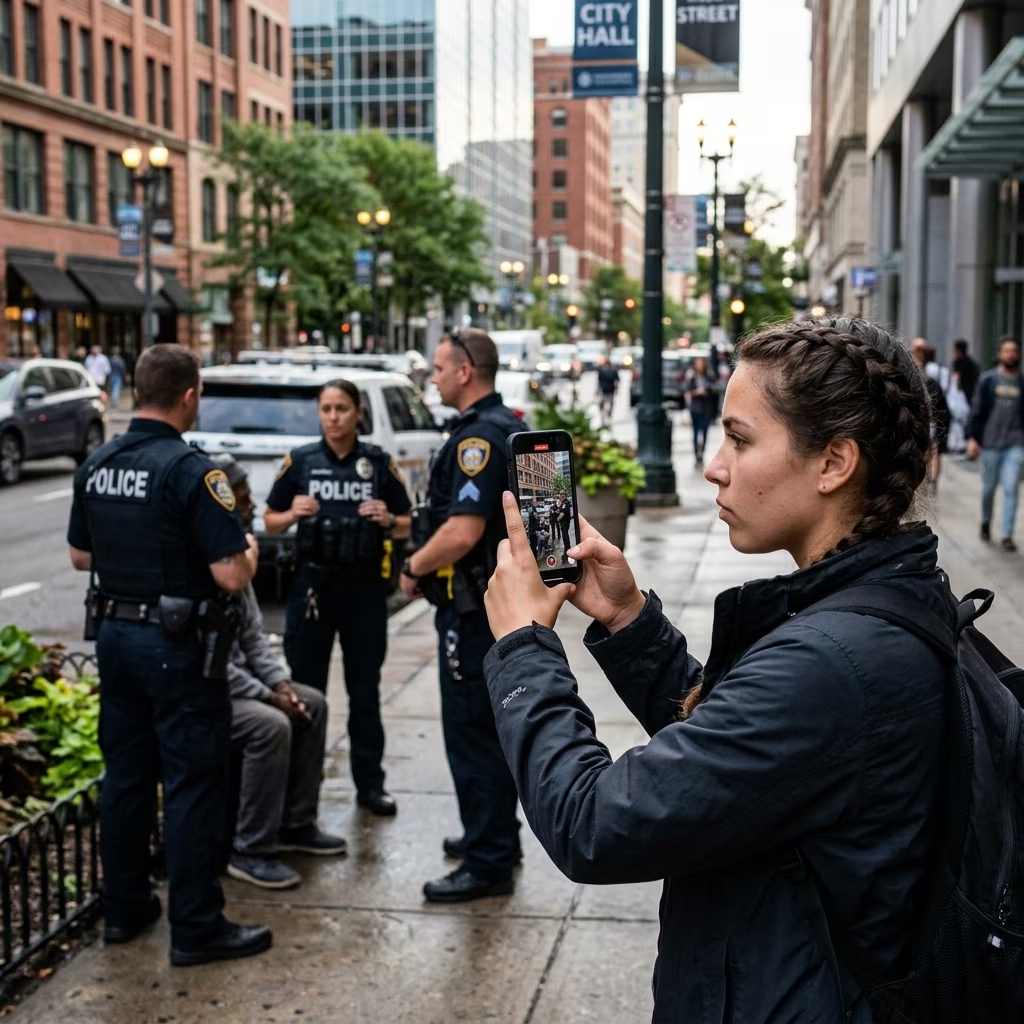
In most situations, you have the right to record police when you are lawfully present in a public space and can see the activity in plain view.
- Examples include streets, sidewalks, parks, public beaches, and other areas open to the general public.
- If you are allowed to be there, police generally cannot stop you from recording simply because they do not want to be filmed.
2.2 Private property and restricted areas
On private property, your ability to record may be limited by the property owner’s rules. Even if you have a First Amendment right to record government officials, a private business or homeowner can set conditions for being on their premises.
Additionally, some spaces are legally restricted or have heightened security, such as courthouses, jails, or certain government buildings. Recording may be regulated or forbidden in specific areas for security or privacy reasons. In those locations, statutory rules or court orders may override your general right to record.
3. State Consent and Wiretap Laws
Recording police can implicate not only constitutional law but also state statutes, particularly wiretap or eavesdropping laws that regulate recording conversations. These laws vary significantly between states.
| Type of State | Consent Requirement (General Rule) | Impact on Recording Police |
|---|---|---|
| One-party consent | Only one person in the conversation needs to consent. | If you are part of the conversation, your own consent is enough; the officer does not need to agree. |
| All-party (two-party) consent | Everyone in the conversation must agree before it is recorded. | Secret audio recording of private conversations may be illegal if other parties do not consent. |
| Mixed or specialized rules | Some states treat public officials and public spaces differently, or have narrow exceptions. | Recording police in public may be allowed even where private conversations require all-party consent. |
For example, Florida law generally requires consent from all parties to record certain private communications, but federal case law in its circuit recognizes a First Amendment right to record police conduct in public, subject to reasonable limits. Other jurisdictions, such as Massachusetts, have recognized the right to record police even when the recording is not obvious.
Because the details are state-specific, you should:
- Check your state’s statutes on wiretapping, eavesdropping, and privacy before engaging in audio recording.
- Distinguish between public activity visible and audible to bystanders and private conversations where participants reasonably expect privacy.
- When in doubt, record openly and make your device visible to reduce the risk of violating secret-recording laws.
4. Limits on Your Right: Interference, Safety, and Privacy
Your right to record police is not absolute. Several legal and practical boundaries can restrict what you may do while documenting an encounter.
4.1 Interference with police duties
Courts and civil liberties organizations consistently note that you may not interfere with legitimate law enforcement operations while recording.
- Standing between officers and a person they are trying to arrest or question.
- Ignoring lawful orders to move back to a safe distance.
- Creating a physical obstruction or a safety hazard.
- Using recording as a pretext to harass or confront officers aggressively.
These behaviors can lead to arrest, not for recording itself, but for obstruction, disorderly conduct, or similar offenses.
4.2 Reasonable time, place, and manner restrictions
Even when recording is protected, authorities may impose reasonable restrictions that are unrelated to the content of your recording.
- Being required to stand behind a barrier or at a specified distance for safety.
- Moving out of an active crime scene so that evidence can be preserved.
- Complying with rules designed to protect victims’ privacy or prevent crowding.
These limits must be genuinely tied to safety or operational needs and leave open alternative ways to document what is happening.
4.3 Privacy and sensitive situations
Recording police can sometimes capture victims, witnesses, or bystanders in distress. While your legal right may allow recording, you should consider ethical and privacy concerns, especially when sharing content online. Laws such as those protecting minors, medical information, or certain protected locations can also affect how you use or distribute recordings.
5. Practical Tips for Safely Recording Police
Beyond the legal framework, there are practical steps you can take to reduce risk and increase the usefulness of your recordings.
5.1 Before and during recording
- Stay calm and respectful. Avoid yelling, insults, or sudden movements that could be misinterpreted as threats.
- Maintain a safe distance. Many organizations suggest standing far enough away that you clearly do not obstruct officers; some local policies specify distances like 25 feet.
- Hold your device steadily and visibly. Visible recording reduces the chance of wiretap issues and makes your intent clear.
- Do not physically resist. If an officer issues a lawful order or attempts to arrest you, physical resistance can escalate the encounter and create additional charges.
5.2 If officers question or confront you
- Ask, calmly: “Am I free to leave?” If the answer is yes, you may decide to end recording and walk away.
- If you are detained, you generally have the right to remain silent and to decline consent to searches of yourself and your belongings.
- If an officer tries to search your phone, clearly state that you do not consent to a search of your device.
5.3 Protecting your device and data
Modern civil rights guidance emphasizes that the right to record also includes protections for the recordings themselves.
- Use a strong password or passcode to secure your phone or camera.
- Know that, in general, police need a warrant to access the contents of your device, even if they lawfully seize it during an arrest.
- Law enforcement officers may not lawfully delete your photos or videos.
- Consider backing up recordings to a secure cloud service or another device if possible.
6. Documenting and Following Up After an Encounter
Recording is often just the first step. If you believe your rights were violated or you witnessed misconduct, detailed documentation and formal complaints can be crucial.
6.1 Recording contextual information
- Write down the date, time, and location as soon as you can.
- Note the officers’ names, badge numbers, and patrol car numbers if visible.
- Identify the agency involved—city police, county sheriff, state troopers, federal agents, or another department.
- Collect contact information from witnesses who observed the events.
6.2 Filing complaints or seeking legal help
Once you have organized your information:
- Submit a written complaint to the relevant police department’s internal affairs unit or civilian oversight board.
- Consult a civil rights or criminal defense lawyer to discuss potential legal claims.
- In some jurisdictions, state law specifically allows you to sue if police unlawfully interfere with your right to record.
Keep copies of your complaint, any responses, and your recordings in a safe place. If your situation involves potential criminal charges or constitutional issues, legal counsel is especially important.
7. Special Considerations: Recording Your Own Stop or Arrest
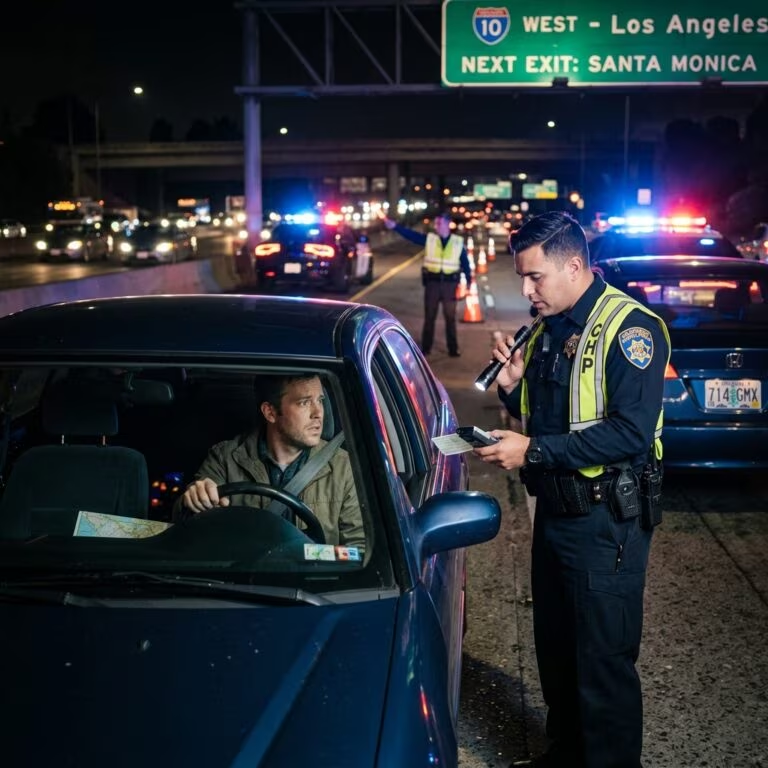
Many people are most concerned about recording when they are the person being stopped or questioned. The First Amendment protections described above apply here too, but there are additional risks to weigh.
- You generally may record your own interaction with police in public, as long as doing so does not interfere with the officers’ duties or create safety risks.
- Trying to film your own arrest while resisting or struggling may not be protected, because it can be viewed as obstruction rather than mere recording.
- In one-party consent states, you can usually record conversations you personally participate in without notifying the officer.
- In all-party consent states, secretly recording your own conversation with police may be risky unless specific case law or statutes protect such recording of public officials.
In these situations, prioritize safety and legal compliance. If recording is likely to escalate tension, you may decide to rely on bystanders’ recordings, body-camera footage, or later complaints instead.
8. Quick FAQs on Recording Police
FAQ 1: Can police stop me from recording just because they do not like being filmed?
Generally, no. If you are lawfully present in a public place and not interfering with police work, officers cannot stop you solely because you are recording. They may, however, impose reasonable safety-based limits on where you stand or how close you get.
FAQ 2: Do I have to tell officers that I am recording?
In many jurisdictions, there is no general requirement to announce your recording, especially in public spaces. However, in states with strict all-party consent laws for audio, openly recording can reduce the risk that your actions are considered illegal secret interception.
FAQ 3: Can police take my phone or camera?
Police may temporarily seize your device if they have a lawful reason, such as arresting you or preserving potential evidence. But they normally need a warrant to access your files, and they may not delete your recordings.
FAQ 4: Is it legal to upload videos of police encounters to social media?
Sharing lawfully obtained recordings of public police activity is usually protected, but you should consider privacy, defamation, and safety issues before posting. Blurring faces or limiting identifying details can reduce risks, especially for victims or minors.
FAQ 5: What should I do if my rights were violated while I was recording?
Preserve your recordings, write down all details of the encounter, identify witnesses, and contact a qualified attorney or civil rights organization. If appropriate, file a written complaint with the relevant agency or oversight body.
9. Key Takeaways
- You have a First Amendment right to record police performing their duties in public, subject to reasonable safety-based limits.
- State wiretap and consent laws may restrict secret audio recording, especially in private or semi-private settings.
- Recording must not interfere with police operations or create safety hazards.
- Police generally cannot lawfully delete your recordings and need a warrant to search your device’s contents.
- Careful documentation, respectful behavior, and legal advice are essential if a recording reveals potential misconduct or if you face charges related to your actions.
References
- Video or Audio Recording of Police Officers & Your Legal Rights — Justia. 2023-06-01. https://www.justia.com/criminal/procedure/right-to-record-police-officers/
- Recording police in public: What you need to know — FIRE. 2023-01-15. https://www.fire.org/research-learn/recording-police-public-what-you-need-to-know
- Recording Police — Ohio State Bar Association. 2022-05-10. https://www.ohiobar.org/my-ohio-rights/recording-police/
- Right to Record the Police in Florida — ACLU of Florida. 2021-11-01. https://www.aclufl.org/right-record-police-florida/
- Know Your Rights: Photographing or Recording the Police — ACLU of Massachusetts. 2020-08-20. https://www.aclum.org/know-your-rights/know-your-rights-photographing-or-recording-police/
- Recording and Documenting Police and Federal Agents — ACLU. 2023-04-12. https://www.aclu.org/know-your-rights/recording-and-documenting-police-and-federal-agents
- Know Your Rights When Filming Police — NYCLU. 2022-03-30. https://www.nyclu.org/resources/know-your-rights/know-your-rights-when-filming-police