
Wyoming Workers’ Compensation: Rights, Benefits, and Employer Duties
Learn how Wyoming’s unique state-run workers’ compensation system protects injured workers and what employers must do to comply with the law.
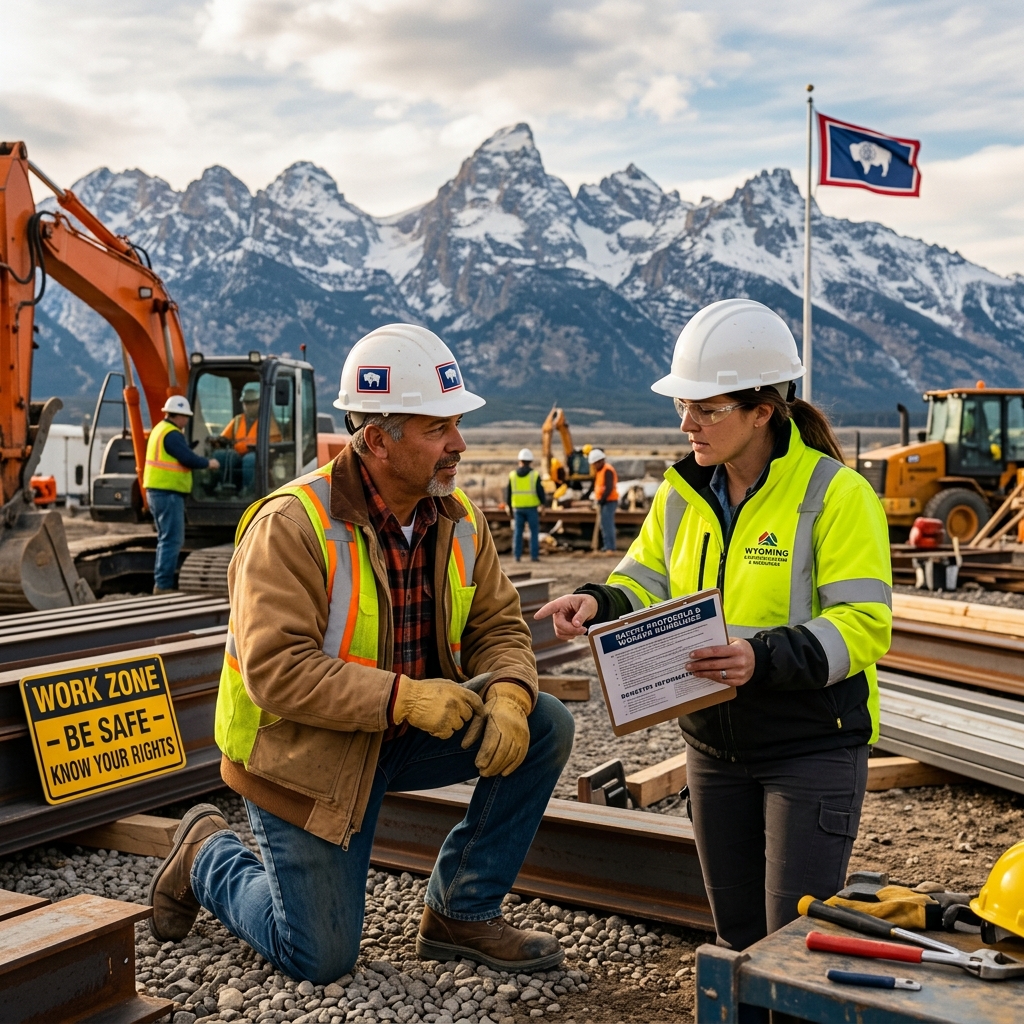
Wyoming’s workers’ compensation system is designed to provide a safety net for employees who suffer job-related injuries or illnesses, while also giving employers predictable costs and protection from most lawsuits arising from workplace accidents. Understanding how this system works is essential for both workers and businesses operating in the state.
1. How Wyoming’s Workers’ Compensation System Is Different
Wyoming is one of a small number of monopolistic workers’ compensation states, which means that most employers must purchase coverage directly from a state-managed fund rather than through private insurance. The system is administered through the Wyoming Department of Workforce Services’ Workers’ Compensation Division, and is funded primarily by employer premiums.
Key structural features include:
- State-run fund: Most employers obtain coverage through the Workers’ Compensation Division rather than the open insurance market.
- Exclusive remedy protection: When coverage is in place, workers generally cannot sue their employer for workplace injuries and instead receive statutory benefits.
- Mandatory registration: Businesses doing work in Wyoming must register with the state system if they employ workers in covered industries.
2. Who Must Carry Coverage and Who Is Covered
Wyoming law broadly requires employers to insure their employees for work-related injuries, with limited exceptions. However, the details can be complex, because coverage hinges on the nature of the business and the type of work being performed.
2.1 Employers Required to Participate
In general, the following employers are required to carry workers’ compensation coverage:
- Businesses with employees in extra-hazardous occupations as defined in Wyoming statutes and classified using NAICS codes.
- Most employers conducting business within Wyoming that have at least one covered worker.
- Employers who voluntarily elect coverage for their workforce under specific statutory provisions, in which case all employees in that covered group must be insured.
Because Wyoming uses statutory and industrial classifications to determine which operations are considered extra-hazardous, employers should confirm their status with the Workers’ Compensation Division or review applicable statutes and rules.
2.2 Employees Who Are Typically Covered
When an employer is required to participate, coverage usually extends to a broad range of workers, including:
- Full-time employees
- Part-time and seasonal workers
- Occasional or temporary employees
- Legally employed minors
- Student learners in covered work
- Certain non-citizen workers authorized to work in the U.S.
Independent contractors, casual laborers, and some specific categories of workers may be excluded depending on the circumstances and statutory definitions. Employers must carefully classify workers to avoid penalties for misclassification.
3. What Counts as a Compensable Work Injury
Not every injury or illness that happens to an employee will qualify for benefits. To be compensable under Wyoming law, the condition must arise out of and in the course of the worker’s employment and not be excluded by statute.
3.1 Basic Requirements for Coverage
Generally, an employee must show that:
- There is a direct causal connection between the employment and the injury.
- The injury or disease is a natural incident of the work and flows from the employment.
- The condition can be traced to the employment as a proximate cause, rather than simply occurring at work by coincidence.
- The hazard causing the injury is not one to which the worker was equally exposed outside the job.
In addition, the relationship must be that of employer and employee, and the injury cannot result from specific excluded conduct, such as an employee’s willful intent to injure themselves.
3.2 Traumatic Injuries vs. Occupational Diseases
| Type of Condition | Typical Examples | Key Considerations |
|---|---|---|
| Sudden workplace injuries | Falls, machinery accidents, lifting injuries | Usually easy to tie to a specific incident; must be reported and claimed promptly. |
| Occupational diseases or cumulative trauma | Hearing loss, repetitive strain, long-term chemical exposure | Develop over time; deadlines may run from diagnosis or last injurious exposure rather than a single accident date. |
For conditions that develop over a substantial period, Wyoming law may allow filing within a specific time after the injury is diagnosed or after the last exposure, whichever is later, subject to statutory limits.
4. Deadlines and the Claims Process
Timely reporting and filing are critical in Wyoming workers’ compensation claims. Missing deadlines can reduce or completely bar benefits, even when the underlying injury is clearly work-related.
4.1 Reporting an Injury
Employees should notify their employer as soon as possible after an accident or when they become aware that a condition is work-related. Prompt reporting helps:
- Ensure quick access to medical treatment
- Preserve evidence related to the incident
- Allow the employer to fulfill its reporting obligations
Employers, in turn, must submit required forms to the Workers’ Compensation Division and cooperate in the investigation of the claim.
4.2 Filing the Formal Claim
To receive benefits, an injured worker must file a claim with the Wyoming Workers’ Compensation Division. This typically involves:
- Completing the official claim form provided by the Division or employer
- Submitting medical documentation that describes the diagnosis, treatment, and work-related cause of the condition
- Providing any requested employment or wage information
Under Wyoming’s statute of limitations, claims for injuries usually must be filed within a set period (often referenced as one or two years from the date of injury or discovery, depending on the type of injury and statutory provisions). Some occupational disease claims use different triggering dates, such as diagnosis or last exposure.
4.3 What Happens After a Claim Is Filed
Once a claim is submitted, the Division evaluates:
- Whether an employer-employee relationship exists
- Whether the employer was properly covered under the state system
- Whether the injury arose out of and in the course of employment
- The type and amount of benefits due under Wyoming law
The Division may request additional medical records or statements and may issue determinations on eligibility and benefits. If either the worker or the employer disagrees with a decision, they may pursue the administrative appeal process described below.
5. Types of Benefits Available to Injured Workers
Wyoming’s workers’ compensation system provides a range of benefits intended to cover necessary medical care and replace a portion of lost income, as well as assist with long-term disabilities.
5.1 Medical and Treatment Benefits
Workers’ compensation generally pays for reasonable and necessary medical treatment related to the work injury or illness, subject to state rules and fee schedules.
- Emergency care and hospitalization
- Doctor visits and specialist consultations
- Diagnostic tests (such as X-rays or MRIs)
- Physical or occupational therapy
- Prescribed medications and certain medical devices
Wyoming uses a fee schedule for medical providers, and providers within the state may not bill injured workers for charges above the approved amount.
5.2 Wage-Loss and Disability Benefits
If a worker cannot perform their job because of a covered injury or illness, they may qualify for payments that partially replace lost wages.
- Temporary total disability (TTD): For workers who cannot work at all for a period of recovery.
- Temporary partial disability (TPD): For workers who can work with restrictions and earn less than before the injury.
- Permanent partial disability (PPD): Compensation when a permanent impairment remains, but the worker can still perform some work.
- Permanent total disability (PTD): Benefits for workers who are permanently unable to return to gainful employment because of their work injury.
The specific amount and duration of benefits depend on Wyoming statutes, impairment ratings, and the worker’s earnings history.
5.3 Vocational Rehabilitation and Return-to-Work Support
Some injured workers may need help returning to suitable employment. Where appropriate, workers’ compensation may support:
- Vocational counseling
- Job placement assistance
- Retraining or education aimed at new job skills
These services are designed to help workers re-enter the workforce, possibly in a modified or entirely new role, if they cannot return to their previous position because of permanent limitations.
5.4 Death and Survivor Benefits
If a worker dies as a result of a compensable workplace injury or illness, Wyoming’s system can provide benefits to eligible dependents. These may include funeral expenses and ongoing financial support, subject to statutory limits and eligibility rules.
6. Employer Responsibilities and Risk Management
Employers in Wyoming have significant legal responsibilities under the workers’ compensation system. Failing to comply can lead to fines, liability exposure, and potential criminal penalties in serious cases.
6.1 Core Employer Obligations
- Register with the state: Employers doing business in Wyoming must register with the Workers’ Compensation Division if they have covered employees.
- Pay premiums: Employers pay premiums into the state fund based on payroll and industry classification; these premiums finance the benefit system.
- Maintain accurate records: Employers must keep payroll and injury records and report changes in operations that may affect classification or premiums.
- Report injuries: When a worker is injured, the employer must complete and submit required injury and employer’s reports to the Division promptly.
- Cooperate with claims handling: Employers must respond to Division inquiries, provide documentation when needed, and avoid interfering with employees’ rights to file claims.
6.2 Benefits of Compliance for Employers
Complying with Wyoming’s workers’ compensation requirements offers important advantages:
- Protection from most civil lawsuits by injured employees (exclusive remedy)
- Predictable handling of workplace injury costs
- State-managed claims administration and dispute resolution
- Support from the Division on safety, prevention, and classification issues
Because Wyoming is a monopolistic state, complying also means working closely with the Department of Workforce Services rather than shopping for private policies, except for certain exempt employers that may obtain private coverage regulated by the Department of Insurance.
7. Disputes, Appeals, and Settlements
Even with detailed rules in place, disagreements frequently arise over whether an injury is work-related, how severe it is, or what benefits are appropriate. Wyoming law provides processes to address these disputes.
7.1 Common Dispute Issues
Disagreements can involve:
- Whether an employer-employee relationship existed on the date of injury
- Whether the incident was truly work-related or occurred off the job
- The extent of medical treatment reasonably required
- The degree of permanent impairment or disability
- Calculation of average wage or benefit rate
7.2 Administrative Appeal Rights
If the Division denies a claim or issues a decision that a party disputes, Wyoming law permits administrative appeals, which may involve hearings before an independent body or administrative hearing officer. Parties generally must:
- File a written objection or request for hearing within the time specified in the notice
- Participate in prehearing or mediation processes if required
- Present testimony, documents, and expert evidence at the hearing
Decisions from administrative proceedings may be subject to further review by the courts under Wyoming’s administrative procedures and workers’ compensation statutes.
7.3 Settlements
Wyoming law allows for certain settlements between the employer, the Division, and the injured worker. Some smaller settlements can be reached without an admission that the injury is compensable or work-related, subject to statutory caps and approval requirements. Larger or more complex settlements may require more formal review to ensure they comply with state law and adequately protect the worker’s interests.
8. Practical Tips for Workers and Employers
8.1 Guidance for Injured Workers
- Seek medical attention quickly: Your health is the priority, and early treatment also creates a clear medical record.
- Report the injury promptly: Notify your supervisor or employer as soon as possible, even if the injury seems minor at first.
- File a claim within deadlines: Ask for the official forms and submit them to the Workers’ Compensation Division by the statutory time limits.
- Keep copies: Maintain copies of all claim paperwork, medical records, and correspondence.
- Follow treatment plans: Complying with your doctor’s instructions helps both your recovery and your claim.
8.2 Guidance for Employers
- Confirm coverage obligations: Verify whether your industry is classified as extra-hazardous and whether you must participate in the state fund.
- Register early: Set up your account with the Workers’ Compensation Division before or as soon as you begin operations with employees in Wyoming.
- Train supervisors: Make sure managers know how to respond to work injuries and how to complete required forms.
- Promote safety: Invest in safety programs and training to reduce the likelihood of claims and potentially lower premiums.
- Maintain open communication: Stay in contact with injured employees, and cooperate with the Division to resolve any issues quickly.
9. Frequently Asked Questions About Wyoming Workers’ Compensation
Q1. Do all Wyoming employers have to buy workers’ compensation insurance?
Most employers with workers in covered or extra-hazardous industries are required to participate in the state-run workers’ compensation system. Certain employers and categories of work are exempt under statute, but even exempt employers may choose to secure coverage, sometimes through private insurers regulated by the Department of Insurance.
Q2. Where do Wyoming employers get workers’ compensation coverage?
Because Wyoming is a monopolistic state, most employers must obtain coverage from the Wyoming Department of Workforce Services Workers’ Compensation Division, not from private carriers. Some exempt employers may purchase private workers’ compensation policies that are regulated by the Department of Insurance.
Q3. How long do I have to file a workers’ compensation claim in Wyoming?
Deadlines depend on the type of injury or illness and the applicable statute. Many claims must be filed within a relatively short period (often referenced as one or two years) from the date of injury or from when the worker knew or should have known that the condition was work-related. For occupational diseases, the time limit may run from diagnosis or last injurious exposure. Workers should consult the Division’s materials or an attorney for guidance on their specific situation.
Q4. Can I sue my employer for a workplace injury if I receive workers’ compensation benefits?
Generally, no. Wyoming’s system is built on the principle of exclusive remedy: when an employer is properly insured and the injury is covered under workers’ compensation, the worker usually cannot sue the employer in civil court for additional damages. Limited exceptions may exist, such as when a third party (not the employer) contributed to the injury.
Q5. What if my workers’ compensation claim is denied?
If your claim is denied, you have the right to challenge the decision. You must typically file a written objection or appeal within a set time frame indicated in the denial notice, after which you may be entitled to a hearing before an administrative decision-maker. Because appeal procedures have strict deadlines and rules of evidence, many workers choose to consult an experienced attorney for assistance.
Q6. Are medical providers allowed to bill me beyond what workers’ compensation pays?
Medical providers in Wyoming must generally accept the state’s workers’ compensation fee schedule as payment in full for covered services, and they may not bill injured workers for charges above that schedule. Workers should review any medical bills they receive and contact the provider or the Division if they believe they are being billed improperly.
References
- Wyoming Workers’ Compensation — Wyoming Department of Workforce Services. 2024-01-15. https://dws.wyo.gov/dws-division/workers-compensation/
- Workers Compensation — Wyoming Department of Insurance. 2023-06-30. https://doi.wyo.gov/consumers/workers-comp
- Wyoming Workers’ Compensation (Joint Labor Committee Presentation) — Wyoming Legislature / Department of Workforce Services. 2020-08-20. https://wyoleg.gov/InterimCommittee/2020/10-2020082012.WorkCompPresentation-JointLabor.pdf
- Workplace Safety & Workers’ Compensation — Wyoming Judicial Branch. 2022-11-01. https://www.wyocourts.gov/legal-help-by-topic/workplace-safety-workers-compensation/
- Wyoming Workers’ Comp Insurance — Progressive / Overview of Statutory Requirements. 2024-02-10. https://www.progressivecommercial.com/business-insurance/workers-compensation-insurance/wyoming/
Similar Articles








Read full bio of medha deb




