
Wyoming Traffic Laws: What Drivers Should Know
A practical overview of Wyoming’s road rules, driver duties, and common traffic violations.
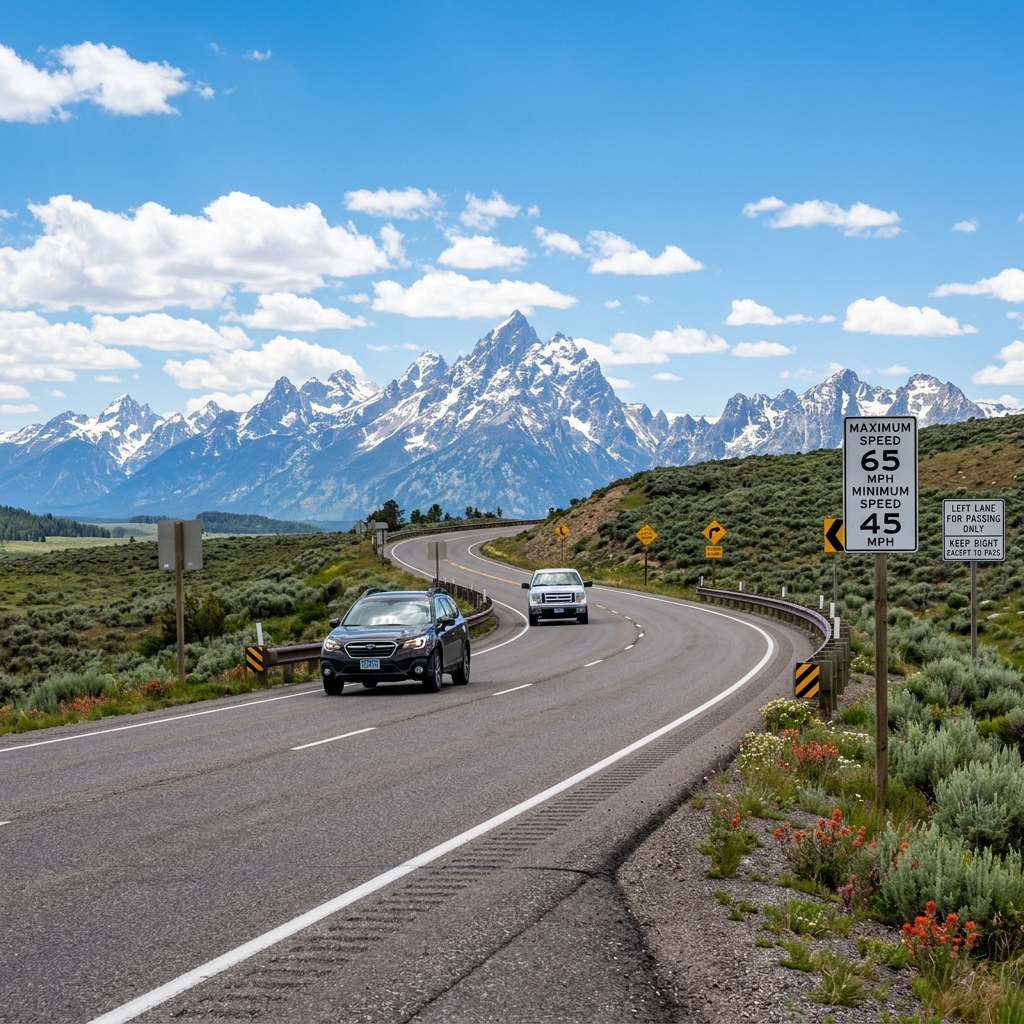
Driving in Wyoming means adapting to long distances, fast-moving highways, severe weather, and a traffic code designed to keep roads moving safely. The state’s rules cover everything from speed and passing to pedestrian rights, bus stops, and impaired driving. Understanding these basics can help drivers avoid tickets, reduce risk, and handle common roadway situations with confidence.
Wyoming’s traffic rules are not limited to interstate travel. They also address how drivers should behave on city streets, rural roads, school routes, and multi-lane highways. Many of the most important rules are found in Title 31 of the Wyoming Statutes, which governs traffic regulation on highways.
How Wyoming organizes traffic regulation
Wyoming law treats traffic safety as a broad system, not just a list of speed limits. The state’s rules cover general driving behavior, speed regulations, traffic-control devices, stopping and parking, pedestrians, bicycles, snowmobiles, and enforcement. That structure matters because a driver’s legal responsibilities can change depending on where they are and what kind of road users are nearby.
The Wyoming Department of Transportation also publishes driver education materials that explain the practical meaning of the law. Those materials are helpful because they translate legal rules into everyday driving situations, such as merging, stopping for hazards, or deciding how to respond to a malfunctioning signal.
Speed limits and safe speed expectations
One of the most visible Wyoming traffic rules is the state’s high maximum speed on certain roads. Interstate highways in Wyoming may allow speeds up to 80 miles per hour, but that does not mean every driver should travel that fast in every condition. Drivers are still expected to slow down for weather, visibility, road damage, and traffic volume.
In addition to posted limits, Wyoming law requires drivers to avoid moving so slowly that they impede traffic. A vehicle in the left lane should not block faster traffic or create an unnecessary hazard. This is especially important on highways where vehicles are moving at high speeds and passing lanes are used frequently.
Passing and lane use
Passing rules in Wyoming reflect the state’s emphasis on efficient highway travel. Drivers may move slightly above the posted limit while passing in the left lane, but only within the limits of the law and only when the roadway allows safe passing. This exception does not apply in no-passing zones.
Once the pass is complete, the driver should return to the right side of the road as soon as it is safe to do so. The purpose of this rule is to keep the passing lane available for faster traffic and reduce the chance of congestion or lane conflict.
- Use the left lane for passing when permitted.
- Do not pass where signs or pavement markings prohibit it.
- Return to the right lane promptly after overtaking another vehicle.
- Do not use the left lane to cruise if it slows traffic behind you.
Impaired driving and DUI enforcement
Wyoming has strict laws against driving under the influence of alcohol or controlled substances. The legal blood alcohol concentration limit is 0.08% for most drivers. Operating a vehicle while impaired can lead to criminal penalties, license consequences, and other serious legal problems.
DUI enforcement is important in a state with long rural roads, nighttime driving, and variable weather, because impairment can make it harder to react to hazards, maintain lane position, or judge stopping distances. The law applies not only to alcohol but also to controlled substances that affect a person’s ability to drive safely.
- Alcohol impairment can create criminal exposure even before a crash occurs.
- Drug impairment may matter even when no alcohol is involved.
- Refusing or failing chemical testing can create separate legal consequences.
Phone use and distracted driving
Wyoming restricts texting while driving. A driver may not send, write, or read a text message while operating a vehicle, although hands-free use is allowed and emergency contact is permitted. The law aims to reduce distraction at moments when even a brief glance away from the road can cause a collision.
A texting violation can be charged as a misdemeanor and may carry a fine of up to $75. The penalty is modest compared with many criminal offenses, but the safety risk is much larger than the fine suggests. A driver who uses a phone unsafely can miss braking traffic, pedestrians, or changing lane conditions.
Seat belts, child restraints, and occupant safety
Wyoming drivers should also pay close attention to seat belt and child restraint requirements. Safety restraints reduce injury risk in abrupt stops and collisions, and the driver is generally responsible for making sure passengers are properly secured. Child passengers need restraints sized for their age and body size.
These requirements are especially important on highways and rural roads, where speeds are often higher and emergency response may take longer to arrive. Proper restraint use is one of the simplest ways to lower the severity of a crash outcome.
Stopping for school buses
Drivers in both directions must stop when approaching a school bus that is stopped with flashing red lights. This rule helps protect children who may be boarding or leaving the bus and crossing nearby traffic lanes. A driver may proceed only when the bus begins moving again or the flashing red lights are turned off.
School bus laws are among the most carefully enforced traffic rules because the danger is immediate and obvious. On roads with divided medians, the exact stopping requirement can depend on roadway design, but the basic principle remains the same: when a bus is actively loading or unloading children, drivers must give it a wide safety margin.
Pedestrians and right-of-way duties
Wyoming law gives pedestrians strong protection. Drivers must stop for pedestrians when traffic-control devices are not in place or are not operating, and intersections are treated as crosswalk areas for this purpose. That means a driver should not assume a person is safe simply because there is no painted crosswalk nearby.
Pedestrian responsibility still matters, but the legal burden on drivers is significant. Motorists should approach corners, intersections, and residential areas carefully, especially in low light or bad weather. When visibility is limited, the chance of a serious injury rises quickly.
Turning, parking, and stopping rules
Wyoming drivers must follow ordinary rules of road use when turning and parking. A U-turn may be allowed unless a sign says otherwise, but it must be made only when there is adequate visibility and room to complete the maneuver safely. Parking is not allowed in places where the vehicle would create a hazard or block access, including intersections, crosswalks, sidewalks, driveways, and certain curb spaces.
Drivers should also leave enough clearance near fire hydrants and obey local signs that restrict stopping or standing. Parking is often regulated by both state law and local rules, so a spot that looks open may still be prohibited.
| Situation | General Rule |
|---|---|
| U-turn | Allowed unless prohibited and only when safe visibility exists |
| Intersection parking | Not allowed |
| Crosswalk parking | Not allowed |
| Fire hydrant area | Leave required clearance |
| Double parking | Prohibited |
What to do at traffic signals and intersections
Wyoming drivers are expected to handle intersections in a predictable, cautious way. If a light is malfunctioning, the safest legal approach is often to treat the intersection like a four-way stop. That means coming to a complete stop, yielding appropriately, and proceeding only when it is safe.
Right turns on red are generally allowed unless a sign says otherwise, but only after a full stop. Drivers should check for pedestrians, cyclists, and cross traffic before turning. Even when a maneuver is technically allowed, it can still be unsafe if conditions are not clear.
Emergency vehicles and yielding obligations
Drivers must yield to emergency vehicles and avoid entering an intersection if an emergency vehicle is approaching. This is a basic but critical rule because emergency response depends on open travel paths. Failing to yield can delay police, fire, or medical response and create dangerous confusion in traffic.
When hearing or seeing emergency signals, drivers should focus on creating a clear route rather than trying to make a quick judgment call. The safest response is usually to reduce speed, move over when legal and practical, and avoid sudden or unpredictable movements.
Licensing and legal operation
Wyoming requires drivers to have a valid license or another authorized driving credential, such as an instruction permit, intermediate license, or restricted license. First-time applicants generally must pass knowledge, vision, and road skills testing. If a license expires, the driver may need to apply in person and may also need to retake parts of the licensing process.
This matters because traffic law is not only about how you drive once you are on the road. It also determines whether you are legally entitled to drive at all. Operating without proper credentials can lead to additional enforcement issues beyond a simple traffic ticket.
Practical habits for safer Wyoming driving
Because Wyoming has wide-open roads, weather-related hazards, and long distances between services, safe driving often means being more conservative than the posted rule alone might suggest. Even when a speed limit is high, road surface quality, wind, ice, wildlife, and visibility can make slower travel the safer choice.
- Adjust speed for snow, ice, wind, and reduced visibility.
- Watch for wildlife crossing rural highways.
- Keep extra space when following large vehicles.
- Do not rely on the roadway being clear just because traffic is light.
- Plan fuel, rest, and route changes before long stretches of travel.
Frequently asked questions
Is 80 mph always legal in Wyoming?
No. Some interstate highways may allow up to 80 mph, but that does not override posted signs, hazardous conditions, or the duty to drive at a safe speed.
Can I text at a stoplight?
Wyoming’s texting ban applies to sending, writing, or reading texts while driving. Safe practice is to wait until the vehicle is fully parked before using the phone for any non-emergency purpose.
Do I have to stop for a school bus on the opposite side of the road?
Drivers generally must stop when a school bus is using flashing red lights, subject to roadway configuration. The key rule is to avoid passing the bus while children may be boarding or leaving.
What happens if a traffic light is out?
A malfunctioning signal should be treated cautiously, commonly as a four-way stop unless local conditions or officers direct otherwise.
Are pedestrians always protected at intersections?
Yes. Wyoming places strong duties on drivers to stop for pedestrians when traffic-control devices are absent or not operating, and intersections are treated as crosswalk areas for this purpose.
References
- Wyoming Traffic Laws — FindLaw. 2026-07-09. https://www.findlaw.com/state/wyoming-law/wyoming-traffic-laws.html
- Wyoming Statutes Title 31, Chapter 5: Regulation of Traffic on Highways — Wyoming Legislature / Justia. 2025-01-01. https://law.justia.com/codes/wyoming/title-31/chapter-5/
- Rules of the Road — Wyoming Department of Transportation. 2021-01-01. https://www.dot.state.wy.us/files/live/sites/wydot/files/shared/Driver_Services/Help%20Documents%20and%20Manuals/2021_DriverManual_web_ClassC_w%20cover.pdf
- Wyoming 511 Definitions and Chain Law Information — Wyoming Department of Transportation. 2026-01-01. https://wyoroad.info/Highway/definitions.html
- Driving in Wyoming | Road Rules & Driving Tips — SIXT. 2024-01-01. https://www.sixt.com/magazine/tips/driving-tips-wyoming/
Similar Articles








Read full bio of medha deb


