
Wyoming School Records and Student Privacy
Understand how Wyoming and federal law work together to protect the privacy, security, and access rights attached to student school records.
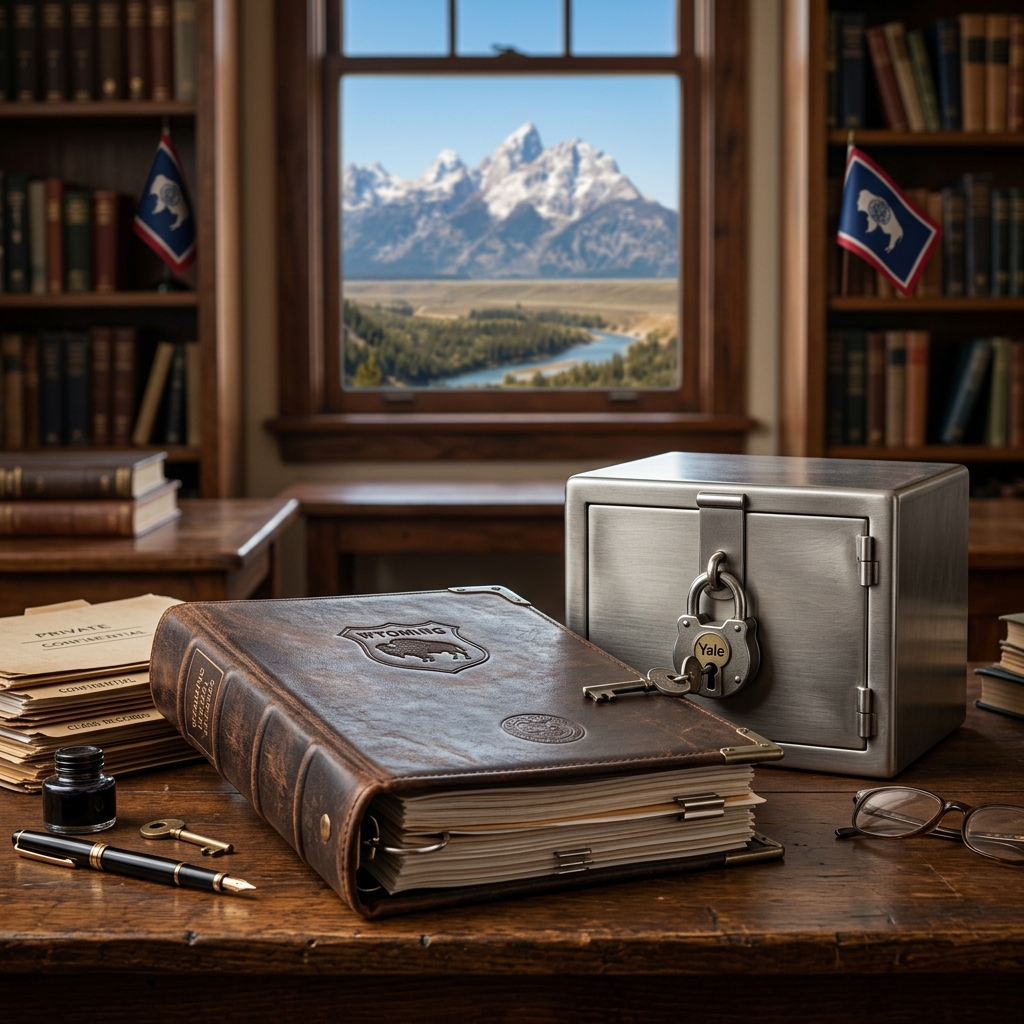
Student records contain some of the most sensitive information a school holds, and Wyoming law works together with federal rules to keep that information private, secure, and properly used. This guide explains how those protections operate, who can see education records, when disclosure is allowed, and what families can do if they believe those rights have been violated.
1. Why Student Record Privacy Matters
Education records document a student’s identity, academic progress, and sometimes health, disability, or disciplinary information. If mishandled, these records can expose a child to embarrassment, discrimination, or identity theft. Wyoming treats most student information as confidential and restricts access to those who have a legitimate need to know.
At the same time, parents and eligible students have important rights to inspect and correct records. Federal law, particularly the Family Educational Rights and Privacy Act (FERPA)
2. Key Legal Framework for School Records in Wyoming
Student privacy in Wyoming rests on a combination of federal and state law. Understanding the main sources helps explain why schools handle data the way they do.
- FERPA (Federal Law) – FERPA is a nationwide statute that applies to public schools and most private institutions receiving federal education funds. It protects access and confidentiality of education records and creates rights for parents and eligible students.
- Wyoming Public Records Act – Wyoming statutes classify most government records as public, but they carve out specific exceptions for student education records, which must be withheld except in limited circumstances.
- Student Data Protection Legislation (HB 08) – Wyoming’s student data protection law adopted in 2017 requires school districts to implement security, limit use of personal data, and develop clear policies for handling student information.
- Agency Privacy Policies – The Wyoming Department of Education (WDE) and local districts publish privacy policies to implement FERPA and state requirements, explaining how they collect, retain, and share student data.
| Source | Scope | Primary Focus |
|---|---|---|
| FERPA (Federal) | Public schools and federally funded institutions | Access rights, confidentiality, complaint process |
| WY Public Records Act | All Wyoming government records | Which records are public vs. confidential |
| HB 08 (Student Data Protection) | K‑12 school districts | Security safeguards, use limits, breach response |
| WDE Privacy Policy | State education agency | Practical rules for data collection, sharing and retention |
3. What Counts as an Education Record?
Under FERPA and related Wyoming law, an education record is generally any information that is directly related to a student and maintained by a school, district, or education agency.
Examples commonly included in education records are:
- Basic identifying information (name, student number, address, date and place of birth)
- Enrollment data, class schedules, and attendance history
- Grades, transcripts, and standardized test scores
- Special education and disability-related records
- Behavior and discipline reports kept by the school
- Communications and notes maintained in a formal file relating to a student’s educational program
Wyoming law specifically treats school district records about a student’s biography, family, religious affiliation, academic achievement, and physical or mental abilities as confidential government records to be withheld from the public. That means such information cannot be released simply because someone files a public records request.
4. Who Has a Right to Access Student Records?
Privacy does not mean secrecy from families. Both federal and Wyoming law recognize that parents and, later, students themselves must be able to review and understand their own records.
4.1 Parents and Guardians
Parents or legal guardians of minor students have the right to inspect and review their children’s education records maintained by the school or education agency. This right includes the ability to request copies if in-person review is impractical, though schools may charge a reasonable fee for copying.
Parents also may ask the school to amend records they believe are inaccurate, misleading, or violate the child’s privacy. If the school declines to change the record, FERPA gives families the right to a formal hearing.
4.2 Eligible Students
Once a student turns 18 or attends a postsecondary institution, FERPA rights transfer to the student, who becomes an eligible student. At that point, access, amendment, and consent rights belong to the student rather than the parent, with some limited exceptions (such as dependent student information reported for tax purposes).
4.3 School Officials and Others with Legitimate Interests
School administrators, teachers, and staff may access student records only when they have a legitimate educational interest in the information. Typically, this means they need the data to perform their professional duties, such as teaching, counseling, special education planning, or safety-related decisions.
Wyoming’s student data protection law further restricts the use of personal data: educators may not use information obtained from students for purposes unrelated to their educational obligations, and districts are prohibited from selling or transferring student data to private businesses.
5. When Can Records Be Shared Without Consent?
Although student records are generally confidential, FERPA and Wyoming rules allow certain disclosures without prior consent. These exceptions are defined narrowly and are intended to support educational operations and protect safety.
- Directory Information – Some basic items, such as name, address, telephone listings, dates of attendance, and participation in activities, may be designated as “directory information” and disclosed without consent, but only after parents receive annual notice and an opportunity to opt out.
- School Officials with Legitimate Educational Interest – As noted earlier, staff and contractors performing institutional services may access records needed for their duties.
- Transfers to Another School – Records may be shared with a new school in which the student seeks or intends to enroll, to facilitate continuity of education services.
- Court Orders and Subpoenas – Schools may release information required by a lawful judicial order or subpoena, typically after making reasonable efforts to notify the parent or eligible student unless the order prohibits notice.
- Health and Safety Emergencies – Data may be disclosed to appropriate parties if necessary to protect the health or safety of the student or others, such as in cases of credible threats or medical emergencies.
- Law Enforcement and Certain Agencies – FERPA allows limited disclosure to law enforcement units or other government authorities under specified circumstances, and Wyoming statutes recognize that law enforcement may gain access without consent in particular situations.
Outside these defined exceptions, schools ordinarily must obtain written consent from the parent or eligible student before releasing personally identifiable information from education records.
6. Special Wyoming Protections for Student Data
Wyoming legislators have taken additional steps to protect student data beyond traditional FERPA rules. These provisions focus on how data is stored, secured, and used by educational agencies.
6.1 Security, Access Controls, and Data Governance
Under Wyoming’s student data protection law and broader state data policies, school districts are required to develop robust security measures and access controls for student data.
Core obligations include:
- Developing administrative, physical, and logical safeguards (such as staff training and technical protections) to prevent unauthorized access.
- Creating authorization and authentication mechanisms to verify who is allowed to view specific data elements.
- Adopting standards for privacy and security compliance across the district.
- Establishing detailed plans for responding to data security incidents, including breach notification and mitigation procedures.
- Setting rules for retention and verified destruction of student data, consistent with legal requirements and record retention schedules.
6.2 Limits on Data Use and Disclosure
Wyoming law emphasizes that student data should be used only for educational purposes. School districts may not sell or transfer personal data collected from students to private businesses or unrelated organizations. Staff must avoid using student information for marketing, profiling, or other non-educational objectives.
7. Penalties and Remedies for Privacy Violations
Both federal and state systems enforce consequences when schools or officials fail to comply with student record privacy laws.
7.1 Federal Consequences Under FERPA
The U.S. Department of Education oversees FERPA compliance. Schools that systematically violate FERPA, such as by repeatedly disclosing records without proper authorization, risk loss of federal funding including grants and loans.
Individuals responsible for unauthorized disclosures can face disciplinary action under local district policies, and in severe cases, other legal consequences depending on the nature of the misuse.
7.2 State-Level Penalties in Wyoming
Wyoming’s public records laws are enforced through civil actions. The state Attorney General or local county attorneys may bring cases against violators, and courts may impose civil penalties up to a statutory maximum (noted as $750 in publicly available summaries) and award damages in appropriate circumstances.
7.3 Complaint Processes for Families
Parents and eligible students who believe their FERPA rights have been violated may file a complaint with the U.S. Department of Education’s Student Privacy Policy Office (SPPO). Complaints must typically describe the alleged failure to comply with FERPA and are subject to time limits and procedural requirements.
Families may also raise concerns directly with the school or district, use local grievance processes, or seek legal advice where serious harm or repeated violations occur.
8. Practical Steps for Parents and Students
Understanding the law is important, but day-to-day actions matter just as much. Parents and students can take several practical steps to safeguard privacy and use their rights effectively.
- Review Privacy Notices – Read annual FERPA notices and district privacy policies to understand how your school handles data and what counts as directory information.
- Use Opt-Out Rights – If you do not want directory information shared, submit opt-out forms within the timelines specified by the school.
- Request Record Access – If you need to see education records, make a written request to the appropriate office and keep copies for your own files.
- Ask for Corrections – Challenge inaccurate or misleading entries by following amendment procedures; if necessary, request a formal hearing.
- Monitor Third-Party Tools – Ask how online platforms or educational apps used by the school are vetted and what data they collect from students.
- Document Concerns – If you suspect a privacy breach, write down what happened, when, who was involved, and any communications you received.
9. Frequently Asked Questions
Q1: Are all student records in Wyoming confidential?
Most education records that identify a student are confidential and cannot be released to the public under Wyoming’s public records law, especially those relating to a student’s biography, family, religion, academic performance, and abilities. However, schools may designate certain limited items as directory information and disclose them unless parents or eligible students opt out.
Q2: Can my child’s school share information with law enforcement without my consent?
Yes, in certain circumstances. FERPA and Wyoming law allow schools to share records with law enforcement or other authorities without consent when required by a lawful subpoena or court order, or when necessary to protect health and safety during emergencies. Outside those situations, routine disclosure still requires appropriate authorization.
Q3: What should I do if I believe my child’s records were shared improperly?
First, contact the school or district to ask for an explanation and to request any relevant documentation. If you are not satisfied, you may use local grievance procedures or file a FERPA complaint with the U.S. Department of Education’s Student Privacy Policy Office. Keeping written notes and copies of communications will help you present a clear record of events.
Q4: Does Wyoming law say how long schools must keep student records?
Retention rules are set primarily through state record schedules and agency policies. The Wyoming Department of Education’s privacy policy states that personally identifiable information is kept only as long as necessary to meet the purpose for collection, legal obligations, or retention requirements. Districts also must adopt standards for retention and verified destruction of student data under state data protection rules.
Q5: Are electronic records treated differently from paper records?
Legally, FERPA applies to both paper and electronic education records. Wyoming’s student data protection law and statewide data policies emphasize specific security and access controls for digital records, including authorization systems, breach response plans, and technical safeguards. Practically, that means schools must pay close attention to how databases, learning management systems, and online tools are secured.
References
- Wyoming Privacy of School Records Laws — FindLaw. 2022-04-20. https://www.findlaw.com/state/wyoming-law/wyoming-privacy-of-school-records-laws.html
- Student Data Privacy: National Trends and Wyoming’s Role — Wyoming Instructional Network / Wyoming Attorney General. 2016-01-01. https://wyominginstructionalnetwork.com/wp-content/uploads/2018/05/Student-Data-Privacy-WAVE-2016.pptx
- Student Data Protection Legislation in the State of Wyoming — CaseGuard. 2022-04-20. https://caseguard.com/articles/student-data-protection-legislation-in-the-state-of-wyoming/
- WDE Privacy Policy — Wyoming Department of Education. 2025-06-01. https://edu.wyoming.gov/wp-content/uploads/2025/06/WDE-Privacy-Policy.pdf
- A Guide for Public School Students in Wyoming — ACLU of Wyoming. 2019-05-01. https://www.aclu-wy.org/app/uploads/2019/05/kyr_student_wyo.pdf
- The Transfer of Educational Records — Wyoming Department of Health. 2019-01-18. https://health.wyo.gov/wp-content/uploads/2020/05/Educational-Records-Guidance-January-18-2019.pdf
Similar Articles








Read full bio of medha deb


