
Wrong-Way Driving on One-Way Roads: Legal Risks Explained
A detailed look at how driving the wrong way on a one-way street can lead to fines, criminal charges, and long-term consequences for your record.
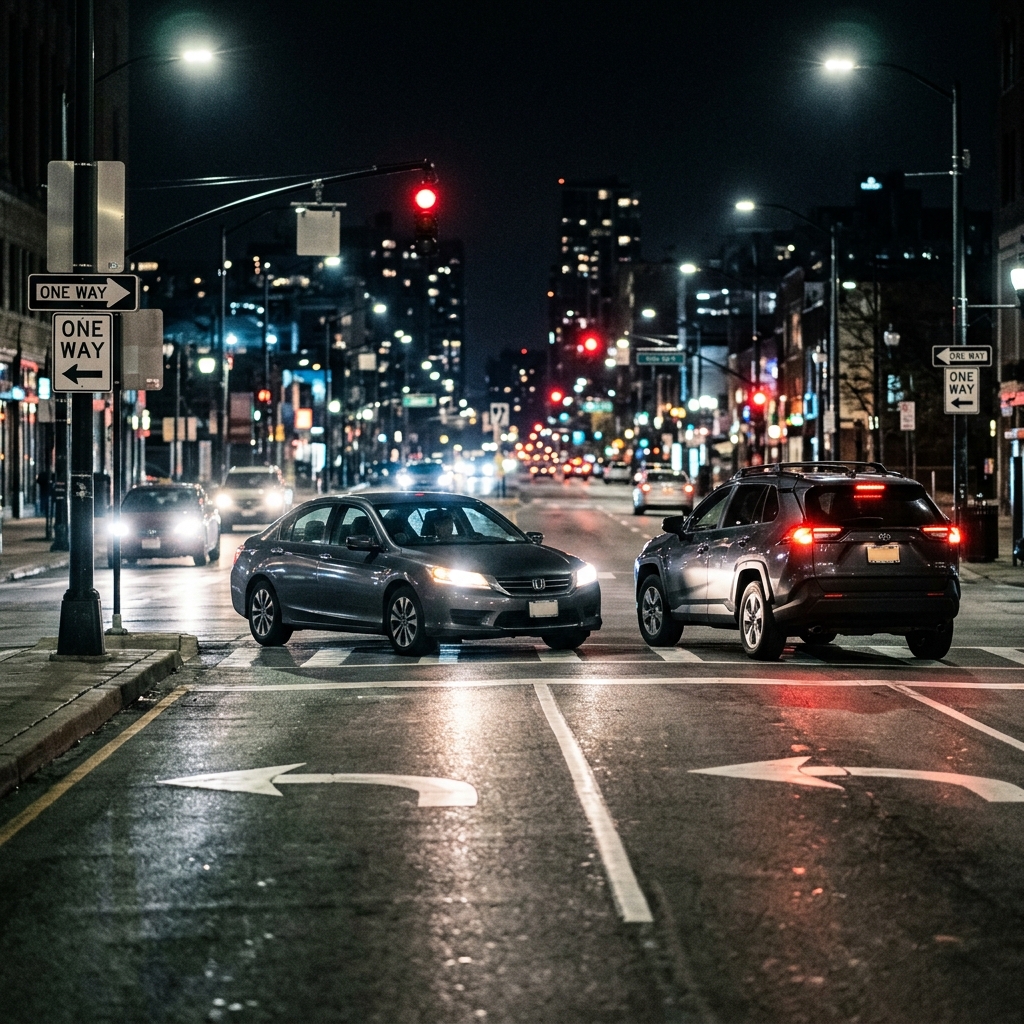
Driving against the designated flow of traffic on a one-way road is one of the most dangerous and legally serious mistakes a driver can make. While many people think of it as a simple navigation error, wrong-way driving often triggers significant traffic penalties, the possibility of criminal charges, and civil liability if an accident occurs.
This article explains why wrong-way driving is treated so seriously, how laws and penalties work, and what you should do if you are ever involved in a wrong-way incident—either as the driver or as a victim.
Why Wrong-Way Driving Is So Dangerous
Wrong-way driving is especially hazardous because it creates an immediate risk of head-on or high-speed side-impact collisions. These crash types are among the most severe and have a higher likelihood of serious injury or death than many other collision scenarios.
Several factors make wrong-way incidents uniquely dangerous:
- Head-on collision risk: Meeting oncoming traffic in the same lane dramatically increases impact speed and crash severity.
- Limited reaction time: Drivers traveling the correct way have very little time to react when a vehicle suddenly appears in front of them.
- Confusing traffic patterns: Wrong-way drivers are often disoriented, making unsafe maneuvers more likely.
- High-risk locations: Wrong-way driving commonly occurs at highway ramps, complex intersections, and downtown grids—places where traffic volumes are high.
Because jurisdictions recognize these risks, laws and penalties for driving the wrong way on a one-way road are often stricter than for other routine moving violations.
How Traffic Laws Treat Wrong-Way Driving
Traffic codes in most regions explicitly require drivers to follow posted direction-of-travel signs and lane-use markings. In practice, this means:
- Obeying ONE WAY signs and arrows painted on the pavement.
- Keeping to the correct side of the road, as required by local rules (e.g., right-hand or left-hand traffic).
- Using designated ramps and access points when entering or exiting highways.
Wrong-way driving typically qualifies as one or more of the following legal violations:
- Failure to obey traffic control device: Ignoring a one-way sign or directional arrow.
- Driving on the wrong side of the road: Traveling against the required flow of traffic.
- Unsafe or improper turn: Entering a one-way segment in the opposite direction from a turn or intersection.
Depending on the jurisdiction, these violations may be categorized as infractions, minor misdemeanors, or, in more serious cases, higher-level misdemeanors or even criminal offenses.
Typical Penalties for Wrong-Way Driving
The specific penalties for driving the wrong way on a one-way road vary by state, province, or country, but several common consequences appear repeatedly in official guidance and statutes.
Traffic Fines and Court Costs
In many jurisdictions, a first-time wrong-way violation is treated as a lower-level offense, punishable by a fine. For example, some U.S. states classify many wrong-way tickets as minor misdemeanors with fines that can range from under $100 to several hundred dollars. Other laws, such as certain road traffic acts, specify fixed fines for driving on the wrong side of the road.
Key points about fines include:
- Fines often increase for repeat offenders within a specified timeframe (e.g., within one year).
- Additional court costs and administrative fees may be added to the base fine.
- In some places, wrong-way driving on highways or higher-risk roads can carry higher fine ranges than similar violations on local streets.
Points on Your Driver’s License
Many licensing systems assign demerit points to traffic violations. Wrong-way driving—especially when considered a hazardous maneuver—may result in points being added to your driving record.
Accumulating too many points within a certain period can trigger automatic administrative actions, such as license suspension. For example, some U.S. state motor vehicle agencies suspend driving privileges when a driver reaches a threshold of points (often around 12 points within a specified timeframe).
Escalation to Misdemeanor or Criminal Charges
Wrong-way driving may start as a relatively minor offense, but penalties can escalate if the driver has a recent history of traffic violations or if the wrong-way driving contributed to an accident.
| Situation | Possible Classification | Typical Maximum Penalties (Example) |
|---|---|---|
| First-time wrong-way ticket with no prior record | Minor misdemeanor / infraction | Fine only, often under a few hundred dollars |
| Wrong-way violation with recent prior traffic offense | Higher-grade misdemeanor | Higher fines and potential short jail term (e.g., up to 30 days) |
| Wrong-way driving causing injury crash | Possible criminal charges (e.g., reckless driving) | Substantial fines, longer jail, probation, and restitution |
The exact classification depends on local law, but the pattern is clear: wrong-way driving becomes more serious when combined with prior violations or harmful outcomes.
Wrong-Way Crashes and Civil Liability
When wrong-way driving leads to a collision, civil liability becomes a major issue. Under basic negligence principles, a driver who disobeys traffic rules and causes an accident is generally responsible for the damages that result.
In one-way street accidents, wrong-way driving can be strong evidence of negligence because the driver has clearly violated a traffic rule designed to prevent harm.
Common civil consequences include:
- Property damage claims: Paying for repairs or replacement of damaged vehicles or structures.
- Bodily injury claims: Covering medical expenses, lost wages, and pain and suffering for injured parties.
- Increased insurance premiums: At-fault wrong-way collisions usually lead to higher future premiums.
In severe cases involving serious injury or death, wrong-way drivers may be sued in civil court for significant damages, and insurers may scrutinize coverage limits and exclusions.
Factors That Influence How Serious the Case Becomes
Not every wrong-way incident is treated the same. Authorities, insurers, and courts look closely at the circumstances to determine how serious the violation is and what penalties or liabilities apply.
Driver’s Mental State and Behavior
- Simple mistake: A brief, quickly corrected error after misreading a sign may be considered less serious, although it can still lead to a ticket.
- Reckless conduct: Speeding, weaving through traffic, or ignoring obvious one-way signs can support charges like reckless driving.
- Impairment: Wrong-way driving under the influence of alcohol or drugs is often treated very harshly and may lead to criminal charges beyond the wrong-way violation itself.
Location and Traffic Conditions
- High-speed roads and ramps: Wrong-way entry on a freeway ramp poses exceptional danger and often carries stricter enforcement and higher penalties.
- Urban one-way grids: City centers with complex one-way systems can generate more wrong-way incidents, but also more pedestrians and cyclists at risk.
- Construction zones: Entering a one-way lane incorrectly in a work zone can endanger both drivers and workers, and may involve special work-zone penalties.
History of Prior Violations
Many statutes increase penalties if the driver has prior traffic convictions within a certain period. For example, a wrong-way violation within a year of another traffic offense may be treated as a higher-level misdemeanor with increased fines and possible jail time.
What To Do If You Realize You Are Driving the Wrong Way
If you suddenly realize you are traveling the wrong way on a one-way road, your first priority should be safety. Official driving manuals and safety guidance emphasize the importance of stopping safely and yielding to other traffic.
General safety steps include:
- Stay calm and avoid sudden maneuvers.
- Signal and move out of active lanes as quickly and safely as possible, ideally onto the shoulder or a safe turnout area.
- Stop the vehicle rather than continuing in the wrong direction.
- Assess surrounding traffic before turning around; use designated turnarounds or exits whenever possible.
- Obey all signs and signals while correcting your route, yielding to oncoming traffic as needed.
In high-traffic or high-speed areas, contacting law enforcement or roadside assistance can help you safely reorient your vehicle and minimize risk to others.
Legal Options After Receiving a Wrong-Way Ticket
If you receive a citation for driving the wrong way on a one-way street, you usually have several options, which vary by jurisdiction.
- Pay the ticket: In some cases, you may be able to pay the fine and accept points on your license, if applicable.
- Contest the citation: You may request a hearing to challenge the ticket, especially if you believe the sign was not visible or conditions made compliance difficult.
- Seek legal counsel: Traffic and criminal defense attorneys can explain local laws, possible defenses, and whether your case might escalate to a misdemeanor or higher.
It is important to consider the long-term impact on your driving record and insurance, especially if you already have recent violations or if the incident involved an accident.
Prevention: How to Avoid Wrong-Way Incidents
While some wrong-way events are caused by momentary confusion, many can be prevented through attentive driving and better understanding of road design.
- Watch for one-way signage: Look for directional arrows, lane markings, and ONE WAY signs at intersections and ramps.
- Follow lane-use rules: Keep to the correct side of the road as required (right or left), except when passing or turning where permitted.
- Use navigation aids thoughtfully: GPS devices can help, but always verify that the route matches physical signs.
- Slow down in unfamiliar areas: Extra time to read signs and observe traffic flow reduces the risk of entering incorrectly.
- Avoid impairment: Alcohol, drugs, and severe fatigue all increase the risk of disorientation and wrong-way driving.
Frequently Asked Questions (FAQs)
Is driving the wrong way on a one-way street always a crime?
Not always. In many places, driving the wrong way is initially treated as a traffic infraction or minor misdemeanor with fines and points, rather than a separate criminal offense. However, if the behavior is reckless, repeated, or causes injury, it can support criminal charges.
Can my license be suspended for a single wrong-way violation?
License suspension usually depends on how many points or serious violations you accumulate, rather than a single ticket. That said, if wrong-way driving is combined with other serious offenses (such as driving under the influence or causing severe injury), suspension becomes more likely.
What happens if I cause an accident while driving the wrong way?
You may face both traffic or criminal charges and civil liability. Wrong-way driving is strong evidence of negligence, meaning you could be responsible for injuries and property damage to others.
Can I defend a wrong-way ticket by claiming the sign was obscured?
In some cases, drivers argue that signs were not visible due to weather, vegetation, or construction. A court or hearing officer will evaluate these facts and may reduce or dismiss a citation if the driver could not reasonably see the control devices. Local law and evidence are crucial.
Does it matter if I immediately corrected my mistake?
Promptly and safely correcting a wrong-way entry lowers the overall risk and may influence how law enforcement and courts view your case. While you can still receive a citation, immediate corrective actions can sometimes help in negotiations or hearings.
References
- Dangers of Wrong-Way Driving — Whitby Driving School. 2024-03-15. https://whitbydrivingschool.com/blog/dangers-of-wrong-way-driving/
- Columbus Wrong Way Violation Lawyers — Luftman, Heck & Associates. 2023-09-01. https://www.columbuscriminalattorney.com/traffic-lawyer/one-way-roads/
- Road Traffic Act 13:01, Section 48 (Driving on the Wrong Side of the Road) — Excerpt discussed by SafeTCI. 2022-06-01. https://www.instagram.com/reel/DWjqWYEDn3r/
- One-Way Street Accident Injury — Attorney Search Network. 2021-05-20. https://attorneysearchnetwork.com/Accident_Injury_Law_One_Way_Street.cfm
- Chapter 2: Idaho Traffic Laws — Idaho Transportation Department Driver’s Manual. 2020-01-01. https://apps.itd.idaho.gov/apps/dmv-audio/documents/DLChapter2.pdf
- Chapter 5: Intersections and Turns — New York State DMV Driver’s Manual. 2024-02-10. https://dmv.ny.gov/new-york-state-drivers-manual-and-practice-tests/chapter-5-intersections-and-turns
Similar Articles








Read full bio of Sneha Tete


