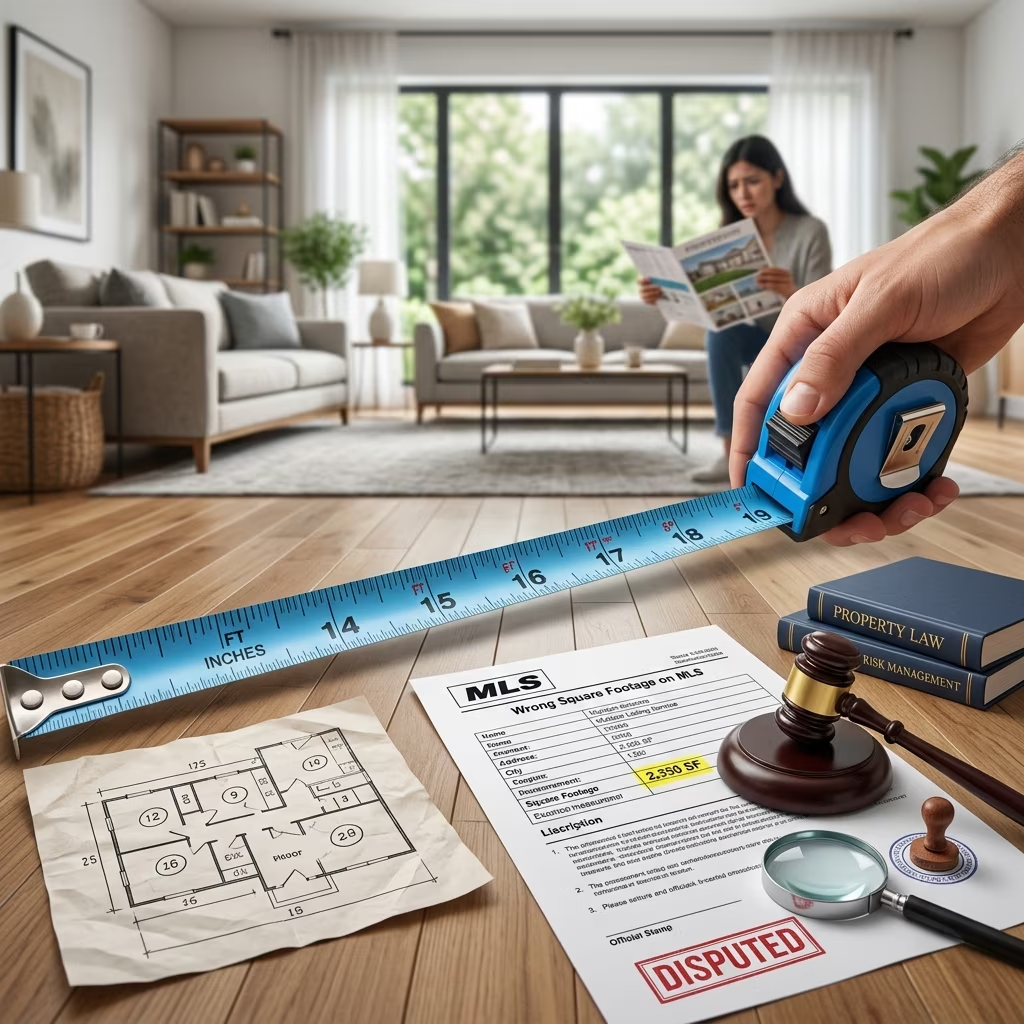
Square footage is one of the most influential numbers in a real estate listing. When that number is wrong in the Multiple Listing Service (MLS), the consequences can range from minor confusion to serious legal and financial disputes. This guide explains what happens when MLS square footage is inaccurate, how it affects buyers and sellers, and what practical steps you can take to address the problem.
Why Square Footage Matters So Much
Square footage is not just a descriptive detail; it is a core driver of a property’s market value, marketing appeal, and financing decisions. Many buyers, appraisers, and lenders rely on price-per-square-foot comparisons when evaluating offers and setting values, so even small discrepancies can change the perceived worth of a home.
- Pricing impact: Listing prices and appraised values are frequently tied to price per square foot, especially in markets with many comparable sales.
- Buyer expectations: Buyers use square footage to estimate livable space, furniture layout, and future resale potential.
- Loan and appraisal decisions: Appraisers document square footage to support value estimates used by mortgage lenders.
Because square footage directly influences perceived and appraised value, inaccurate numbers can create a mismatch between what a buyer believes they are purchasing and what they actually receive.
Common Ways MLS Square Footage Goes Wrong
MLS systems often pull data from public records, prior listings, or information supplied by sellers and agents. Each of these sources can introduce errors if they are outdated, incomplete, or measured using different standards.
- Reliance on tax assessor records: County records may omit additions, finished basements, or renovations, or they may never have been updated after construction changes.
- Copying prior MLS listings: Agents may reuse old listing data without remeasuring, carrying forward past mistakes.
- Misunderstanding what “counts” as square footage: Local rules often exclude unfinished basements, garages, or areas with low ceiling height from the formal livable area count.
- Measurement errors: Manual measurements, irregular layouts, and rounding can produce inconsistent results between professionals.
In many cases, discrepancies stem from different measurement standards rather than intentional misrepresentation. Still, when the number in the MLS diverges significantly from reality, the risk of disputes increases.
What Counts as Square Footage?
There is no single nationwide standard for measuring residential square footage. States, provinces, and even local boards may adopt different rules. However, some consistent principles guide what is typically included in the “living area.”
| Area Type | Usually Included in Living Area? | Key Considerations |
|---|---|---|
| Main finished floors | Yes | Heated, finished, and directly accessible from the main living space. |
| Finished attic | Sometimes | Ceiling height and access may determine whether it counts; local standards vary. |
| Finished basement | Often separate | Commonly reported but not always included in official above-grade living area. |
| Garages | No | Usually reported separately from heated living area. |
| Porches and sunrooms | Depends | Must be enclosed, finished, and heated in many standards. |
Because these distinctions are technical, appraisers, surveyors, and trained measurement professionals often provide more defensible square footage figures than informal estimates.
How Wrong Square Footage Can Affect Value and Negotiations
When MLS square footage is significantly overstated, buyers may feel they paid for space they did not receive. Understated square footage can harm sellers by making a property appear smaller and less valuable than it truly is.
Financial Consequences
- Overpayment claims: Buyers who discover that a home is smaller than advertised may argue they overpaid or seek compensation to reflect the true size.
- Price renegotiation: If the discrepancy is discovered before closing, parties may renegotiate the purchase price or ask for repairs or credits.
- Appraisal challenges: Appraisers may adjust their value if measurements differ from the MLS, which can affect financing approvals.
Legal and Regulatory Risks
Misrepresenting square footage can be treated as a material misstatement that affects value, especially if the error is large or appears intentional.
- Professional discipline: Real estate boards and regulators can impose fines or disciplinary actions for inaccurate or misleading MLS data, including square footage errors.
- Civil liability: If buyers rely on incorrect square footage in deciding to purchase, they may pursue claims for misrepresentation or breach of contract, depending on local law.
- Insurance implications: Errors in listings can trigger professional liability or errors-and-omissions (E&O) insurance claims.
Regulatory bodies and professional standards emphasize that brokers and agents must correct inaccurate advertising promptly and help parties understand their options when discrepancies arise.
Responsibilities of Sellers, Buyers, and Agents
Although exact duties differ by jurisdiction, there are common expectations about how each party should handle square footage information.
Seller Responsibilities
- Provide honest information: Sellers should avoid overstating size and disclose known facts that could affect value, including past measurements and additions.
- Cooperate in correcting records: If new measurements reveal a different size, sellers may need to update county or municipal records and future MLS listings.
Buyer Responsibilities
- Conduct due diligence: In many regions, buyers are expected to verify important facts about a property, and square footage is typically considered a material fact.
- Review appraisals and inspections: Buyers should compare MLS data to appraisal reports, inspection findings, and any independent measurements before closing.
Agent and Broker Duties
- Verify, do not assume: Professional guidance increasingly emphasizes measuring each listing rather than relying on public records or prior MLS entries.
- Understand local measurement standards: Agents should learn what their board, state, or province requires or recommends, such as specific residential measurement standards.
- Correct errors promptly: If a broker discovers that square footage in an active listing is wrong, they are expected to update the MLS, inform clients, and document the steps taken.
Verifying Square Footage Before You Rely on It
Whether you are buying, selling, or representing a party, independent verification of square footage is one of the most effective ways to reduce risk. Several practical approaches can be used together to improve accuracy.
Key Verification Steps
- Check official property records: Review county assessor documents, deeds, and prior building permits to see what size has been recorded.
- Hire a qualified appraiser or measurement professional: Licensed appraisers and surveyors use established methodologies to measure livable area and document their results.
- Compare multiple sources: When MLS, public records, and independent appraisals conflict, investigate why the numbers differ. Discrepancies may relate to basements, attics, or recent alterations.
Basic DIY Measurement (for Orientation)
Homeowners can perform simple measurements to get a rough sense of total area, but these numbers should not replace professional measurements in legal or financial decisions.
- Measure the length and width of each finished, heated room.
- Multiply each room’s length by width to get its area.
- Add the areas of all rooms that qualify as livable space under local standards.
While this exercise helps identify obvious inconsistencies, relying solely on informal measurements for contract or loan purposes may not be advisable.
What to Do When MLS Square Footage Is Wrong
If a discrepancy is discovered, the response should be systematic. Timely action can reduce misunderstandings and protect everyone involved.
Step-by-Step Response
- Confirm the measurement: Ask the appraiser or measurement professional how they calculated the square footage and which spaces were included or excluded.
- Locate the source of the difference: Identify whether the discrepancy relates to basements, additions, ceiling height issues, or unpermitted structures.
- Update the MLS listing: Brokers should promptly correct the square footage and note the basis for the measurement in the listing where possible.
- Communicate with all parties: Buyers, sellers, and lenders should be informed in writing when a material change like square footage occurs.
- Consider renegotiation: If the difference materially affects the transaction, parties may discuss adjustments to price or contract terms, but no automatic reduction is required purely because of a discrepancy.
When the parties cannot resolve the matter through discussion and negotiation, brokers are commonly advised to recommend that clients consult legal counsel.
Preventing MLS Square Footage Problems
Preventative practices help reduce the chance that a listing will contain inaccurate square footage and the risk that those errors lead to disputes or litigation.
- Measure every listing: Professionals are encouraged to measure each property rather than copying public records or existing MLS data.
- Use modern tools: Digital measurement technologies, including advanced scanning or LiDAR-based tools, can provide more accurate and defensible measurements than manual tape measures.
- Document methodology: Keeping written records of how measurements were taken, what spaces were included, and the standard used can be critical evidence if disputes arise.
- Train team members: Brokerages can invest in training on local measurement standards and best practices so all agents apply consistent methods.
Frequently Asked Questions (FAQ)
Is a seller required to lower the price if square footage is wrong?
No. Guidance from real estate organizations indicates that a seller is not automatically required to reduce the purchase price simply because a broker’s reported square footage and an appraiser’s size differ. Whether the price changes is a matter of negotiation between the parties.
Can a buyer sue over incorrect square footage on the MLS?
Inaccurate square footage can lead to claims of misrepresentation or breach of contract, depending on how the data was presented and relied upon. Whether a lawsuit will succeed depends on local law, the size of the error, and the evidence of reliance and damages.
Who is responsible for verifying square footage?
Responsibility is shared. Buyers are generally expected to perform due diligence, sellers should be truthful, and brokers are encouraged to verify measurements rather than rely on third-party data.
How can MLS square footage be corrected?
Once a discrepancy is identified and verified, the listing broker can update the MLS entry. Support documents such as appraisals, measurement reports, or revised public records may be used as the basis for the corrected figure.
Does an unfinished basement count toward square footage?
Typically, unfinished basements do not count in the formal living area, although they may be listed separately as additional space. Finished basements are often reported but treated differently from above-grade living area in many standards.
References
- Does Wrong Square Footage Impact My Home Price? — Houzeo Blog. 2023-05-10. https://www.houzeo.com/blog/wrong-square-footage/
- 5 Common Mistakes in Calculating Square Footage and 3 Proven Ways to Avoid Them — Nashua Video Tours. 2022-11-01. https://www.nashuavideotours.com/5-common-mistakes-in-calculating-square-footage-and-3-proven-ways-to-avoid-them/
- What to do if there is a dispute over square footage? — NC REALTORS®. 2021-07-15. https://www.ncrealtors.org/question/what-to-do-if-there-is-a-dispute-over-square-footage/
- The high cost of getting square footage wrong — Real Estate Magazine. 2023-03-20. https://realestatemagazine.ca/the-high-cost-of-getting-square-footage-wrong/
- How to Avoid a Real Estate Lawsuit from MLS Errors — CRES Insurance. 2022-09-08. https://www.cresinsurance.com/avoid-real-estate-lawsuit-when-mls-gets-things-wrong/