
Writing To Politicians: 9 Practical, Persuasive Ways That Work
A practical, step‑by‑step guide to crafting persuasive letters and emails that get attention – and responses – from elected officials.
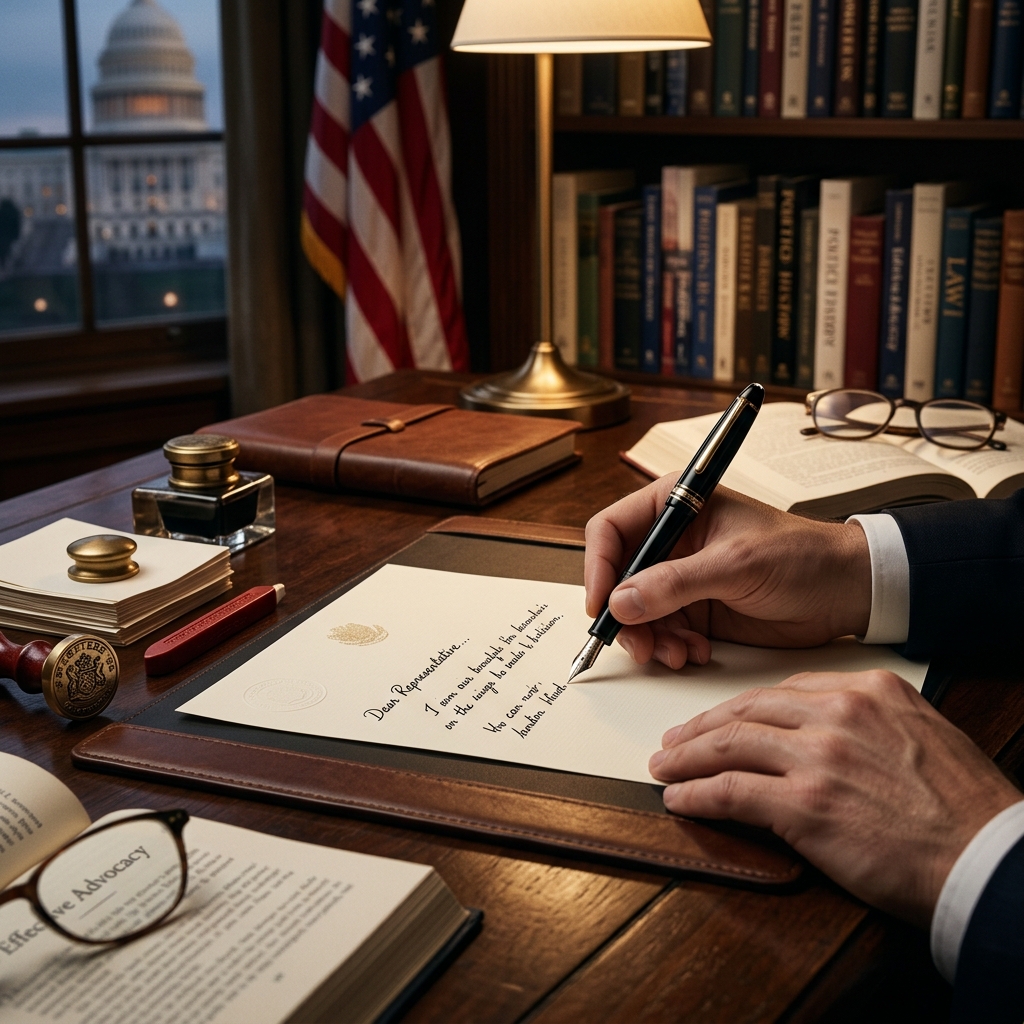
Contacting elected officials is one of the most direct ways for citizens to influence public policy. Thoughtful letters and emails can shape decisions, highlight real-world impacts, and ensure that voices from every community are heard. This guide explains how to write effective, respectful and persuasive messages to politicians at any level of government.
Why Writing to Politicians Matters
Policymakers depend on input from constituents to understand how laws and policies affect everyday life. Legislative staff read and summarize correspondence, and high‑quality messages are more likely to be noticed, shared internally, and reflected in policy debates. When you write clearly and constructively, you help officials:
- Identify local impacts of national or regional issues.
- Prioritize problems that may not be visible from official data alone.
- Recognize expert or lived experience they do not personally have.
- Gauge public support or concern around particular proposals.
Effective communication is therefore not just symbolic; it is a practical tool of democratic participation.
Step 1: Identify the Right Recipient
Your message has more impact when it reaches the official who can actually act on your concern. Before writing, identify which level of government and which office is most relevant.
- National or federal issues (e.g., immigration, national budget, defense) typically involve members of national legislatures and executive branches.
- State or provincial matters (e.g., schools, highways, health programs) are often handled by state legislatures and governors or equivalent officials.
- Local concerns (e.g., zoning, local policing, transit routes) are usually decided by city councils, mayors, county executives, or similar local bodies.
Government information portals usually provide tools to locate your elected officials with a postcode or address and list contact methods, including email forms, postal addresses, and sometimes social media accounts.
Step 2: Choose Your Format – Email vs. Letter
Most offices accept both email and paper letters. Each has advantages, and sometimes using both is helpful.
| Format | Strengths | Best Use Cases |
|---|---|---|
| ||
| Paper letter |
|
|
If the matter is important, sending both an email and a paper letter can improve the chances that staff will see and log your message promptly.
Step 3: Use Correct Titles and Professional Addressing
Using appropriate titles and salutations demonstrates respect and helps staff process your message. Many parliamentary and legislative websites explain the formal styles of address used in their country.
General principles include:
- Use the official title (e.g., “Senator”, “Representative”, “Member of Parliament”, “Mayor”).
- State their full name and role in the address block of a paper letter.
- Open with a courteous salutation such as “Dear Senator Smith” or “Dear Mayor Lopez”.
Correct spelling and formatting are small details, but they contribute to a professional tone and avoid distracting from your message.
Step 4: Structure Your Message for Clarity
Officials and their staff read many letters every day. Clear structure makes your message easier to understand and increases its persuasive value. A concise, single‑issue letter or email is usually more effective than a long list of concerns.
Essential Components of an Effective Letter
- Opening paragraph
- State that you are a constituent, if applicable.
- Identify the topic or specific bill you are writing about (by name or number).
- Briefly explain why you are writing now (e.g., upcoming vote, new policy, local impact).
- Body paragraphs
- Focus on one main issue per message.
- Develop your three strongest points supporting your position.
- Include accurate facts and statistics from reliable sources.
- Explain how the issue affects you, your organization, or your community.
- Recognize key counter‑arguments when relevant and respond briefly.
- Closing paragraph
- Clearly state what action you want the official to take.
- Request a response or meeting, if appropriate.
- Thank them for their time and service.
Most guides recommend keeping letters to one page and emails to a few short paragraphs. Focused, concise messages are easier to read, remember, and act upon.
Step 5: Build Persuasive Content
Persuasion in political correspondence comes from a combination of credible information and authentic personal experience. You do not need formal expertise to make a compelling case, but your points should be logically presented and supported where possible.
Use Accurate Facts and Evidence
Legislators and staff rely heavily on facts when evaluating positions. Strengthen your arguments by including:
- Relevant statistics from government agencies, academic institutions, or recognized research organizations.
- References to recent, reputable news reports that illustrate the issue.
- Brief quotations or findings from non‑partisan reports.
Always ensure your information is current and from credible sources; misleading or exaggerated claims can undermine your message.
Connect Policy to Real Lives
Personal stories help officials see how abstract policies affect individuals and communities. Research on policymaking indicates that constituent narratives often influence how legislators understand the stakes of an issue.
- Describe how the policy impacts your daily life, work, or family.
- Share observations from your neighborhood, school, clinic or workplace.
- Explain why you care about this issue and how long you have been engaged with it.
These details make your letter more memorable and demonstrate that your perspective is grounded in experience, not only in abstract opinion.
Make Your Request Explicit
Officials often receive messages that express concern but do not clearly state what the writer wants them to do. An effective letter includes a straightforward, actionable request.
- Support or oppose a specific bill or amendment.
- Advocate for increased or revised funding for a program.
- Ask for public statements, hearings, or consultation with affected groups.
- Request a meeting or attendance at an event related to the issue.
Stating your desired outcome helps staff track positions and ensures your message is not simply categorized as “general feedback.”
Step 6: Maintain a Respectful, Professional Tone
Even when you strongly disagree with a policy, respectful communication is more likely to be taken seriously and generate constructive responses.
- Be firm but courteous – you can clearly state disagreement without personal attacks.
- Avoid insults and threats – these can lead staff to disregard your message.
- Use clear, plain language rather than jargon, especially when writing as a member of the general public.
- Check grammar and spelling to ensure your points are easy to follow.
A positive, solution‑oriented tone signals that you are interested in dialogue rather than confrontation.
Step 7: Include Complete Contact Information
Officials and staff need a way to verify that you are a constituent and to respond to your message. Always provide basic contact details.
- Your full name.
- Your mailing address (especially important for demonstrating that you live in their district).
- Email address and phone number.
- Organizational role or title, if writing on behalf of a group.
For paper letters, sign your name by hand below the closing. If you use an official title in your signature, some formal styles recommend placing the title in parentheses.
Step 8: Follow Up Strategically
Writing once may not be enough, especially on complex issues. Responsible follow‑up shows commitment while respecting the workload of busy offices.
- Track your correspondence – note the date, topic, and office contacted.
- Wait a reasonable period – many guides suggest about a month for a letter, less for an email, before following up.
- Call or email the office if you have not received an answer, politely asking when a response might be expected.
- Reply to their response – thank them for positive actions or respectfully continue the conversation if you still have concerns.
Consistent, measured engagement can build relationships over time and make future communications more effective.
Step 9: Common Mistakes to Avoid
Many well‑intentioned messages lose impact because of avoidable errors. The following are frequent problems and how to sidestep them.
- Covering too many issues at once – focus on a single topic per letter to avoid diluting your message.
- Excessive length – keep letters under a page and emails to a few concise paragraphs.
- Lack of a clear ask – always state the specific action you want the official to take.
- Overuse of technical language – plain language helps staff quickly understand your points.
- Copy‑paste campaigns without personalization – form letters can be helpful, but adding your own experience and reasoning increases impact.
FAQs: Writing to Politicians
How long should my letter or email be?
Most expert guides recommend keeping letters to one page and emails to a few short paragraphs. This length allows you to explain your position and three key points without overwhelming busy staff.
Do politicians really read individual messages?
Elected officials themselves may not personally read every letter, but staff members review and categorize correspondence, summarize constituent views, and highlight especially thoughtful or impactful messages. Well‑written letters can influence briefings, talking points, and policy decisions.
Is it better to send an email or a paper letter?
Both can be effective. Email is faster and easier to circulate within an office, while paper letters can stand out and feel more formal. For important issues, sending both formats is often recommended.
Should I mention that I am a constituent?
Yes. Many offices prioritize messages from people who live in the official’s district or region. Identify yourself as a constituent in the first paragraph and include your address.
Can I write on behalf of an organization?
Writing as an organization can add weight to your message, especially if you work directly on the issue. Use official letterhead when appropriate, state your role, and ensure your organization’s policies on advocacy are followed.
References
- Writing Your Elected Representatives — American Civil Liberties Union (ACLU). 2023-03-01. https://www.aclu.org/writing-your-elected-representatives
- Find and contact elected officials — USAGov, U.S. General Services Administration. 2024-04-10. https://www.usa.gov/elected-officials
- How to address an MP in a letter — Oxfam Australia. 2022-06-15. https://www.oxfam.org.au/get-involved/take-political-action/writing-to-your-mp/
- Guidelines: How to write a letter to a politician — Share4Rare / Sant Joan de Déu Research Foundation. 2021-09-01. https://www.share4rare.org/sites/default/files/imce/S4R_Tools_Letter%20to%20politician.pdf
- Writing to Policymakers — Association for Career and Technical Education (ACTE). 2022-05-01. https://www.acteonline.org/writing-to-policymakers/
- Politics and Elected Officials: How to Write a Letter to Your Legislator — University of North Texas Libraries. 2020-08-20. https://guides.library.unt.edu/gic-politics-elected-officials/Letter
Similar Articles








Read full bio of medha deb


