
Workplace Holiday Decorations: Safety and Compliance
Master essential guidelines for festive office decorations while maintaining legal and fire safety standards.
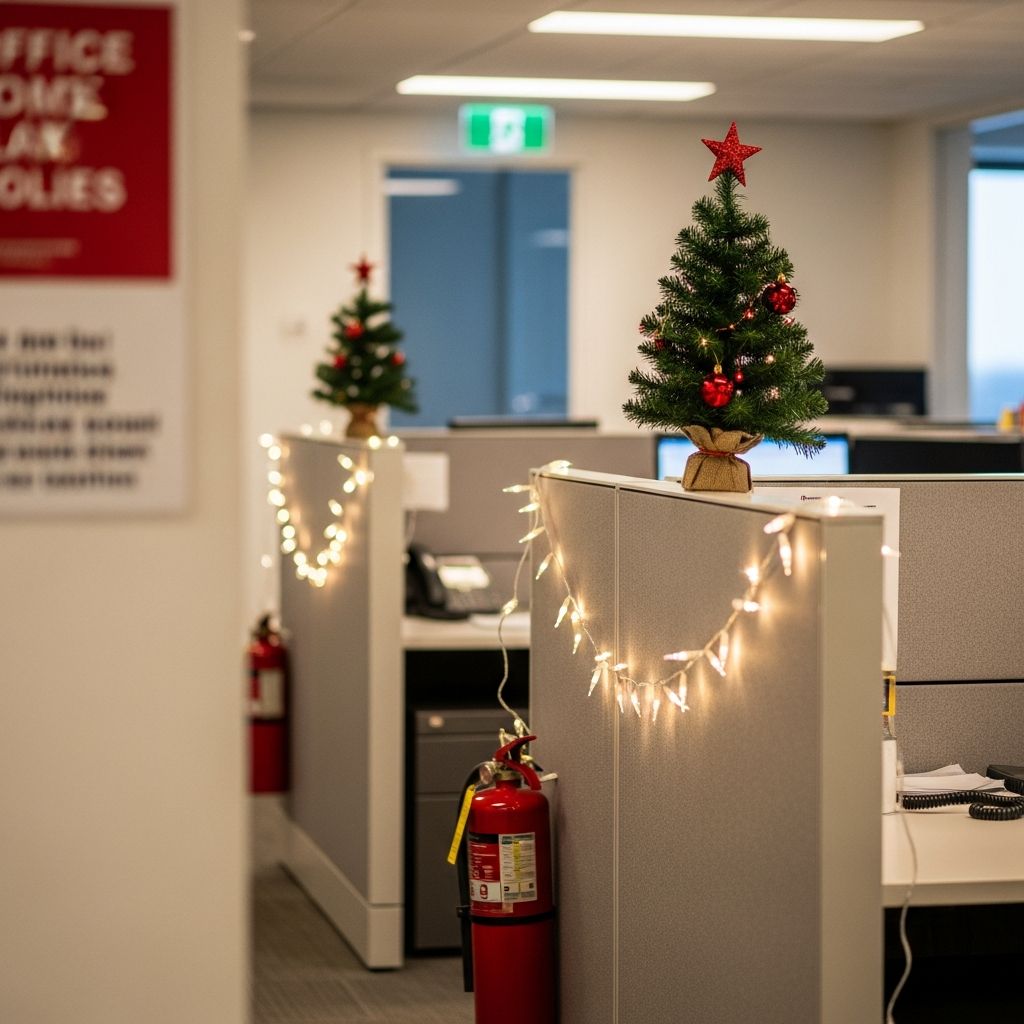
The holiday season brings opportunities for employees to celebrate together and create a festive atmosphere in the workplace. However, decorating office spaces requires careful attention to safety protocols, fire codes, and company policies to ensure that festivities do not create hazards or legal liability. Organizations must balance the desire to celebrate with the responsibility to maintain a safe work environment and comply with applicable regulations.
Holiday decorations, when improperly planned or installed, can create multiple workplace hazards including fire risks, electrical dangers, trip-and-fall incidents, and obstructed emergency exits. Additionally, organizations must consider inclusivity and respect for diverse cultural and religious observances when selecting decoration themes and styles. This comprehensive guide explores the essential considerations for implementing workplace decoration policies that prioritize employee safety, legal compliance, and organizational culture.
Understanding Fire Safety Requirements and Material Selection
Fire safety represents the primary concern when decorating workplace environments. The National Fire Protection Association (NFPA) provides guidelines for temporary decorative materials in commercial buildings, which most states incorporate into local fire codes. Understanding these requirements is fundamental to preventing decoration-related fires that can endanger employees and damage property.
Materials used for workplace decorations must meet specific fire-resistance standards. Most decorative items fall under the category of temporary decorative materials and therefore must comply with flame-resistant or flame-retardant requirements. When selecting decorations, organizations should verify that products carry appropriate certifications, such as Underwriters Laboratory (UL) certification or flame-resistant labels.
Natural materials present particular fire hazards in the workplace environment. Decorations such as baled or loose straw, dry cornstalks, and natural evergreen branches are highly flammable and should be prohibited in most workplace settings. If an organization determines that natural materials are essential to its holiday aesthetic, these items must be treated with flame-retardant solutions and kept strictly away from heat sources, electrical equipment, and ignition sources.
Artificial Trees and Lighting Systems
Artificial holiday trees offer a safer alternative to natural evergreens when selected with appropriate attention to material composition. All artificial trees should be clearly marked or specified as constructed from slow-burning materials or possess fire-resistance or flame-retardant properties. Additionally, artificial trees equipped with built-in electrical systems must carry the Underwriters Laboratory label to ensure they meet electrical safety standards.
Certain materials require special lighting considerations. Aluminum trees present unique shock hazards and should be illuminated only with indirect lighting rather than direct electrical connections. Using extension cords to power holiday trees creates additional electrical risks and should be strictly avoided. All holiday lighting and extension cords used in workplace environments must carry UL approval, with employees verifying the certification tags on all electrical equipment before use.
Placement Restrictions and Egress Protection
The strategic placement of holiday decorations is critical to maintaining workplace safety and compliance with fire codes and life safety regulations. Poor placement decisions can obstruct emergency exits, interfere with fire suppression systems, and create visibility hazards that endanger employees during evacuations.
Decorations must never be placed in locations that compromise emergency egress or fire protection systems. Organizations should maintain strict prohibitions on decorations and related objects in corridors, exit hallways, near corridor doors, or on exit signs. Additionally, decorations must not obstruct any fire detection or protection devices, including smoke detectors, heat detectors, sprinkler heads, and fire suppression equipment.
Vision panels, or windows in doors, must remain completely unobstructed to allow clear sightlines through the door from both sides. This requirement ensures that individuals can observe potential hazards or emergency situations on the opposite side of doors and determine whether it is safe to proceed. Similarly, decorations should never be hung from ceilings, as overhead decorations can pose falling object hazards, obstruct sprinkler systems, and create fire risks.
Glass decorations present additional hazards in workplace settings. Organizations should utilize unbreakable, non-glass decorations whenever possible, as glass balls and ornaments can fall, break, and create cutting hazards for employees. When applying decorations to walls, employees should use only authorized putty rather than tape, tacks, or staples, which can damage building surfaces and leave permanent marks.
Decorations should be proportionally limited in extent across any work surface. In healthcare and institutional settings, decorations should not exceed 30 percent of any wall, ceiling, or door area outside of resident sleeping rooms to maintain compliance with life safety codes and prevent excessive visual obstruction.
Electrical Safety and Hazard Prevention
Electrical hazards represent a significant risk during the holiday season when decorative lighting and additional electrical equipment are installed throughout workplace environments. Many holiday-related workplace injuries stem from improper extension cord management, overloaded circuits, and unsafe electrical practices.
Extension cords used for holiday decorations must be specifically rated for the equipment they power and should not be used in place of permanent wiring installations. All extension cords and holiday lighting equipment must carry UL certification, which indicates that products have been tested and verified to meet established safety standards. Organizations should establish clear guidelines prohibiting the use of non-certified or damaged electrical equipment in workplace decoration projects.
A critical electrical safety practice involves turning off all trees and other decorative lighting when employees leave their work areas for the day or when areas are unoccupied. This practice reduces fire risks and prevents electrical failures that could occur during extended operation. Additionally, employees should receive training on recognizing signs of electrical damage, such as exposed wires, damaged insulation, or non-functioning components, and should report these hazards to maintenance staff immediately.
Kitchen areas and spaces with heat-generating equipment require particular attention to electrical and fire safety. Decorations must be kept away from heat sources such as ovens, stovetops, space heaters, and other equipment that generates significant temperatures. Kitchen fire suppression systems must be maintained in clean, unobstructed condition to ensure they function properly in the event of a fire related to grease or cooking accidents.
Planning Safe Decoration Installation and Maintenance
Implementing workplace decoration policies requires careful planning regarding timing, installation methods, and ongoing maintenance to prevent accidents and injuries. Organizations should establish clear procedures that protect employee safety throughout the decoration process.
When hanging decorations at height, employees must use appropriate equipment specifically designed for the task. Ladders represent the only acceptable platforms for reaching elevated areas; office chairs, buckets, stepladders not rated for the task, and other improvised platforms should never be used for decoration installation. Organizations should ensure that appropriate ladders are available and that employees receive training on safe ladder usage before beginning decoration projects.
Establishing designated periods for installation and removal of decorations helps organize the process and ensures compliance with fire codes and building regulations. Organizations should identify specific timeframes during which decorations may be installed and the dates by which all decorations must be removed from the workplace. This approach prevents extended exposure of the workplace to fire hazards and maintains a professional appearance throughout the year.
Assigning maintenance staff to perform daily safety checks on decorations and electrical setups provides an important quality assurance function. These inspections should verify that decorations remain secure, electrical connections remain intact, and no new hazards have developed since installation. Maintenance personnel should be trained to recognize fire hazards, electrical dangers, and code violations and should have clear authority to address problems immediately.
Creating an Inclusive and Respectful Celebration Environment
Beyond fire safety and physical hazards, workplace decoration policies must address inclusivity and respect for the diverse cultures and religious traditions represented in the modern workplace. Organizations have both legal obligations under employment law and ethical responsibilities to create work environments where all employees feel valued and respected during holiday celebrations.
Distinguishing Public and Private Workspace Decoration Guidelines
Federal guidelines and organizational policies typically distinguish between public and private workspace when determining what decorations are appropriate. This distinction reflects legal requirements regarding religious expression in workplace environments while still allowing employees to celebrate personal traditions.
In public work spaces—areas where clients, customers, or members of the general public have physical or visual access, such as lobbies, reception areas, front counters, hallways, and building exteriors—organizations should restrict decorations to secular holiday themes. Secular decorations include items such as tinsel, garland, snowmen, candy canes, and reindeer that celebrate the winter season without advancing particular religious traditions. Religious symbols or holiday decorations with explicit religious content should not be displayed in these areas.
Private work spaces, defined as areas assigned exclusively to individual employees such as personal cubicles, desks, or individual offices not regularly visible to clients or the general public, allow greater flexibility. In these spaces, employees may display holiday decorations with religious content or secular decorations according to personal preference, provided that the decorations do not create safety hazards or fire code violations.
Shared work spaces—including copy rooms, conference rooms, shared offices, and break areas—follow the same guidelines as public spaces and should display only secular decorations. Religious or culturally specific decorations should not be displayed in shared spaces where employees of differing beliefs must work together or pass through regularly.
Inclusive Celebration Activities and Participation
Holiday activities such as luncheons, potlucks, and gift exchanges should remain completely voluntary, with organizational leaders making clear that participation is optional. Some employees may be uncomfortable participating in certain celebrations due to religious beliefs, cultural traditions, or personal circumstances, and management should respect these decisions without applying pressure or demonstrating favoritism toward participants.
To create more genuinely inclusive work environments, organizations should plan activities that share and celebrate different cultural traditions during the holiday season. Designating common areas where educational materials highlight occasions of significance celebrated by various cultures represented in the workforce demonstrates organizational commitment to diversity and inclusion. Using multicultural calendars during event planning helps organizations recognize and honor multiple traditions rather than focusing exclusively on dominant cultural celebrations.
Inviting staff to participate and share information or items reflecting their personal cultural traditions or beliefs in holiday gatherings creates opportunities for cross-cultural learning and genuine community building. Supervisors and managers must avoid actions that could be perceived as endorsing or supporting religion generally or particular religious traditions over others, which could create legal liability and undermine workplace trust.
Building Employee Awareness and Responsibility
Successful implementation of workplace decoration guidelines requires that all employees understand the policies, the reasons behind them, and their individual responsibilities in maintaining a safe and compliant workplace during celebrations.
Organizations should provide clear, written guidance that employees can reference when making decisions about decorations for their work spaces. Policy documents should specify which decorations are prohibited, which are permissible in various locations, what certification or labeling is required for electrical equipment, and how to report potential safety hazards. Visual reminders posted in break rooms, hallways, and common areas reinforce key safety messages throughout the decoration season.
Training sessions or informational materials should educate employees on fire hazards associated with specific decoration types, proper installation methods, and the importance of maintaining emergency egress pathways. When employees understand why certain restrictions exist and what dangers they prevent, they are more likely to comply with policies and to encourage colleagues to follow guidelines as well.
Establishing clear reporting procedures allows employees to alert management or maintenance staff when they observe potential safety violations, hazardous conditions, or decorations that appear to violate company policy. Organizations should encourage these reports without penalizing employees who raise legitimate safety concerns and should address reported issues promptly to demonstrate that safety policies are genuinely enforced.
Developing a Comprehensive Workplace Decoration Policy
Organizations benefit from developing comprehensive, written policies that address all aspects of workplace decoration during holiday seasons and special occasions. These policies should clearly delineate prohibited and permissible decorations, specify placement guidelines, address electrical safety requirements, describe maintenance and inspection procedures, and establish timelines for installation and removal.
Policies should explicitly address the materials and practices that create fire hazards, ensuring that employees understand which decorations are prohibited and the reasons for prohibitions. Rather than presenting restrictions as arbitrary rules, explanatory language helps employees understand the connection between specific guidelines and employee safety.
Organizations should designate specific individuals or departments responsible for policy enforcement, safety inspections, and coordination of workplace decoration efforts. Clear assignment of responsibility ensures that someone is actively monitoring compliance and addressing violations rather than relying on passive enforcement through written guidelines alone.
Common Questions About Workplace Holiday Decorations
Q: Can employees display religious decorations like nativity scenes or menorahs in their personal cubicles?
A: Yes, in private work spaces assigned exclusively to individual employees and not regularly visible to the general public, employees may display decorations with religious content. However, these decorations must still comply with fire safety requirements and must not create hazards. Religious decorations should not be displayed in shared spaces or public areas where they might be visible to clients or other employees who do not share the religious tradition.
Q: Are natural holiday trees acceptable for workplace decoration?
A: Natural evergreens and similar materials are highly flammable and present significant fire hazards in workplace environments. Most organizations prohibit natural trees entirely. If an organization permits natural materials, they must be treated with flame-retardant solutions, kept away from heat sources and electrical equipment, and clearly labeled as flame-retardant. Artificial trees that are flame-resistant or flame-retardant and carry UL certification for electrical components represent safer alternatives.
Q: What should employees do if they notice a decoration creating a safety hazard?
A: Employees should immediately report safety concerns to their supervisor, maintenance department, or designated safety personnel. Hazards might include obstructed fire exits, decorations blocking sprinkler systems, damaged electrical cords, or improperly secured items that could fall. Reporting these issues promptly prevents injuries and fires and demonstrates organizational commitment to safety.
Q: How can organizations balance festive celebrations with inclusive workplace environments?
A: Organizations should use secular decorations in public and shared spaces while allowing religious or culturally specific decorations in private work areas. Holiday activities should remain voluntary with no pressure to participate. Educational materials highlighting various cultural traditions celebrated by employees, multicultural calendars, and opportunities for staff to share personal traditions create inclusive environments that honor diverse backgrounds.
Q: Are there specific regulations governing workplace decoration safety?
A: Yes, workplace decoration safety is governed by the National Fire Protection Association (NFPA) guidelines, local fire codes based on those guidelines, Occupational Safety and Health Administration (OSHA) standards regarding workplace hazards, and life safety codes in healthcare and institutional settings. Organizations should consult their local fire department or building safety officials regarding specific regulations applicable in their jurisdiction.
References
- Guidance for Safe, Respectful Workplace Holiday Decorations — Penn State Health, Office for Diversity, Equity and Inclusion and Department of Safety. 2025. https://pennstatehealthnews.org/topics/guidance-for-safe-respectful-workplace-holiday-decorations-3/
- Holiday Decorations and Celebrations Guidelines for a Respectful and Inclusive Workplace — University of Mary Washington, Administrative Finance Human Resources. 2025. https://adminfinance.umw.edu/hr/employee-relations/respectful-workplace-policies/holiday-decorations-and-celebrations-guidelines-for-a-respectful-and-inclusive-workplace/
- Workplace Holiday Decoration Safety — DynaFire. 2025. https://dynafire.com/workplace-holiday-decoration-safety/
- Safe Holiday Decorating Guidelines — Regis University, Physical Plant Department. 2025. https://one.regis.edu/news/2025/university-updates/12/safe-holiday-decorating-guidelines
- OSHA’s Unofficial Guidelines for Safe Holiday Decorating — Illinois WorkSafe, Occupational Safety and Health Administration. 2025. https://worksafe.illinois.gov
- Keep Safety and Compliance in Mind When Decorating for the Holidays — American Health Care Association and National Center for Assisted Living. December 10, 2024. https://www.ahcancal.org/News-and-Communications/Blog/Pages/Keep-Safety-and-Compliance-in-Mind-When-Decorating-for-the-Holidays.aspx
- Holiday Decoration Safety Tips — U.S. Consumer Product Safety Commission. 2024. https://www.cpsc.gov
Similar Articles








Read full bio of medha deb




