
Workplace Equality for Women in the Skilled Trades
A practical legal and workplace guide to help women in construction, manufacturing, utilities, and other trades assert their rights and build safer, fairer careers.
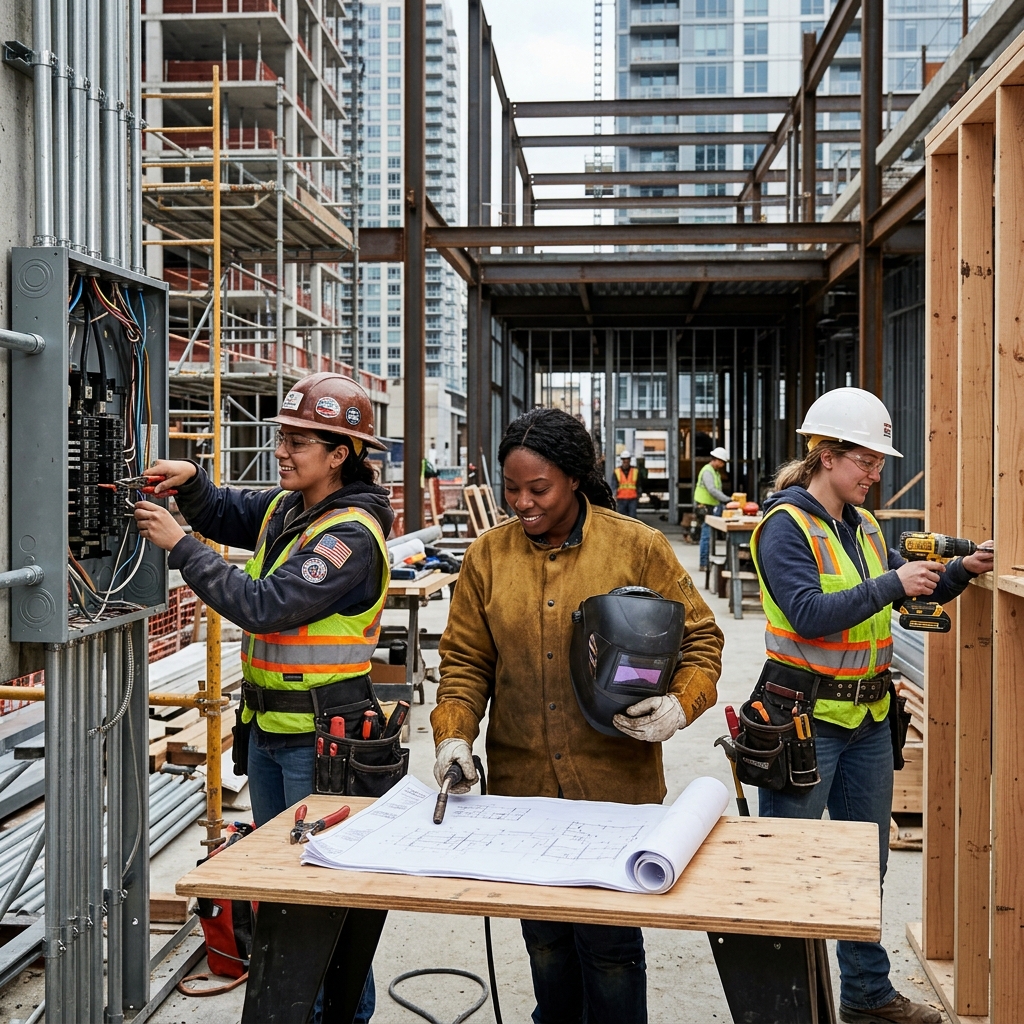
Women working in construction, manufacturing, utilities, transportation, and other skilled trades have the same legal right to fair pay, safety, and opportunity as men. Yet they continue to face unique barriers, from harassment on job sites to being passed over for the best assignments and training opportunities.
This guide explains the core legal protections that apply to women in the trades, the most common types of discrimination they experience, and concrete steps for documenting, reporting, and challenging unlawful treatment. It is written for apprentices, journey-level workers, foremen, supervisors, union members, and anyone supporting women in nontraditional occupations.
1. Why Equality in the Trades Matters
Skilled trades offer stable wages, benefits, and career ladders that can dramatically improve economic security for women and their families. At the same time, women remain severely underrepresented: in many skilled trades, they make up well under 10% of the workforce.
Ensuring equal treatment in these roles is not just about fairness; it affects safety, workforce quality, and the long-term health of the industry.
- Economic opportunity: Trade jobs often pay more than many traditional “women’s” jobs that require similar or higher levels of education.
- Skills shortage: Many trades face labor shortages, which can be partially addressed by recruiting and retaining more women.
- Safety and health: Hostile work environments and inadequate protective equipment increase injury risk and psychological stress for women in the trades.
2. Key Federal Laws Protecting Women in the Trades
Several U.S. federal laws provide the foundation for workplace equality. Many states and localities add stronger protections on top of these federal minimums.
2.1 Title VII and Sex Discrimination
Title VII of the Civil Rights Act of 1964 prohibits employers with 15 or more employees from discriminating based on sex in hiring, firing, pay, training, promotion, and other terms of employment.
- Employers may not refuse to hire a woman into a trade job simply because of her sex.
- Assignments, overtime, and training cannot be distributed based on gender stereotypes.
- Sexual harassment is a form of sex discrimination when it is severe or pervasive enough to create a hostile work environment.
These protections apply to many trade roles, including:
- Apprenticeship and pre-apprenticeship positions.
- Union and nonunion jobs.
- Employees of contractors, subcontractors, and staffing agencies.
2.2 Equal Pay and Wage Fairness
The Equal Pay Act and Title VII require that women receive equal pay for equal work, meaning substantially similar skills, effort, responsibility, and working conditions.
- Women must be paid at least the same as male coworkers in the same classification and with comparable qualifications.
- Employers cannot justify pay gaps based on assumptions that men are “breadwinners” or that women do not need overtime.
- Pay secrecy policies that discourage discussing wages may violate federal labor protections, particularly for non-supervisory employees.
2.3 Pregnancy, Lactation, and Family Responsibilities
Women in physically demanding trade jobs may face unique challenges during pregnancy, childbirth, and postpartum recovery. Several federal laws offer specific protections:
- Pregnancy Discrimination Act: Employers must treat pregnancy and related conditions as they would any other temporary medical condition, including with respect to light duty or leave.
- Family and Medical Leave Act (FMLA): For eligible employees, FMLA provides up to 12 weeks of unpaid, job-protected leave for childbirth or serious health conditions.
- Reasonable accommodations: Under disability and pregnancy accommodation laws, many workers are entitled to modifications such as lifting restrictions, adjusted schedules, or temporary reassignment where feasible.
These rights apply regardless of whether the job is traditionally male-dominated and must be honored on construction sites, in fabrication shops, and in other field environments.
3. Common Forms of Discrimination in the Trades
Although the legal framework is clear, women in the trades often encounter similar patterns of unequal treatment. Research highlights both physical and psychosocial hazards tied to gender bias.
3.1 Hiring and Apprenticeship Barriers
Bias can surface at the earliest stages of a trade career:
- Being told that “women don’t last” in the trade or are not strong enough for the work.
- Lack of information about apprenticeship opportunities being shared with women and girls.
- Informal hiring practices that favor male-dominated social networks.
While outreach programs and targeted recruitment are expanding, women still enter apprenticeships at significantly lower rates than men.
3.2 Harassment and Hostile Work Environments
Studies show that tradeswomen frequently report a hostile work climate that increases both injury risk and psychological strain.
Examples of hostile conduct include:
- Sexual jokes, comments, or explicit images in the workplace.
- Unwanted touching or repeated requests for dates.
- Sabotage of tools or materials, or being given unsafe tasks as a way of “testing” women.
- Retaliation or ridicule for raising safety or discrimination concerns.
Harassment from supervisors, coworkers, or even workers from other companies on the same job site can all be covered under Title VII when the employer fails to take reasonable steps to prevent and correct it.
3.3 Unequal Training, Assignments, and Advancement
Women may be technically “in” the trade but still denied the experiences they need to advance:
- Being regularly tasked with cleaning, driving, or lower-skill work instead of core trade tasks.
- Excluded from overtime, plum projects, or specialized training that increase earnings.
- Overlooked for foreman or lead positions despite seniority or qualifications.
Because trade careers rely heavily on on-the-job learning, these patterns can permanently limit a woman’s earnings and professional growth.
3.4 Safety Equipment and Facilities
Women in the trades often report poorly fitting personal protective equipment (PPE), lack of sanitary facilities, and other basic infrastructure gaps.
| Issue | Example | Potential Legal Concern |
|---|---|---|
| Poorly fitting PPE | Gloves, harnesses, or respirators designed only for larger male bodies | May violate OSHA’s requirement for appropriate PPE and raise discrimination concerns if not remedied. |
| Lack of restrooms | No private, sanitary toilets for women on a remote site | Can violate health and safety standards and contribute to a hostile environment. |
| Lactation needs | No clean, private space (other than a bathroom) for pumping breast milk | May violate federal lactation break requirements in many circumstances. |
4. Your Rights and Options: Practical Steps
Knowing the law is only part of the picture. Women in the trades also need practical strategies to assert their rights while protecting their safety and livelihood.
4.1 Documenting Problems
Meticulous documentation can make the difference in whether complaints are taken seriously and whether a legal claim can succeed.
- Keep a written log of incidents: dates, times, locations, people involved, witnesses, and what was said or done.
- Save texts, emails, photos, or social media posts that demonstrate harassment, discriminatory instructions, or unequal treatment.
- Note when you report concerns and how supervisors or HR respond.
Recordkeeping can be done in a notebook, secure digital file, or password-protected app, but protect your privacy and avoid violating workplace rules about recording conversations without consent where applicable.
4.2 Using Internal Reporting Channels
Most employers and unions have procedures for reporting harassment or discrimination. These may include:
- Notifying a foreman, superintendent, or site supervisor.
- Submitting a written complaint to human resources, if available.
- Contacting a union steward or business agent to file a grievance under the collective bargaining agreement.
Following internal procedures can be important both for resolving problems and for preserving certain legal rights, especially in harassment cases where employers may defend themselves by claiming they were never informed.
4.3 Filing External Complaints
If internal processes fail, or if the situation is severe, women in the trades can file complaints with government agencies such as the Equal Employment Opportunity Commission (EEOC) or state and local civil rights agencies.
- There are strict deadlines—often as short as 180 days from the date of discrimination—so acting promptly is crucial.
- These agencies can investigate, seek settlement, or issue a right-to-sue letter allowing a worker to bring a lawsuit in court.
- Workers generally have the right to be free from retaliation for filing a complaint or participating in an investigation.
In some trades, government contracting rules also require contractors to maintain affirmative action and nondiscrimination programs. Complaints about violations can sometimes be directed to the relevant contracting agency.
5. Support Systems and Resources for Tradeswomen
Women do not have to navigate these challenges alone. Unions, training providers, and advocacy organizations increasingly offer targeted supports.
5.1 Unions and Worker Organizations
Unionized trade workplaces often provide significant advantages for women, including more transparent pay structures, grievance procedures, and health benefits.
- Collective bargaining agreements that spell out wage rates, job classifications, and promotion processes, making discrimination easier to detect.
- Stewards and union staff who can accompany workers during meetings with management and help file grievances.
- Joint apprenticeship committees that can address discriminatory apprenticeship practices or training exclusions.
5.2 Pre-Apprenticeship and Training Programs
Specialized programs for women help bridge the gap into skilled trades through hands-on training, career exploration, and academic preparation.
- Pre-apprenticeships that teach tool basics, safety, and industry expectations.
- Support with math skills, test preparation, and application processes.
- Mentoring, peer networks, and ongoing support during the first years in the field.
These programs can increase confidence, help women identify quality employers, and provide trusted contacts when problems arise.
5.3 Mentoring and Peer Networks
Peer support is critical in nontraditional occupations where women may be the only female worker on a crew.
- Networking groups and associations for tradeswomen that provide mentoring, advice, and referrals.
- Online communities where women share strategies for handling harassment, negotiating pay, and balancing family responsibilities.
- Regional conferences and events that highlight best practices and connect women with allies in unions, industry, and government.
6. Strategies for Employers and Unions to Advance Equality
Creating equitable workplaces is not solely the responsibility of individual workers. Employers, unions, and training providers play a central role in removing barriers and building inclusive job sites.
6.1 Inclusive Recruitment and Hiring
- Partner with schools, community colleges, and community organizations to introduce girls and women to trades careers.
- Use gender-neutral job ads and images that depict women in trade roles.
- Standardize hiring criteria to reduce reliance on informal networks and subjective impressions.
6.2 Fair Training, Assignments, and Promotion
- Track who receives overtime, training, and high-visibility assignments, and review data for gender disparities.
- Provide clear written criteria for advancement to journey-level status, lead roles, or supervisory positions.
- Develop mentorship programs pairing experienced workers with new tradeswomen.
6.3 Safe and Respectful Work Environments
- Adopt and enforce written anti-harassment policies covering all workers on the job site, including subcontractors.
- Provide hands-on, trade-specific harassment and bystander training that addresses real scenarios workers face.
- Ensure access to properly fitting PPE and safe, sanitary, and private facilities, including for pregnant and nursing workers.
6.4 Accountability and Continuous Improvement
- Survey workers anonymously about climate, safety, and inclusion, and act on the findings.
- Integrate diversity and equity metrics into supervisor evaluations and contractor selection.
- Collaborate with unions and tradeswomen’s organizations to assess policies and develop targeted initiatives.
7. Frequently Asked Questions (FAQs)
Do anti-discrimination laws apply on temporary or short-term construction projects?
Yes. Federal anti-discrimination laws such as Title VII generally apply based on the size of the employer, not the duration of the project. If the company meets the employee threshold and otherwise falls under the statute, its obligations extend to all covered worksites and projects where its employees perform work.
What if harassment comes from workers employed by another contractor on the same site?
An employer can be responsible for harassment by nonemployees if it knows or should know about the conduct and fails to take reasonable steps to stop it. Workers should report harassment to their own employer and, where applicable, to site management overseeing all contractors.
Can I be fired or laid off for complaining about discrimination or unsafe conditions?
Retaliation for reporting discrimination, harassment, or participating in an investigation is prohibited under federal equal employment opportunity laws. Workers who experience adverse actions soon after raising concerns should document events and seek legal or union assistance immediately.
How do I know if a pay difference is illegal?
Not every pay difference is unlawful, but significant differences between men and women doing substantially equal work can violate the Equal Pay Act or Title VII if not explained by legitimate factors such as seniority or qualifications. Union wage scales, job descriptions, and payroll records can help evaluate potential disparities.
Where can I get help understanding my rights?
Women in the trades can consult multiple sources: their union (if represented), local legal aid offices, bar association lawyer referral services, or government agencies that enforce anti-discrimination laws. Many tradeswomen’s organizations and training programs also provide referrals and practical guidance.
8. Moving Forward: Building a More Equitable Future in the Trades
When women have full and equal access to skilled trade careers, everyone benefits: workers, employers, communities, and the broader economy. Yet the path to equality requires persistence—from individuals who assert their rights, from unions and employers who commit to change, and from policymakers who strengthen and enforce legal protections.
By combining knowledge of the law with strong peer support, careful documentation, and strategic use of internal and external complaint mechanisms, women can protect themselves and help transform the trades into workplaces where talent, not gender, determines opportunity.
References
- Working Safely in the Trades as Women: A Qualitative Exploration of Hazards — Hall, A. L. et al., Journal of Occupational and Environmental Medicine. 2022-02-01. https://pmc.ncbi.nlm.nih.gov/articles/PMC8833840/
- Women in Trades: Breaking Barriers and Building Futures — Northshore Technical Community College. 2021-10-01. https://ntinow.edu/women-in-trades-breaking-barriers-and-building-futures/
- Resources for Women in the Skilled Trades — WorkWave. 2023-03-15. https://www.workwave.com/blog/resources-for-women-in-the-skilled-trades
- Women in Trades — Employment Training for Adults (ETA), New York State Education Department. 2020-09-01. https://www.etaprogram.org/apps/pages/WomenInTrades
- The Gender Gap in Skilled Trades and Efforts to Increase Diversity — Philadelphia Technician Training Institute. 2022-06-10. https://ptt.edu/the-gender-gap-in-skilled-trades-and-efforts-to-increase-diversity/
- Practical Steps Employers Can Take to Support Women in Trades — LinkedIn Article. 2021-05-20. https://www.linkedin.com/pulse/practical-steps-employers-can-take-support-women-trades-ngdqc
Similar Articles








Read full bio of medha deb




