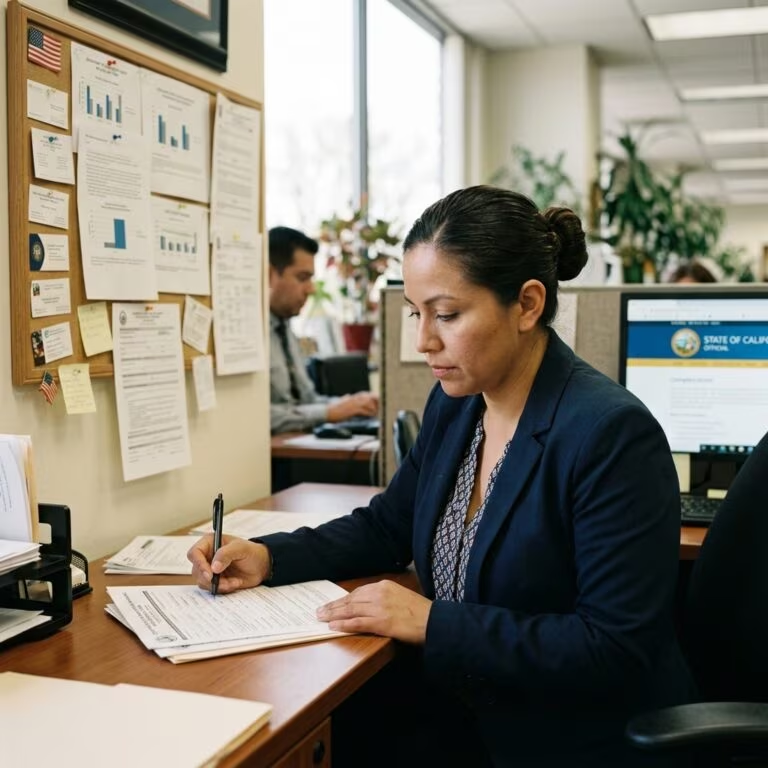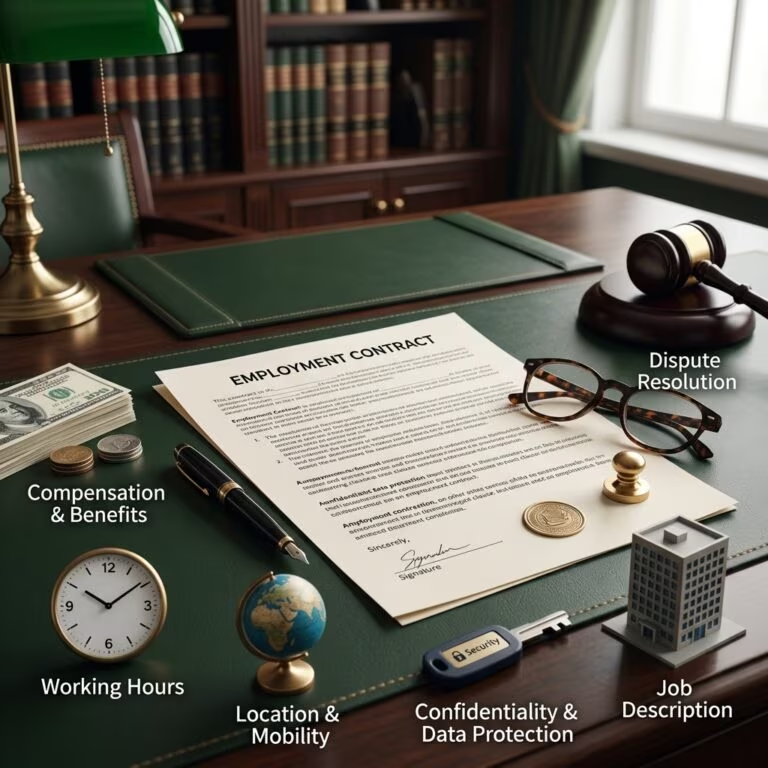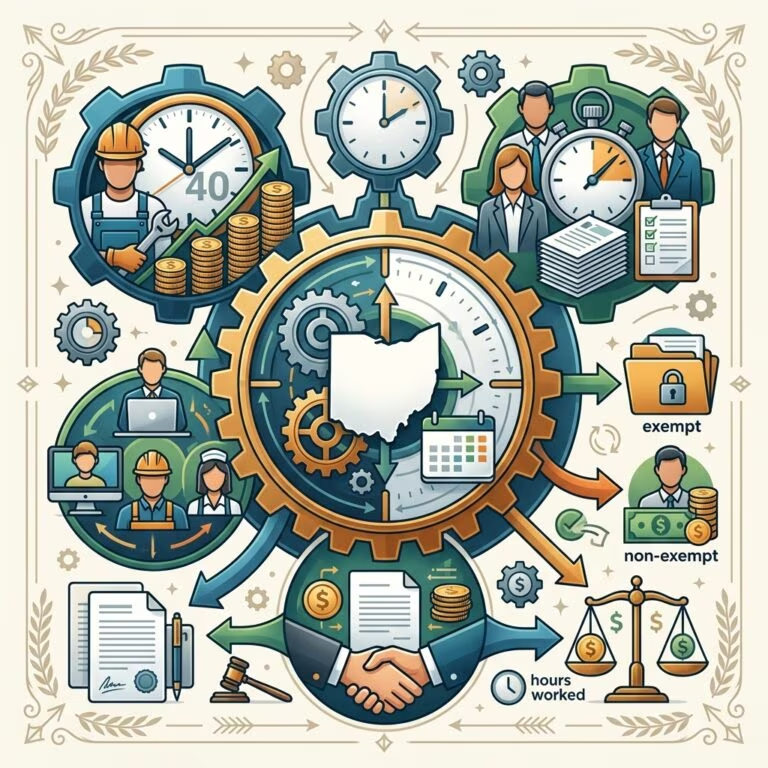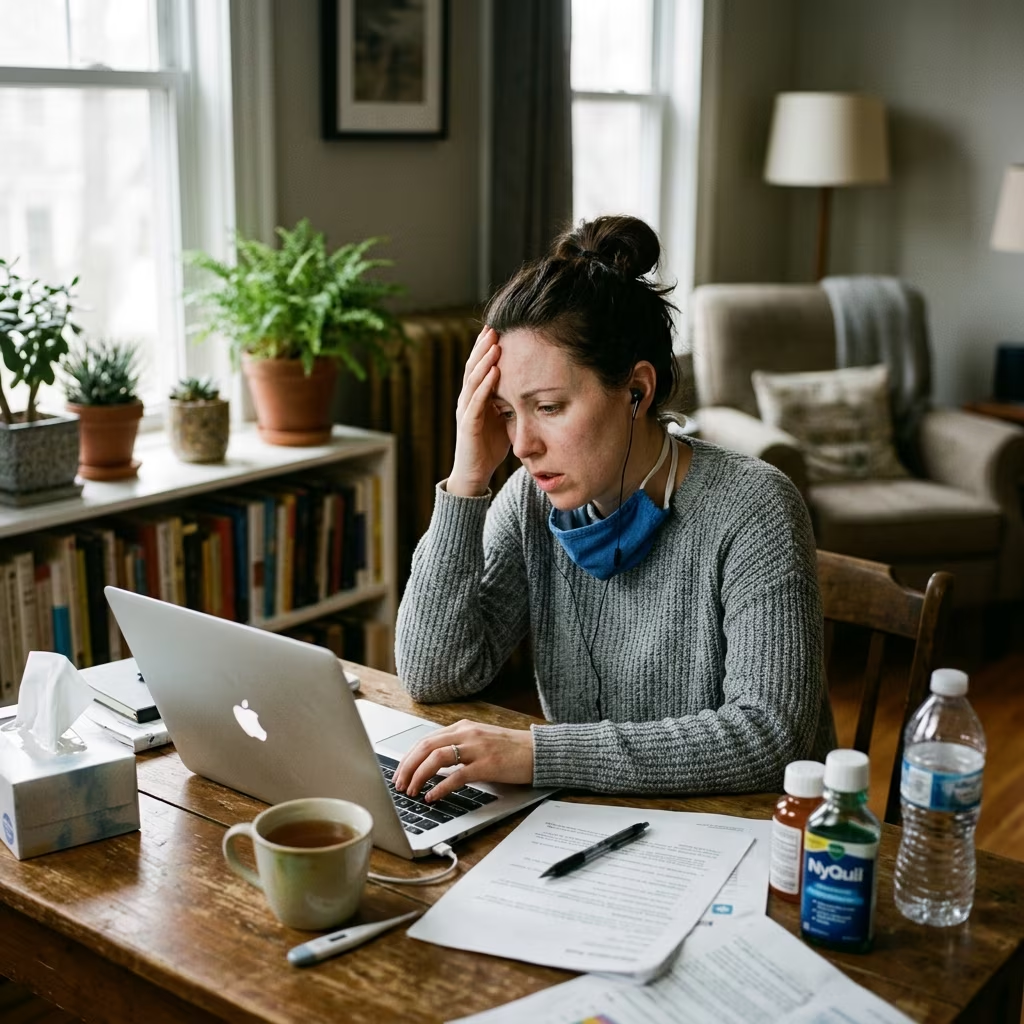
Being asked to work while you are sick puts you in a difficult position. You may worry about losing income, upsetting your manager, or even jeopardizing your job if you stay home. At the same time, you want to protect your health and avoid spreading illness to coworkers or customers. This article explains how U.S. employment laws and workplace policies address sick time, when an employer can insist you work, and what you can do if you are pressured to show up while ill.
Understanding the Legal Landscape of Sick Leave
Sick leave rules in the United States are a patchwork of federal, state, and local laws layered on top of employer-specific policies. There is no general federal law that requires private employers to offer paid sick days to all employees. Instead, protections depend on where you work, the size of your employer, and how long you have worked there.
- Federal law provides unpaid job-protected leave in limited situations through the Family and Medical Leave Act (FMLA).
- Many states and some cities have their own paid sick leave mandates with specific accrual rules and usage protections.
- Employers may voluntarily offer sick time through written policies or collective bargaining agreements, even when not required by law.
Because of this complexity, whether your boss can require you to work while sick depends heavily on which laws apply to your job and what your employer’s policy says.
Federal Protections: FMLA and Sick Leave
The main federal law relevant to serious health conditions is the Family and Medical Leave Act (FMLA). The FMLA does not guarantee paid sick days, but it does provide up to 12 weeks of unpaid, job-protected leave for certain medical and family situations.
When FMLA Applies
FMLA only covers some employers and employees. To be eligible, all of the following must be true:
- Your employer is a covered entity (generally a private employer with at least 50 employees within 75 miles, or a public agency).
- You have worked for the employer for at least 12 months.
- You have logged at least 1,250 hours of work during those 12 months.
If eligible, you may use FMLA leave for your own serious health condition or to care for an immediate family member with such a condition. During FMLA leave, your employer:
- Must maintain your job (or a substantially equivalent position) for you.
- Generally cannot fire or discipline you for taking approved leave.
- May not require you to work or respond to normal work demands during your leave, aside from minimal, necessary communications.
FMLA does not apply to short, routine illnesses like a mild cold. However, when your illness is serious enough to qualify, it can provide strong protection against being forced to work.
State and Local Paid Sick Leave Laws
Because there is no broad federal requirement for paid sick days, many states and cities have enacted their own sick leave laws. These laws typically require covered employers to provide a minimum amount of paid time off that employees can use when they or certain family members are ill, need medical care, or are affected by domestic or sexual violence.
Common Features of State Sick Leave Laws
While specific rules vary, paid sick leave laws often share several features:
- Accrual of hours: Employees earn at least one hour of sick leave for every 30 hours worked.
- Usage rights: Employees can use accrued time for their own illness, preventative care, or to care for family members.
- Protection from retaliation: Employers may not punish employees for using lawful sick leave.
- Return to work: Employees are entitled to return to work without negative consequences after approved sick leave.
Examples from Major States
| Jurisdiction | Minimum Paid Sick Leave | Key Protection |
|---|---|---|
| California | At least 40 hours or 5 days per year for most workers. | Employees cannot be required to find a replacement as a condition of using sick leave. |
| New York State | 40–56 hours per year depending on employer size; some small employers provide unpaid leave. | Employers generally cannot require medical verification for absences under 3 consecutive scheduled days. |
| Colorado | Paid sick leave with full pay and protection against negative consequences for using it. | Employees have a right to return to work without retaliation. |
In these jurisdictions, once you have accrued and properly requested sick leave, your employer generally cannot lawfully demand that you work instead, or punish you for staying home.
Can Your Boss Force You to Work While Sick?
Whether an employer can require you to work during illness usually turns on two questions:
- Do you have a legal or contractual right to take sick leave at that time?
- Is the employer’s demand consistent with anti-retaliation and health and safety laws?
Situations Where You Have Strong Protection
Your employer’s ability to insist that you work is limited when:
- You are using properly requested and approved paid sick leave under state or local law.
- You are on FMLA leave for a qualifying serious health condition.
- Your employment contract or union agreement explicitly protects sick time and restricts employer interference.
- Public health orders or employer policies require you to stay home (for example, after certain exposures or symptoms during a public health emergency).
In these circumstances, your boss generally cannot lawfully demand that you come in, threaten discipline for using sick leave, or pressure you to work when you have a right to be off.
Situations Where Employer Demands Are More Flexible
In other cases, the law gives employers more discretion. For example:
- If you work in a jurisdiction without paid sick leave laws and no FMLA coverage, your employer may lawfully expect you to attend work, depending on company policy.
- When you have used up all available sick leave hours, your employer may require you to work or approve unpaid time off under its normal rules.
- Policies may allow employers to inquire about your ability to perform essential job functions if your illness affects safety or performance.
Even when the law does not mandate sick leave, employers still must comply with other regulations, including health and safety rules and disability protections. In some workplaces, allowing or requiring visibly ill employees to work could raise OSHA or similar safety concerns, particularly in healthcare, food service, or close-contact environments.
Your Rights When You Choose to Stay Home Sick
If you decide not to work because you are ill, your rights depend on the type of leave you are using and the laws in your jurisdiction.
Using Statutory Paid Sick Leave
In states with paid sick leave laws, once you follow any notice requirements and use available hours, you are typically entitled to:
- Receive pay at your regular rate (or applicable minimum wage, whichever is higher in some jurisdictions).
- Return to work without being demoted, fired, or otherwise penalized for lawful sick leave use.
- Be free from requirements like finding a replacement to cover your shift as a condition of using sick time (for example, in California).
Using Employer-Provided Sick Leave
Even when sick leave is not mandated by law, many employers offer it voluntarily. In these cases, your rights are governed by:
- The written policy in your employee handbook.
- Any individual employment contract or union agreement.
- General anti-discrimination and retaliation protections that apply to all workplace policies.
Employers that promise sick leave may not selectively deny or punish its use based on protected characteristics (such as disability, age, sex, or race) or in retaliation for asserting legal rights.
What If Your Employer Pressures You to Work While Sick?
Pressure to work while ill can be subtle—like suggesting you “push through” an illness—or direct, such as threats of discipline. How you respond should be guided by an understanding of your rights and the practical realities of your job.
Practical Steps to Take
- Review your company’s policies: Check your employee handbook or HR portal for sick leave rules, notice requirements, and documentation standards.
- Confirm applicable laws: Identify whether your state or city has paid sick leave laws and whether you qualify for protections like FMLA.
- Communicate clearly: Provide timely notice of your illness and intent to use sick leave, following any established procedures (phone call, app, email).
- Document interactions: Keep records of messages, emails, or written instructions that pressure you to work despite illness, especially if you have legal leave available.
- Consult HR or a supervisor: If your immediate manager is insisting you work, escalate the issue in a professional manner.
If you believe your employer is violating a sick leave law—for example, by denying accrued paid sick leave or retaliating for using it—you may have options to file a complaint with a labor agency or to seek legal advice.
Balancing Health, Job Security, and Workplace Culture
Even when the law supports your right to stay home, workplace culture can make employees feel guilty or anxious about using sick time. High workloads, understaffing, and performance pressures may contribute to a culture of “toughing it out.” Understanding the legal context can help you make informed decisions and advocate for healthier practices.
- Public health concerns: Contagious illnesses in workplaces can harm colleagues, customers, and vulnerable populations.
- Productivity and retention: Evidence suggests that appropriate sick leave policies can reduce turnover and long-term absenteeism by preventing serious health issues.
- Legal risk for employers: Ignoring sick leave laws or safety standards can expose employers to complaints, penalties, and reputational damage.
Open dialogue between employees and management about sick leave and health expectations can improve both compliance and workplace well-being.
Frequently Asked Questions
1. Does federal law give me paid sick days?
No. Federal law does not require private employers to offer paid sick leave to all workers. Some federal contractors and specific sectors may have special rules, but most paid sick leave protections are created by state or local law or employer policy.
2. If my state has paid sick leave, can my boss still refuse my request?
If you have accrued sick leave and you follow notice rules, your employer usually may not refuse lawful uses like illness, medical appointments, or family care, and may be prohibited from retaliating against you. However, each law has specific conditions and allowed limits on annual usage.
3. Can I be disciplined for calling out sick too often?
Employers can enforce attendance policies, but they generally cannot discipline you for using protected leave such as statutory paid sick time or approved FMLA leave. Discipline tied directly to lawful sick leave use may violate anti-retaliation provisions, especially if it targets protected health-related absences.
4. Do I have to find someone to cover my shift before I can use sick leave?
In some jurisdictions, such as California, laws explicitly state that employees cannot be required to find a replacement as a condition of using paid sick leave. Where no such rule exists, employers may encourage shift swaps, but legal sick leave rights cannot be undermined by impractical conditions.
5. What can I do if my employer denies my sick leave or retaliates?
Depending on your location, you may be able to file a complaint with a state labor agency, such as a department of labor or industrial relations, or seek advice from an employment lawyer. Official government websites provide guidance and complaint procedures for paid sick leave and wage and hour violations.
References
- Sick Leave — U.S. Department of Labor. 2023-06-01. https://www.dol.gov/general/topic/workhours/sickleave
- Paid Sick Leave (PSL) — California Department of Industrial Relations. 2024-01-01. https://www.dir.ca.gov/dlse/California-Paid-Sick-Leave.html
- California’s Paid Sick Leave Law — Small Business Majority. 2024-02-15. https://smallbusinessmajority.org/resources/california-s-paid-sick-leave-law
- California Labor Code § 246 — FindLaw. 2024-01-01. https://codes.findlaw.com/ca/labor-code/lab-sect-246/
- New York Paid Sick Leave — New York State. 2023-08-01. https://www.ny.gov/new-york-paid-sick-leave/new-york-paid-sick-leave
- Wage and Hour Laws (including Paid Sick Leave) — Colorado Division of Labor Standards and Statistics. 2024-03-01. https://cdle.colorado.gov/dlss/labor-laws-by-topic/wage-and-hour-laws-including-paid-sick-leave
- Paid Sick Leave Laws by State for 2026 — Paycor. 2026-01-10. https://www.paycor.com/resource-center/articles/paid-sick-leave-laws-by-state