
Physical Ability Tests: 4 Steps To Fair, Job-Related Standards
How strength and fitness tests shape women’s access to jobs, and what fair, lawful physical ability testing should look like.
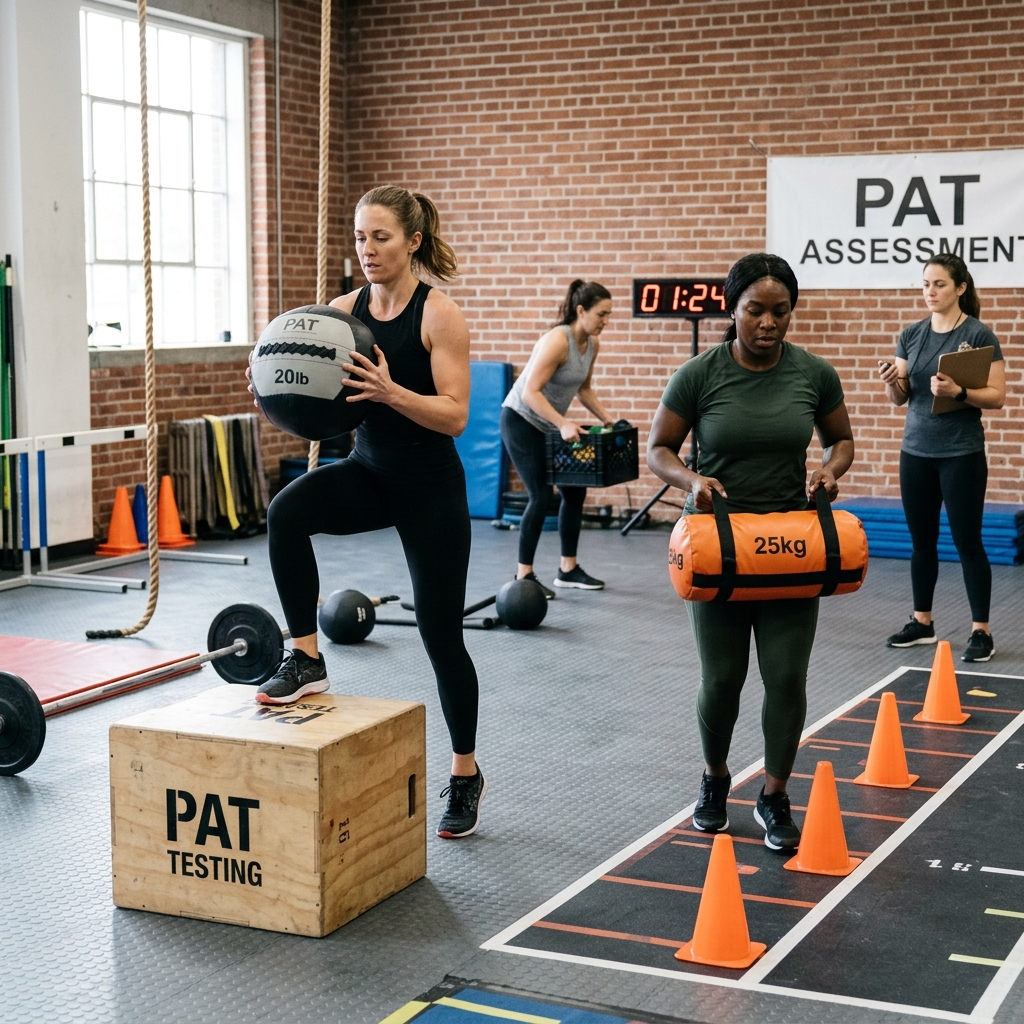
Physical ability testing has become a common gateway to jobs that require strength, stamina, or agility, especially in public safety, transportation, manufacturing, and warehousing. Yet these tests often screen out women at higher rates than men, raising serious questions about fairness, legality, and access to good jobs for women.[10] When physical standards are not designed and validated carefully, they can become unlawful barriers rather than legitimate safety tools.
This article examines how physical ability tests affect women, the legal framework that governs these tests, the specific ways bias can appear, and practical steps employers can take to create hiring systems that are both safe and inclusive.
What Are Physical Ability Tests and Where Are They Used?
Physical ability tests (PATs) are assessments that require a person to perform tasks or exercises that measure physical capabilities such as strength, endurance, balance, flexibility and overall fitness. They may be used before a person is hired, for promotions into more physically demanding roles, or periodically to ensure employees can still perform essential tasks.
Common Features of Physical Ability Tests
While the details vary, most PATs include activities that aim to mirror the physical requirements of a job or measure underlying physical capacities.
- Timed runs, step tests, or stair climbs to gauge aerobic endurance.
- Lifting, carrying, or dragging weighted objects to assess strength and power.
- Bending, reaching, kneeling, and crawling tasks to evaluate flexibility and mobility.
- Push-ups, sit-ups, or similar fitness drills to test muscular endurance.
- Obstacle courses that simulate real work situations, such as climbing ladders or navigating confined spaces.
Sectors That Frequently Use PATs
Physical ability testing is especially common in sectors where the work is demanding and safety-critical.
- Law enforcement and corrections – for patrol officers, deputies, and correctional officers.
- Firefighting and emergency services – where carrying equipment and rescuing people is central.
- Military and defense – for combat and support roles with heavy physical demands.
- Transportation and delivery – especially positions involving loading, unloading, and repetitive lifting.
- Manufacturing and warehousing – where moving materials and working with heavy tools is routine.
In all of these sectors, employers often turn to PATs to reduce workplace injuries, verify that candidates can safely perform essential tasks, and lower overall hiring risk.
Why Physical Ability Tests Often Exclude Women at Higher Rates
On their face, physical tests may appear neutral because everyone is given the same exercises and cut scores. Yet research and experience show that many tests have an adverse impact on women, meaning that women pass at much lower rates than men, even when they are capable of doing the job safely.[10]
Biological Differences and Test Design
Men and women, on average, have different distributions of upper body muscle mass and absolute strength, though there is considerable overlap between individuals. When tests emphasize raw strength more than the job actually requires, or when they are set at unnecessarily high levels, they tend to exclude more women than men without improving on‑the‑job performance or safety.
Examples of test design choices that can disproportionately disadvantage women include:
- Using very heavy lifting thresholds that exceed what is typically required on the job.
- Relying heavily on upper‑body strength tasks when the job is more about technique, teamwork, or use of equipment.
- Setting time cutoffs that reward speed over safe and steady work.
Adverse Impact and the “Four-Fifths” Rule
In employment law, adverse impact is often evaluated using the so‑called four‑fifths rule. If a protected group (such as women) has a pass rate that is less than four‑fifths (80 percent) of the pass rate of the group with the highest success rate, that difference is a red flag for potential discrimination. Many physical ability tests, especially in public safety agencies, have been documented to produce such disparities for women.[10]
When Safety Concerns Become Pretexts
Employers are legitimately concerned about safety and injury prevention, but sometimes safety is invoked in ways that go beyond what the job truly requires. If a test sets physical thresholds far above actual job tasks, women are more likely to be screened out even though they could perform real work with proper training, equipment, or reasonable accommodations.
The Legal Framework: Title VII, the ADA, and EEOC Enforcement
Physical ability tests sit at the intersection of workplace safety and anti‑discrimination law. Two key federal statutes shape what employers may and may not do: Title VII of the Civil Rights Act of 1964 and the Americans with Disabilities Act (ADA).
Title VII and Disparate Impact
Title VII prohibits employment practices that discriminate on the basis of sex, among other protected characteristics. That prohibition covers both overt discrimination and facially neutral practices that have a disparate impact on a protected group.
If a physical ability test screens out women at a statistically significant higher rate than men, the employer must show that:
- The test is job-related, meaning it measures abilities that are genuinely required to perform essential job duties.
- The test is consistent with business necessity, which is a demanding standard requiring evidence that the test predicts an individual’s capacity to safely and effectively perform the job.
Even if an employer meets that burden, the test may still be unlawful if a less discriminatory alternative could achieve the same business goals.
Gender-Normed Tests and Equal Burden Concerns
Some employers try to address disparities by using gender-normed standards, setting different cut scores for men and women so that pass rates are roughly equal. This approach is controversial. While it may reduce adverse impact on paper, it raises questions about whether men and women are being held to comparable standards and whether it complies with Title VII’s prohibition on sex-based classifications.
Legal scholarship increasingly argues that gender-normed physical tests constitute a form of sex discrimination and should be justified, if at all, under the narrow bona fide occupational qualification (BFOQ) exception. Under that view, employers should instead focus on improving the job-relatedness and necessity of a single, carefully designed standard that applies to everyone.
The ADA and Reasonable Accommodation
The ADA adds another layer of obligations. Employers must ensure that physical tests do not unlawfully screen out qualified individuals with disabilities and must provide reasonable accommodations when needed, such as modified test formats or additional time, so long as the essential requirements of the job are preserved.
EEOC Scrutiny and Enforcement
The U.S. Equal Employment Opportunity Commission (EEOC) has repeatedly challenged strength and fitness tests that disproportionately disqualify women.[10] In one widely cited case, the EEOC alleged that a company’s strength and endurance tests for entry-level jobs disqualified women at a much higher rate than men and were not properly validated as job-related.[10] Such cases illustrate the legal and financial risks employers face when they adopt off‑the‑shelf tests or outdated standards without careful analysis and documentation.
Building Fair, Job-Related Physical Ability Tests
Despite the risks, physical ability tests can be legitimate and helpful when they are scientifically developed, legally validated, and regularly reviewed. The core principle is that tests must closely reflect the actual physical requirements of the job.
Step 1: Conduct a Rigorous Job Analysis
A thorough job analysis is the foundation of any lawful and fair PAT. This process should:
- Identify essential job tasks that require physical effort (for example, lifting equipment, carrying loads, climbing stairs).
- Measure the frequency, weight, duration, and conditions associated with each task.
- Consult a diverse group of incumbent employees and supervisors, including women and minorities, to capture the full range of real‑world duties.
The results of this analysis guide what the test should measure and the level of performance needed to perform the job safely.
Step 2: Design Tests That Mimic Real Work
Two broad approaches are common:
- Job-task simulations, such as carrying a weighted hose up stairs for firefighters or dragging a dummy for law enforcement.
- General fitness tests, such as timed runs, push-ups, and lifting exercises that measure underlying physical capacities.
Courts and expert bodies generally view tests more favorably when they clearly approximate real work tasks and are supported by validation studies showing that performance on the test predicts performance on the job.
Step 3: Validate the Test and Document Business Necessity
Validation is the process of demonstrating that a test is a meaningful and fair measure of job performance. Employers can use methods such as criterion-related validation (showing that test scores correlate with actual job performance) or content validation (showing that the test accurately represents important job tasks).
Good validation typically includes:
- Testing a diverse group of existing employees, including women and people of color.
- Analyzing whether test scores predict safety, productivity, or other relevant outcomes.
- Adjusting test content or cut scores if they are not closely linked to job demands.
The resulting documentation is crucial if the test is ever challenged in court or before the EEOC.
Step 4: Monitor for Adverse Impact and Consider Alternatives
Validation is not a one‑time event. Job requirements, technology, and workforce demographics all change over time. Employers should regularly review data to see whether any group, including women, is passing at a much lower rate.
If adverse impact is detected, employers should consider whether other approaches could serve their goals with less disparity, such as:
- Focusing on job‑task simulations rather than abstract fitness metrics.
- Providing training or conditioning programs before testing.
- Revising cut scores to reflect actual minimum job needs, not ideal or aspirational levels.
Impacts on Women’s Economic Security and Career Paths
When physical tests are not carefully designed, they can significantly limit women’s access to some of the best‑paying blue‑collar and public safety jobs. This has ripple effects on income, retirement security, and representation in leadership roles in these sectors.
Reduced Access to High-Quality Jobs
Public safety and skilled trades positions often offer stable employment, robust benefits, and opportunities for advancement. If women are screened out at high rates by unnecessarily stringent or poorly designed PATs, they lose access to these economic opportunities, reinforcing occupational segregation by gender.[10]
Barriers to Promotion and Retention
Some employers use periodic physical ability tests not just at hiring but also as conditions for promotion or continued employment. If these tests are misaligned with actual duties, women who are already performing effectively can be pushed out or blocked from advancement, even after years of successful service.
Balancing Safety, Fairness, and Inclusion: A Comparative View
The table below summarizes key differences between physical testing practices that create unnecessary barriers for women and those that support both safety and equality.
| Testing Approach | Common Features | Likely Impact on Women |
|---|---|---|
| Poorly designed tests | Heavy emphasis on raw upper‑body strength; high cut scores disconnected from actual tasks; limited validation; no regular review for adverse impact. | High failure rates for women; heightened risk of Title VII challenges; unjust exclusion from jobs they could safely perform.[10] |
| Well-designed, validated tests | Based on detailed job analysis; use job-task simulations; validated to predict performance; periodically reviewed and updated. | Lower risk of unlawful discrimination; improved safety; broader access for qualified women while maintaining clear physical standards. |
Practical Recommendations for Employers
Employers who want to maintain physical standards and also comply with the law can take a series of concrete steps.
- Start with evidence, not assumptions. Base test design on empirical job analysis rather than tradition or intuition.
- Use expert support. Work with industrial-organizational psychologists, ergonomists, or other qualified professionals to develop and validate tests.
- Include women in test development. Involving women in pilot testing and feedback helps identify aspects of the test that are unnecessarily exclusionary.
- Document everything. Keep detailed records of job analyses, validation studies, test changes, and adverse impact reviews.
- Provide preparation resources. Offer realistic test previews, practice sessions, or conditioning programs so candidates have a fair chance to meet standards.
- Review and revise regularly. As jobs evolve, revisit the test to ensure it remains relevant, valid, and no more exclusionary than necessary.
What Applicants and Workers Can Do
Women facing physical ability tests are not powerless. Understanding their rights and the basics of lawful testing can help them recognize and challenge unfair practices.
- Ask for information about the test. Applicants can request descriptions of what the test measures and how it relates to essential job tasks.
- Document experiences. Keeping records of testing conditions, instructions, and outcomes can be useful if a test appears discriminatory.
- Seek advice. Workers who suspect unlawful discrimination can consult with legal counsel or civil rights organizations experienced in employment law.
FAQs: Women and Physical Ability Tests
Do employers have the right to require physical ability tests?
Yes. Employers may require physical ability tests when the job truly demands certain physical capabilities and the tests are properly designed, validated, and applied consistently. However, they must comply with anti‑discrimination laws such as Title VII and the ADA.
Is it legal for a test to have different passing standards for men and women?
Using gender-normed cut scores is controversial and can raise serious Title VII concerns. Some legal scholars argue that gender-norming is a form of sex discrimination that should be justified only under narrow exceptions. Employers are generally safer focusing on a single, job‑related standard that everyone must meet, supported by strong validation evidence.
What if more women fail the test than men?
A higher failure rate for women is not automatically illegal, but it does trigger scrutiny. If the disparity is large, especially if it violates the four‑fifths rule, the employer must show that the test is job-related and consistent with business necessity and consider less discriminatory alternatives.[10]
Can a worker challenge a physical test as discriminatory?
Yes. Workers who believe a physical ability test is discriminatory can file a charge with the EEOC or pursue legal remedies under federal or state law. The success of such challenges often turns on whether the test was carefully validated and tied to actual job duties.[10]
How can tests be both fair to women and protective of safety?
Safety and fairness are not mutually exclusive. Tests that mirror real job tasks, are validated with diverse employees, and are updated as work changes can maintain safety standards while avoiding unnecessary barriers for women. The key is focusing on what is genuinely required to perform the job rather than outdated or overly demanding physical benchmarks.
References
- Gender-Normed Physical-Ability Tests Under Title VII — Columbia Law Review. 2019-01-01. https://www.columbialawreview.org/content/gender-normed-physical-ability-tests-under-title-vii/
- Physical Ability Tests: How Employers Can Minimize Their Risks — Ogletree Deakins. 2015-09-15. https://ogletree.com/insights-resources/blog-posts/physical-ability-tests-how-employers-can-minimize-their-risks/
- Physical Ability Tests — U.S. Office of Personnel Management (OPM). 2016-01-01. https://www.opm.gov/policy-data-oversight/assessment-and-selection/other-assessment-methods/physical-ability-tests/
- Physical Ability Testing – White Papers — IO Solutions. 2017-01-01. https://iosolutions.com/physical-ability-testing-white-papers/
- EEOC: Strength Tests Risk Bias Against Women — SHRM. 2015-01-26. https://www.shrm.org/topics-tools/news/talent-acquisition/eeoc-strength-tests-risk-bias-women
- The Role of Physical Ability Testing in Reducing Hiring Risk — Advanced Ergonomics Inc. 2020-01-01. https://advancedergonomics.com/the-role-of-physical-ability-testing-in-reducing-hiring-risk/
- Why Physical Ability Testing Is Helpful for Work Environment — Great Northern Physical Therapy. 2019-01-01. https://greatnorthernpt.com/why-physical-ability-testing-is-helpful-for-work-environment/
Similar Articles








Read full bio of Sneha Tete




