
Wisconsin Tenant Rights: Complete Guide For Renters And Repairs
A practical guide to renting in Wisconsin, from habitability to eviction rules and deposit deadlines.
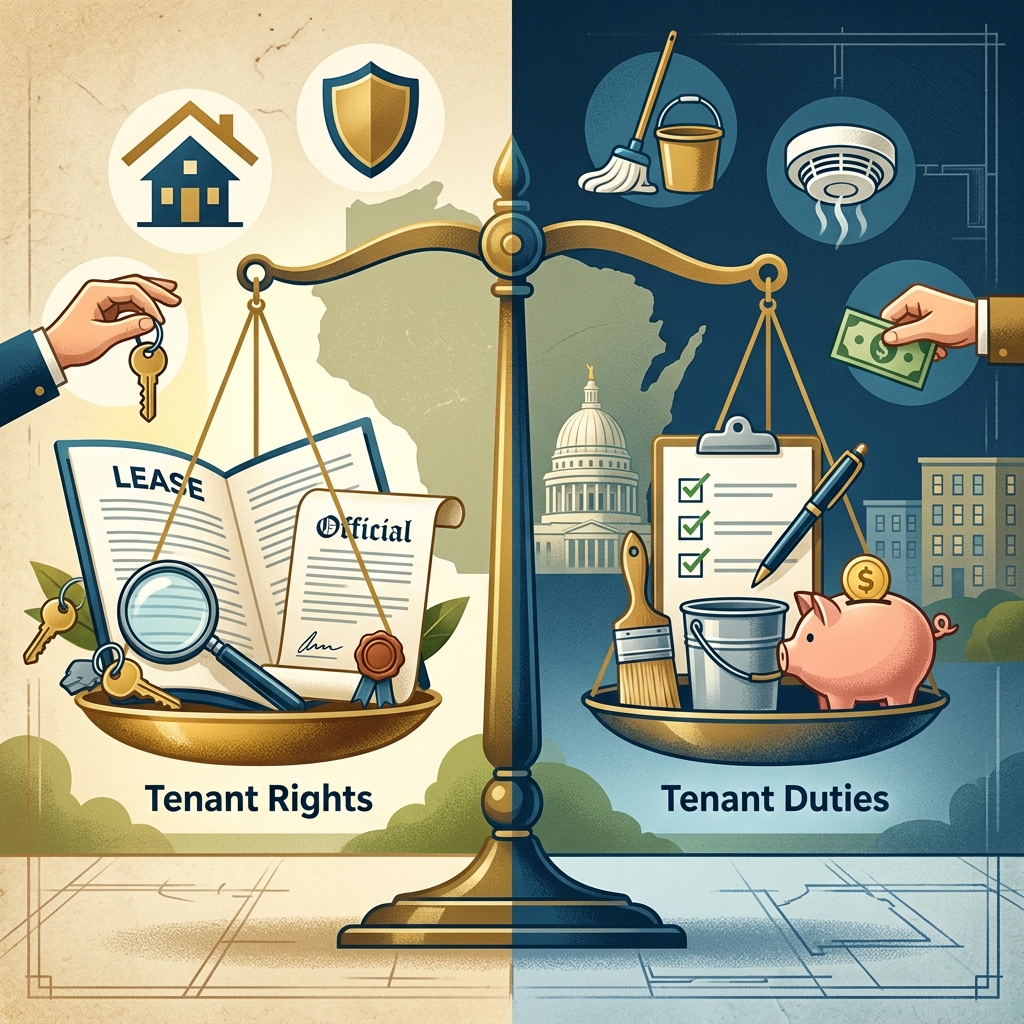
Renting a home in Wisconsin comes with both protections and responsibilities. State law sets standards for what landlords must provide, what tenants must do, and how disputes are handled when something goes wrong. Those rules are shaped mainly by Wisconsin landlord-tenant statutes and administrative code provisions, which together control issues such as privacy, repairs, deposits, lease terms, and eviction procedures.
This guide explains the most important rights and obligations in plain language. It is written for tenants who want to understand what a landlord can require, what a tenant can expect, and which problems may lead to a notice or court case.
The basic legal framework for renting in Wisconsin
Wisconsin landlord-tenant law is not based only on the lease. State statutes and administrative rules fill many gaps and can override lease language that conflicts with the law. That means a rental agreement is important, but it is not the only source of rights and duties.
In practice, three sets of rules matter most:
- Wisconsin statutes governing landlord and tenant duties, notices, and eviction procedures.
- Wisconsin administrative code rules that regulate rental practices and lease provisions.
- Local housing, building, and sanitation codes that can impose additional maintenance standards.
Tenants should also remember that fair housing laws prohibit discrimination in housing on protected grounds such as sex, race, color, religion, disability, marital status, and sexual orientation.
What a tenant is entitled to expect
A Wisconsin tenant has the right to exclusive possession of the rental unit during the tenancy. In simple terms, the tenant—not the owner—has the right to occupy and control the space, subject to reasonable landlord access rules.
Tenants also have the right to live in a unit that is reasonably safe and fit for occupancy. That includes conditions that meet health and safety standards and repairs that are handled within a reasonable time after notice of a problem.
Other core protections include:
- Freedom from unlawful lockouts, utility shutoffs, or other self-help eviction tactics.
- Reasonable privacy and limits on excessive interference by the landlord.
- Protection against retaliation for asserting legal rights or reporting violations.
- The ability to challenge unlawful lease terms that conflict with state law.
What landlords must provide
Landlords are responsible for maintaining the premises in a condition that complies with applicable codes and does not create avoidable safety or habitability problems. That responsibility usually includes making repairs that are not caused by the tenant and keeping essential building systems in working order.
Wisconsin law also requires landlords to respect notice and access rules. Although a landlord may enter the property for legitimate reasons such as inspection, repair, or showing the unit, that access must be reasonable and cannot be used to harass or disrupt the tenant’s use of the home.
Common landlord obligations include:
- Making needed repairs after receiving notice of a defect.
- Maintaining common areas and structural elements in a safe condition.
- Following housing codes and sanitation rules.
- Providing lease terms that do not violate Wisconsin law.
What tenants must do in return
Tenant rights are balanced by tenant duties. A renter must pay rent as required by the lease and on time. A tenant must also keep the unit reasonably clean, avoid damaging the property, and use the premises for lawful residential purposes.
In addition, tenants must comply with lease rules that are lawful under Wisconsin law. Those rules may cover matters such as pets, smoking, occupancy limits, and use of shared spaces. If a tenant or guest causes damage, the tenant may be financially responsible for the repair.
Typical tenant responsibilities include:
- Paying rent in full by the due date.
- Maintaining reasonable cleanliness and sanitation.
- Using the property as a residence and not for illegal activity.
- Following lawful lease terms and building rules.
- Paying for damage caused by the tenant, household members, or guests.
Repairs, habitability, and how notice matters
When something breaks, the tenant usually needs to give the landlord notice before stronger legal remedies become available. Written notice is often the best approach because it creates a record of the problem and the date the landlord learned about it.
Wisconsin sources describe a duty to make repairs promptly after notice, especially when the issue affects safety or habitability. Examples include serious leaks, heat problems, plumbing failures, electrical hazards, mold conditions tied to water intrusion, and other defects that make the unit harder or less safe to live in.
Tenants should document the problem carefully:
- Take dated photos or video.
- Keep copies of emails, letters, and text messages.
- Describe the condition clearly and factually.
- Send notice in a way that can be proven later.
While a tenant may have remedies when a landlord fails to repair a serious problem, the tenant should not assume the lease can simply be ignored. The safer course is to preserve evidence, give notice, and seek legal guidance before withholding rent or taking other steps that could be disputed in court.
Security deposits, move-out deductions, and deadlines
Security deposits are a frequent source of conflict because tenants often expect the full amount back while landlords expect to deduct unpaid rent or damage charges. Wisconsin law limits how deposits are handled and gives tenants an important deadline after move-out.
After the tenancy ends, the landlord generally has 21 days to return the deposit or send a written statement explaining deductions. If the landlord fails to comply, the tenant may have a claim for additional recovery under Wisconsin law.
To reduce disputes, tenants should:
- Keep the move-in checklist if one was provided.
- Photograph the unit when moving in and when moving out.
- Return keys and leave a forwarding address in writing.
- Request the deposit return in a dated written notice.
Deduction lists should be itemized and specific. A vague statement about “damage” is less useful than a detailed explanation tied to actual repairs or unpaid obligations.
Rent increases, late fees, and lease terms
Wisconsin generally does not impose a statewide cap on rent increases for new or renewed terms unless another law applies, but rent cannot be raised in violation of a valid lease or in a retaliatory or discriminatory way. If the tenant has a fixed-term lease, the landlord usually cannot change the rent until the lease term ends unless the lease allows it.
Late fees are also limited. Wisconsin law caps late charges at 5% of the monthly rent, and the fee must be authorized by the lease. A landlord cannot invent a penalty later if the lease does not support it.
Lease clauses that conflict with Wisconsin protections may be unenforceable. The state’s rules can invalidate terms that try to waive basic tenant rights, permit unlawful lockouts, or undermine the statutory eviction process.
When a landlord can end the tenancy
Eviction in Wisconsin is a legal process, not a shortcut. A landlord must generally use the proper notice and court procedures before removing a tenant. Self-help eviction tactics such as changing locks, removing belongings, cutting off utilities, or physically forcing a tenant out are not lawful.
The type of notice depends on the reason for ending the tenancy. Wisconsin law and related guidance describe different notice periods for unpaid rent, lease violations, damage, illegal activity, and situations involving imminent harm.
| Situation | Typical landlord action | General tenant response |
|---|---|---|
| Unpaid rent | Notice to pay or vacate, followed by court action if unresolved | Pay the amount owed within the deadline if possible |
| Lease violation | Notice to cure or vacate in many cases | Fix the violation if the notice allows curing |
| Serious or repeat violation | Notice to vacate may be required under the circumstances | Review whether the landlord used the correct notice |
| Illegal activity or imminent danger | Shorter notice periods may apply | Seek immediate legal help |
Because notice rules can vary by the length of the tenancy and the type of violation, tenants should read any notice carefully and not ignore it.
Defenses against unlawful eviction
Tenants are not without defenses if a landlord tries to remove them unfairly. A landlord generally must prove a legal basis for eviction and follow the correct process in court.
Possible defenses can include:
- The landlord failed to give the required notice.
- The landlord used an incorrect notice period.
- The landlord attempted a lockout or utility shutoff instead of going to court.
- The eviction is retaliatory or discriminatory.
- The landlord’s own serious failure to repair caused the dispute.
Tenants facing an eviction case should gather the lease, notices, photos, payment records, and all communication with the landlord. A strong paper trail can matter more than verbal explanations.
Special protections and housing fairness
Wisconsin housing rules also protect tenants from discrimination. A landlord cannot refuse housing, impose different terms, or otherwise treat applicants unfairly because of a protected characteristic.
In addition, tenants generally cannot be penalized for seeking assistance from law enforcement, health services, or safety services when they need help. Lease provisions that attempt to punish a tenant for exercising that kind of protected right may not be enforceable.
These protections matter because many disputes are not only about rent or repairs. They may also involve unequal treatment, harassment, or attempts to silence legitimate complaints.
Practical steps tenants can take
Many landlord-tenant disputes become harder when the tenant waits too long to respond. A practical, organized approach can make a real difference.
- Keep every lease, notice, receipt, and repair request.
- Communicate in writing whenever possible.
- Report serious conditions promptly and clearly.
- Document the condition of the unit at move-in and move-out.
- Read every eviction notice carefully as soon as it arrives.
- Get advice quickly if the landlord threatens a lockout, shutoff, or immediate removal.
Tenants may also be able to find assistance through legal aid, local housing organizations, or state and community resources that explain rental law in plain language.
Frequently asked questions
Can a landlord lock me out without going to court?
No. Wisconsin guidance states that landlords may not use self-help methods such as changing locks, cutting off utilities, or removing belongings to force a tenant out.
How long does a landlord have to return my security deposit?
In general, the landlord has 21 days after the tenancy ends to return the deposit or provide an itemized statement of deductions.
Can my rent be raised during my lease?
If you have a fixed-term lease, the rent usually cannot be changed until the term ends unless the lease allows it. For other situations, different rules may apply.
What if my landlord refuses to make repairs?
Start by giving written notice and keeping proof. Wisconsin law and guidance recognize a landlord duty to repair problems promptly after notice, especially when they affect habitability or safety.
Can I be evicted for contacting a housing inspector or agency?
Retaliatory conduct is not permitted, and tenants have protections when they assert legal rights or seek help about housing conditions.
References
- Your Rights and Responsibilities as a Renter — Wisconsin Law Help. 2026. https://www.wislawhelp.org/page/425/your-rights-and-responsibilities-renter
- Wisconsin Tenant-Landlord Rental Laws & Rights for 2026 — Hemlane. 2026. https://www.hemlane.com/resources/wisconsin-tenant-landlord-law/
- Chapter 704, Wisconsin Statutes — Wisconsin Legislature. 2026. https://docs.legis.wisconsin.gov/statutes/statutes/704
- Tenants Rights and Responsibilities — City of Milwaukee. 2026. https://city.milwaukee.gov/ImageLibrary/User/jkamme/EAP/Info-Library/InfoLibrary_WiscLandlordTenant.pdf
- Tenant Rights – Housing at UWM — University of Wisconsin–Milwaukee. 2026. https://uwm.edu/housing/off-campus-housing/resources/tenant-rights/
- Tenant Sourcebook — Legal Action of Wisconsin. 2024. https://legalaction.org/wp-content/uploads/2024/01/Tenant-Sourcebook.pdf
- Landlord / Tenant Rental Law — Wisconsin State Law Library. 2026. https://wilawlibrary.gov/topics/landlord.php
- Landlord/Tenant Guide — Wisconsin Department of Agriculture, Trade and Consumer Protection. 2026. https://datcp.wi.gov/pages/publications/landlordtenantguide.aspx
- Understand Your Rights — Tenant Resource Center. 2026. https://www.tenantresourcecenter.org/your_rights
Similar Articles








Read full bio of Sneha Tete


