
Winning Your Louisiana Workers’ Comp Case
Learn how to present a clear, persuasive workers’ compensation case in Louisiana by organizing evidence, testimony, and legal arguments the right way.
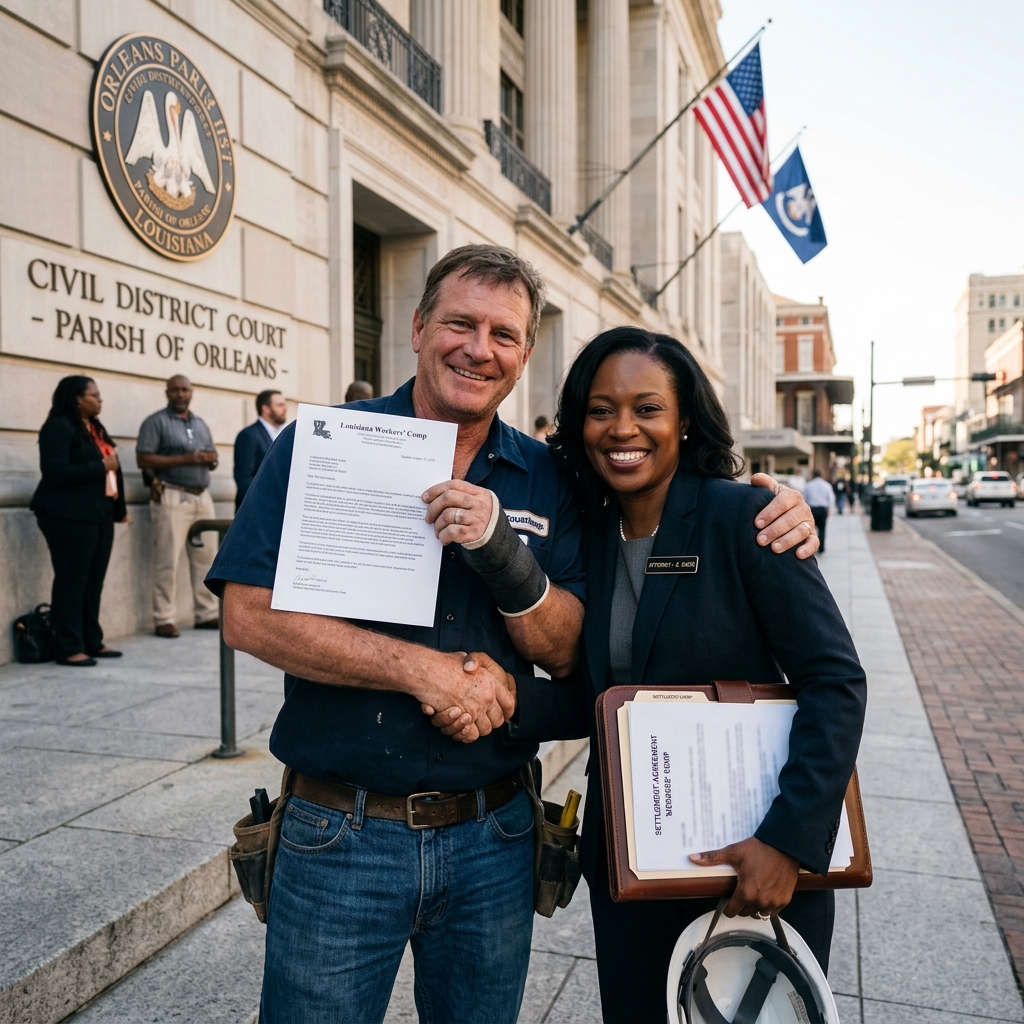
When a work injury disrupts your health and your paycheck, filing a workers’ compensation claim is only the first step. To actually secure benefits in Louisiana, you must present a clear, well-organized, and convincing argument that shows how your injury happened, why it is work-related, and what benefits you are legally entitled to receive.
This guide explains how to build that argument—from the earliest moments after an accident through hearings and potential appeals—so you can navigate the process with confidence.
Understanding the Legal Landscape in Louisiana
Workers’ compensation is a statutory system. In Louisiana, most employers with at least one employee are required to carry workers’ compensation insurance, which pays certain benefits when employees are injured in the course and scope of employment.
Before crafting a persuasive case, it helps to understand the basic framework:
- Coverage: Most full-time, part-time, temporary, and seasonal employees are covered, with some exceptions such as certain farm workers and musicians under specific performance contracts.
- No-fault system: You generally do not need to prove your employer was negligent, only that your injury arose out of and in the course of employment.
- Benefits types: Medical care, wage replacement (indemnity benefits), and sometimes vocational rehabilitation may be available, subject to statutory limits.
Deadlines That Shape Your Argument
Even the strongest argument fails if it is not presented on time. Louisiana law imposes strict deadlines:
- Report the injury to your employer: Generally within 30 days of the accident.
- Employer reports to insurer: Within 10 days of notification in most cases.
- Formal claim for benefits: Typically within one year of the accident if no benefits have been paid, with extended periods in some situations where benefits have been provided.
Missing these deadlines may undermine your credibility and can bar your claim entirely, so timing is part of making a convincing case.
Foundations of a Clear Workers’ Comp Argument
A persuasive workers’ compensation case is built on three pillars:
- Accurate facts about the accident and your injuries
- Reliable documentation that supports those facts
- Legal structure that connects the facts to your rights under Louisiana law
Key Questions Your Argument Must Answer
Whether you are communicating with an adjuster, mediator, or workers’ compensation judge, your case should clearly answer:
- What happened, where, and when?
- What work duties were you performing at the time?
- How did the accident or exposure cause your injury or illness?
- What medical diagnosis and treatment have you received?
- How has the injury affected your ability to work and earn wages?
- What specific benefits are you requesting and why?
Organizing your evidence around these questions keeps your presentation focused and easier for decision-makers to follow.
Documenting Your Injury: Building the Evidentiary Backbone
Evidence is the backbone of any clear and convincing argument. In workers’ compensation, much of that evidence comes from timely reporting and diligent record-keeping.
Immediate Steps After a Work Injury
What you do in the hours and days after an accident can significantly strengthen—or weaken—your case.
- Seek prompt medical care and be honest and specific about how the injury occurred at work.
- Notify your employer as soon as possible, preferably in writing, describing the date, time, location, and nature of the incident.
- Request copies of any incident or accident reports your employer completes and keep them in your records.
Essential Records to Gather and Organize
Collecting and organizing documents early makes later arguments much more effective. Consider creating a simple file system for:
- Medical documents: Treatment notes, diagnostic tests, prescriptions, work restrictions, and medical bills.
- Employment records: Job description, pay stubs, schedules, performance evaluations, and any disciplinary records relevant to your claim.
- Communication logs: Emails, letters, and notes from phone calls with your employer, insurer, or medical providers.
- Personal notes: A written timeline of events, pain levels, and changes in your ability to perform daily tasks and job duties.
Accident Details: Capturing Critical Information
In Louisiana, being able to clearly describe how the injury occurred is crucial to showing that it arose out of and in the course of employment.
When documenting the accident, focus on:
- Where the accident happened on the job site
- What you were doing and what equipment or tools were involved
- How the incident unfolded, step by step
- Who witnessed the event or its aftermath
- Environmental conditions like lighting, weather, noise, or slippery surfaces
Medical Evidence: Turning Treatment into Persuasion
Medical evidence often carries the greatest weight in workers’ compensation cases. It not only proves that you are injured but also links your condition to your work activities.
Strengthening the Causal Connection
To show that your condition is work-related, medical records should clearly explain the relationship between your job and your injury or illness. Helpful elements include:
- A consistent history of a work-related accident or exposure described in your medical notes.
- A diagnosis that is logically related to the mechanism of injury (for example, a back strain following heavy lifting).
- Treatment plans that support ongoing disability or restrictions—for instance, physical therapy notes documenting limited mobility.
Working with Your Treating Physician
Your treating physician is often a central witness in your case. To make their testimony persuasive:
- Provide complete and accurate descriptions of your job duties and how the injury happened.
- Ask whether your provider is willing to prepare a detailed report explaining diagnosis, causation, and work restrictions.
- Request that any work limitations be put in writing, including how long they are expected to last.
Handling Conflicting Medical Opinions
Insurers may request an independent medical examination or obtain opinions that differ from your treating doctor. Your argument should:
- Identify methodological weaknesses in unfavorable opinions (brief exams, incomplete records, or lack of specialty expertise).
- Highlight consistency and depth in your treating physician’s records and their long-term perspective on your condition.
- Use objective evidence—such as imaging or lab tests—to support your preferred medical narrative.
Legal Structure: Connecting Facts to Louisiana Law
Facts alone rarely win a case; they must be tied to the legal standards that govern workers’ compensation in Louisiana. A clear argument identifies those standards and shows how your evidence satisfies them.
Core Elements of a Compensable Claim
Although each case is different, a persuasive claim usually addresses the following elements:
| Element | What You Must Show | Helpful Evidence |
|---|---|---|
| Employment relationship | You were an employee covered by Louisiana workers’ comp laws. | Pay stubs, job contract, employer policy, coverage confirmation. |
| Work-related injury | Injury arose out of and in the course of employment. | Accident reports, witness statements, job descriptions, medical history. |
| Timely notice | You notified your employer within the required timeframe. | Emails, written notices, supervisor notes. |
| Disability or limitations | Injury limits your ability to perform job duties or earn wages. | Work restrictions, functional capacity tests, wage loss documentation. |
| Benefit entitlement | Statutory criteria for medical and wage benefits are met. | Medical bills, wage statements, statutory citations. |
Claim Forms and the Story They Tell
Louisiana requires specific forms at various stages of the process. For example, disputed claims for compensation are filed using Form LWC-WC-1008 with the Office of Workers’ Compensation Administration (OWCA).
Treat each form as an opportunity to present a coherent narrative. Ensure that the facts on your forms match your medical records, accident reports, and testimony to avoid inconsistencies that insurers may exploit.
Presenting Your Case: From Mediation to Hearing
Not all workers’ compensation disputes go straight to trial. Louisiana offers mediation, and many cases are resolved through negotiation before a formal hearing.
Mediation: Testing and Refining Your Argument
Mediation is often a chance to refine your presentation and gauge how persuasive your case appears to a neutral party. To use mediation effectively:
- Arrive with a concise summary of your case—who you are, how you were injured, and what you are seeking.
- Bring key documents: accident reports, medical records, and proof of wage loss.
- Listen carefully to the insurer’s objections and note which points seem to matter most; these may need stronger evidence or clearer explanation.
Preparing for a Workers’ Compensation Hearing
If mediation does not resolve the dispute, a workers’ compensation judge will ultimately decide your case. Clarity and organization are especially important here.
Before the hearing:
- Create an outline of your testimony that walks through the accident, medical treatment, and impact on your work and life.
- Prepare a document index so you can quickly reference exhibits when asked.
- Discuss potential cross-examination questions with your attorney, focusing on any inconsistencies in your statements or records.
Testimony: Communicating Credibility
Your testimony is an essential part of making a convincing argument. Judges consider not only what you say but how you say it.
- Answer questions directly and honestly, even when facts are complicated.
- Stick to concrete details rather than speculation.
- Admit minor memory gaps rather than guessing; this often increases credibility.
- Avoid exaggeration; your medical records and daily activities should align with what you describe.
Appeals and Ongoing Strategy
If your claim is denied or you disagree with a judge’s decision, you may have the right to appeal. Appeals generally focus on whether the law was applied correctly and whether the evidence supports the ruling.
Strengthening Your Position on Appeal
On appeal, clarity becomes even more critical because the reviewing body relies heavily on written records:
- Ensure that key legal arguments are clearly stated in appellate briefs.
- Highlight misinterpretations of evidence or legal errors that affected the outcome.
- Confirm that the record contains all crucial documents and testimony; missing items may be difficult to add later.
Practical Tips to Make Your Case More Persuasive
Beyond legal and medical requirements, certain practical habits can make your workers’ compensation argument more compelling.
Organizational Habits That Help
- Maintain a case calendar with all deadlines and appointments.
- Use clearly labeled folders (physical or digital) for medical records, employment documents, and legal correspondence.
- Review your notes before important meetings or hearings to keep your narrative consistent.
Communication Practices
- Communicate with your employer and insurer in writing whenever possible.
- Keep copies of all letters and emails; these can demonstrate timely notice and cooperative behavior.
- Be respectful and professional in all interactions; judges and mediators often notice how parties have behaved during the process.
Working with Legal Counsel
Many injured workers choose to work with an attorney experienced in Louisiana workers’ compensation law, especially for disputed claims. A lawyer can:
- Identify the strongest legal theories for your specific situation.
- Organize evidence into a coherent case strategy.
- Represent you in mediation, hearings, and appeals.
FAQs: Clear and Convincing Arguments in Louisiana Workers’ Comp
Do I have to prove my employer was at fault to win my workers’ comp case?
No. Louisiana workers’ compensation is generally a no-fault system. Your primary task is to show that your injury arose out of and in the course of your employment, not that your employer was negligent.
What if I did not report my injury immediately?
Failing to report an injury promptly can hurt your credibility and may violate the 30-day reporting requirement, but it does not automatically end every claim. You will need strong evidence to explain the delay and to prove the injury is work-related.
Can pre-existing conditions still be covered?
Pre-existing conditions may be compensable if your work activities aggravated or accelerated them. Your argument should focus on medical testimony and records showing a clear change in symptoms or functional capacity after the work incident.
What happens if my claim is denied by the insurer?
If your claim is denied, you can request mediation with the Office of Workers’ Compensation and, if necessary, file a disputed claim for compensation using the appropriate OWCA form (commonly Form LWC-WC-1008).
Why is consistency so important in a workers’ comp case?
Inconsistencies—such as different accident dates in medical records and employer reports—can make your case less convincing and give insurers a basis to argue against your credibility. Keeping your story and documentation aligned is essential to a clear and persuasive argument.
References
- FAQ – Rights and Responsibilities for Workers’ Compensation — Louisiana Workforce Commission, Office of Workers’ Compensation Administration. 2024-03-01. https://www.laworks.net/FAQs/FAQ_WorkComp_RightsAndResponsibilities.asp
- Louisiana Workers Compensation Laws: 2026 Comprehensive Guide — Melancon Rimes Law Firm. 2026-01-15. https://www.melanconrimes.com/louisiana-workers-compensation-laws-2026/
- Workers’ Compensation in Louisiana: A Step by Step Guide — The Chopin Law Firm. 2023-08-10. https://www.chopinlawfirm.com/blog/workers-compensation-a-step-by-step-guide/
- Workers’ Compensation Claims Process in Louisiana — Schwartz Law Firm. 2022-11-05. https://www.lawyerschwartz.com/workers-comp-claims-process
- Louisiana Workers’ Compensation Insurance Guide — OnPay. 2023-06-20. https://onpay.com/insights/workers-comp-requirements-by-state/louisiana/
Similar Articles








Read full bio of medha deb




