
DUI Trial: What To Expect And Key Factors For Defendants Now
Understand when a DUI case proceeds to trial, what happens at each stage, and how legal strategy and evidence shape the outcome.
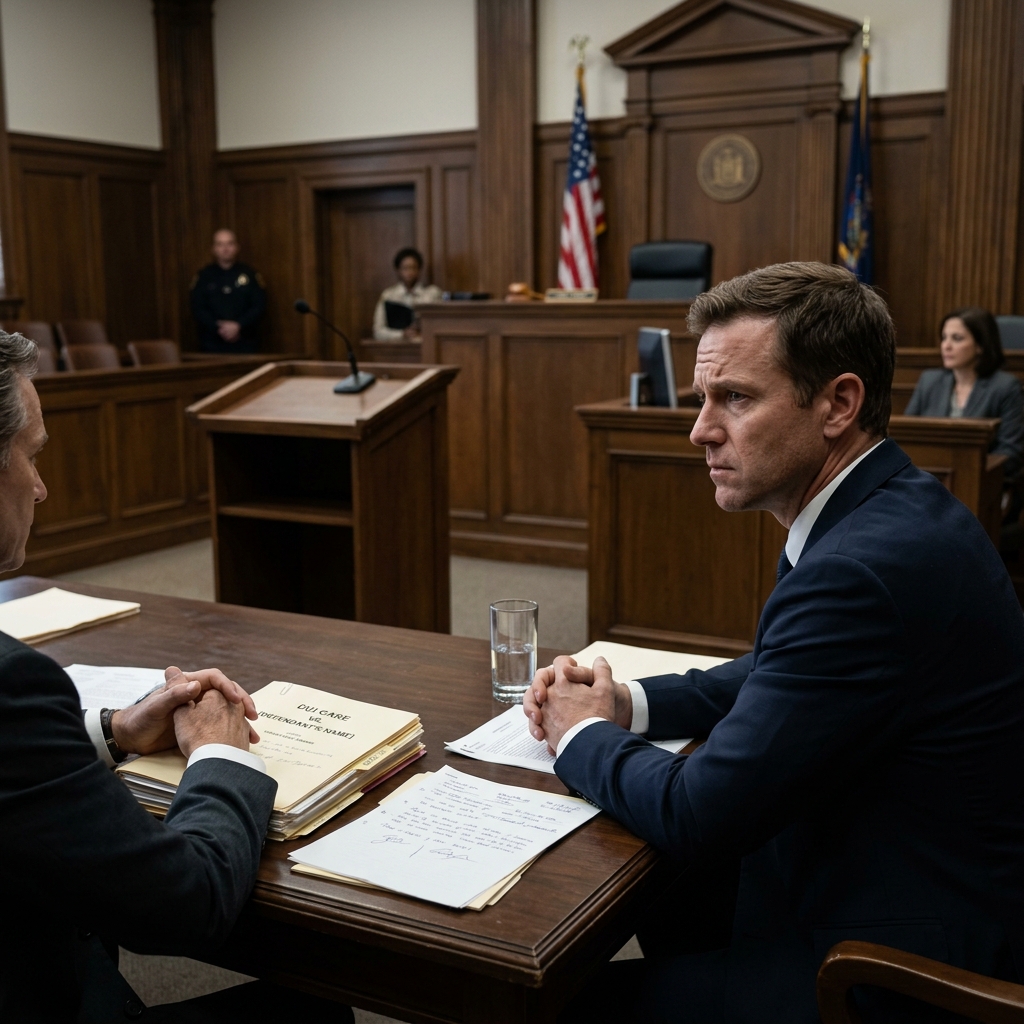
After a driving under the influence (DUI) arrest, one of the first questions people ask is whether their case will end up in a full trial before a judge or jury. In reality, most DUI cases are resolved without trial through plea agreements or pretrial motions, but some do proceed all the way to verdict. Understanding how and why a case reaches trial helps you make informed choices and work effectively with your attorney.
How DUI Cases Usually Resolve
DUI prosecutions typically move through a series of stages: investigation and arrest, charging decisions, arraignment, pretrial negotiations and motions, and, in a minority of cases, trial. At several points along this path, the defense and prosecution can reach a resolution that avoids trial.
- Plea bargains: Many defendants accept a negotiated plea to a reduced charge or to the original DUI with agreed-on penalties to avoid the risk and cost of trial.
- Dismissals: In some situations, the prosecutor declines to file charges or later dismisses them, often because of problems with the evidence or legal issues uncovered by the defense.
- Pretrial motions: Successful challenges to key evidence, such as breath or blood test results or the legality of the traffic stop, can weaken the prosecution’s case so much that a trial becomes unnecessary.
Only a relatively small fraction of DUI cases go to trial, especially first-offense cases without injury or aggravating factors. When they do, it is usually because the defendant disputes guilt, the prosecution insists on substantial penalties, or critical facts remain contested.
Key Factors That Determine Whether a DUI Goes to Trial
No single rule decides whether a DUI case will be tried. Instead, the decision turns on a combination of legal, factual, and personal considerations. These are typically discussed between the defendant and their attorney after reviewing police reports, test results, and any video evidence.
Strength of the Prosecution’s Evidence
The quality and reliability of the government’s evidence is central to the trial decision. In a DUI case, evidence often includes the officer’s observations, field sobriety tests, chemical tests, and statements by the driver.
- Field sobriety tests: These standardized tests (such as the horizontal gaze nystagmus, walk-and-turn, and one-leg stand) are designed to help officers identify impairment, but they can be affected by medical conditions, fatigue, weather, and nerves.
- Breath and blood tests: Chemical tests aim to measure blood alcohol concentration (BAC). Their reliability depends on proper calibration, correct procedures, and appropriate storage and handling of samples.
- Video and audio recordings: Dashboard or body-worn cameras sometimes show driving behavior and field tests, which can support or undercut the officer’s description of impairment.
When evidence appears strong and legally sound, trial may carry greater risk. When key elements are questionable or vulnerable to legal challenges, the defense may be more inclined to take the case to a jury.
Legal Issues and Constitutional Challenges
DUI cases often raise important legal questions, including whether the traffic stop was lawful, whether the arresting officer had probable cause, and whether the defendant’s constitutional rights were respected.
- Fourth Amendment concerns: If the stop or arrest violated protections against unreasonable searches and seizures, evidence like test results may be excluded.
- Implied consent rules: States require drivers to submit to chemical testing under implied consent statutes, but procedures must comply with state law and constitutional limits.
- Admissibility of test evidence: Courts may exclude BAC results if testing devices are not properly maintained or if sample collection fails to follow required medical or legal protocols.
Strong legal challenges can create leverage for better plea offers or persuade the defense to proceed to trial if the prosecution will not adjust its position.
Defendant’s Prior Record and Case Severity
Whether a DUI is a first offense or part of a pattern and whether it involves injuries or other aggravating factors greatly influences the stakes.
- First offense, no accident: These cases often involve lower sentencing ranges and more flexible plea bargaining, which may reduce the incentive to risk trial.
- Multiple prior DUIs: Repeat offenses can carry mandatory jail terms, longer license suspensions, and higher fines, causing some defendants to consider trial if they believe acquittal is possible.
- Injury or property damage: DUIs involving injuries or significant damage can be charged as felonies, increasing potential penalties and sometimes encouraging more aggressive defense strategies.
The more severe the potential sentence, the more carefully defendants and attorneys weigh the risks and benefits of trial versus negotiated resolution.
Plea Offer vs. Trial Risk
Another key factor is the difference between the prosecutor’s best plea offer and the worst-case outcome after trial. If the plea offer involves relatively modest penalties compared to the possible sentence upon conviction, many defendants choose the certainty of a negotiated plea.
By contrast, if the offer still includes substantial jail time, lengthy license loss, or heavy fines, a defendant who disputes the facts may decide that it is worth asking a jury to evaluate the evidence. The decision ultimately depends on individual circumstances, risk tolerance, and advice from counsel.
Overview of the DUI Court Process
To understand when a trial might occur, it is helpful to review the major phases of a typical DUI case, from the initial stop to the final disposition.
| Stage | Main Purpose | Key Participants |
|---|---|---|
| Investigation & Arrest | Officer evaluates impairment and decides whether to arrest for DUI. | Driver, law enforcement officer. |
| DMV/Administrative Hearing | Decides whether to suspend driving privileges based on arrest and test results. | Driver, DMV hearing officer, attorney (optional). |
| Charging Decision | Prosecutor reviews evidence and chooses whether and how to charge. | Prosecutor, law enforcement. |
| Arraignment | Defendant hears formal charges and enters an initial plea. | Judge, prosecutor, defendant, defense attorney. |
| Pretrial Conferences & Motions | Discuss plea offers, exchange evidence, litigate legal issues. | Judge, prosecutors, defense attorneys. |
| Trial | Factfinder (jury or judge) decides guilt using admissible evidence. | Judge, jury (in jury trial), prosecutors, defense, witnesses. |
| Sentencing | Judge imposes penalties after conviction or guilty plea. | Judge, defendant, attorneys. |
Investigation, Stop, and Arrest
DUI investigations usually begin with a traffic stop based on observed driving behavior or a checkpoint authorized by law. Officers look for signs of impairment such as slurred speech, odor of alcohol, bloodshot eyes, and coordination problems.
If the officer develops probable cause, they may ask the driver to perform field sobriety tests and take a preliminary breath test. When the officer believes the driver is impaired, an arrest follows, and the driver is taken for booking and formal chemical testing.
DMV or Administrative License Proceedings
Separate from the criminal case, most states allow the motor vehicle agency to suspend a driver’s license shortly after a DUI arrest or test indicating a high BAC. In California, for example, drivers typically have a limited time window—such as ten days—to request an administrative hearing to challenge the suspension.
These hearings focus on issues like whether the officer had reasonable cause, whether the driver was lawfully arrested, and whether the test results meet administrative standards. The outcome can affect driving privileges even if the criminal case later ends favorably.
Arraignment and Initial Plea
After the prosecutor files formal charges, the court holds an arraignment. At this first major court appearance, the judge informs the defendant of the specific DUI charges, associated rights, and possible penalties.
The defendant typically enters a plea of guilty, not guilty, or no contest. A not-guilty plea is common while the defense investigates the case and evaluates options. The court also sets future dates for pretrial conferences or motion hearings.
Pretrial Conferences, Discovery, and Motions
Much of the strategic work in a DUI case occurs before any trial begins. During pretrial conferences, the prosecution and defense exchange evidence, discuss plea offers, and identify contested issues.
- Discovery: The defense reviews police reports, lab records, test machine maintenance logs, and any video or audio recordings.
- Motions to suppress: The defense may ask the court to exclude evidence obtained through unlawful stops or improper procedures.
- Plea negotiations: Both sides explore whether a negotiated plea can resolve the case without trial, often considering the strength of the evidence and likely sentence after trial.
If these steps result in a plea or dismissal, the case ends without a trial. If major disputes remain and no acceptable plea is reached, the matter proceeds to trial.
What Happens During a DUI Trial?
A DUI trial follows the general structure of criminal trials, with specific focus on proving (or contesting) impairment and BAC at the time of driving. Cases can be heard by a jury or, in some situations, solely by a judge in a bench trial.
Phases of a Typical DUI Jury Trial
- Jury selection: Lawyers question prospective jurors to ensure they can be fair and follow the law.
- Opening statements: Each side outlines its theory of the case and what the evidence will show.
- Prosecution’s case: The government presents witnesses, documents, and test results to prove guilt beyond a reasonable doubt.
- Defense case: The defense may call its own witnesses, challenge the reliability of tests, or argue that the government did not meet its burden.
- Closing arguments: Both sides summarize the evidence and argue how the jury should apply the law.
- Jury instructions and deliberation: The judge instructs the jury on the law; jurors then discuss the case privately and vote on a verdict.
- Verdict and possible sentencing: If the jury finds the defendant guilty, the court schedules or proceeds to sentencing; if not guilty, the case ends.
In many jurisdictions, criminal juries must reach a unanimous decision to convict or acquit. If the jury cannot agree, the judge may declare a mistrial, and the prosecution must decide whether to retry the case.
Burden of Proof and Reasonable Doubt
In every criminal case, including DUI prosecutions, the government must prove each element of the charged offense beyond a reasonable doubt. This high standard reflects the serious consequences of conviction and the presumption of innocence.
For a typical DUI, the prosecution must establish that the defendant was driving and that, at the time of driving, they were either under the influence of alcohol or drugs or had a prohibited BAC level. Defense strategies often focus on creating reasonable doubt about these elements by questioning test accuracy, highlighting alternate explanations for observed behavior, or challenging the legality of the stop and arrest.
Sentencing: What Happens If You Are Convicted?
If a defendant pleads guilty or is found guilty at trial, the case moves to sentencing. Exact penalties depend on the jurisdiction, prior record, BAC level, and whether there was an accident or injury.
- Fines and fees: Courts commonly impose monetary penalties and court costs for DUI convictions.
- License suspension or restriction: Convictions often lead to additional suspension periods beyond any administrative action, sometimes with opportunities for restricted or ignition interlock licenses.
- Probation and conditions: Many defendants receive probation, which may require alcohol education, treatment programs, community service, and compliance with monitoring or testing.
- Jail or imprisonment: Jail terms can range from brief local custody for first offenses to longer incarceration for repeat or felony DUIs.
In some states, specialized DUI courts focus on intensive supervision and treatment for repeat offenders, aiming to reduce recidivism and address underlying substance use issues.
Practical Tips for Defendants Considering Trial
Deciding whether to take a DUI case to trial is complex. While the decision ultimately belongs to the defendant, it should be made in close consultation with experienced counsel who understands local law and courtroom practice.
- Collect and preserve evidence: Request and retain copies of police reports, test records, and any personal evidence such as receipts, witness contact information, or medical documentation.
- Attend all hearings: Missing court dates can lead to additional charges or warrants; consistent attendance demonstrates respect for the process.
- Discuss risk openly with counsel: Ask your attorney to explain likely sentences if you plead versus if you are convicted at trial, along with chances of success.
- Consider long-term consequences: DUIs can affect employment, professional licenses, insurance costs, and eligibility for certain programs; these factors matter as much as immediate penalties.
Frequently Asked Questions About DUI Trials
Do most DUI cases go to trial?
No. Most DUI cases are resolved through plea agreements or pretrial motions rather than full trials. Trials usually occur when major factual disputes exist or when the plea offer is unacceptable given the potential consequences.
Can I demand a jury trial in my DUI case?
In many jurisdictions, defendants charged with DUI have the right to a jury trial, especially when jail time is possible. However, some may choose a bench trial before a judge or waive trial rights as part of a plea agreement, after consulting with counsel.
What happens if the jury cannot agree on a verdict?
If the jury is deadlocked and unable to reach a unanimous decision, the judge may declare a mistrial. The prosecution then decides whether to dismiss the case or retry it, often after reviewing the reasons for the deadlock.
Is it better to take a plea or go to trial?
There is no universal answer. The best option depends on factors such as the strength of the evidence, your prior record, the plea offer, and your tolerance for risk. A knowledgeable DUI attorney can help you weigh these elements and advise on the most sensible path.
Will a DUI trial automatically clear my license suspension?
Not necessarily. Administrative license suspensions from the motor vehicle agency are often separate from the criminal case. Even if you win at trial, you may need to follow specific procedures to address any prior or ongoing administrative actions affecting your license.
References
- What To Expect During a DUI Trial — FindLaw. 2023-04-18. https://www.findlaw.com/dui/cases/dui-trial.html
- DUI Process – A Roadmap of How The Court & DMV Work — Shouse Law Group. 2023-06-01. https://www.shouselaw.com/ca/dui/laws/court-process/
- 10 Phases of a DUI Case — Orange County DUI Attorneys. 2022-11-10. https://www.ocduiattorneys.com/practice-areas/dui/10-phases-in-dui-case
- Navigating the California DUI Process: From Arrest to Sentencing — OC Criminal Lawyer. 2023-07-15. https://www.oc-criminallawyer.com/blog/2023/july/navigating-the-california-dui-process-from-arres/
- DUI Courts — Judicial Branch of California. 2022-09-30. https://courts.ca.gov/programs-initiatives/collaborative-justice-courts/adult-courts/dui-courts
Similar Articles








Read full bio of medha deb




