
Why Some White-Collar Offenders Get Probation
Exploring how judges decide between probation and prison in white-collar crime sentencing, and what factors drive those outcomes.
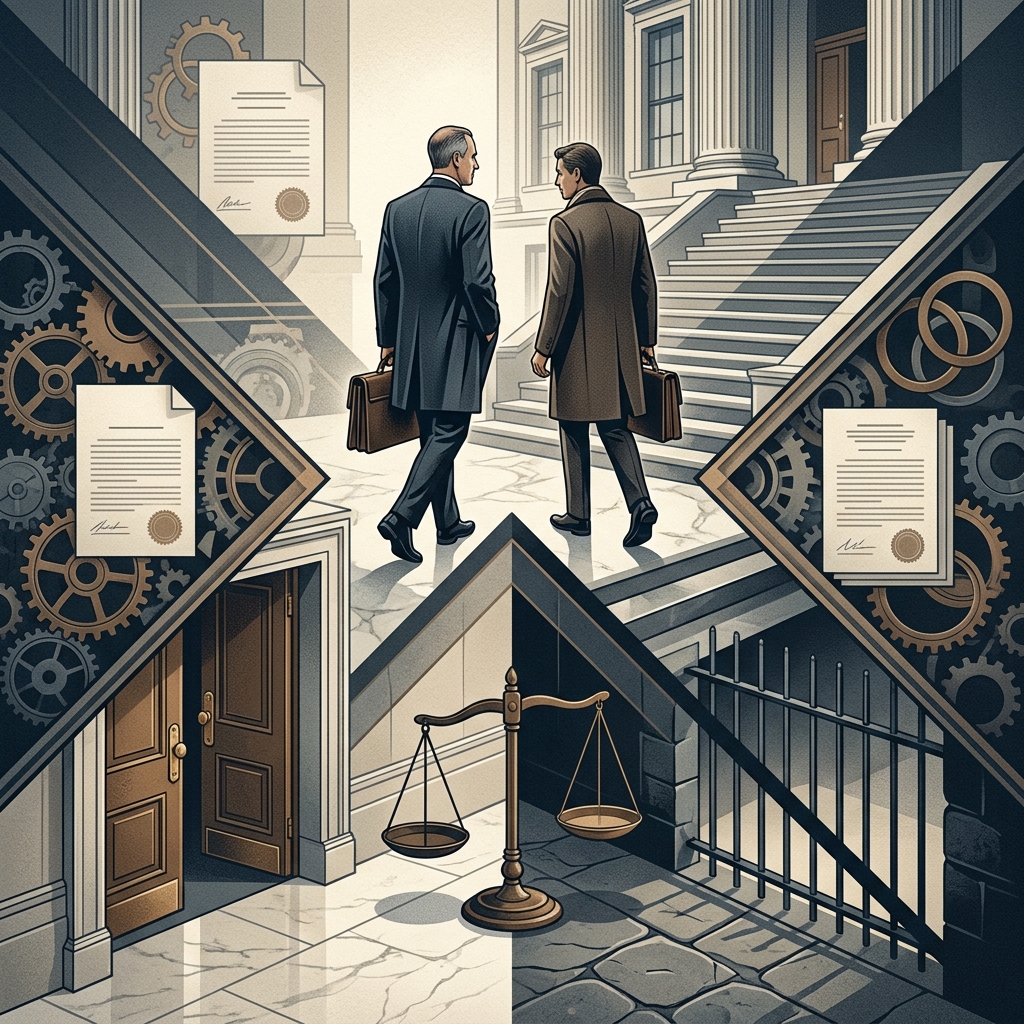
When people hear about a white-collar criminal avoiding prison and receiving probation instead, the reaction is often frustration or confusion. Many assume that financial crimes always lead to harsh punishment behind bars, especially when victims lose their savings or businesses. In reality, sentencing for white-collar crimes is far more nuanced, and probation can be a lawful, carefully considered outcome based on specific legal factors.
This article explains why probation is sometimes imposed instead of imprisonment for white-collar offenses, what judges look at during sentencing, and what probation really means for those convicted of financial and corporate crimes. It also explores common misconceptions and offers a practical view of how courts try to balance punishment, deterrence, and rehabilitation.
Understanding White-Collar Crime and Its Penalties
White-collar crime generally refers to non-violent, financially motivated offenses committed through deception, abuse of trust, or manipulation of systems. These crimes often occur in business, financial, or professional contexts and may involve complex schemes rather than direct physical harm.
Common examples include:
- Fraud (securities, insurance, mortgage, healthcare, tax fraud)
- Embezzlement and misappropriation of funds
- Bribery and corruption
- Money laundering
- Identity theft and cyber-fraud
Although these offenses are non-violent, courts recognize that they can destroy businesses, wipe out retirement accounts, and undermine trust in markets and institutions. As a result, potential penalties can be severe.
Typical Sanctions for White-Collar Offenses
Depending on the jurisdiction and the seriousness of the conduct, a conviction for a white-collar crime can lead to:
- Imprisonment or jail time for misdemeanor and felony offenses
- Probation or supervised release under strict court supervision
- Fines and restitution to compensate victims and penalize the offender
- Loss of professional licenses (e.g., lawyers, accountants, brokers)
- Asset forfeiture and disgorgement of illegal profits
- Community service, counseling, and financial monitoring
Probation is just one possible outcome on this spectrum, and it is rarely granted without serious conditions. To understand why probation appears in these cases, it helps to look at how sentencing decisions are made.
How Judges Decide Between Probation and Prison
In both federal and state systems, judges often have substantial discretion when deciding whether a white-collar offender should go to prison or receive probation. That discretion is not unlimited—sentencing guidelines, statutory limits, and case law all shape what is possible—but judges still make case-by-case decisions based on a range of factors.
Core Sentencing Considerations
Although every case is unique, several key elements commonly influence whether a judge views probation as appropriate for a white-collar defendant:
- Nature and seriousness of the offense – How complex was the scheme? How long did it last? Was it carefully planned and concealed?
- Amount of loss and number of victims – Sentences tend to be harsher when large sums of money are taken or many individuals are harmed.
- Defendant’s role and culpability – Was the defendant a minor participant, or the mastermind? Did they exploit vulnerable victims or abuse a position of trust?
- Criminal history – First-time offenders with no prior record are more likely to be considered for probation, especially in less severe cases.[10]
- Acceptance of responsibility – Judges look closely at whether the defendant admits wrongdoing, expresses remorse, and accepts the consequences.
- Cooperation with investigators – Helping authorities uncover the full scheme or prosecute others can lead prosecutors to request or support a lighter sentence.
- Restitution and efforts to repair harm – Attempting to repay victims or otherwise mitigate damages can weigh in favor of probation in some situations.
| Factor | Effect on Likelihood of Probation |
|---|---|
| Low monetary loss and limited victims | Can make probation more likely, especially with other mitigating factors. |
| No prior criminal record | Often supports probation or shorter sentences for first-time offenders.[10] |
| Full cooperation with investigators | May lead to reduced sentencing recommendations and potential probation. |
| High loss, repeated fraud, vulnerable victims | Strongly favors prison time over probation. |
| Serious abuse of authority or trust | Often treated as aggravating, increasing the chance of incarceration. |
Legal Limits on Probation in Serious Cases
Judges cannot simply replace prison with probation in every white-collar case. Federal law, for example, only allows probation for certain classes of offenses, and in other instances, the judge must make specific findings on the record explaining why a non-incarcerative sentence is justified. That might include references to:
- Low risk of reoffending
- Strong community ties and stable employment
- Extraordinary cooperation or assistance to authorities
- Exceptional mitigating circumstances, such as serious health conditions
In many large-scale fraud or corruption cases, these thresholds are not met and statutes or guidelines effectively require at least some prison term. In smaller or less aggravated cases, however, probation remains a lawful option.
What Probation Really Means for White-Collar Offenders
One of the biggest public misconceptions is that probation is equivalent to “getting off easy”. For white-collar offenders, probation is not simply freedom; it is a structured, closely monitored period during which violations can quickly lead to imprisonment.
Standard Conditions of Probation
While terms vary, courts and probation offices typically impose a core set of obligations. These can include:
- Reporting requirements – The individual must report to the probation office within a set time after sentencing (often within 72 hours in federal court) and then attend regular check-ins.
- Travel and residence restrictions – Leaving the jurisdiction or changing residence usually requires prior approval from the probation officer.
- Truthfulness and transparency – Lying to a probation officer, hiding assets, or concealing employment can be treated as violations.
- Home and workplace visits – Officers may conduct unannounced visits, including at the home or workplace, and may seize unauthorized items in plain view.
- Employment obligations – Maintaining full-time employment or actively seeking work is often mandatory unless specifically waived.
- No association with criminals – Contact with known offenders generally requires prior permission.
- Restrictions on firearms and sometimes financial activity – Possessing weapons is prohibited, and in financial cases, courts may monitor or limit certain business or investment activities.
Violating any of these conditions—whether by failing to report, traveling without authorization, or committing another offense—can result in a probation revocation and a new sentence that includes imprisonment.
Additional Conditions in Financial and Corporate Cases
In white-collar matters, courts often tailor conditions to the nature of the crime and the needs of victims.
- Restitution payments monitored over time
- Restrictions on managing finances or holding fiduciary roles
- Mandatory financial disclosures and audits
- Counseling or ethics-related programs
- Community service focused on victim or consumer education
In some instances, probation may be combined with home confinement, electronic monitoring, or weekend jail. From a practical standpoint, these sanctions can dramatically affect the person’s professional future and daily life, even without a long prison term.
Why Probation May Be Considered Appropriate
Given the public anger that often surrounds white-collar cases, it is worth examining why probation is seen by courts as a legitimate, sometimes necessary option.
Balancing Punishment and Rehabilitation
Sentencing is designed to serve multiple purposes: punishment, deterrence, protection of the public, and rehabilitation. Judges may conclude that in some white-collar cases, especially those involving lower losses or first-time offenders, these goals can be met without extended incarceration.
Reasons judges may favor probation include:
- Low risk of future violence – White-collar offenders typically do not present a physical danger to the public.
- Demonstrated remorse and restitution – Genuine efforts to repay victims and accept responsibility can suggest that rehabilitation is realistic.
- Collateral consequences – Loss of career, reputation, and professional credentials may already represent a significant punishment.
- Ability to continue working – Allowing the offender to remain employed may help finance restitution and support dependents.
Deterrence Without Long-Term Incarceration
Courts also consider the broader deterrent effect. A felony record, strict probation, financial sanctions, and lifelong reputational damage can deter others in similar positions, even without a long prison sentence. In moderate cases, judges may conclude that the combination of penalties is sufficient to send a clear warning to the business community.
When Probation is Unlikely
Probation is not the norm in all white-collar prosecutions. Certain features of a case strongly push sentencing toward incarceration.
- High-dollar losses – Large-scale frauds involving substantial sums are more likely to lead to prison.
- Multiple or vulnerable victims – Targeting retirees, small businesses, or repeated victimization over many years usually prompts harsher punishment.
- Organized, sophisticated schemes – Carefully planned conspiracies with complex concealment strategies are treated as more serious.
- Prior convictions – Repeat offenders face significantly reduced chances of probation.[10]
- Lack of remorse or obstruction of justice – Destroying evidence, lying to investigators, or refusing to accept responsibility can lead to increased prison terms.
In these circumstances, probation may either be off the table legally, strongly disfavored by guidelines, or simply deemed inadequate to reflect the seriousness of the harm.
Public Perception vs. Legal Reality
The difference between how the public views probation and how the law treats it explains much of the controversy surrounding white-collar sentencing.
Common Misconceptions
- “Probation means no punishment” – In reality, probation imposes significant restrictions, financial obligations, and ongoing risk of imprisonment for violations.
- “All white-collar criminals are wealthy” – Many offenders are mid-level employees or small business owners, not top executives.
- “Judges favor corporate defendants” – Sentencing is constrained by statutes, guidelines, and case law, even when the defendant is a professional or businessperson.
Transparency in Sentencing Decisions
To help maintain public confidence, judges often explain their reasoning in written opinions or on the record in court, especially when imposing probation in serious cases. These explanations may highlight:
- The specific mitigating factors that justified a non-incarcerative sentence
- Restitution orders and financial penalties
- Strict probation conditions and the consequences of any violation
Understanding these factors can make controversial outcomes easier to evaluate, even when people disagree with the ultimate sentence.
Frequently Asked Questions About Probation in White-Collar Cases
Is probation common for white-collar offenders?
Probation is available in many white-collar cases, especially for less severe offenses and first-time defendants, but it is not guaranteed. Larger, more damaging schemes are far more likely to result in prison.
Does a person on probation walk free without restrictions?
No. Probation typically involves regular meetings with a probation officer, travel limitations, employment requirements, financial monitoring, and other conditions. Violations can lead directly to imprisonment.
Can probation be combined with other penalties?
Yes. Courts often pair probation with fines, restitution, community service, counseling, home confinement, or professional restrictions.
What role does cooperation with investigators play?
Cooperating with law enforcement—by providing information, testifying, or helping recover funds—can lead prosecutors to recommend lighter sentences and may increase the chances of probation, depending on the case.
Is probation more likely in state court than federal court?
It depends on the specific statutes and guidelines. Both federal and state courts allow probation in some white-collar cases and limit it in others. Federal law restricts probation for certain serious offenses, and judges must justify any decision to substitute probation for incarceration.
References
- Availability of Probation in the Context of White Collar Defense — Binnall Law Group. 2023-05-10. https://www.binnall.com/insights-news/availability-of-probation-in-the-context-of-white-collar-defense/
- Can You Get Federal Probation for a White-Collar Crime? — Aaron Wiley Law. 2022-08-15. https://aaronlwileylaw.com/can-you-get-federal-probation-for-a-white-collar-crime/
- White Collar Probation Terms — StechLaw Criminal Defense. 2021-11-02. https://www.tpatrialattorneys.com/white-collar-probation/
- What Legal Consequences Do White Collar Criminals Face? — John Picerno Law. 2020-09-18. https://johnpicerno.com/news-articles/what-legal-consequences-do-white-collar-criminals-face/
- White Collar — Teakell Law. 2023-03-27. https://www.teakelllaw.com/practice-areas/white-collar/
- Indiana Criminal Defense Attorney – White Collar Crimes — The Justice Firm Indiana. 2022-04-05. https://www.indyjustice.com/criminal-defense/white-collar-crimes/
Similar Articles








Read full bio of Sneha Tete




