
Why Police Don’t Aim to Wound With Firearms
Exploring the legal, tactical, and medical reasons police are trained to shoot to stop threats, not to wound suspects in arms or legs.
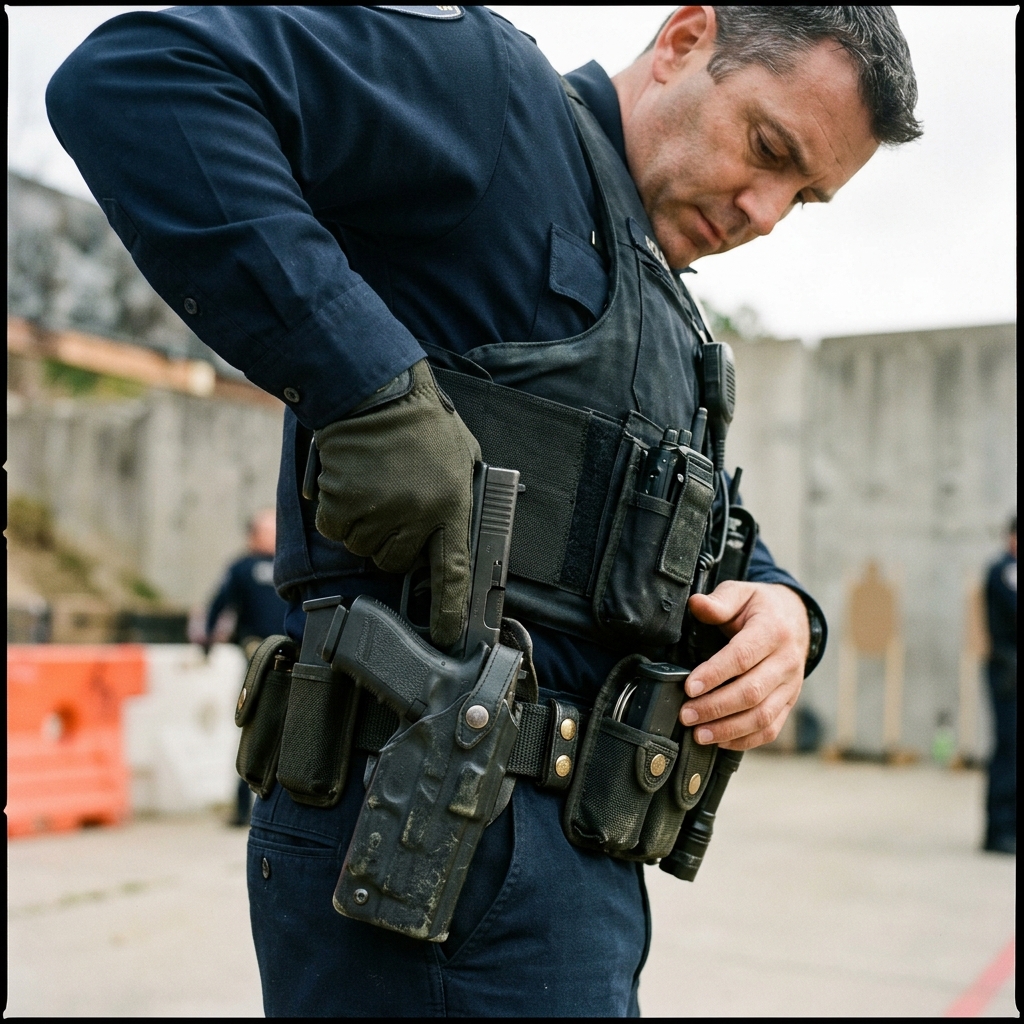
When a high-profile police shooting occurs, many people ask why officers did not simply shoot the suspect in the leg or arm. The idea of “shooting to wound” sounds like a humane compromise between doing nothing and killing someone, but modern law enforcement training and legal rules treat any intentional discharge of a firearm at a person as deadly force regardless of where the bullet is aimed. This article explains why officers are trained to aim at center mass, why arm and leg shots are discouraged, and how courts and police policies define and review deadly force.
Deadly Force: How the Law Sees Police Gunfire
From a legal standpoint, there is no separate category for “shooting to wound.” When an officer fires a gun at a person, the law views that act as the use of deadly force because it carries a substantial risk of death or serious bodily injury, no matter which body part is targeted. This distinction matters because it determines when officers may lawfully use their firearms.
Courts and statutes typically allow police to use deadly force only when certain conditions are met, such as:
- An imminent threat of death or serious bodily harm to the officer or another person.
- A fleeing suspect who poses an immediate danger if allowed to escape, such as someone believed to have committed a violent felony.
Once those conditions exist, the question becomes whether the officer’s use of deadly force was objectively reasonable under the circumstances. The U.S. Supreme Court has emphasized that officers make decisions in tense, uncertain, and rapidly evolving situations, and they are not legally required to choose the least intrusive option so long as their actions are reasonable.
“Shoot to Kill” vs. “Shoot to Stop”
Public debate often uses the phrase “shoot to kill,” implying that officers are trained to ensure a suspect dies. In reality, many departments and training academies explicitly teach the concept of “shoot to stop the threat” rather than shoot to kill or shoot to wound. The goal is to end the suspect’s ability to continue presenting a deadly danger, not to cause a particular medical outcome.
Because deadly force carries a high risk of death, shooting to stop and shooting to kill can look similar from the outside, but the underlying intent and legal justification focus on ending the threat. That intent is one reason officers aim at center mass.
Why Police Aim at Center Mass
Center mass generally refers to the largest exposed area of a suspect’s torso. Training officers emphasize center-mass shooting for several interrelated reasons: higher hit probability, better control of the threat, and reduced risk to bystanders.
Hit Probability and Human Factors
Real-world gunfights are chaotic. Suspects move, run, twist, and sometimes shoot back. Officers must make decisions in fractions of a second with elevated heart rates, adrenaline, and limited visibility. Under these conditions, fine motor skills deteriorate and precision shooting becomes extremely difficult.
Arms and legs are relatively small, fast-moving targets that are much harder to hit than the torso. Police training and research into armed encounters indicate that expecting officers to reliably strike a limb in a dynamic confrontation is unrealistic and potentially dangerous. The Omaha Police Department, for example, has publicly noted that shooting suspects in the arms or legs is “not feasible nor realistic” given how encounters unfold.
Stopping the Threat vs. Causing Pain
The purpose of deadly force is to stop a threat, not to cause pain or minor injury. Training experts and police policies stress that someone actively attempting to kill or seriously injure others may not stop just because they have been wounded in a limb. A suspect may still be able to shoot, stab, or drive a vehicle even after being shot in an arm or leg.
Because of this, officers are taught to target the torso, where a shot is more likely to disrupt the suspect’s ability to continue aggressive actions. Even torso shots do not guarantee immediate incapacitation; an individual can sometimes continue fighting for seconds or minutes after sustaining potentially fatal injuries. This reality further undermines the idea that limb shots would reliably end dangerous behavior.
Protecting Bystanders
Another reason officers aim at center mass is to reduce the chance that a stray bullet will hit an innocent person. In a crowded environment, missing a small limb target increases the likelihood that rounds will travel past the suspect and strike bystanders or other officers. Aiming at the largest available target improves the odds of a hit and limits unintended risks.
| Aspect | Center Mass Aim | Arm/Leg Aim |
|---|---|---|
| Target size | Large, relatively stable | Small, moving rapidly |
| Hit probability under stress | Significantly higher | Much lower |
| Threat-stopping potential | More likely to disrupt attack | May not stop armed or aggressive suspect |
| Risk to bystanders | Lower, assuming accurate aim | Higher due to increased misses |
| Training consistency | Standard in most academies | Generally not taught |
The Medical Reality of “Non-Lethal” Gunshot Wounds
Another misconception behind the “shoot to wound” slogan is that bullets to arms or legs are harmless or only cause minor injuries. Medical evidence does not support this view. A gunshot wound to a limb can easily be life-threatening or permanently disabling.
For example, a shot to the thigh that severs the femoral artery can cause rapid blood loss and death if not treated immediately. Damage to nerves, muscles, and bones can lead to lifelong disability, amputation, or chronic pain, even when the victim survives. Because of these risks, courts and policies still classify limb shots as deadly force rather than as a lesser category of harm.
In other words, aiming at a leg does not transform a firearm into a non-lethal tool. The risk of death or severe injury remains substantial, which is why the law does not draw a clean line between “shoot to kill” and “shoot to wound” for purposes of evaluating police conduct.
Why Training to Shoot to Wound Is Discouraged
Criminal defense attorneys and use-of-force experts often encounter clients or witnesses who believe officers should be required to attempt limb shots. However, multiple training authorities and law enforcement organizations argue that formal “shoot to wound” training would create serious scientific, legal, and tactical problems.
Scientific and Practical Obstacles
- Reaction time and movement: In real incidents, suspects move unpredictably. There is no practical way for an officer to reliably track and hit a small limb under fire in the brief time span available.
- Stress and performance: Under high stress, fine motor skills and precise aiming degrade. Training that emphasizes limb shots could increase the chances of missed shots and prolonged danger.
- No guarantee of incapacitation: Wounding a limb does not consistently stop aggressive behavior, especially if the suspect is intoxicated, on certain drugs, or experiencing a severe mental health crisis.
Legal Confusion
Teaching officers to shoot to wound would blur the legal boundary between deadly and non-deadly force. Because courts treat any firearm discharge at a person as deadly force, training officers to “only wound” could encourage unrealistic expectations from the public and create confusing standards for judges and juries reviewing shootings.
Legal frameworks are built around whether the use of deadly force was justified, not whether the shot was intended to be “a little bit” deadly. Some police legal advisors argue that carving out a special category for limb shots would conflict with established case law and risk inconsistent outcomes.
Tactical Risk to Officers and Civilians
From a tactical perspective, officers must prioritize safety of the public and themselves. Trying to wound rather than stop the threat can leave the officer exposed to continued attack, prolong the encounter, and increase the risk that bystanders will be injured.
In addition, some trainers warn that partially wounding a determined assailant can sometimes escalate the aggressor’s efforts rather than de-escalate them. A suspect who has been shot but not incapacitated may become more desperate or enraged, making the situation even more dangerous.
Role of Less-Lethal Tools
The fact that police do not generally shoot to wound does not mean they always rely on deadly force to control dangerous individuals. Most departments equip officers with less-lethal options such as batons, pepper spray, conducted energy devices (Tasers), and specialized impact munitions.
These tools are designed to reduce the likelihood of death, but each has limitations:
- Limited range: Some tools, like batons or pepper spray, require close proximity, which may be unsafe against edged weapons or firearms.
- Variable effectiveness: Tasers and other impact devices sometimes fail to incapacitate a suspect, especially if probes do not connect properly or the person has a high pain tolerance or altered mental state.
- Need for backup: Because less-lethal tools may not reliably stop a deadly threat, many policies require that another officer be ready with a firearm in case the situation escalates.
Experts caution that Tasers and similar devices should not be viewed as substitutes for deadly force when there is an immediate threat of death or serious injury. In such cases, courts and training guidelines still recognize firearms as the appropriate response.
Warning Shots and Alternative Aiming Policies
Another recurring question is why officers do not simply fire a warning shot into the air or ground. Many departments prohibit warning shots because of the risk that a bullet could ricochet or travel long distances, striking someone far from the scene. Policies typically require officers to account for every round fired, and warning shots make that accountability more difficult.
There are occasional exceptions where an officer may use a warning shot and successfully end a confrontation, but these cases are not the norm and do not represent a nationwide standard. Most agencies prefer clear, repeatable rules that prioritize safety and control over unpredictable techniques.
What This Means for Criminal Defense Cases
For defendants and families challenging a police shooting, understanding these principles is essential. A criminal defense attorney examining a case involving deadly force will typically look at:
- Whether the suspect truly posed an imminent threat at the time shots were fired.
- Whether the officer followed departmental training and policies regarding center-mass aiming and use of force.
- Whether less-lethal options were available and reasonably considered before resorting to deadly force.
- How quickly events unfolded and what information the officer had at each moment.
Arguments that officers should have “shot to wound” are emotionally understandable but rarely persuasive under current legal standards. Courts focus on whether deadly force was justified, not on whether the officer could have aimed more precisely at a limb or fired a warning shot. Recognizing this legal framework helps set realistic expectations about how such cases are assessed and litigated.
Frequently Asked Questions About Shooting to Wound
Do police ever intentionally shoot at arms or legs?
In rare, highly specific situations, an officer might attempt a limb shot, but this is not standard practice and is generally discouraged by training guidelines. Dynamic movement, low hit probability, and ongoing threat concerns make limb aiming an exception rather than a rule.
Is shooting someone in the leg legally considered deadly force?
Yes. Because a leg shot can cause severe bleeding, permanent disability, or death, the law treats firing a gun at any part of the body as the use of deadly force. Courts do not create separate legal categories based on the officer’s target location.
Why can’t officers just shoot weapons out of suspects’ hands like in movies?
Hollywood depictions are not realistic. Hitting a small, moving object like a handgun in someone’s hand under stressful, fast-moving conditions is extraordinarily difficult. Attempting that shot could increase the risk of missing entirely and endangering others.
Are officers trained to “shoot to kill”?
Most policies and training materials describe the goal as shooting to stop the threat rather than shooting to kill. However, because deadly force carries a substantial risk of death, the practical outcome may be similar. The legal and ethical focus remains on ending imminent danger, not causing a particular medical result.
Can less-lethal weapons replace firearms in deadly force situations?
Less-lethal tools are important for many scenarios, but experts caution that they should not be used as substitutes when there is an immediate, life-threatening danger. Their variable effectiveness and range limitations make them unreliable as the sole response to a deadly threat.
References
- Why Don’t Police Shoot to Wound? — FindLaw Legal Blog. 2014-08-19. https://www.findlaw.com/legalblogs/criminal-defense/why-dont-police-shoot-to-wound/
- Experts on Why Police Aren’t Trained to Shoot to Wound — ABC News. 2016-07-11. https://abcnews.com/US/police-trained-shoot-wound-experts/story?id=40402933
- Shooting to Wound: Why It Doesn’t Make Sense Scientifically, Legally or Tactically — Police1. 2018-01-01. https://www.police1.com/patrol-issues/articles/why-shooting-to-wound-doesnt-make-sense-scientifically-legally-or-tactically-6bOdYvNUEECtIWRI/
- Frequently Asked Questions on Police Use of Force — Orange County Government (NY). 2017-05-01. https://www.orangecountygov.com/m/faq?cat=19
- Evansville Police Department Statement on “Shoot to Kill” vs. “Shoot to Stop” — Evansville Police Department. 2013-10-10. https://www.facebook.com/EvansvillePoliceDept/posts/563334190350527
Similar Articles








Read full bio of Sneha Tete




