Many people arrive for jury duty expecting to be finished in a day. In reality, the process can stretch into several days or even weeks, depending on the court, the type of case, and what happens behind the scenes. Understanding why jury service sometimes feels painfully slow can make the experience less frustrating and more meaningful.
This article explains the main reasons jury duty takes time, breaks down what is happening when jurors are waiting, and offers practical tips for handling lengthy service. It focuses on jury duty in the United States, although many of the underlying ideas apply to other systems that use juries.
The Purpose of Jury Duty: Why Courts Can’t Rush
Jury duty is not just an administrative task; it is a core part of the justice system. Federal courts describe jury service as a civic duty where ordinary citizens help decide the facts of a case according to the law explained by the judge. State courts echo this view, emphasizing that jury service allows citizens to directly participate in the administration of justice.
- Fact-finding role: Jurors listen to testimony, evaluate evidence, and apply legal instructions to reach a verdict.
- Protection against government overreach: In criminal cases, a jury can act as a community safeguard by ensuring the prosecution proves its case beyond a reasonable doubt.
- Legitimacy of outcomes: Verdicts reached by a group of citizens tend to carry more public trust than decisions made solely by officials.
Because jury duty supports fundamental rights, courts are cautious about moving too fast. The priority is fairness and accuracy, not speed.
How Long Jury Duty Typically Lasts
The length of jury duty depends on whether you are simply summoned as part of the pool or actually selected to serve on a jury.
- Many people serve less than a day: Courts recognize that a large share of summoned jurors will not be chosen. Once jury selection ends, those not chosen are usually excused.
- Typical service for selected jurors: Some courts report that jury duty commonly lasts about a week when a person is selected for a trial, though the exact duration varies widely.
- Length of trials: Criminal and civil trials can range from a single day to several weeks or longer, especially if the case involves serious charges, complex evidence, or multiple parties.
| Stage of Jury Duty | Typical Time Frame | What Jurors Experience |
|---|---|---|
| Initial reporting | Half day to full day | Check-in, orientation, waiting for assignment to a courtroom or panel |
| Jury selection (voir dire) | Several hours to multiple days | Answering questions, possible dismissal or selection as a juror |
| Trial for selected jurors | 1 day to weeks | Hearing evidence, following instructions, deliberating |
| Deliberations | Hours to days | Private discussion among jurors to reach a verdict |
These time frames are approximate. Courts emphasize that service length varies considerably based on the particular case and the court’s schedule.
Jury Selection: The First Major Source of Delay
The process of choosing a jury, known as voir dire, is one of the biggest reasons jury duty can stretch into long hours or multiple days. A lot of careful work happens here before you ever hear opening statements.
Building the Jury Pool
Courts begin by summoning a pool of potential jurors from sources such as voter registration lists or driver’s license records. The size of the pool depends on:
- Whether the case is criminal or civil
- The seriousness of the charges
- How many jurors the law requires (for example, 6 or 12 jurors)
Summoning a large pool ensures that enough people are available to create an impartial jury despite hardships, conflicts, or dismissals.
Questioning Jurors for Bias or Hardship
Once the pool is gathered, judges and attorneys question potential jurors about their backgrounds, experiences, and opinions. This step aims to discover any bias or hardship that might affect a juror’s ability to be fair.
Typical areas of questioning include:
- Prior involvement in similar types of cases
- Knowledge of the parties or lawyers
- Strong views about the subject matter (such as law enforcement or large corporations)
- Scheduling issues, caregiving responsibilities, or health concerns that make service difficult
Courts often dismiss jurors who cannot be impartial or who face genuine hardships. This process can be time-consuming, particularly in high-profile or sensitive cases where lawyers are concerned about pre-existing opinions.
Challenges and Strikes
During voir dire, attorneys can ask the judge to remove certain jurors “for cause” if they show clear bias or legal disqualification. Lawyers also have a limited number of peremptory challenges, allowing them to strike potential jurors without stating a reason, within constitutional limits.
Sorting through each juror’s responses and deciding on challenges takes time, especially when the case is complex or controversial. In notable trials, jury selection alone has taken weeks because of extensive questioning and numerous challenges.
Behind the Scenes: What Happens While Jurors Wait
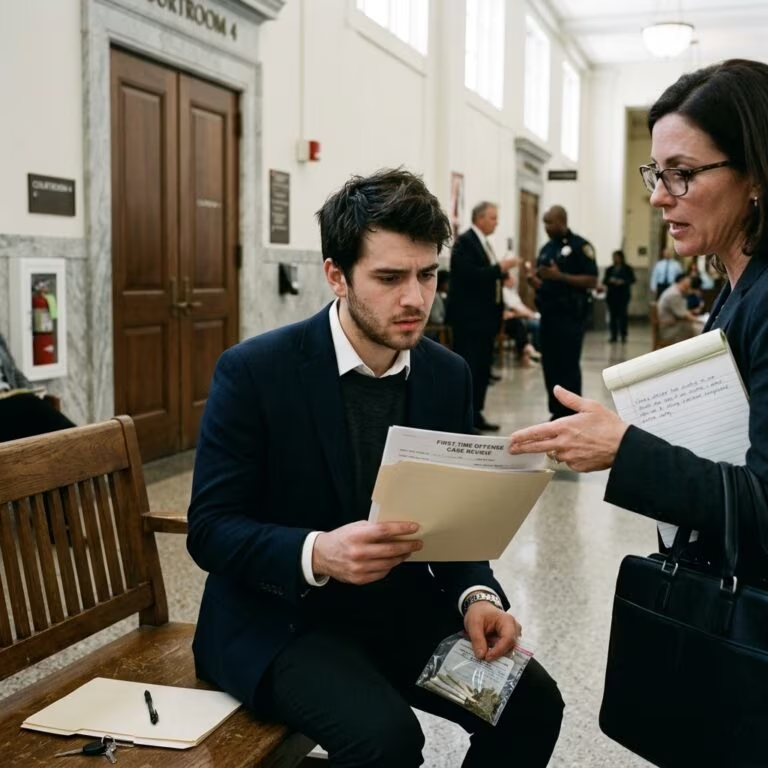
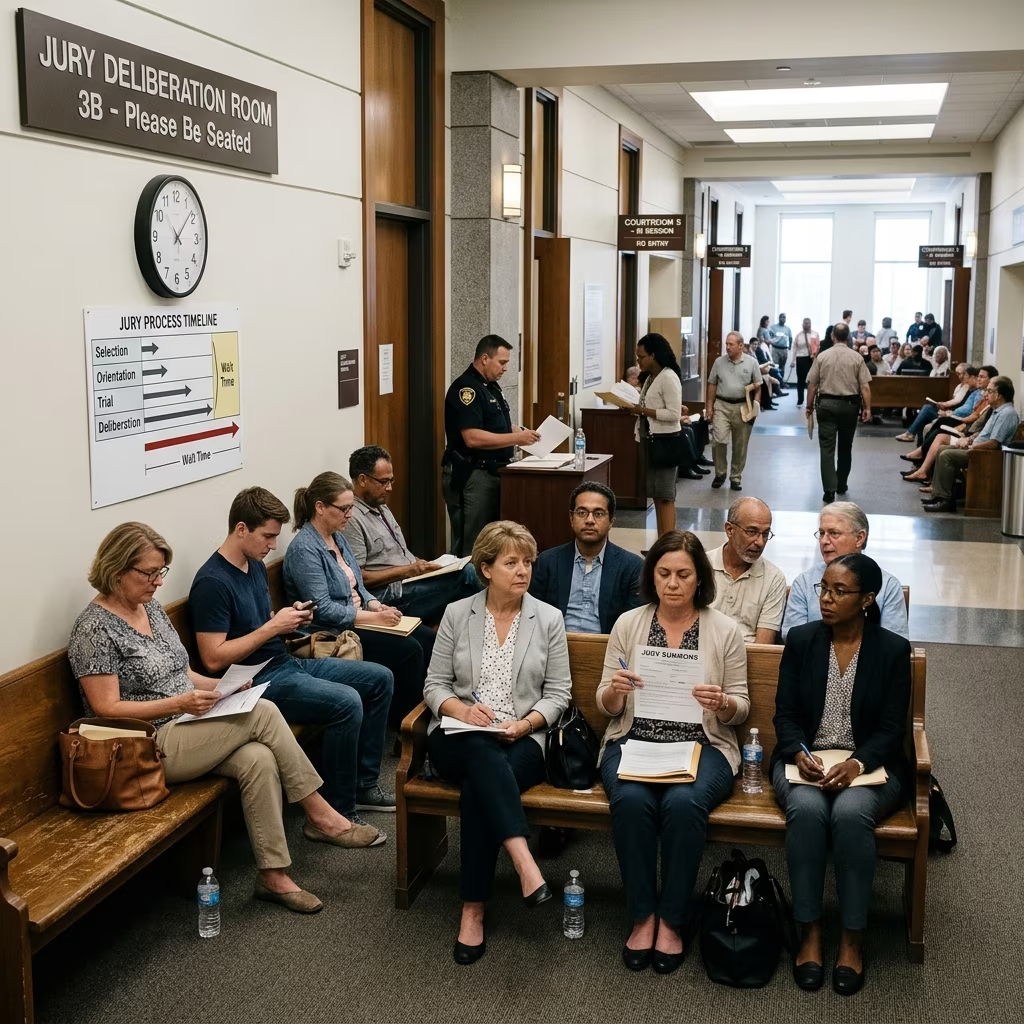
One of the most frustrating parts of jury duty is the waiting. Jurors often spend long stretches in waiting rooms or hallways, with little visible activity. Yet usually, a great deal is happening out of view.
Plea Negotiations and Settlements
Many cases scheduled for trial never actually go forward. Criminal cases often end in plea agreements, and civil cases may settle at the last minute. When lawyers are negotiating, the judge may pause jury selection or trial proceedings, leaving jurors temporarily idle.
Delays from negotiations serve a purpose:
- They can conserve judicial resources if a trial becomes unnecessary.
- They may lead to outcomes both sides find acceptable, avoiding the uncertainty of a jury verdict.
Legal Motions and Evidentiary Disputes
Judges frequently handle legal issues outside the presence of the jury, including:
- Arguments over whether certain evidence is admissible
- Requests to exclude testimony
- Disputes about the wording of jury instructions or the scope of questions in voir dire
These matters must be resolved carefully to protect the fairness of the trial, but courts do not expose jurors to the legal arguments themselves. That can mean extended breaks while the judge and lawyers work through complex legal questions.
Scheduling Conflicts and Resource Limitations
Courtrooms operate within practical constraints. Judges may be handling multiple cases, lawyers may be in other hearings, and witnesses must be coordinated. Administrative realities such as limited courtroom space, staffing, and technology issues can also contribute to slow progress.
From the juror’s perspective, these factors simply feel like “nothing is happening,” even when court personnel are busy with coordination and problem-solving.
Why Some Trials Take Much Longer Than Others
Once a jury is selected and the trial begins, length depends on the complexity of the case and the volume of evidence. Several elements can make a trial significantly longer:
- Number of witnesses: Calling many witnesses or experts increases time spent on examinations and cross-examinations.
- Type of evidence: Technical or scientific evidence often requires detailed explanations and may involve expert testimony.
- Legal complexity: Cases involving multiple charges, intricate laws, or several parties take longer to present and explain.
- Seriousness of the outcome: Trials involving severe penalties, such as long imprisonment, tend to be handled more cautiously and thoroughly.
Courts and attorneys generally move more quickly in straightforward cases with fewer witnesses and simpler facts. In contrast, high-profile or complicated cases may stretch over weeks, even if the initial jury summons only mentioned a shorter anticipated service.
Juror Protections That Contribute to Delays
Another reason jury duty is not rushed is that courts seek to protect jurors’ rights and welfare. These protections can indirectly lengthen proceedings but exist to ensure jurors can perform their roles responsibly.
Limits on Questioning and Privacy
During jury selection, courts balance the need to uncover potential bias with respect for personal privacy. Judges may restrict intrusive questions or shift sensitive topics to private discussions, which can require additional time.
Breaks and Working Hours
Courts schedule regular breaks and usually conduct trials only during business hours. A juror’s day might include:
- Morning and afternoon breaks
- A mid-day lunch recess
- Early adjournments for scheduling or legal issues
These pauses ensure jurors stay alert and able to focus, but they lengthen the calendar time needed to complete a trial.
Instructions and Clarifications
Judges must give detailed instructions to jurors before deliberations. If jurors ask questions after they start deliberating, the court may recall them to clarify legal points. Crafting and delivering accurate instructions takes careful thought and can extend proceedings.
Practical Tips for Handling Long Jury Duty
While jurors cannot control how quickly a case progresses, they can take steps to make the experience easier and more productive.
- Prepare for more than one day: Even if your summons suggests a short duty period, consider arranging your schedule in case service extends beyond a single day.
- Bring appropriate reading material: Courts commonly allow quiet activities like reading during long waits, as long as jurors remain available when called.
- Plan for basic comfort: Wear layered clothing, bring necessary medications, and be ready for cool or warm courtroom temperatures.
- Ask questions about logistics: Court staff can explain expected daily schedules, parking, reimbursement policies, and procedures for requesting hardship consideration.
- Focus on the civic value: Remember that jury duty helps maintain fair trials and community participation in law. Courts describe it as an important privilege as well as a duty.
Common Misconceptions About Jury Duty Delays
Several misunderstandings make long jury duty days feel more frustrating than they need to be. Clarifying these points can improve expectations.
- “The court is wasting my time.” In most cases, delays occur because judges and lawyers are actively resolving legal issues, negotiating outcomes, or ensuring the integrity of the process. What looks like inactivity usually reflects work happening elsewhere in the building.
- “Jury selection should take only a few minutes.” Thorough questioning of jurors is essential to finding a fair and impartial jury, particularly in difficult or high-profile cases. Some trials have required weeks of jury selection due to the sensitivity of the issues.
- “All trials last for weeks.” While some trials do extend for a long time, many cases are resolved quickly, and a large number are settled or resolved without proceeding to a full trial at all.
FAQs About Long Jury Duty
1. Why was I called in, but never picked for a jury?
Courts summon more people than will ultimately serve on a jury to ensure they can screen for bias, hardship, and legal disqualifications. If you were not picked, it likely means the attorneys and judge were able to form a complete jury without needing everyone in the pool.
2. Why did we spend hours waiting without going into a courtroom?
Waiting often happens because the court is resolving legal motions, working through scheduling issues, or dealing with last-minute plea negotiations or settlements. Jurors are kept apart from these discussions to preserve neutrality and avoid exposure to inadmissible information.
3. Can the court shorten my service if I have a hardship?
Courts commonly provide procedures to request relief from jury service for significant hardships, such as severe health problems or critical caregiving duties. These requests are evaluated on a case-by-case basis, and decisions depend on local rules and the judge’s discretion.
4. Why does jury selection sometimes take days or weeks?
In complex or widely publicized cases, attorneys may ask extensive questions to identify potential biases, and many jurors may be excused or challenged. This careful screening is designed to form a jury that can decide the case fairly, even though it takes considerable time.
5. Is jury duty different in federal and state courts?
While the specific procedures and time frames vary, both federal and state courts treat jury service as a crucial civic responsibility and emphasize the need for impartial juries. Some jurisdictions may have typical service lengths or one-day/one-trial systems, but actual experience will depend on the case assigned.
Key Takeaways for Prospective Jurors
Jury duty can feel slow, but its pace reflects the seriousness of the decisions jurors must make. The process involves careful selection, protection of legal rights, and numerous behind-the-scenes steps designed to ensure fair, lawful outcomes.
- Most summoned jurors serve only briefly, but those selected for a trial may spend several days or more participating in the process.
- Jury selection is often the longest and most unpredictable part of jury duty, especially in complex cases.
- Delays usually signal that judges and attorneys are actively working on legal issues, negotiations, or logistics rather than simply inactivity.
- Courts emphasize jury service as both a duty and a privilege through which citizens contribute directly to justice.
By understanding these dynamics and preparing for potential delays, jurors can approach service with realistic expectations and a clearer sense of their role in the justice system.
References
- Jury Service in Texas — Texas Judicial Branch. Accessed 2024-05-01. https://www.txcourts.gov/about-texas-courts/juror-information/jury-service-in-texas/
- Jury Service — United States Courts. Accessed 2024-05-01. https://www.uscourts.gov/court-programs/jury-service
- Jury Duty — Wikipedia (summary of jury systems, primary sources therein). Accessed 2024-05-01. https://en.wikipedia.org/wiki/Jury_duty
- Here’s Why Jury Selection Took So Long — The New York Times. 2021-11-05. https://www.nytimes.com/2021/11/05/us/heres-why-jury-selection-took-so-long.html
- Answering the Call for Jury Service: Jury Duty Explained — Administrative Office of the U.S. Courts (video). Accessed 2024-05-01. https://www.uscourts.gov/court-programs/jury-service
- Jury Duty, What Is Going On While You’re Wasting Your Day? — Slowtwitch forum (anecdotal explanation of courtroom delays). Accessed 2024-05-01. https://forum.slowtwitch.com/t/jury-duty-what-is-going-on-while-youre-wasting-your-day/653355