
HOA Attorney: What Boards Need To Know About Legal Risk In 2025
How legal guidance helps associations govern fairly, collect dues, and avoid costly disputes.
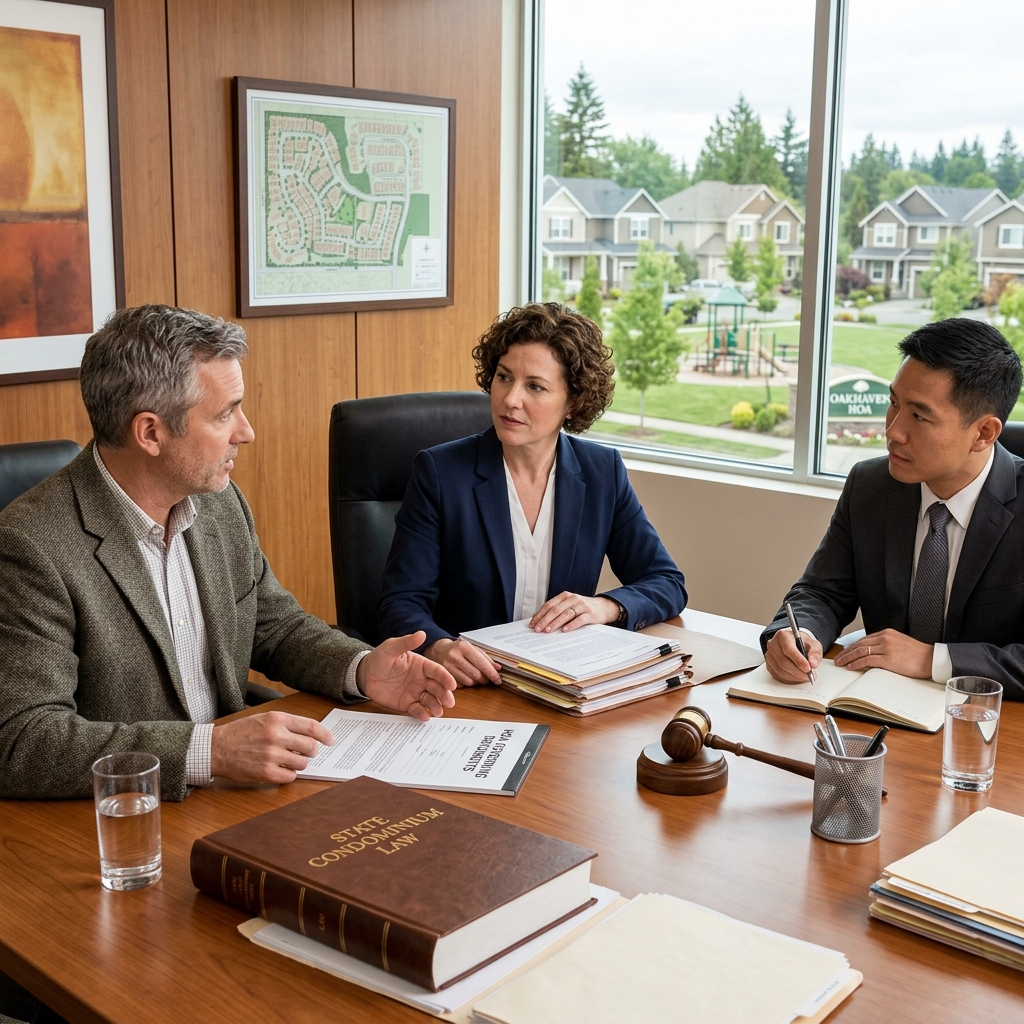
Homeowners associations operate like small governing bodies, but they are also legal entities with duties, powers, and limits. That combination makes legal guidance important from the moment an association is formed and throughout its life as a community organization. Attorneys help HOAs write enforceable rules, respond to disputes, manage collections, and reduce the risk of expensive mistakes.
An HOA may appear to be a neighborhood volunteer organization, but it often handles significant financial decisions and makes rules that affect property rights. Those responsibilities create legal exposure. When boards rely only on informal advice or past practice, they can run into problems that are hard to fix later. Legal counsel can help an association stay consistent, transparent, and compliant with the law.
The legal role of an HOA is broader than many boards expect
In many communities, the board is made up of residents who volunteer their time. They may be skilled in business, construction, accounting, or community leadership, but not necessarily in association law. The challenge is that an HOA is not simply a social club. It has governing documents, contractual obligations, and responsibilities tied to property ownership.
Attorneys can help boards understand the difference between what a community wants to do and what it is legally allowed to do. That distinction matters because rules that are poorly written, inconsistently enforced, or outside the association’s authority can create conflict and invite lawsuits. Legal review also helps ensure that the board’s actions line up with the declaration, bylaws, rules, and state law.
| Common HOA issue | Why legal help matters |
|---|---|
| Rule enforcement | Ensures the association applies standards consistently and fairly |
| Collections | Helps the board follow proper notice and lien procedures |
| Owner disputes | Reduces the chance of escalating conflicts and litigation |
| Document updates | Improves enforceability and keeps policies current |
Attorneys help draft and update governing documents
Every HOA depends on a set of governing documents that define how the community operates. These may include declarations, bylaws, rules, architectural standards, and enforcement procedures. If these documents are vague, outdated, or inconsistent with one another, the association may struggle to act decisively when issues arise.
A lawyer can review existing documents for contradictions, legal gaps, and outdated language. This is especially useful when laws change or when the association wants to revise policies on topics such as parking, exterior modifications, pet restrictions, rentals, or maintenance obligations. Legal drafting helps avoid provisions that are too broad, too narrow, or impossible to enforce.
Well-written documents also reduce misunderstandings among homeowners. When residents can see clear standards, there is less room for arbitrary decision-making claims. That can protect the board as well as the community as a whole.
Rule enforcement works better with consistent legal support
Enforcement is one of the most sensitive parts of HOA management. Homeowners usually accept reasonable restrictions when they believe the rules are applied evenly. Problems begin when the board treats similar violations differently, skips required steps, or imposes penalties without proper authority.
Legal counsel can help the association create a structured enforcement process. That process may include written notices, deadlines to cure a violation, hearing procedures, and appeals. If the documents allow fines or other remedies, counsel can explain how to use them correctly. This reduces the risk that the HOA will face claims of selective enforcement or procedural unfairness.
Attorneys can also help distinguish between a genuine covenant violation and a matter that is better handled informally. Not every neighbor complaint needs a formal enforcement response. Sometimes the most effective approach is a carefully worded notice or a mediated conversation rather than immediate penalties.
Collections require legal precision
Collecting assessments is one of the most important functions of an HOA. Without stable revenue, the association cannot maintain common areas, pay vendors, or cover insurance and administrative costs. Yet collections are also one of the areas where legal errors can quickly become costly.
Boards often need guidance on late fees, interest, payment plans, and lien rights. They also need to make sure notices are sent correctly and deadlines are followed. A lawyer can help the association adopt a collection policy that is both effective and legally defensible. That policy may also explain when the HOA should escalate a delinquent account and when it should pause enforcement because of a hardship arrangement or dispute.
Using legal counsel for collections is especially important when the association intends to file a lien, pursue foreclosure, or send a matter to litigation. Those steps must be handled carefully, because missteps can create liability for the HOA and increase hostility within the neighborhood.
Disputes are easier to manage when a neutral legal advisor is involved
HOAs deal with disagreements over noise, parking, landscaping, pets, architectural requests, and alleged unfair treatment. Some disputes are minor, while others can become deeply personal and expensive. When board members handle conflict without legal support, conversations can become emotional and inconsistent.
An attorney gives the board an objective framework. Rather than reacting to pressure from one side or the other, the board can focus on the governing documents and applicable law. That does not mean every dispute must turn into formal litigation. In fact, legal counsel often helps the parties avoid court by clarifying rights, narrowing the issues, and suggesting practical solutions.
Lawyers may also assist with hearings, settlement discussions, or mediation. In many communities, an early legal review helps prevent a dispute from becoming a long-running feud. This is valuable because HOA conflict can reduce property values, damage neighbor relationships, and drain volunteer energy.
Board elections and meetings need procedural discipline
Good governance depends on more than good intentions. Board elections, notice requirements, meeting rules, quorum standards, and voting procedures all need to be handled correctly. If not, residents may challenge the legitimacy of board decisions.
Legal counsel can help the association design election procedures that are fair and consistent. That includes advising on candidate qualifications, proxy rules, notice timing, ballot handling, and record retention. Lawyers can also help the board understand open meeting requirements, executive session limits, and minute-taking practices.
Procedural mistakes can lead to distrust even when no one acted in bad faith. A lawyer’s role is to help the HOA avoid those mistakes before they turn into a governance dispute. That is especially helpful in large associations or communities with frequent turnover in board leadership.
Lawyers help HOAs navigate contracts and vendors
Most associations rely on outside vendors for landscaping, accounting, maintenance, snow removal, security, reserve studies, and repairs. Every contract creates risk. If the terms are unclear, the HOA may overpay, receive poor service, or get trapped in a long-term agreement it no longer wants.
An attorney can review vendor contracts before they are signed and identify problem clauses such as automatic renewals, broad indemnity language, weak termination rights, or unclear performance standards. Legal review is also useful when a contractor causes damage, misses deadlines, or disputes payment.
Because HOAs operate on behalf of many owners, contract decisions should be documented carefully. Legal counsel helps ensure that the board has authority to sign agreements and that the contract terms align with budget limits and governing documents.
When state and federal rules overlap, legal advice becomes essential
HOAs do not operate in a vacuum. They must comply with state property laws, nonprofit rules in some jurisdictions, fair housing requirements, disability accommodation rules, and other legal obligations. This can be difficult for a volunteer board to track on its own.
For example, a rule that looks neutral on its face may still create issues if it has a discriminatory effect or conflicts with housing protections. Similarly, a policy on architectural changes or pets may need to account for legally protected accommodations. An attorney can help the board recognize when a simple neighborhood rule also raises broader legal questions.
That kind of guidance is useful not only for avoiding lawsuits, but also for making sure the association treats residents in a lawful and respectful manner.
Budgeting for legal help can save money over time
Some boards hesitate to hire an attorney because they want to keep fees low. That concern is understandable, especially in communities with tight budgets. But legal costs should be weighed against the expense of fixing avoidable mistakes. Poorly handled enforcement, invalid amendments, bad contracts, or improper collections can become far more expensive than routine legal review.
Many associations use counsel selectively. They may ask for help when updating documents, dealing with collections, responding to a demand letter, or preparing for a major policy change. Others prefer ongoing counsel so they can get quick answers before a problem grows. Either approach can work, as long as the board uses legal advice proactively rather than waiting for a crisis.
- Review governing documents before making major policy changes
- Get legal guidance before sending serious enforcement or collection notices
- Ask counsel to review vendor contracts and amendments
- Use an attorney when disputes become repeated or emotionally charged
- Seek advice before elections, rule adoptions, or reserve-related decisions
What an HOA attorney can actually do for a board
The value of legal counsel is often practical rather than dramatic. A lawyer does not need to run the association day to day. Instead, counsel helps the board make better decisions with fewer surprises. That may include writing notices, explaining powers and limits, reviewing minutes, interpreting restrictions, or representing the HOA in court if necessary.
For many associations, the best use of an attorney is prevention. A short review today can stop a long dispute tomorrow. That preventive function is especially important in communities where residents are highly engaged, rules are frequently challenged, or development documents are old and hard to interpret.
Frequently asked questions
Do all HOAs need an attorney? Smaller associations may not need constant legal services, but most HOAs benefit from having an attorney available for document review, disputes, collections, and compliance questions.
Can a board handle rule enforcement without legal help? Yes, for minor matters, but legal advice is valuable when penalties, repeated violations, or claims of unfair treatment are involved.
Should an HOA lawyer be involved in elections? It is often wise to involve counsel when election procedures are challenged or when the governing documents are unclear.
Is legal help only for lawsuits? No. Much of an HOA lawyer’s work is preventive, including drafting documents, reviewing contracts, and guiding board procedures.
When is the best time to consult counsel? The best time is before a major problem develops. Early advice is usually cheaper and more effective than fixing a dispute after it escalates.
Choosing the right legal partner
Not every attorney has the same level of experience with HOA matters. Boards should look for counsel familiar with community association documents, collection practices, enforcement procedures, and state-specific property rules. Experience with real estate and nonprofit governance can also be helpful.
A good HOA attorney should be able to explain complex issues in plain language, respond quickly when problems arise, and help the board make decisions that are both practical and legally sound. The right lawyer becomes a resource for the board, the property manager, and the community as a whole.
References
- Guides: Property Owners’ Associations: General Information — Texas State Law Library. 2026-07-10. https://guides.sll.texas.gov/property-owners-associations
- Homeowners Association (HOA) Information — South Carolina Department of Consumer Affairs. 2026-07-10. https://consumer.sc.gov/HOA-Ed
- Homeowners’ Associations & Their Legal Powers — Justia. 2026-07-10. https://www.justia.com/real-estate/home-ownership/owning-a-home/hoas/
- Missouri HOA Laws: A 2025 guide — FirstService Residential. 2025-01-01. https://www.fsresidential.com/missouri/news-events/articles/missouri-hoa-laws/
- Homeowner’s Associations (HOAs) — Hamilton Law, PLC. 2026-07-10. https://www.hamiltonlawplc.com/practice-areas/real-estate-law/homeowners-associations-hoas/
Similar Articles








Read full bio of medha deb


