
The Enduring Injustice of Guantanamo Bay
Despite widespread condemnation, the Guantanamo Bay detention camp remains a symbol of human rights abuses and legal evasion.
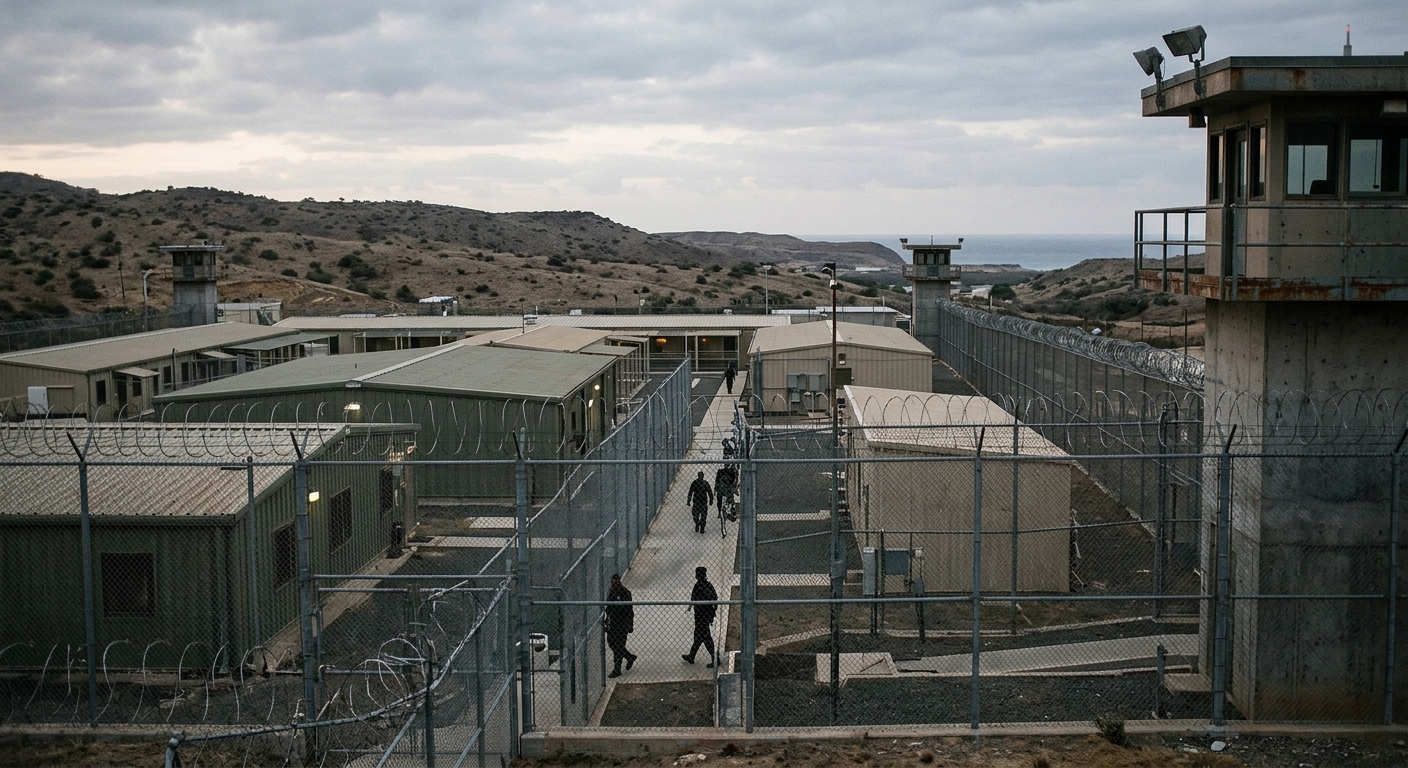
Introduction: A Lingering Shadow Over American Justice
More than two decades have passed since the September 11 attacks, an event that profoundly reshaped global security and American domestic policy. In the chaotic aftermath, the United States government made a fateful decision that would permanently alter its standing on the global stage: the establishment of a military prison at the Naval Station Guantanamo Bay in Cuba. Originally pitched to the public as a temporary, emergency measure to house the ”worst of the worst” suspected terrorists, the facility has instead metastasized into a permanent fixture of indefinite detention. Today, it stands as a glaring contradiction to the very principles of due process and human rights that the United States claims to champion globally.
The persistence of Guantanamo Bay—often referred to simply as Gitmo—forces a difficult reckoning. Why does a nation founded on the rule of law continue to tolerate the existence of an offshore prison explicitly designed to operate outside the bounds of constitutional jurisdiction? To answer this, one must peel back the layers of political fearmongering, examine the catastrophic failure of alternative legal systems, and confront the staggering financial and human costs associated with keeping the facility open.
The Blueprint of a Legal Black Hole
To understand why Guantanamo Bay is so uniquely problematic, one must look at its foundational geography and legal architecture. Following the 2001 invasion of Afghanistan and the launch of the broader War on Terror, the executive branch needed a location to interrogate and detain foreign nationals without the interference of the American judicial system. By leasing land in Cuba—territory over which the U.S. maintains total control but lacks ultimate sovereignty—the government successfully created a legal vacuum.
Detainees flown to the island were stripped of the traditional protections afforded by the Geneva Conventions. They were not classified as prisoners of war, nor were they treated as criminal defendants under U.S. federal law. Instead, they were labeled ”unlawful enemy combatants,” a newly minted designation that essentially denied them the fundamental right of habeas corpus. For years, these men were denied the ability to challenge the legality of their detention before a neutral judge. It was a calculated maneuver to prioritize intelligence gathering and security over the basic tenets of international humanitarian law.
A Catastrophic Human Rights Legacy
The physical and psychological toll exacted on the men held at Guantanamo Bay is a dark chapter in modern history. Of the nearly 800 Muslim men and boys who have passed through the camp’s gates since 2002, the vast majority were never charged with a crime. Many were sold to U.S. forces for bounties, possessing no ties to Al-Qaeda or the Taliban, only to spend over a decade in a cage. The damage inflicted upon these individuals is not merely historical; it is an ongoing crisis.
In a landmark 2023 report, the United Nations Special Rapporteur on the promotion and protection of human rights while countering terrorism, Fionnuala Ní Aoláin, documented the grim reality of life inside the facility following an official technical visit. The findings were devastating. The report highlighted unrelenting physical and psychological abuses, detailing a legacy of torture, sensory deprivation, and medical neglect. According to the UN mandate, the conditions at the site amount to ”cruel, inhuman, and degrading treatment.”
For the aging detainees who remain, the trauma of their initial interrogations—which often involved extreme sleep deprivation, waterboarding, and solitary confinement—is compounded by the indefinite nature of their captivity. Without a release date, trial, or meaningful legal recourse, the psychological despair is profound. The United States government has yet to provide adequate medical care for the complex, trauma-induced ailments from which many of these men suffer, further cementing the facility’s reputation as an epicenter of human rights violations.
The Staggering Financial Absurdity
If the moral and legal arguments against Guantanamo are insufficient to sway its proponents, the financial realities should be impossible to ignore. Maintaining a remote offshore detention center is an extraordinarily inefficient use of taxpayer funds. Because the facility sits on an island, every piece of infrastructure, every meal, and every medical supply must be flown or shipped in. Furthermore, the ratio of military personnel and contractors to detainees is wildly disproportionate, requiring a massive logistical footprint to guard a shrinking population.
- Federal Prison Comparison: According to data recorded in the Congressional Record, housing a high-security inmate at a federal ”Supermax” prison within the United States—facilities that currently hold notorious domestic and international terrorists—costs approximately $78,000 per year.
- Guantanamo’s Price Tag: By stark contrast, the cost per detainee at Guantanamo Bay has ballooned well past $10 million annually, with some estimates citing figures upward of $13 to $16 million per person per year depending on defense budget allocations.
- Infrastructure Decay: The temporary structures built in 2002 were never meant to last decades. Millions of dollars are continuously poured into upgrading and repairing crumbling facilities that house only a few dozen men.
This exorbitant expenditure represents a colossal waste of resources. The funds currently sunk into operating this offshore legal anomaly could be redirected toward authentic national security initiatives, veterans’ care, or modernizing military readiness. Yet, the facility remains open, heavily subsidized by a public largely unaware of its daily operating costs.
The Mirage of Military Commissions
In an attempt to bypass the federal courts, the government established military commissions to try the small fraction of detainees who were actually accused of war crimes, including the alleged architects of the 9/11 attacks. However, this parallel justice system has proven to be an unmitigated disaster.
Unlike the traditional U.S. federal justice system, which has successfully prosecuted hundreds of terrorism-related cases since 2001, the military commissions have been paralyzed by procedural gridlock. The core issue lies in the foundational illegality of the CIA’s post-9/11 interrogation programs. Because the government subjected the defendants to torture at ”black sites” before transferring them to Cuba, prosecutors have spent over a decade fighting to keep classified details of that torture out of the courtroom. Defense attorneys, rightfully arguing that evidence extracted through torture is inadmissible, have tied the commissions up in endless pre-trial hearings.
The result is a stagnant process that delivers neither accountability nor closure. The victims of the September 11 attacks and their families have been forced to wait decades for a trial that remains perpetually on the horizon. The military commissions have demonstrated that abandoning the constitutional justice system in favor of an untested, ad-hoc tribunal only breeds dysfunction and impunity.
The Psychology of American Tolerance: Why Is It Still Open?
Given the legal quagmire, the human rights condemnation, and the astronomical costs, the persistent existence of Guantanamo Bay begs the question: why does the American public tolerate it? The answer lies at the intersection of fear, political opportunism, and collective amnesia.
First, the issue has been heavily politicized. For years, lawmakers have weaponized the fear of terrorism to block efforts to close the camp. Congress has repeatedly passed legislative riders prohibiting the use of federal funds to transfer any Guantanamo detainee to the U.S. mainland for any reason, including trial or medical care. Politicians brandish the ”Not in My Backyard” argument, claiming that bringing detainees to stateside prisons would endanger local communities, despite the fact that federal Supermax prisons already securely house hundreds of convicted terrorists without incident.
Second, out of sight means out of mind. Located on an isolated base in the Caribbean, inaccessible to journalists and the general public, the daily realities of Guantanamo Bay are easy to ignore. Over the years, the narrative has faded from the front pages of newspapers. As domestic crises take precedence, the indefinite detention of a few dozen Muslim men has slipped down the priority list of the average voter.
Finally, there is an institutional reluctance to confront the dark legacy of the War on Terror. Closing the facility permanently would require a public acknowledgment of the systemic failures, the torture, and the innocent lives ruined in the pursuit of intelligence. It is politically safer to maintain the status quo than to reckon with the consequences of state-sanctioned abuses.
Charting a Path Toward Closure and Accountability
Closing Guantanamo Bay is not impossible; it requires political will and a commitment to the rule of law. A realistic roadmap involves:
1. Expediting Transfers: Many men still held have already been cleared for transfer by unanimous agreement of U.S. intelligence agencies. The State Department must prioritize diplomatic negotiations to resettle them in safe third countries.
2. Embracing Plea Agreements: For men facing charges in the broken military commission system, the pursuit of death penalty trials has proven futile. The pragmatic way to achieve justice, while acknowledging the government’s use of torture, is to negotiate plea deals. This bypasses endless pre-trial litigation.
3. Ending the Legislative Blockade: Congress must repeal arbitrary restrictions preventing the transfer of detainees to the U.S. mainland. This allows remaining cases to be handled by capable, constitutionally sound federal courts.
Conclusion
The ongoing operation of the Guantanamo Bay detention camp is a profound failure of American legal and moral leadership. It stands as a daily reminder of how easily democratic principles can be discarded under the banner of national security. True security cannot be built upon a foundation of indefinite detention, torture, and a disregard for international law. Until the gates of the prison are permanently shuttered, the United States will continue to carry the burden of its most shameful post-9/11 legacy. It is time for the nation to stop tolerating the intolerable and finally close this disgraceful chapter.
Frequently Asked Questions (FAQ)
What was the original purpose of the Guantanamo Bay detention camp?
The facility was established in 2002 following the 9/11 attacks to hold foreign nationals suspected of terrorism. The location in Cuba was chosen to keep the detainees outside the jurisdiction of U.S. federal courts, allowing the government to interrogate them without granting standard constitutional protections.
Are all the detainees at Guantanamo guilty of terrorism?
No. Of the nearly 800 individuals detained since its inception, the vast majority were never charged. Many were turned over for bounties and found to have no significant ties to terror organizations. Dozens still there are officially cleared for transfer but await diplomatic arrangements.
Why doesn’t the government just move the remaining detainees to prisons in the U.S.?
Congress has passed stringent laws prohibiting the use of government funds to transfer Guantanamo detainees to the United States mainland for any purpose, including trial or medical treatment. Politicians have cited security concerns, despite the fact that stateside maximum-security federal prisons already hold hundreds of convicted international and domestic terrorists securely.
What are the military commissions?
Military commissions are specialized tribunals set up by the U.S. government to prosecute Guantanamo detainees accused of war crimes. However, these commissions have been largely dysfunctional. The trials have been hopelessly stalled for years, primarily because defense attorneys are challenging the use of evidence obtained through the CIA’s post-9/11 torture programs.
References
- A/78/520: Report of the Special Rapporteur on the promotion and protection of human rights and fundamental freedoms while countering terrorism — Office of the United Nations High Commissioner for Human Rights (OHCHR). 2023-10-10. https://www.ohchr.org/en/documents/reports/a78520-report-special-rapporteur-promotion-and-protection-human-rights-and
- Congressional Record – 115th Congress — U.S. Government Publishing Office (GovInfo). 2017-07-27. https://www.govinfo.gov/content/pkg/CREC-2017-07-27/html/CREC-2017-07-27-pt1-PgH6475-2.htm
- Guantanamo Bay Detainees: Facilities and Factors for Consideration If Detainees Were Brought to the United States — U.S. Government Accountability Office (GAO). 2012-11-14. https://www.gao.gov/products/gao-13-31
Similar Articles








Read full bio of Sneha Tete


