Why Many Criminal Defendants Remain Silent at Trial
Understanding the legal rights, strategic concerns, and courtroom risks that lead many defendants to decline taking the witness stand.
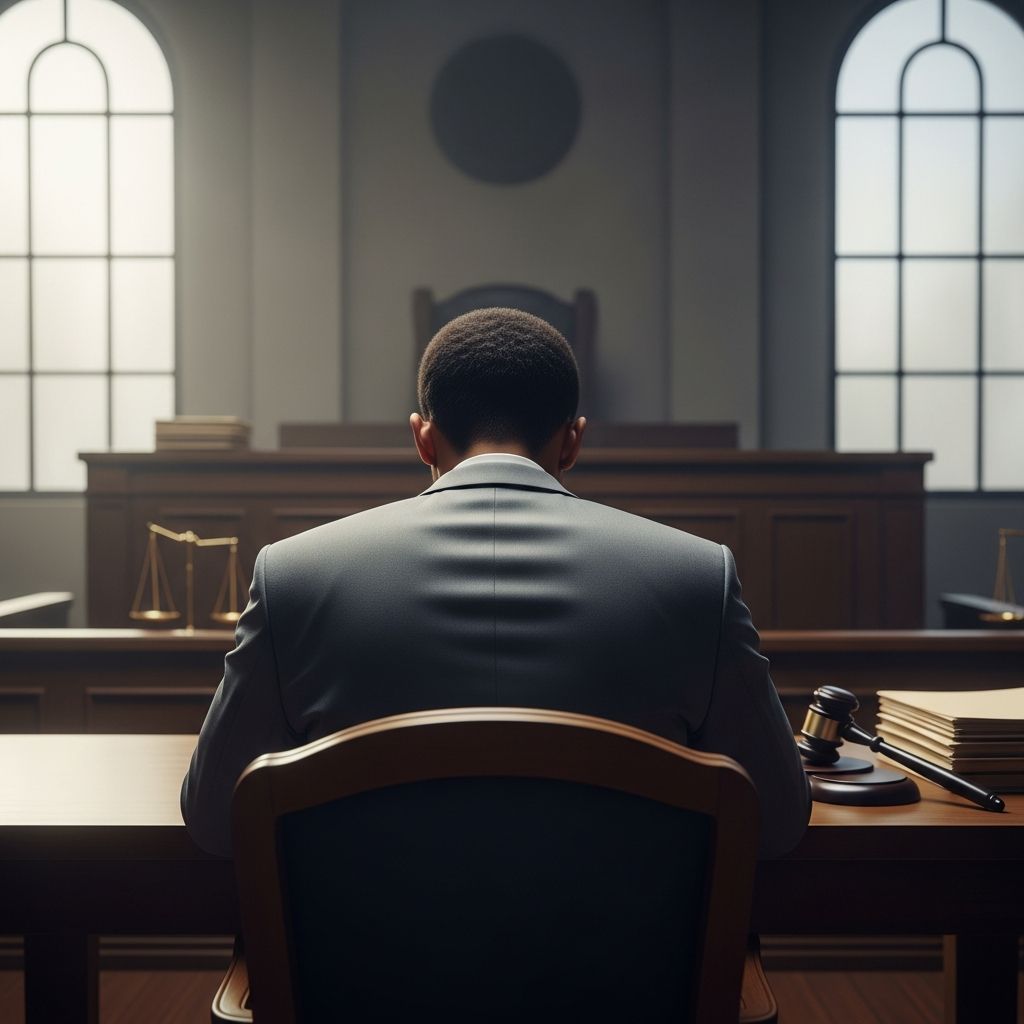
One of the most misunderstood moments in a criminal trial comes when the defendant chooses not to take the witness stand. Many people assume that an innocent person will always want to testify. In reality, staying silent is often a deliberate legal strategy, firmly grounded in constitutional protections and courtroom experience.
This article explains why many defendants decline to testify, how that choice is protected by law, what risks come with taking the stand, and what jurors are formally told about drawing conclusions from a defendant’s silence.
Core Legal Right: The Power to Stay Silent
In U.S. criminal cases, a defendant has a fundamental right not to testify. This right is closely tied to the privilege against self-incrimination, often referred to as “pleading the Fifth.”
What the Right Means in Practice
- No compulsion: The government cannot force a criminal defendant to take the stand and answer questions at trial.
- Defendant’s decision: The ultimate choice to testify or remain silent belongs to the defendant, usually after extensive consultation with defense counsel.
- No legal penalty for silence: Courts instruct jurors that they must not treat the defendant’s silence as evidence of guilt or discuss it during deliberations.
- Fundamental nature: Courts have recognized the right not to testify as a fundamental constitutional right that must be respected and waived, if at all, knowingly and voluntarily.
The Burden of Proof and Why It Matters
Equally important is the allocation of the burden of proof in criminal trials. The prosecution must prove guilt beyond a reasonable doubt; the defense has no obligation to prove innocence.
- Prosecution’s job: The government must present enough credible evidence to convince jurors of every element of the offense.
- No duty to explain: A defendant is not required to explain their side of the story, present any evidence, or testify in their own defense.
- Strategic silence: When the prosecution’s case is weak, leaving it unstrengthened by defendant testimony can be a powerful defense choice.
Why Testifying Can Be Risky for Defendants
Deciding whether to testify is rarely simple. Testifying gives a defendant the chance to speak directly to the jury—but it also opens the door to several serious risks. Experienced defense lawyers weigh these carefully before advising their clients.
| Potential Benefit of Testifying | Corresponding Risk |
|---|---|
| Tell personal version of events directly to jurors | Exposure to aggressive cross-examination |
| Appear open and cooperative | Nervousness or confusion may look like dishonesty |
| Attempt to explain damaging evidence | Statements can unintentionally confirm or strengthen prosecution theories |
| Show remorse or humanity | Prosecutor may use that testimony to challenge credibility or motives |
1. The Dangers of Cross-Examination
When a defendant testifies, the prosecution gains the right to question them on cross-examination. Skilled prosecutors are trained to exploit inconsistencies, highlight uncertainty, and elicit admissions that help their case.
- High-pressure questioning: Most defendants have never faced a hostile interrogation in front of a jury. Even honest witnesses can become flustered or confused.
- Inconsistent details: Minor differences between prior statements and trial testimony—even if innocent—can appear as lies to jurors.
- Sound bites and admissions: A poorly phrased answer can be repeated in closing argument as powerful evidence against the defendant.
2. Risk of Inadvertent Self-Incrimination
The privilege against self-incrimination exists precisely because ordinary people under pressure can say things that make their situation worse, even if they are not intentionally lying. Once on the stand, a defendant must answer most questions unless a court sustains an objection or allows the privilege to be asserted on a question-by-question basis.
- Expanding the record: Testimony may introduce new facts the prosecution can investigate or exploit.
- Unhelpful explanations: Attempts to “explain away” damaging evidence sometimes solidify a juror’s belief that the evidence is accurate.
- Prior statements: If the defendant has spoken to police, the media, or others, inconsistencies between those statements and trial testimony can be used to attack credibility.
3. Exposure to Prior Criminal History
Evidence rules generally limit the government’s ability to tell jurors about a defendant’s past crimes, because such information is highly prejudicial and may cause jurors to convict based on character rather than evidence of the charged offense.
However, when a defendant testifies, certain prior convictions may be used to challenge their truthfulness or to respond to specific claims made on the stand, depending on the jurisdiction’s rules of evidence.
- Impeachment with prior convictions: In many jurisdictions, certain past crimes can be mentioned to cast doubt on the defendant’s honesty.
- Opening the door: Broad statements like “I’ve never done anything like this” can give prosecutors an opportunity to introduce otherwise excluded acts or conduct.
- Prejudice risk: Once jurors hear about prior misconduct, separating those acts from the present charge can be psychologically difficult.
4. Managing Jury Perception and Human Psychology
Trials are not decided only on legal rules; juror perceptions and human psychology also play a major role. A defendant’s demeanor on the stand may influence jurors—sometimes in ways that are impossible to control or predict.
- Nervousness misread as guilt: Sweating, shaking, or stumbling over words can be misinterpreted as dishonesty rather than anxiety.
- Cultural and personal differences: Directness, eye contact, and emotional expression vary across cultures and personalities. A style that feels respectful in one community may appear evasive in another.
- Emotional outbursts: Anger or visible frustration under cross-examination can hurt a defendant’s image, even if the reaction is understandable.
Strategic Reasons to Decline the Witness Stand
Because of these risks, defense teams often decide that the best move is to keep the defendant off the stand and focus instead on attacking the prosecution’s evidence.
Relying on the Prosecution’s Weaknesses
If the government’s case is incomplete, contradictory, or heavily dependent on unreliable witnesses, defense counsel may prefer to:
- Highlight gaps or inconsistencies in police investigations.
- Challenge the credibility of eyewitnesses, informants, or accomplices.
- Point out missing documents, tests, or recordings that would be expected if the prosecution’s theory were accurate.
In this approach, putting the defendant on the stand can be seen as unnecessary risk: it gives the prosecution an additional witness to attack, and potentially shifts focus away from weaknesses in the government’s proof.
Maintaining a Coherent Defense Theory
Defense strategy is often carefully planned around a single clear theme—for example, mistaken identity, unreliable forensic results, or lack of intent. Testimony from the defendant that conflicts even slightly with that theme can weaken the overall message to the jury.
- Message discipline: Limiting who speaks and what they say helps keep the defense theory simple and memorable.
- Avoiding surprises: Even well-prepared defendants may express themselves in unpredictable ways under stress.
- Protecting complex defenses: In cases involving technical or legal defenses (such as complex financial crimes), it may be more effective to rely on expert witnesses and attorney argument than on the defendant’s lay explanations.
How Courts Protect the Right Not to Testify
To prevent jurors from punishing a defendant for remaining silent, courts provide specific instructions and treat the decision with great care.
Jury Instructions on Silence
Pattern jury instructions in many states explicitly tell jurors:
- The defendant has a constitutional right not to testify.
- The decision whether to testify is the defendant’s alone, made with the advice of counsel.
- Jurors must not draw any inference of guilt from the defendant’s silence, nor discuss that silence during deliberations.
Some jurisdictions also have guidance on when trial judges should or may give such instructions, especially if the defense requests them.
Voluntary and Informed Choice
Because the right not to testify is fundamental, appellate courts have stressed that waiving it—by deciding to take the stand—must be done knowingly and voluntarily. While courts differ on whether judges must conduct an on-the-record conversation with the defendant about this choice, they consistently recognize the importance of ensuring the decision is personal and informed.
Common Misconceptions About Defendant Silence
Public expectations about courtroom drama often clash with actual legal practice. Several misconceptions frequently arise when defendants do not testify.
Misconception 1: “If They Were Innocent, They Would Testify”
Innocent defendants may reasonably fear that:
- Their nervousness or confusion under questioning will be misread by jurors.
- Prosecutors will twist their words or seize on small inconsistencies.
- Old, unrelated mistakes could be brought up to damage their credibility.
Choosing not to testify is therefore not a reliable indicator of guilt or innocence; it often reflects a calculation about risk, not a hidden confession.
Misconception 2: “Staying Silent Shows Disrespect to the Jury”
Some jurors may initially expect to hear from the defendant. However, the legal system deliberately protects the defendant’s right to remain silent, and judges specifically instruct jurors not to hold that silence against them. Respect for the jury includes trusting jurors to follow the law, even when it contradicts their expectations.
Misconception 3: “Lawyers Tell Defendants to Stay Silent Only When the Case Is Hopeless”
Defense lawyers often advise silence in strong cases where the prosecution has failed to meet its burden. In that situation, testifying can create unnecessary risk and provide the government with additional material to work with in cross-examination and closing argument.
When Defendants Do Choose to Testify
Despite the risks, some defendants decide that taking the stand is essential. Situations where testimony is more likely include:
- Self-defense claims: The defendant’s state of mind and personal perceptions are central to the case.
- Alibi or mistaken identity: The defendant may want to personally explain why they could not have committed the crime.
- Public perception: In high-profile cases, defendants sometimes feel compelled to address the accusations themselves, even if lawyers are cautious.
Even in these scenarios, defense counsel typically conducts extensive preparation, including mock cross-examinations, to reduce the risk of damaging testimony.
Frequently Asked Questions (FAQs)
Q: Can the prosecutor tell the jury that the defendant did not testify?
No. In criminal cases, prosecutors generally may not comment on the defendant’s decision not to testify, because that would penalize the exercise of constitutional rights. Judges instead instruct jurors that they must not consider the defendant’s silence as evidence of guilt.
Q: Can a defendant change their mind about testifying during trial?
Often yes, subject to the court’s scheduling and evidentiary rules. The choice to testify or remain silent belongs to the defendant, and they may change course after consulting with their attorney, although late changes can complicate trial strategy.
Q: Does a defendant have to testify to claim self-defense?
Not always. Other witnesses, physical evidence, and expert testimony can sometimes support a self-defense theory. However, because self-defense often turns on the defendant’s perceptions and intentions, many such cases involve testimony from the accused, after careful strategic discussion.
Q: Is the right not to testify the same in civil and criminal cases?
The privilege against self-incrimination exists in both contexts, but its consequences differ. In criminal trials, jurors are told they cannot draw any inference of guilt from silence. In civil cases, negative inferences from a party’s refusal to answer may sometimes be allowed, depending on the jurisdiction and specific circumstances.
Q: Who makes the final decision about whether the defendant testifies?
The defendant does. Defense counsel can strongly advise one way or the other, but courts recognize the decision to testify as a personal, fundamental right of the accused, which cannot be taken away by attorneys or judges.
References
- WIS JI–Criminal SM-28 Special Materials: Right Not to Testify — Wisconsin Judicial Conference. 2010-06-01. https://wilawlibrary.gov/jury/files/criminal/SM-28.pdf
- Idaho Criminal Jury Instructions 300–316 (Evidence and Witnesses) — Idaho Supreme Court. 2017-01-01. https://isc.idaho.gov/jury/criminal/300/300EvidenceAndWitnesses-All.pdf
- Right to Testify — North Carolina Defender Manual, University of North Carolina School of Government. 2013-10-01. https://defendermanuals.sog.unc.edu/sites/default/files/pdf/21.3%20Right%20to%20Testify_0.pdf
- When Your Client Insists on Testifying in a Criminal Case — Fox Rothschild LLP. 2018-05-15. https://www.foxrothschild.com/publications/when-your-client-insists-on-testifying-in-a-criminal-case
- What We Don’t Know About Criminal Defendants’ Testimony — Laurie L. Levenson, Loyola of Los Angeles Law Review. 2011-01-01. https://digitalcommons.lmu.edu/cgi/viewcontent.cgi?article=3199&context=llr
Similar Articles






Read full bio of medha deb