
Mortgage Closing Costs: What They Cover And Who Pays
Understand the full range of mortgage closing fees, who typically pays them, and how to prepare before you sign.
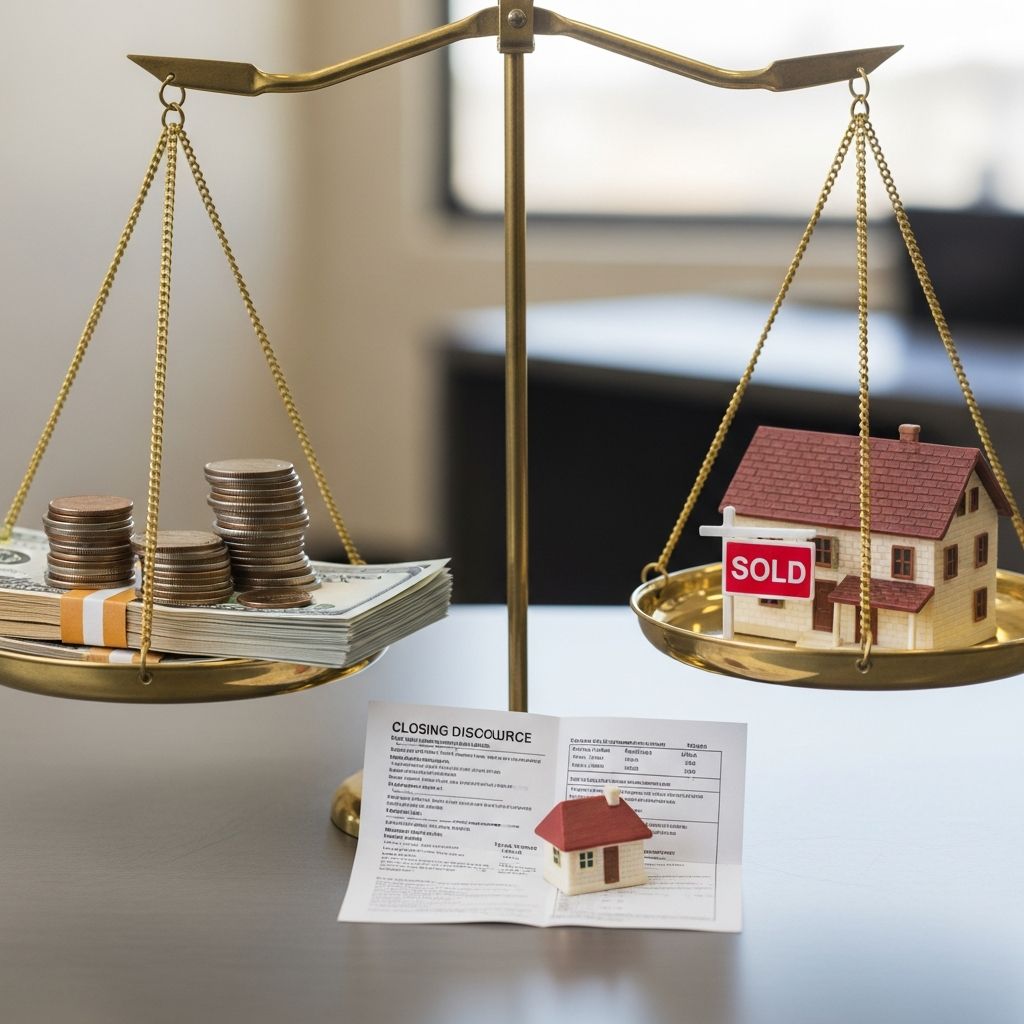
When you close on a mortgage, you pay more than just your down payment. A long list of fees, taxes, and service charges must be settled before the lender funds the loan and the property changes hands. Many of these expenses are called closing costs, and they can significantly affect how much cash you need to bring to the closing table.
This guide explains the most common closing fees, how much they typically cost, and who usually pays them—buyer, seller, or lender—so you can approach closing with fewer surprises and more confidence.
1. What Are Mortgage Closing Costs?
Closing costs are the one-time expenses you and the seller pay to finalize a real estate transaction and mortgage. They cover services such as processing your loan, checking the property’s title, recording legal documents, and prepaying certain taxes and insurance.
According to major lenders and housing agencies, total closing costs for homebuyers typically run between 2% and 6% of the loan amount. That means on a $300,000 mortgage, a buyer might pay roughly $6,000 to $18,000 in closing costs in addition to the down payment.
- When they’re paid: Most fees are paid on the day of closing, although a few (like an appraisal or inspection) might be paid earlier.
- Who can pay: Costs can be covered by the buyer, the seller (through concessions), or the lender (via credits), depending on the contract and loan rules.
- How they’re disclosed: Buyers receive a Loan Estimate early in the process and a Closing Disclosure at least three business days before closing, showing each fee and who pays it.
2. Big-Picture Overview: Buyer vs. Seller vs. Lender Costs
Every real estate deal is negotiated, but there are common patterns in who typically pays which types of fees.
| Type of Cost | What It Covers | Typical Payer |
|---|---|---|
| Lender & loan fees | Processing, underwriting, rate-related costs | Mostly buyer |
| Title & settlement charges | Title search, title insurance, closing agent | Split or negotiated; often buyer-heavy |
| Government & recording fees | Deed, mortgage recording, transfer taxes | Buyer, seller, or both depending on local custom |
| Prepaid items & escrows | Interest, property taxes, homeowners insurance | Buyer |
| Real estate commissions | Compensation to listing and buyer’s agents | Normally seller |
3. Lender and Loan-Related Fees
These costs arise from getting your mortgage approved, documented, and funded. They are almost always paid by the buyer, unless a lender credit or seller concession offsets them.
3.1 Common lender charges
- Origination fee: A charge for processing and underwriting your loan. Some lenders express this as a flat fee; others use a percentage of the loan amount (for example, 0.5% to 1%).
- Application or processing fee: Covers initial review and administrative work. In some cases this is folded into the origination fee.
- Discount points: Optional fees paid at closing to reduce your interest rate. One point usually equals 1% of the loan amount and may lower your rate by about 0.25 percentage points, though the exact benefit varies by lender.
- Underwriting fee: Charged for risk analysis and final loan approval. It may appear as a separate line or be included in origination.
- Credit report fee: A relatively small charge to pull your credit history from one or more credit bureaus.
- Rate-lock or commitment fee (if applicable): Sometimes charged when you lock a rate for an extended period.
3.2 Who pays these fees?
- Buyer: Typically pays all standard lender fees out of pocket at closing.
- Seller: Can agree to cover some of these costs through a seller credit, subject to loan program limits.
- Lender: May provide lender credits that offset closing costs in exchange for a slightly higher interest rate.
4. Property-Related Services and Third-Party Fees
Several independent companies provide services needed for the lender to approve the loan and for the buyer to safely purchase the property.
4.1 Appraisal and valuation
- Appraisal fee: The lender orders a professional appraisal to confirm that the home is worth at least the loan amount. Typical fees are several hundred dollars and vary by location and property type.
- Who pays: Usually the buyer. It may be due before closing, such as when the appraisal is ordered.
4.2 Inspections and surveys
- Home inspection: A detailed inspection of the property’s condition. Often optional from the lender’s perspective but strongly recommended for buyers.
- Pest or structural inspections: Sometimes required in specific regions or for certain loan types.
- Land survey: Verifies property boundaries and improvements. Required in some states or by certain lenders.
- Who pays: Generally the buyer, though the seller may agree to pay for particular inspections during negotiations.
4.3 Other third-party fees
- Flood determination or certification: Used to see whether the property is in a flood zone that requires flood insurance.
- Courier and document handling: Smaller fees for moving paperwork and final signed documents between parties.
- Who pays: Typically the buyer as part of the loan-related costs.
5. Title, Settlement, and Legal Costs
Title-related services ensure that the seller legally owns the property and has the right to transfer it, and that no one else has valid claims that could threaten your ownership.
5.1 Title search and title insurance
- Title search: A review of public records to confirm the property’s ownership history and identify any liens, easements, or restrictions that might affect the sale.
- Lender’s title insurance: Protects the lender if a title issue arises after closing. Most lenders require this coverage as a condition of the loan.
- Owner’s title insurance (optional but recommended): Protects the buyer’s equity if someone later claims an interest in the property. Whether it is customary to purchase an owner’s policy, and who pays for it, varies by region.
- Who pays:
- Lender’s policy is almost always paid by the buyer.
- Owner’s policy may be paid by the buyer, the seller, or shared, depending on local practice and negotiation.
5.2 Settlement or closing agent fees
- Settlement/closing fee: Charged by the title company, escrow company, or closing attorney for coordinating and conducting the closing, distributing funds, and recording documents.
- Attorney’s fees (where used): Some states or transactions involve attorneys for one or both parties. Their fees may be separate from the settlement fee.
- Who pays: Often the buyer pays the main settlement fee, but attorney fees may be paid individually by whomever the attorney represents. Local custom and the purchase contract determine the split.
6. Government Fees, Taxes, and Recording Charges
Government entities charge various fees to record your purchase and mortgage and to transfer legal ownership of the property.
6.1 Recording and filing
- Recording fees: County or city offices charge to officially record the deed and mortgage in public records, establishing your ownership and the lender’s legal claim.
- Who pays: Typically the buyer pays recording fees for the deed and mortgage, though local customs can vary.
6.2 Transfer taxes and stamps
- Transfer taxes or documentary stamp taxes: Some states and localities impose taxes based on the property’s sale price or mortgage amount.
- Who pays: Practices vary widely. In some places the seller pays all transfer taxes; in others, the buyer does, or the cost is split. The purchase agreement will state how these taxes are allocated.
7. Prepaid Items and Escrow Account Set-Up
Not all charges at closing are fees; some are prepaid expenses that cover future costs like interest, property taxes, and insurance. These payments often fund your escrow account, which the lender uses to pay taxes and insurance when due.
- Prepaid interest: Interest from the closing date until the end of that month. For example, if you close on the 10th, you may owe 21 days of prepaid interest at closing.
- Initial escrow deposit for property taxes: Lenders may collect several months’ worth of property taxes upfront to establish your escrow balance.
- Homeowners (hazard) insurance: Many lenders require at least the first year’s premium to be paid at or before closing, plus an additional 1–2 months’ premium into escrow.
- Mortgage insurance premiums:
- FHA loans often require an upfront mortgage insurance premium, which can be financed into the loan or paid at closing.
- Conventional loans with small down payments may require private mortgage insurance, with initial premiums due at closing.
- Who pays: These are buyer costs, though they may be reduced by seller credits or lender credits.
8. Seller’s Typical Closing Costs
Sellers also pay significant closing costs, mainly related to transferring the property and compensating real estate professionals.
- Real estate commissions: Historically the largest cost, often totaling 5%–6% of the sale price, split between the listing and buyer’s broker. In many markets this is paid by the seller out of the sale proceeds.
- Seller’s share of transfer taxes: Depending on local law or custom, the seller may pay some or all transfer taxes or documentary stamp taxes.
- Title-related fees for the seller: In some areas, the seller pays for the owner’s title policy or for certain title company charges.
- Outstanding property taxes and utilities: Sellers typically pay any prorated share of taxes or utilities owed for the period they owned the home.
- Repairs and credits: If the seller agreed to repair items or provide credits after inspection, these appear as reductions in the seller’s net proceeds.
The seller usually does not bring cash for these items. Instead, they are deducted from the sale proceeds at closing.
9. Negotiating Who Pays What
Although many closing costs follow local customs, they are ultimately determined by your purchase contract and by the rules of your loan program.
9.1 Seller concessions
Seller concessions are amounts the seller agrees to pay toward the buyer’s closing costs, reducing the cash the buyer must bring to closing. Conventional, FHA, and VA loans all place limits on how large seller concessions can be, typically expressed as a percentage of the purchase price or loan amount.
- Sellers are often more willing to offer concessions in a buyer’s market or when a home has been listed for a long time.
- Concessions may not be used for certain non-allowable items depending on the loan program; the lender must approve how they are applied.
9.2 Lender credits
Lender credits reduce your cash outlay in exchange for a higher interest rate.
- They are useful if you are short on cash at closing but comfortable paying slightly more each month.
- Lenders must clearly disclose the relationship between the higher rate and the amount of credits provided.
9.3 Choosing service providers
Your Loan Estimate and Closing Disclosure identify which services you can shop for and which providers are required or pre-selected by the lender.
- Shopping for items like title services, pest inspections, and surveys can reduce total costs.
- If you choose a provider from your lender’s recommended list, certain tolerance rules limit how much those charges can increase between the Loan Estimate and closing.
10. How to Review and Prepare for Closing Costs
To avoid last-minute stress, start reviewing potential closing costs early in the homebuying process.
10.1 Use early disclosures
- Loan Estimate (LE): Provided within three business days of your loan application, it offers an early breakdown of estimated closing costs and cash to close.
- Closing Disclosure (CD): You must receive this at least three business days before closing. It lists your final closing costs, who pays each fee, and the exact amount you’ll owe at closing.
10.2 Compare and question charges
- Compare the LE and CD line by line and ask your lender to explain any increases or unfamiliar fees.
- Ask your real estate agent or attorney whether particular charges are typical in your area or open to negotiation.
10.3 Plan your cash to close
- Set aside funds not only for the down payment but also for closing costs and prepaid items.
- Confirm acceptable forms of payment for closing day (such as cashier’s check or wire transfer) and verify instructions directly with the closing agent to avoid fraud.
Frequently Asked Questions (FAQs)
Q1: How much should I budget for closing costs as a buyer?
Most buyers should budget about 2% to 6% of the loan amount for closing costs, depending on location, loan type, and lender pricing.
Q2: Can the seller pay all of my closing costs?
A seller can often pay some or even most of a buyer’s closing costs through concessions, but loan program rules limit how much the seller can contribute as a percentage of the price or loan.
Q3: Are any closing costs negotiable?
Yes. Some lender fees, title charges, and inspection costs are negotiable or can be reduced by shopping around. Who pays certain fees can also be negotiated in the purchase contract.
Q4: Can I roll closing costs into my mortgage?
Some loan products allow you to finance certain closing costs by adding them to the loan balance, or to offset them with lender credits, but this increases the interest you pay over time.
Q5: Do I pay closing costs again if I refinance?
Yes. Refinancing is a new loan, so you will pay another set of closing costs, although fees and amounts may differ from your original purchase closing.
References
- Mortgage closing costs: What are they, and how much will you pay? — Bankrate. 2025-01-18. https://www.bankrate.com/mortgages/what-are-closing-costs/
- What are Mortgage Closing Costs? — NerdWallet. 2024-03-12. https://www.nerdwallet.com/mortgages/learn/closing-costs-mortgage-fees-explained
- Closing Costs Explained: What They Are and Their Potential Amounts — Nationwide. 2024-02-01. https://www.nationwide.com/lc/resources/home/articles/what-are-closing-costs
- Closing Costs Explained – How Much Are Closing Costs? — Zillow. 2024-05-10. https://www.zillow.com/learn/closing-costs/
- What Are Closing Costs and How Much Will You Pay? — Rocket Mortgage. 2024-06-05. https://www.rocketmortgage.com/learn/closing-costs
- How much are closing costs — What will you pay? — U.S. Bank. 2023-11-15. https://www.usbank.com/home-loans/mortgage/first-time-home-buyers/closing-costs.html
- Closing Costs Calculator — Fannie Mae. 2023-09-01. https://yourhome.fanniemae.com/calculators-tools/closing-costs-calculator
Similar Articles








Read full bio of Sneha Tete




