
Body-Camera Footage: Who Can See It? What You Need To Know Now
As body cameras spread across police departments, the real battle is over who gets to see, use, and control the footage they create.
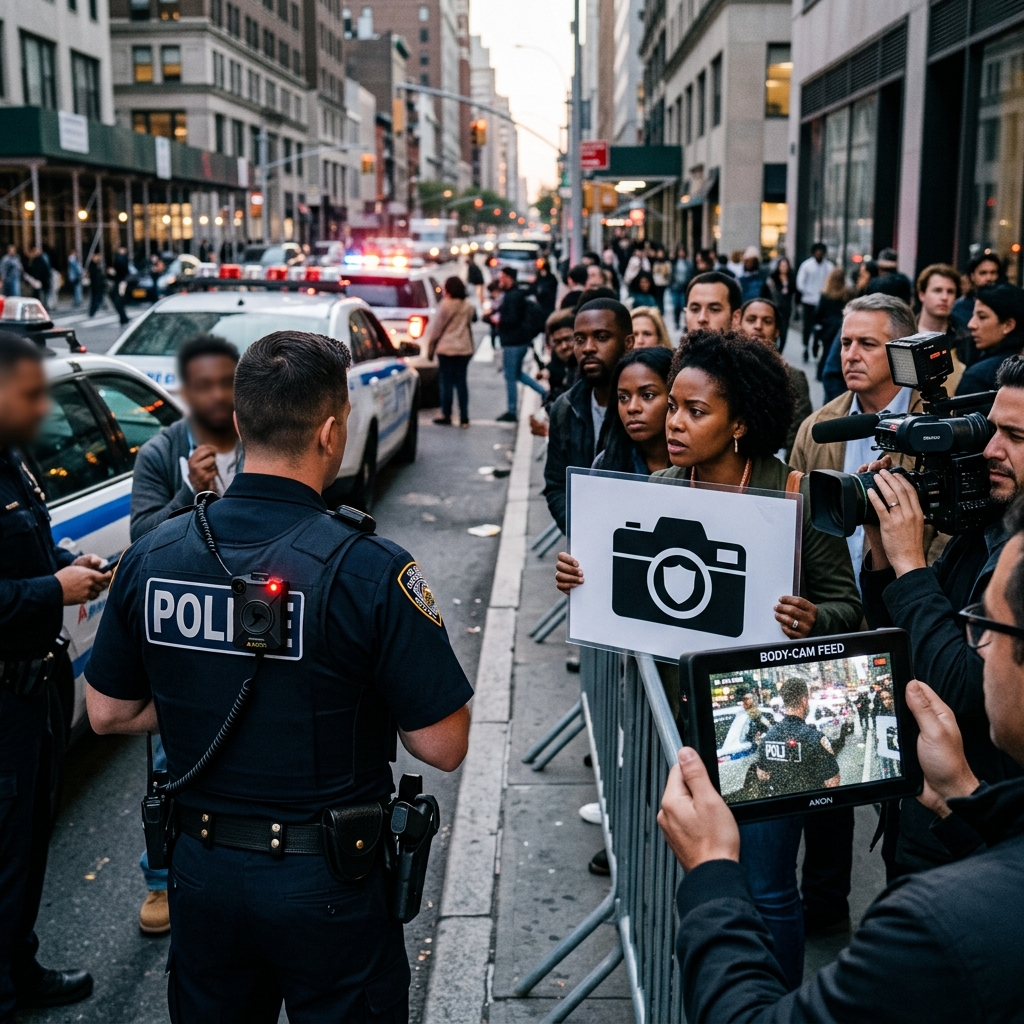
Police body-worn cameras are now common across the United States, promoted as tools to improve accountability, document interactions, and rebuild public trust. Yet as the devices become standard equipment, a crucial question has emerged: who decides who can see the footage they capture? Supporters often assume the video will be easily available to the public, but the reality is more complicated. State laws, court decisions, and department policies create a patchwork of rules that determine when body-camera video is released, to whom, and under what conditions.
This article explains the landscape of access to police body-camera footage, focusing on public records laws, privacy protections, and the competing goals of transparency and effective law enforcement. It draws on recent statutes, guidance, and policy examples to show how different jurisdictions approach the same technology in very different ways.
Body Cameras: Promise of Transparency, Reality of Legal Complexity
Body-worn cameras (BWCs) are small devices worn on officers’ uniforms that record audio and video during police interactions. They are often introduced after high-profile use-of-force incidents, with the expectation that having an objective record will deter misconduct and clarify contested events.
However, cameras alone do not guarantee transparency. Access to footage is controlled by:
- State public records laws (also known as freedom of information or open records laws).
- Specific statutes regulating law enforcement video and body-worn camera programs.
- Department policies on recording, retention, and disclosure.
- Court orders and litigation rules that limit or compel release.
Because these rules vary widely, the same kind of footage might be publicly accessible in one state, strictly limited in another, or subject to case-by-case judicial review in a third.
Public Records Laws and Body-Cam Footage
In most states, police body-camera recordings are treated as some form of government record, but whether that record is accessible depends on statutory exemptions. Many legislatures have amended their public records laws or enacted new provisions specifically for law enforcement video.
Classifying Body-Cam Video as a Public Record
Several states explicitly classify body-camera footage as a type of public record, which establishes a baseline that the recordings are potentially accessible to requesters. From that baseline, the law then identifies circumstances where footage must or may be withheld, redacted, or only disclosed to certain people.
For example, some laws:
- Define body-camera recordings as law enforcement agency recordings subject to special rules.
- Specify that they are records under the state’s open records law, but list exemptions for sensitive content.
- Require agencies to treat body-cam video similarly to other investigative records, with privacy and law enforcement effectiveness as key considerations.
Common Exemptions and Restrictions
Nearly every state has exemptions for law enforcement records that can limit access to body-camera footage. Typical exemptions include:
- Recordings that are part of an open or ongoing investigation, where disclosure could interfere with law enforcement activities.
- Footage whose release would violate an individual’s right to privacy, often defined as highly offensive to a reasonable person and not of legitimate public concern.
- Video involving witnesses who requested anonymity, victims of sensitive crimes, or minors.
- Recordings related to pending litigation, which may be shielded until the case is resolved.
These exemptions are intended to protect people recorded in vulnerable moments, preserve investigative integrity, and prevent misuse of highly sensitive visual data.
Balancing Privacy and Transparency in Law Enforcement Video
At the heart of body-camera policy debates is a tension: cameras are meant to provide transparency, but they inevitably capture people during some of the worst or most private moments of their lives. Lawmakers and courts have responded by trying to strike a balance between public oversight and individual privacy.
Privacy Concerns Around Body-Cam Recordings
Privacy issues arise because officers routinely enter homes, hospitals, schools, and other sensitive spaces. Body cameras can record:
- Medical emergencies and mental health crises.
- Domestic violence responses and family disputes.
- Children, including victims and witnesses.
- People in states of undress, distress, or injury.
State laws increasingly recognize that unfettered public release of such footage could be “highly offensive” and cause significant harm. Some statutes enumerate specific scenarios where public release is presumed to violate privacy, such as recordings of minors, nudity, or serious physical injury.
Examples of Legal Protections
| Type of Protection | Typical Legal Approach | Purpose |
|---|---|---|
| Privacy-based exemption | Statutes exempt footage where nondisclosure is essential to protect privacy rights. | Shield individuals from harmful exposure. |
| Location-based limits | Restrictions on recording inside homes without consent or warrant. | Preserve heightened privacy expectations at home. |
| Content-based redactions | Mandated blurring or muting of faces, bodies, or identifiers before release. | Allow partial transparency without exposing sensitive details. |
| Case-by-case judicial review | Courts decide whether disclosure is appropriate in contested situations. | Balance interests for each incident. |
Who Can Access Body-Cam Footage?
Not all requesters are treated the same. Many laws distinguish between members of the general public, people directly involved in an incident, and other institutional actors like prosecutors or defense attorneys.
Access for People Involved in the Incident
Several statutes give special access rights to individuals who appear in the recording or whose rights are affected by the incident. These may include:
- Any person whose image or voice appears in the recording.
- Personal representatives of minors, adults under guardianship, or deceased persons captured on video.
- Attorneys representing individuals directly involved in the incident.
In some jurisdictions, these individuals may have a right to view the footage without necessarily receiving a copy, or may need a court order to obtain a copy. This distinction is designed to let affected people understand what was recorded while still controlling broader distribution.
Access for the General Public and Media
For journalists, advocacy organizations, and other public requesters, access usually depends on ordinary public records processes plus body-camera-specific rules. Agencies may require detailed requests that identify:
- The name of a person involved.
- An incident or case number.
- The date, time, and location of the incident.
- The officer or unit involved.
These requirements help limit broad, indiscriminate fishing expeditions and focus disclosure on particular incidents of public interest.
Judicial Oversight Over Disclosure
In some states, courts play a central role in deciding whether footage can be released beyond the directly affected individuals. For example, one statute requires a person seeking broader disclosure to first request access from the agency head; if that request is denied or limited, the requester may then petition a court for review.
Court involvement allows judges to weigh factors such as:
- Potential harm to privacy or safety.
- Impact on ongoing investigations.
- Public interest in understanding government conduct.
Judges may order only partial disclosure, authorize viewing but not copying, or impose conditions on how the footage can be used.
Retention, Fees, and Administrative Burdens
Beyond access rules, agencies also face practical questions: how long to keep footage, how to pay for storage and review, and what to charge requesters. Body-camera video can generate huge volumes of data, making retention and disclosure costly.
Retention Requirements
State laws often establish minimum retention periods, with longer requirements for serious incidents or potential evidence. Typical models include:
- Short-term retention (e.g., 60–90 days) for routine footage that does not capture a violation, use of force, or ongoing investigation.
- Extended retention for recordings involving use of deadly force, substantial bodily harm, or formal complaints against officers.
- Alignment of retention with existing rules for internal affairs and offense investigation records when the footage is part of those files.
These rules aim to balance preserving evidence and managing storage costs.
Fees for Reviewing and Producing Footage
Providing body-camera video is more complex than copying a document: agencies may need to review footage frame-by-frame, redact faces or audio, and convert formats. Some states authorize specific fees to cover these costs.
Fee structures may:
- Allow agencies to charge for staff time to review and redact recordings.
- Link fees to the actual cost of production, set or overseen by a state attorney general or records authority.
- Prohibit excessive charges that would effectively block public access.
These financial rules influence how often requesters attempt to obtain video and how much footage agencies realistically can release.
Differing State Approaches to Public Release
States vary widely in how strongly they favor disclosure versus restriction of body-camera footage. Some lean toward more open access, others toward privacy and investigative control.
States Emphasizing Public Release
In some jurisdictions, body-camera video is presumed to be a public record, and law enforcement must release recordings within specific timelines, subject to limited exemptions. Policies in these states may require:
- Release of recordings within a set number of days after an incident or complaint.
- Public availability of footage showing uses of force, especially those causing serious harm.
- Retention rules designed explicitly to support transparency and civilian oversight.
These frameworks are often promoted as a way to rebuild public trust after controversial incidents.
States Restricting Public Access
Other states take a more restrictive approach. Some require court orders before law enforcement video can be made public, or treat body-camera footage as confidential except in narrow circumstances. In practice, this means:
- Members of the public cannot directly obtain footage without judicial involvement.
- Agencies may release video only to people depicted or to legal representatives, and even then often only for viewing.
- Broad public records requests for body-camera footage are frequently denied based on statutory exemptions.
Supporters of this approach emphasize protecting privacy and limiting the risk that sensitive footage is widely disseminated online.
Key Policy Questions Going Forward
As more departments adopt body-worn cameras and more states refine their laws, several policy questions continue to drive debate:
- How much footage should be public by default? Should recordings of routine interactions be accessible, or only serious incidents?
- Who should make disclosure decisions? Individual agencies, independent commissions, or courts?
- How should privacy be defined and protected? Should laws enumerate specific categories (e.g., minors, medical settings), or rely on case-by-case judgments?
- What role should technology play? Can automated redaction tools reduce burdens and enable more disclosure without sacrificing privacy?
- How will storage and costs be managed long-term? Large video archives can strain budgets; policymakers must decide how to prioritize retention.
Answers to these questions will determine whether body-worn cameras fulfill their promise of meaningful transparency, or become yet another silo of information largely inaccessible to the communities they are meant to serve.
Frequently Asked Questions (FAQ)
Do all states treat body-camera footage as a public record?
No. Many states classify body-camera video as a type of public record, but they often attach extensive exemptions and conditions. Others treat law enforcement video as a special category subject to stricter rules and, in some cases, court oversight.
Can anyone request body-camera footage?
In principle, public records laws allow any member of the public to request government records, including body-camera footage. In practice, requesters may face requirements to identify specific incidents and may encounter privacy or investigative exemptions that limit access.
Do people recorded on video have more rights than the general public?
Often, yes. Many statutes give individuals whose image or voice appears in a recording, or their representatives, special rights to view or seek disclosure of that footage. These rights can be broader than general public access, though they may still be subject to limitations or court control.
Why is some footage released with faces blurred or audio muted?
Redaction is used to protect privacy and comply with legal requirements. Agencies may be required or permitted to obscure identifiable features, remove sensitive audio, or cut portions of recordings before release, particularly when minors, victims, or witnesses are involved.
How long do police departments keep body-camera recordings?
Retention periods vary by state and policy. Common approaches require agencies to keep routine footage for a limited period (e.g., 60–90 days) and to retain recordings of serious incidents, uses of force, or formal complaints for much longer, sometimes aligned with evidence and investigation rules.
References
- Body-Worn Camera Laws Database — National Conference of State Legislatures. 2024-01-10. https://www.ncsl.org/civil-and-criminal-justice/body-worn-camera-laws-database
- Disclosure of Law Enforcement Video Footage — Municipal Research and Services Center (MRSC). 2023-08-15. https://mrsc.org/explore-topics/public-records/law-enforcement/video-footage
- Understanding Police Body Camera Laws by State — Axon. 2023-06-01. https://www.axon.com/resources/body-camera-laws-by-state
- Police Body-Worn Cameras: Where Your State Stands — Urban Institute. 2017-05-01. https://apps.urban.org/features/body-camera/
- 132‑1.4A. Law Enforcement Agency Recordings — North Carolina General Assembly. 2016-07-11. https://www.ncleg.net/EnactedLegislation/Statutes/PDF/BySection/Chapter_132/GS_132-1.4A.pdf
- Body-Worn Cameras — Texas Municipal League. 2016-09-01. https://www.tml.org/348/Body-Worn-Cameras
- State Law Enforcement Body Camera Policies — Electronic Privacy Information Center (EPIC). 2022-11-10. https://epic.org/state-law-enforcement-body-camera-policies/
Similar Articles








Read full bio of medha deb




