
Wedding Officiant: 5 Key Checks To Verify Legal Authority Today
A practical guide to wedding officiants, legal authority, and how to avoid ceremony mistakes.
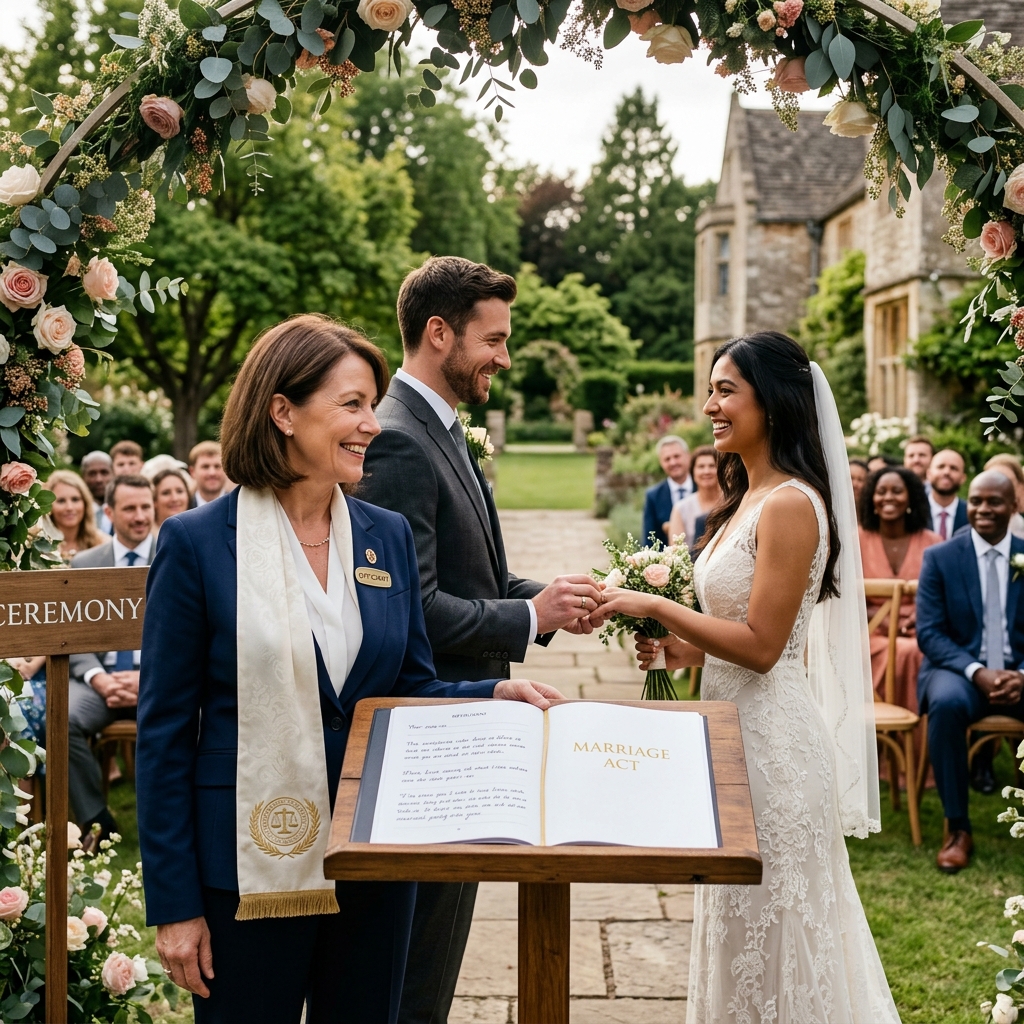
Choosing the right officiant is more than a style decision. In many places, the person leading your ceremony must also have legal authority to make the marriage valid. That means couples should check the rules in the state or county where the wedding will happen before they lock in plans.
The exact answer depends on local law, but the core idea is simple: a wedding officiant must be someone the law recognizes. In some states that includes clergy, judges, and other public officials. In others, the list is broader, and in a few places the rules allow special one-time authority for a specific ceremony.
What a Wedding Officiant Actually Does
A wedding officiant is the person who leads the ceremony and completes the formal steps that turn the event into a legal marriage. The officiant usually confirms the couple’s consent, pronounces them married, and signs the marriage license after the ceremony.
That last step is important. A beautiful ceremony does not automatically create a lawful marriage if the officiant lacks legal authority or if the license is not handled correctly. For that reason, couples should treat officiant eligibility as part of the marriage paperwork, not just the wedding planning process.
The Most Common Types of People Who May Officiate
Many states allow several categories of people to perform weddings. The exact list varies, but these are the most common groups recognized by law:
- Clergy members such as ministers, priests, rabbis, or other religious leaders.
- Judges, including active, retired, or former judges in some jurisdictions.
- Justices of the peace or similar civil officials.
- Other government officers who are authorized by state law to perform marriages.
- Notaries public in certain states.
Some states also recognize officiants tied to specific religious organizations, while others allow civil celebrants or special temporary authorizations. Because the categories are not uniform across the country, the same person may be qualified in one state and disqualified in another.
Why State Law Matters So Much
Marriage law in the United States is mostly state-based, which means there is no single national rule for officiants. A person who can legally marry a couple in one state may not have the same authority elsewhere. Even within a state, local clerks may have their own procedures for filing paperwork or verifying credentials.
This is why couples planning a destination wedding should never assume that an officiant who worked for a friend in another state will automatically qualify at their venue. The safest approach is to check the marriage laws for the exact location where the ceremony will take place.
Can a Friend or Family Member Officiate?
Many couples want a friend or relative to lead the ceremony, especially for a more personal or meaningful event. In some places that is possible, but only if the person meets the legal requirements. In other words, friendship alone does not create authority to solemnize a marriage.
Depending on the state, a friend may be able to officiate if they become ordained through a recognized religious organization or obtain a special local appointment. In some jurisdictions, however, there is no path for a private individual to officiate a wedding unless they already hold an approved role under state law.
If you want a loved one to marry you, the first question is not whether they are willing. It is whether they are legally eligible where you are getting married.
Do Officiants Need to Register or Get Licensed?
Some states require registration, while others do not. In certain places, an officiant may simply need to fall within one of the legal categories recognized by statute. In other places, the officiant may need to file credentials, register with a county office, or obtain a one-time appointment before the ceremony.
This distinction matters because a person can be fully qualified in principle but still fail to complete a required administrative step. If registration is required and it is missed, the ceremony could face problems later when the marriage license is reviewed.
| Question | Possible Answer | Why It Matters |
|---|---|---|
| Can the officiant legally perform weddings? | Depends on state law | Legal authority is the foundation of a valid ceremony |
| Must the officiant register first? | Sometimes | Some jurisdictions require paperwork before the wedding |
| Can a friend do it? | Sometimes | Only if the friend meets local legal requirements |
| Can a judge or clergy member do it? | Usually yes | These are among the most commonly recognized officiants |
How to Check Whether an Officiant Is Authorized
Couples should verify officiant status before the wedding date, not after. A simple check can prevent a major legal headache. The goal is to confirm both the person’s credentials and the local filing rules.
- Ask what legal basis allows the person to officiate.
- Request proof of ordination, appointment, or official status if applicable.
- Contact the county clerk or marriage license office where the wedding will occur.
- Confirm whether any registration, filing, or fee is required.
- Ask who will complete and return the marriage license after the ceremony.
These steps are especially useful for destination weddings, courthouse alternatives, religious ceremonies outside a church setting, and weddings led by a friend or relative.
What Happens If the Officiant Was Not Properly Authorized?
The consequences depend on state law. In some situations, the marriage may still be treated as valid if the couple participated in good faith and the officiant appeared to have authority. In other situations, a defect in the ceremony can create uncertainty that must be corrected later.
That is why it is risky to assume everything is fine simply because the ceremony went smoothly. A marriage license is not just a keepsake; it is part of the legal record. If the officiant is not qualified or the paperwork is not completed correctly, the couple may need to take additional steps to confirm the marriage was properly recorded.
Special Situations That Can Change the Answer
Some weddings involve unusual arrangements that require extra attention. For example, a couple marrying outside their home state may face two sets of rules: one for the officiant and another for the license itself. Religious ceremonies may also raise questions about whether a particular leader is recognized under local law.
Temporary or one-day authority can also exist in certain jurisdictions. Some local systems allow a person to be appointed for a single ceremony or a single couple. These special permissions are limited, so couples should not rely on them unless they have been formally approved in writing.
Questions to Ask Before the Ceremony
If you are trying to avoid last-minute surprises, ask these practical questions well in advance:
- Is the officiant legally allowed to perform weddings in this location?
- Do they need to register with the county or state?
- Will they bring any required proof of authority to the ceremony?
- Who is responsible for signing and returning the marriage license?
- What happens if a scheduling issue forces a backup officiant to step in?
These questions may feel procedural, but they are often the difference between a smooth legal process and a future correction.
What Couples Should Remember About Validity
The legal validity of a marriage usually depends on a combination of factors: a properly licensed couple, a qualified officiant, a valid license, and correct filing after the ceremony. Missing any one of those pieces can create unnecessary complications.
Because marriage rules are state-specific, couples should rely on local government guidance rather than assumptions or generic internet advice. When in doubt, the clerk’s office that issues the marriage license is often the best place to start.
FAQs
Can anyone become a wedding officiant?
No. A person can only officiate if the relevant state law or local rule gives them authority. In some places, that may include clergy, judges, or public officials; in others, a person may need ordination, registration, or a special appointment.
Is an online-ordained officiant always valid?
Not always. Some states accept online ordination, while others may require additional recognition or may limit which organizations count. The key issue is whether the local law accepts that form of authority.
Can a notary marry us?
Only in certain states. Notarial authority to officiate is not universal, so couples should verify local law before assuming a notary can legally perform the ceremony.
Do we need to tell the county clerk who our officiant is?
In many places, yes, either directly or indirectly through the marriage license process. Some jurisdictions also require the officiant to file proof of status or complete a separate form.
What if we already had the ceremony and later learn the officiant was not qualified?
You should contact the county clerk or a family law attorney promptly. Some marriages can be corrected or validated, but the available fix depends on the state and the specific facts.
Planning Tip for a Smooth Ceremony
The simplest way to protect your wedding is to verify the officiant early. Do not wait until the rehearsal dinner to ask whether the person leading the ceremony is legally authorized. A few minutes of research can prevent avoidable stress, missed paperwork, and uncertainty about whether the marriage was properly solemnized.
If your ceremony has an unusual setup, such as a friend officiating, a destination location, or a nontraditional religious structure, build extra time into your planning for legal checks. That extra step helps ensure the ceremony is memorable for the right reasons.
References
- Who can perform a marriage ceremony in Texas? — Texas State Law Library. 2024-01-01. https://www.sll.texas.gov/faqs/perform-marriage-ceremony/
- Marriage officiant — Wikipedia. 2026-01-01. https://en.wikipedia.org/wiki/Marriage_officiant
Similar Articles








Read full bio of Sneha Tete


