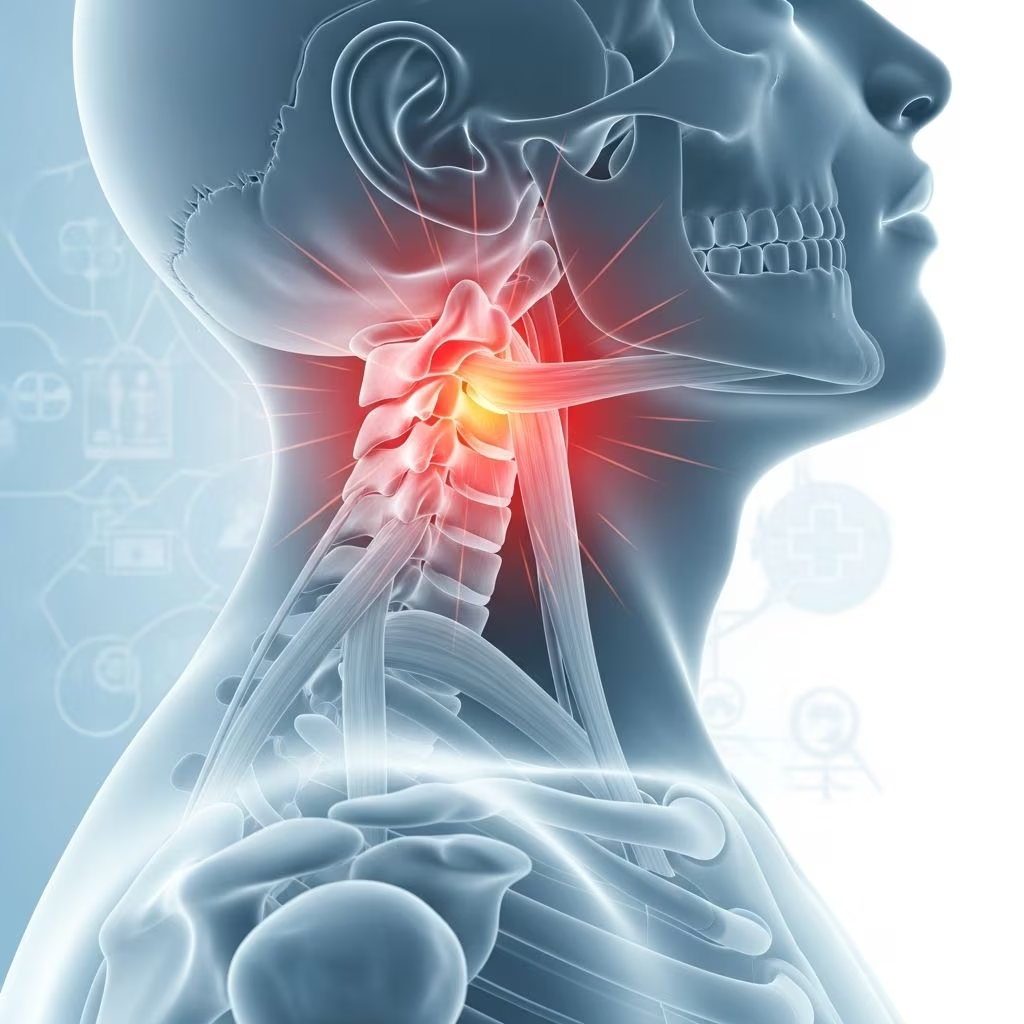
Whiplash occurs when a sudden force causes the head to jerk forward and backward rapidly, straining the neck’s soft tissues including muscles, ligaments, tendons, and sometimes nerves or spinal structures. This injury demands prompt recognition and management to prevent chronic issues and promote healing.
Understanding the Mechanics of Whiplash
The rapid acceleration-deceleration forces in whiplash exceed the neck’s natural protective mechanisms, leading to overstretching or tearing of tissues. Unlike fractures, whiplash primarily affects soft tissues, making it challenging to detect via standard imaging initially. Common scenarios involve vehicles where the body is restrained but the head moves freely, amplifying stress on the cervical spine.
Recognizing Whiplash Symptoms Early
Symptoms often emerge within hours to days post-injury, varying from mild discomfort to debilitating pain. Early identification is crucial to avoid complications like persistent pain or reduced mobility.
- Neck pain and stiffness: The hallmark sign, worsening with movement or prolonged positions.
- Headaches: Typically originating at the skull base and radiating forward.
- Shoulder and upper back discomfort: Due to interconnected muscle groups absorbing impact forces.
- Reduced neck mobility: Difficulty rotating or tilting the head fully.
- Neurological signs: Tingling, numbness, or weakness in arms; dizziness or concentration issues.
- Other effects: Fatigue, jaw pain, blurred vision, ringing ears, nausea, or mood changes like irritability.
Severe indicators warranting immediate care include confusion, vomiting, or severe headaches, signaling potential concussion or spinal cord involvement.
Primary Causes and Risk Factors
While rear-end car collisions account for most cases, whiplash arises from any event snapping the neck violently. Key triggers include:
- Rear-end vehicle crashes, even at low speeds.
- Sports impacts like football tackles or cycling falls.
- Amusement park rides or slips causing head whip.
Risk amplifiers encompass older age, pre-existing neck conditions, high-impact forces, or delayed care, which prolong recovery.
| Risk Factor | Impact on Recovery |
|---|---|
| Age over 50 | Slower tissue healing and muscle weakness. |
| Prior neck injuries | Increased vulnerability to chronic symptoms. |
| High-speed collision | Greater tissue damage severity. |
| Delayed treatment | Risk of muscle atrophy and stiffness. |
Diagnostic Approaches for Accurate Assessment
Diagnosis starts with a detailed history and physical exam, evaluating pain sites, motion range, and neurological function. Imaging like X-rays rules out fractures, while MRI or CT scans detect soft tissue or disc damage if symptoms persist.
- Physical tests: Neck rotation, pressure points, reflex checks.
- Imaging: X-rays for alignment, advanced scans for ligaments/nerves.
- Specialist referral: For ongoing issues, orthopedists or neurologists use EMG for nerve function.
Prompt evaluation prevents misdiagnosis as mere strain, ensuring tailored care.
Initial Home Management Strategies
Conservative steps form the foundation of whiplash care, focusing on pain control and gentle mobilization.
- Rest briefly: 1-2 days maximum to avoid stiffness; resume light activity soon.
- Ice and heat therapy: Cold packs first 48-72 hours for swelling, then heat for circulation (15-20 mins every few hours).
- OTC medications: NSAIDs like ibuprofen reduce inflammation and pain.
- Cervical collar: Short-term use only, to prevent dependency.
Avoid prolonged immobility, as it hinders recovery.
Professional Treatment Options
If home care insufficient after 1-2 weeks, escalate to supervised interventions promoting healing and strength.
Physical Therapy Essentials
PT is cornerstone, with therapists prescribing stretches, strengthening exercises, and posture training to restore function and avert recurrence. Programs evolve from passive mobilizations to resistance training, often incorporating TENS for pain relief.
Medication and Injection Therapies
Prescription muscle relaxants or stronger analgesics bridge acute phases. For refractory pain, corticosteroid or nerve block injections target inflammation precisely.
Advanced and Complementary Methods
Regenerative options like platelet-rich plasma accelerate tissue repair in chronic cases. Complementary therapies—acupuncture, massage, yoga—aid relaxation and flexibility when integrated judiciously.
Surgery is rare, reserved for verified structural damage like herniated discs.
Timeline for Recovery and Monitoring Progress
Most recover in weeks to months with active management; 80-90% resume normalcy within 3 months. Track via pain scales, mobility metrics, and function return. Persistent symptoms beyond 6 weeks signal need for specialist review to address complications.
- Weeks 1-2: Acute pain subsides with conservative care.
- Weeks 3-6: PT gains motion and strength.
- Months 2-6: Full activity resumption for most.
Preventing Future Whiplash Incidents
Proactive steps mitigate risks: Adjust car seats/headrests for alignment, wear seatbelts properly, use protective gear in sports, and strengthen neck via exercises. Awareness in traffic and ergonomics at work further safeguards.
Frequently Asked Questions
How soon do whiplash symptoms appear?
Symptoms can start immediately or delay up to 24-48 hours, sometimes days.
Is whiplash only from car accidents?
No, it occurs in sports, falls, or any rapid neck snap.
Can whiplash cause long-term damage?
Yes, untreated cases risk chronic pain, but most fully recover with timely care.
Should I use a neck brace long-term?
Limit to days; extended use weakens muscles.
When to see a doctor for whiplash?
Immediately if severe pain, numbness, dizziness, or symptoms last over a week.
Navigating Insurance and Legal Aspects
Document injuries thoroughly for claims, as whiplash compensation covers medical costs, lost wages, and pain. Consult professionals for no-fault or liability disputes, retaining records of treatments and progress.[Inspired by legal context, synthesized generally]
Whiplash management blends self-care with expert intervention for best outcomes, emphasizing movement over rest long-term.
References
- Whiplash Injury: 5 Proven Ways To Identify And Treat — Apex Orthopaedics Spine & Neurology. 2023. https://www.apexosn.com/identify-whiplash-injury/
- Whiplash: Symptoms, Causes, Diagnosis, and Treatment — CFA Ortho. 2025-11. https://www.cfaortho.com/media/news/2025/11/whiplash-symptoms-causes-diagnosis-and-treatment
- Whiplash Injury: Causes, Symptoms, & Treatment — Hoag Orthopedic Institute. Accessed 2026. https://www.hoagorthopedicinstitute.com/care-services/clinical-specialties/spine/conditions/whiplash/
- Whiplash (Neck Strain): What It Is, Symptoms & Treatment — Cleveland Clinic. 2024-05-24. https://my.clevelandclinic.org/health/diseases/11982-whiplash
- Whiplash – Symptoms and Treatments — Total Spine & Orthopedics. Accessed 2026. https://totalspineortho.com/spine-conditions/whiplash/
- Whiplash – Diagnosis and treatment — Mayo Clinic. 2024-01-12. https://www.mayoclinic.org/diseases-conditions/whiplash/diagnosis-treatment/drc-20378926
- Whiplash – symptoms, causes, treatments and complications — healthdirect.gov.au. Accessed 2026. https://www.healthdirect.gov.au/whiplash