
When Your Spouse Won’t Sign Divorce Papers
Learn how divorce can move forward even when your spouse refuses to sign, ignores the process, or tries to delay your case.
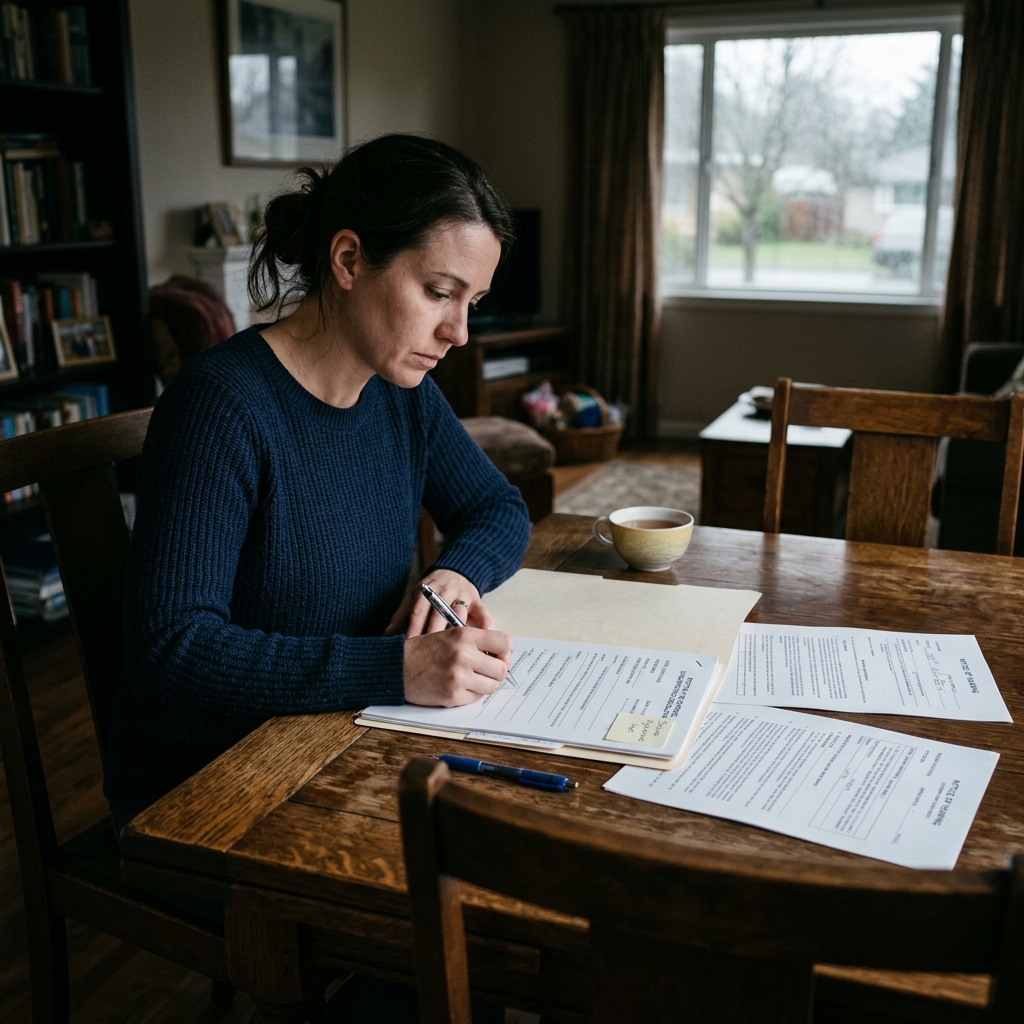
Discovering that your spouse won’t sign the divorce papers can be deeply frustrating, but it does not mean you are trapped in the marriage. In most U.S. states, one spouse’s refusal to cooperate does not prevent a court from granting a divorce. Instead, it changes the process you must follow and may require additional legal steps.
This guide explains what typically happens when a spouse refuses to sign, the main paths forward, and practical strategies you can use to protect yourself while the case moves ahead.
Key Principles: Refusal to Sign Rarely Stops a Divorce
Modern divorce law in the United States generally recognizes that a marriage can end even when only one spouse wants out. Many states use no‑fault divorce, meaning you do not have to prove marital misconduct like adultery or cruelty to end the marriage.
- No‑fault grounds (often called “irretrievable breakdown” or “insupportability”) allow either spouse to file for divorce without the other spouse’s consent.
- Your spouse’s signature is usually not required on the initial divorce petition or complaint.
- Refusal to sign primarily affects uncontested divorces (where both spouses agree on all terms), not your basic right to obtain a divorce.
Knowing that you can typically proceed without your spouse’s approval helps you focus on the specific procedural steps required in your state.
Understanding the Divorce Paperwork
When people talk about “signing the divorce papers,” they often mean different documents. It is helpful to distinguish them:
| Document | Who Usually Signs? | What It Does? |
|---|---|---|
| Divorce petition or complaint | Filed and signed by the spouse initiating the case | Formally asks the court to dissolve the marriage and sets out basic requests (property division, custody, support). |
| Answer or response | Typically signed by the other spouse | Admits or denies allegations, states disagreements, and may include counter‑requests. |
| Settlement agreement | Usually signed by both spouses | Records negotiated terms for property, custody, and support. Often used in uncontested divorces. |
| Final decree or judgment | Signed by the judge; parties may acknowledge receipt | Official court order that dissolves the marriage and sets binding terms. |
Your spouse’s refusal most often involves the settlement agreement or their response to the petition. Importantly, the court can still issue a final judgment even if one spouse never signs anything beyond their required court filings, or fails to file at all.
Service of Process: Making Sure Your Spouse Is Notified
You cannot move forward with a divorce until your spouse has been properly notified of the case. This step is called service of process. It is required to protect due process rights and ensure your spouse has a fair chance to respond.
Common methods of service include:
- Personal service – A sheriff, marshal, or licensed process server hand‑delivers the petition and summons to your spouse.
- Substitute service – In some circumstances, papers may be left with a suitable adult at your spouse’s home or workplace, subject to state rules.
- Service by publication – If you cannot locate your spouse after diligent efforts, you may ask the court for permission to publish notice in a newspaper or other approved outlet.
Courts usually require documentation showing your attempts to find and serve your spouse before allowing alternate methods like publication. Once service is completed according to state law, the case can move forward even if your spouse refuses to accept or open the paperwork.
If Your Spouse Does Nothing: Moving Toward a Default Divorce
After service, your spouse typically has a limited time to file an answer or other response. In many jurisdictions this period is around 20–30 days, although the exact deadline depends on state and local rules.
If your spouse simply ignores the papers and misses the response deadline, you may be able to request a default divorce. In a default case:
- The court notes that the responding spouse failed to answer within the required time.
- You may ask the judge to grant the divorce and adopt your proposed terms for property, support, and custody, as long as they are lawful and adequately supported by evidence.
- A hearing is usually held where the judge reviews your documents and may take brief testimony before entering a default judgment.
Default divorces are not automatic, and judges still have broad discretion to ensure outcomes are fair, particularly where children are involved. However, a spouse who refuses to participate forfeits opportunities to argue for different terms or present their own evidence.
If Your Spouse Participates But Won’t Agree: Contested Divorce
In many cases, a spouse refuses to sign settlement papers but does file an answer or appear in court. This usually leads to a contested divorce, meaning the parties disagree about some or all major issues.
Common points of dispute include:
- Division of property, debts, and retirement accounts
- Child custody and parenting time schedules
- Child support and spousal support (alimony)
- Responsibility for taxes or business interests
The contested process often involves several formal stages, such as:
- Pleadings – Each side files claims and defenses outlining their position.
- Discovery – Exchange of financial records, communications, and other evidence through tools like document requests, interrogatories, and depositions.
- Motions and temporary orders – Requests for interim decisions about custody, support, or use of the marital home while the case is pending.
- Mediation or settlement conferences – Many courts require or strongly encourage mediation to resolve disputes without trial.
- Trial – If settlement fails, the judge hears testimony, reviews evidence, and issues a final ruling on all unresolved issues.
Although contested divorces can be more time‑consuming and expensive, they still end in a court‑ordered judgment even when a spouse never voluntarily signs a settlement agreement.
No‑Fault Divorce and the Right to Exit the Marriage
Several states explicitly allow a divorce to be granted over a spouse’s objection through no‑fault statutes. For example, Texas law permits either spouse to file on the ground of “insupportability,” defined as marital discord that destroys the legitimate ends of the marriage with no reasonable expectation of reconciliation.
Similarly, many states, including Indiana and Illinois, have adopted no‑fault provisions or eliminated traditional fault grounds, reflecting a broader policy that mutual consent is not required to dissolve a marriage.
As a result:
- Your spouse’s refusal to agree, sign, or “give permission” is generally not a legal barrier to divorce.
- The court focuses on fair division of marital property and appropriate arrangements for children, not on forcing spouses to remain married.
Practical Steps If Your Spouse Won’t Sign
When dealing with an uncooperative spouse, planning and documentation become even more important. Consider the following practical measures:
- Consult a family law attorney – An experienced lawyer can explain the rules in your state, handle service of process, and represent you at hearings.
- Gather financial records – Collect bank statements, tax returns, pay stubs, loan documents, and retirement account information. These will be crucial for property and support decisions.
- Document communication – Save emails, text messages, and notes of conversations that relate to your spouse’s refusal, threats, or agreements. They may help show patterns of behavior or support requests for temporary orders.
- Avoid escalation – When emotions are high, direct confrontation can make cooperation less likely and may raise safety concerns. Let your attorney or mediator handle sensitive discussions wherever possible.
- Plan for the future – Think through housing, childcare, transportation, and budgeting after the divorce so you can present realistic proposals to the court.
These steps not only support your legal case but also reduce uncertainty, helping you make decisions from a more stable position.
Special Situations: Missing, Abusive, or Highly Uncooperative Spouses
Some cases involve additional complications beyond reluctance to sign. While specifics depend on local law, three patterns frequently arise:
1. You Cannot Locate Your Spouse
If you do not know where your spouse lives or works, courts typically require you to show “diligent efforts” to find them before authorizing alternative notice. This may include checking prior addresses, contacting relatives, or using public records. Once you document these efforts, you can often ask to serve by publication or another substitute method.
2. Safety Concerns and Domestic Violence
Where domestic violence is present, your safety is the priority. Many jurisdictions allow protective orders, confidential addresses, and other safeguards during divorce proceedings. Legal aid organizations often prioritize family law cases that involve abuse.
In such situations, insist on communicating through attorneys and the court system rather than direct contact with an abusive spouse.
3. Spouse Delays or Obstructs the Process
An uncooperative spouse may refuse to provide financial information, miss hearings, or ignore court orders. Judges have a range of tools to respond, including setting firm deadlines, compelling disclosure, or imposing sanctions. In extreme cases, a court may proceed with trial and rule based on the evidence presented by the cooperating party.
Emotional and Practical Considerations
Legal rules explain how divorce can go forward, but living through an obstructed divorce is often emotionally draining. Common challenges include:
- Guilt or doubt about ending the marriage when a spouse begs you to reconsider
- Fear of retaliation, financial instability, or harm to children
- Confusion about procedural steps and timelines
While this guide focuses on legal options, many people benefit from emotional support during the process, such as individual counseling, support groups, or trusted friends and family. Professional help can be particularly valuable in navigating feelings of pressure or manipulation from an uncooperative spouse.
Frequently Asked Questions
Do I need my spouse’s signature to file for divorce?
In most states, you do not need your spouse’s signature to start the divorce. You file the petition or complaint yourself, and then the court requires that your spouse be properly served with notice of the case.
What if my spouse refuses to sign an uncontested divorce agreement?
If your spouse will not sign a settlement agreement, your case may shift from uncontested to contested. The court can still grant a divorce, but you may need mediation, discovery, hearings, and possibly a trial for the judge to decide unresolved issues.
Can my spouse stop the divorce by ignoring the paperwork?
Generally no. If your spouse is properly served and fails to respond within the deadline, you can ask the court for a default judgment. The judge will review your requests and evidence and may grant the divorce based largely on your filings.
How long will the process take if my spouse won’t cooperate?
The timeline varies widely by state and by court. A default divorce may move relatively quickly once deadlines pass and hearings are scheduled, while highly contested cases can take many months or longer. Local waiting periods, backlogged court calendars, and complexity of issues all affect timing.
Do I need a lawyer if my spouse won’t sign?
While some people represent themselves, having a family law attorney becomes especially important when a spouse is uncooperative. A lawyer can ensure proper service, manage deadlines, present evidence effectively, and help you pursue default relief or litigate contested issues.
References
- What If Your Spouse Won’t Sign the Divorce Papers? — DivorceNet (Nolo). 2023-05-01. https://www.divorcenet.com/legal-advice/divorce/divorce-basics/what-can-i-husband-wont-sign-the-divorce-papers
- What Are My Options if My Spouse Refuses to Sign Divorce Papers? — VR Legal. 2022-09-15. https://www.vrlegal.com/what-are-my-options-if-my-spouse-refuses-to-sign-divorce-papers/
- What if my Spouse won’t Sign Divorce Papers? — HELP4TN. 2021-08-10. https://www.help4tn.org/node/1494/what-if-my-spouse-won%E2%80%99t-sign-divorce-papers-%E2%80%93-help4tn-blog
- What Happens When One Spouse Won’t Sign the Divorce Papers? — Smolka Law Group. 2023-02-20. https://smolkalawgroup.com/blog/what-happens-when-one-spouse-wont-sign-the-divorce-papers/
- What Are My Rights If My Husband Won’t Sign the Divorce Papers — The Larson Law Office (YouTube transcript). 2023-04-05. https://www.youtube.com/watch?v=bTg28DV2lbM
- What Happens If Your Spouse Refuses To Sign Divorce Papers In Texas? — Onda Family Law. 2023-06-12. https://ondafamilylaw.com/what-happens-if-your-spouse-refuses-to-sign-divorce-papers-in-texas/
- What If My Spouse Refuses to Sign the Divorce Papers in Illinois? — Pesce Law Group. 2022-11-30. https://www.dupagecountyfamilylawfirm.com/naperville-divorce-lawyer/what-if-my-spouse-won-t-sign-the-divorce-papers
Similar Articles








Read full bio of Sneha Tete


