
When You Can Sue a Restaurant for Injury or Illness
Learn when restaurant injuries or food-related illnesses justify a lawsuit and what you must prove to seek compensation.
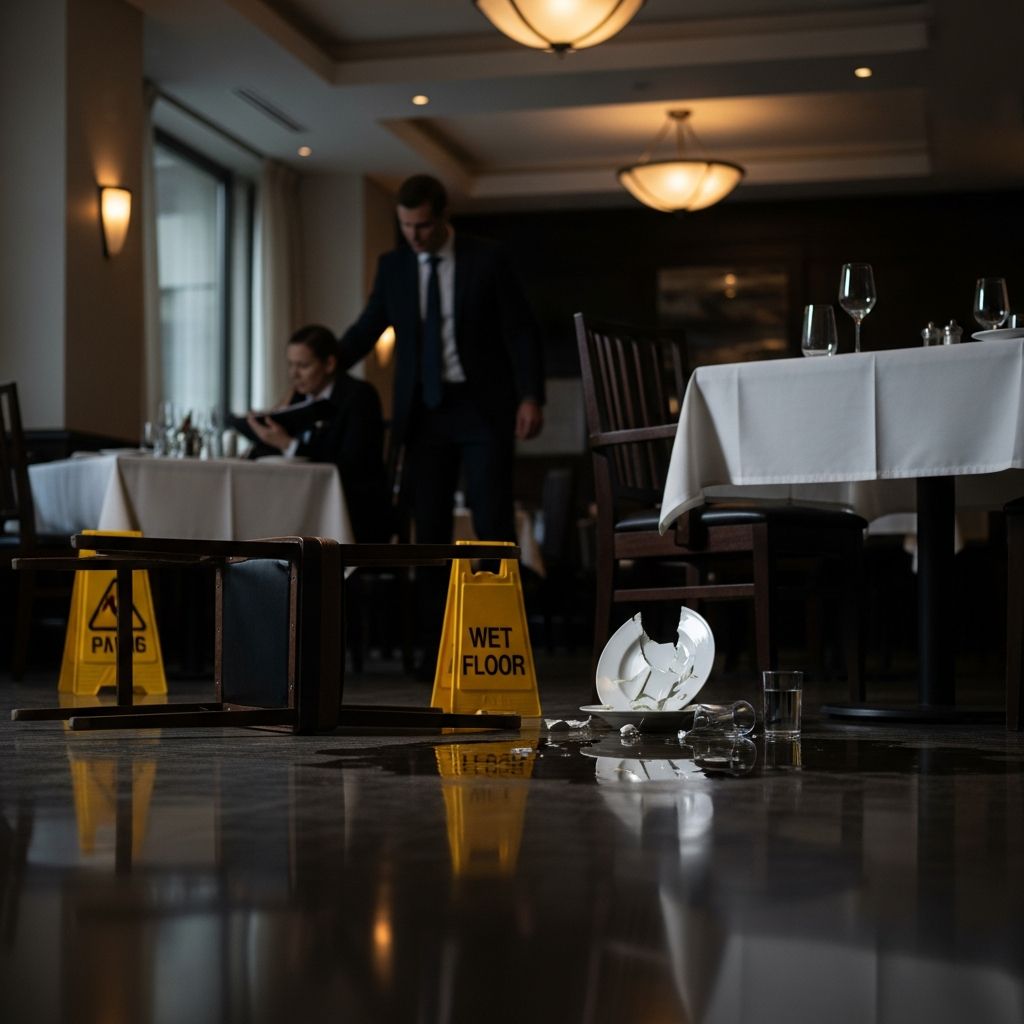
Restaurants are supposed to be places of comfort and enjoyment, not danger. Yet spills, hot plates, contaminated food, or violent incidents can turn an ordinary meal into a serious legal matter. When a restaurant fails to keep guests reasonably safe, personal injury law may allow you to seek compensation for the harm you suffer.
This guide explains the most common situations where suing a restaurant may be appropriate, what you have to prove, and how to protect your legal rights after an incident.
Understanding a Restaurant’s Legal Duty to Guests
In most cases, lawsuits against restaurants arise under the legal doctrine of premises liability. This area of law holds property owners and occupiers responsible when unsafe conditions on their property cause injuries.
To win a typical restaurant negligence case, you must generally show four things:
- Duty of care – The restaurant owed you a duty to keep the premises reasonably safe.
- Breach of duty – The restaurant failed to meet that duty by doing something careless or by failing to act.
- Causation – That failure directly caused your injury (not just by coincidence).
- Damages – You suffered actual harm, such as medical bills, lost income, or pain and suffering.
These elements appear across most U.S. jurisdictions, although the details and standards can vary by state.
Major Reasons People Sue Restaurants
Not every unpleasant dining experience leads to a valid lawsuit. But certain types of incidents commonly do. Below are key scenarios where customers often have grounds to sue.
1. Slip, Trip, and Fall Accidents
One of the most frequent claims against restaurants involves slip-and-fall or trip-and-fall accidents. These may occur when:
- Floors are wet or greasy without warning signs.
- Food or debris is left on walking surfaces for too long.
- Worn carpets, loose tiles, or uneven flooring create tripping hazards.
- Stairways have poor lighting or missing handrails.
To hold a restaurant liable, you typically must show that its staff either:
- Knew about the dangerous condition and failed to fix or warn about it; or
- Should have known about it through reasonable inspections and maintenance.
Evidence such as photos, surveillance footage, incident reports, and witness statements is often critical in these cases.
2. Food Poisoning and Contaminated Meals
Restaurants can also be sued for foodborne illness caused by contaminated or improperly handled food. Typical legal theories include negligence, breach of warranty, and product liability. Public health agencies estimate that millions of people in the United States get sick from foodborne diseases annually.
Potential causes of restaurant-related food poisoning include:
- Improper cooking or reheating temperatures.
- Poor refrigeration or food storage practices.
- Cross-contamination between raw and ready-to-eat foods.
- Employees working while sick or with poor hygiene.
To succeed, you usually must link your illness to the restaurant. This might involve medical records, lab tests, health department reports, and evidence that others were sickened by the same food.
3. Burns, Scalds, and Other Heat-Related Injuries
Restaurants regularly serve hot food, beverages, and use heated equipment. They can face liability when carelessness makes these items unreasonably dangerous, such as:
- Serving liquids so hot they cause severe burns if spilled.
- Failing to warn that dishes or plates are extremely hot.
- Leaving exposed heating elements or equipment where customers can easily be burned.
Burn injuries can require extensive medical treatment, leave permanent scarring, and justify claims for both economic and non-economic damages.
4. Injuries from Dangerous Conditions or Poor Maintenance
Beyond spills and hot food, other unsafe conditions can also lead to premises liability claims, including:
- Broken chairs, stools, or booths that collapse.
- Falling signs, light fixtures, or decorations.
- Malfunctioning doors or automatic systems that strike guests.
- Hazardous parking lots with potholes, ice, or inadequate lighting.
When a restaurant fails to perform reasonable inspections and repairs, injuries caused by these defects may support a negligence lawsuit.
5. Assaults, Fights, and Other Criminal Acts
In some situations, a restaurant may be partially responsible for injuries caused by criminal acts committed by third parties, such as assaults in the dining room or parking lot.
Liability may arise where:
- There is a known history of crime in or around the property.
- The restaurant fails to provide reasonable security, such as adequate lighting or basic monitoring.
- Staff ignore escalating disturbances or overserve visibly intoxicated patrons, depending on state law.
Law in this area varies widely. Some states have strong dram shop or liquor liability laws, while others, like Nevada, limit claims against bars and restaurants for injuries caused by drunk patrons.
Quick Comparison: Common Restaurant Claims
| Type of Incident | Typical Legal Theory | Key Evidence |
|---|---|---|
| Slip, trip, or fall | Premises liability / negligence | Photos, witness statements, maintenance logs, incident reports |
| Food poisoning | Negligence, product liability, breach of warranty | Medical records, lab tests, receipts, health department findings |
| Burn or scald | Negligence, failure to warn | Temperature records (if available), photos, medical records, witness accounts |
| Broken furniture or fixtures | Premises liability / negligent maintenance | Condition photos, repair records, prior complaints |
| Assault or criminal act | Negligent security (premises liability) | Police reports, prior crime data, security policies, camera footage |
What You Must Prove in a Restaurant Lawsuit
Although the facts vary, most claims against restaurants require you to establish negligence. In practical terms, that means proving:
- The restaurant owed you a legal duty of care as a customer or lawful visitor.
- It breached this duty by creating a hazard or failing to address a known or reasonably discoverable danger.
- The hazardous condition was the direct cause of your injury (not some unrelated factor).
- You suffered measurable losses, such as medical expenses, lost wages, or pain and suffering.
States may apply doctrines like comparative negligence, which can reduce your compensation if you are found partly at fault (for example, by ignoring warning signs or not paying attention where you were walking).
Damages You May Recover
If you prove the restaurant is legally responsible, you may be able to recover different categories of compensation.
- Medical expenses – Emergency care, hospital bills, surgery, medication, physical therapy, and future treatment needs.
- Lost income – Wages you lost while injured, reduced earning capacity, or missed business opportunities.
- Pain and suffering – Compensation for physical pain, inconvenience, emotional distress, and reduced quality of life.
- Property damage – Damage to personal items such as phones, glasses, or clothing.
- Punitive damages – In rare cases of extreme or reckless conduct, additional damages may be awarded to punish and deter similar behavior.
Practical Steps to Take After a Restaurant Incident
Your actions immediately after an injury or illness can significantly affect any future claim. Consider the following steps, as widely recommended in premises liability guidance:
- Report the incident to the manager and ask that an incident report be completed.
- Document the scene with photos or video before conditions are cleaned up or repaired.
- Gather witness information, including names and contact details.
- Preserve physical evidence such as footwear, clothing, receipts, or leftover food.
- Seek prompt medical attention and follow your doctor’s recommendations.
- Consult an experienced personal injury lawyer to evaluate your rights and handle communications with insurers.
Common Defenses Restaurants May Raise
Even when injuries are serious, restaurants and their insurers often dispute liability. Some frequently used defenses include:
- Open and obvious hazard – Claiming the danger was so clearly visible that a reasonable person would have avoided it.
- Comparative or contributory negligence – Arguing that the customer’s own carelessness significantly contributed to the accident, potentially reducing or barring recovery, depending on state law.
- Lack of notice – Asserting that the restaurant did not know and reasonably could not have known about the hazard in time to correct it.
- Pre-existing condition – Alleging that the injury was due to prior medical issues rather than the incident.
- No causal connection – Particularly in food poisoning cases, disputing that the restaurant’s food caused the illness.
A qualified attorney can anticipate and respond to these arguments using medical evidence, expert testimony, and investigative work.
Frequently Asked Questions (FAQs)
Q: Is every fall or upset stomach at a restaurant grounds for a lawsuit?
A: No. To have a viable claim, you must show the restaurant was legally negligent and that its conduct directly caused your injury or illness, resulting in actual damages.
Q: How long do I have to sue a restaurant after I am injured?
A: Time limits, called statutes of limitations, vary by state and by type of claim. Missing the deadline usually ends your right to sue, so speaking with a lawyer as soon as possible is important.
Q: Can I still recover money if I was partly at fault?
A: Many states follow comparative negligence rules, which reduce your compensation in proportion to your share of fault but do not necessarily bar recovery altogether.
Q: Do restaurant injury claims always go to trial?
A: No. Many cases settle through negotiations between your attorney and the restaurant’s insurance company. A lawsuit may still be filed to preserve your rights or when settlement offers are unfair.
Q: Should I talk directly with the restaurant’s insurance adjuster?
A: You are not required to, and doing so without legal advice can hurt your case. Many consumer and legal resources recommend consulting an attorney before giving recorded statements or accepting any offer.
References
- Foodborne Illnesses and Germs — U.S. Centers for Disease Control and Prevention. 2024-01-24. https://www.cdc.gov/foodsafety/foodborne-germs.html
- Suing Restaurants in Premises Liability Lawsuits — Justia. 2023-05-10. https://www.justia.com/injury/premises-liability/restaurant-liability/
- Slip and Fall Accidents in Restaurants: Liability of Owners and Staff — Rosen Justice Injury Lawyers. 2023-03-15. https://rosenjustice.com/blog/slip-and-fall-in-restaurant/
- Restaurant Injury Settlement – What Can a Victim Expect? — Shouse Law Group. 2022-11-02. https://www.shouselaw.com/ca/blog/restaurant-injury-settlement/
- How to File a Restaurant Injury Lawsuit — The Cain Firm. 2023-08-09. https://cainfirm.com/faqs/how-can-i-file-a-restaurant-injury-personal-injury-lawsuit/
- Can I Sue a Restaurant or Retailer if I Was Injured on Its Property? — Super Lawyers / Thomson Reuters. 2022-06-01. https://www.superlawyers.com/resources/premises-liability-plaintiff/can-i-sue-a-restaurant-or-retailer-if-i-was-injured-on-its-property/
- Bar & Restaurant Liability — Adam S. Kutner, Injury Attorneys. 2022-04-20. https://www.askadamskutner.com/premises-liability/bar-restaurant-liability/
Similar Articles








Read full bio of medha deb


