
When Workplace Misconduct Crosses Into Criminal Law
A practical guide for HR and managers on recognizing, responding to, and documenting workplace conduct that may also be a criminal offense.
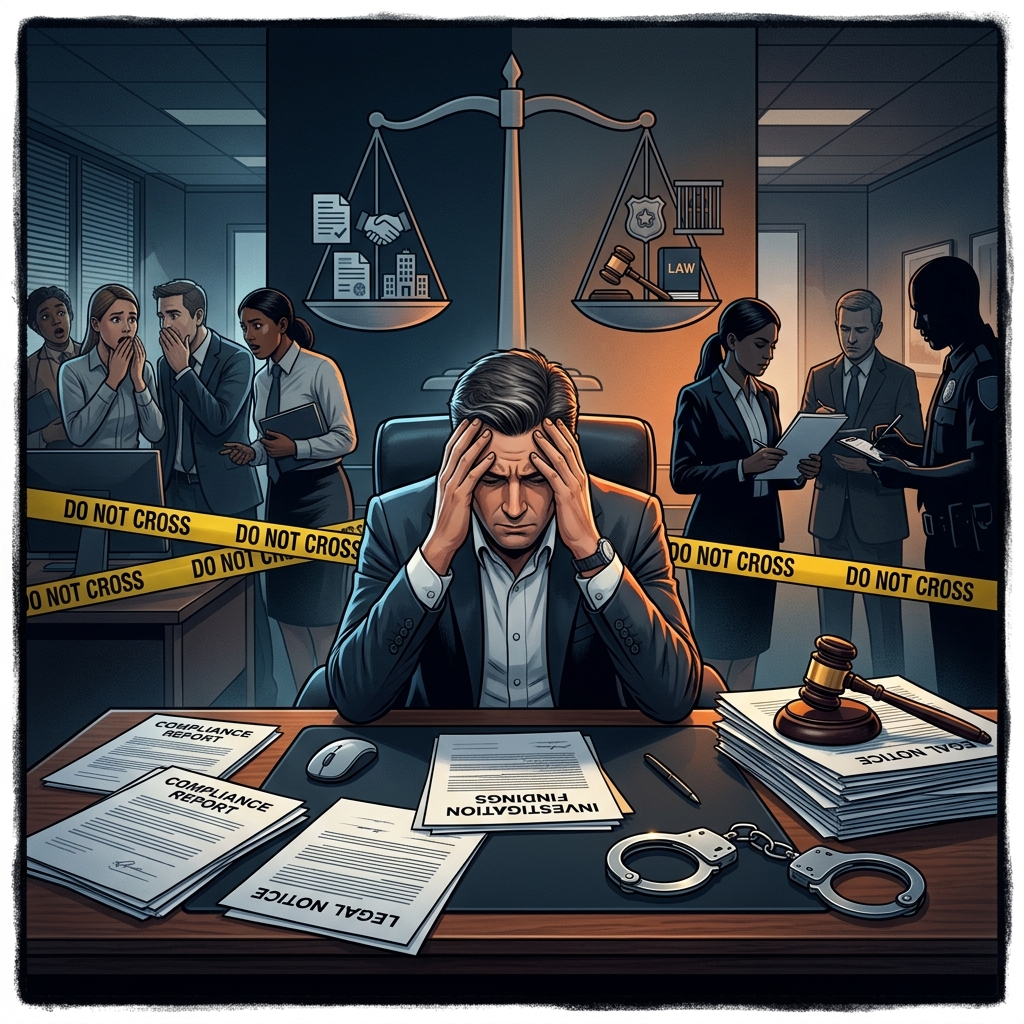
Employers regularly address employee misconduct through internal policies and discipline. At times, however, behavior at work or outside of work does more than violate company rules—it may also amount to a criminal offense under state or federal law. Understanding this overlap is critical for human resources and managers, who must protect the organization, respect employee rights, and comply with legal obligations.
This article explains how to recognize potential criminal conduct, how to respond, and how to coordinate internal investigations with law enforcement, while staying within employment law boundaries.
Why the Criminal–Employment Law Intersection Matters
Employment decisions often have legal consequences beyond the workplace. When potential crimes are involved, employers face additional risks:
- Reputational damage: Serious criminal allegations involving employees can harm public trust in the organization.
- Regulatory exposure: Certain industries must report criminal incidents to regulators or risk penalties.
- Civil liability: Failure to act on known misconduct can lead to negligence claims, especially in cases involving workplace violence or harassment.
- Employee rights: Mismanaging investigations can violate due process principles or statutory protections relating to arrests and convictions.
HR professionals need a framework to determine when conduct is only a disciplinary issue and when its criminal nature requires a different response.
Types of Workplace Conduct That May Be Criminal
Not every violation of workplace rules is a crime. Many incidents are purely internal matters, like tardiness or minor policy violations. However, certain categories of behavior can be both misconduct and criminal:
- Theft and embezzlement: Stealing money, company property, or misusing funds can constitute larceny, embezzlement, or fraud.
- Violence and threats: Physical assaults, credible threats, or stalking in the workplace can trigger criminal assault or harassment charges.
- Sexual misconduct: Conduct ranging from unwanted touching to sexual assault may violate criminal laws even when it begins as workplace harassment.
- Computer and data crimes: Unauthorized access, data theft, or destruction of electronic records can qualify as computer crime or criminal mischief.
- Drug-related offenses: Possessing or distributing controlled substances at work can be prosecuted under criminal drug statutes.
Internal policies often describe these behaviors as misconduct, but only criminal law determines whether they are prosecutable crimes.
On-the-Job vs. Off-Duty Criminal Conduct
Misconduct can occur at work or away from the workplace. The legal implications differ depending on the context and its connection to employment.
| Scenario | Employment Impact | Key Considerations |
|---|---|---|
| Criminal conduct at work | Usually a legitimate basis for discipline or termination, and potentially reportable to authorities. | Risk to staff safety, company property, and legal obligations to investigate. |
| Off-duty criminal conduct related to job | May justify discipline if it damages trust, harms reputation, or conflicts with job duties. | Need to show a clear connection between conduct and employment (e.g., public-facing roles, fiduciary duties). |
| Off-duty criminal conduct unrelated to job | Less likely to justify termination solely on that basis. | Employers must avoid overreliance on arrest records or unproven allegations, and respect legal limits on using non-conviction data. |
Courts in several jurisdictions have emphasized that criminal conduct outside working hours does not automatically provide a valid reason for dismissal; there must be a substantial, objective connection to the employment relationship.
Core Principles for HR When Criminal Issues Arise
When HR learns of alleged criminal conduct—whether at work or off duty—it should act under a set of guiding principles.
- Separate the employment decision from the criminal process: Employers generally assess the underlying behavior, not merely the fact that an arrest occurred.
- Focus on workplace impact: The key question is whether the alleged conduct affects safety, trust, job performance, or organizational interests.
- Respect legal protections: Laws in many jurisdictions limit how employers may use arrest records, non-conviction data, or certain criminal history information in employment decisions.
- Preserve due process and fairness: Employees should receive notice of allegations and an opportunity to respond before final decisions are made, subject to safety needs.
Conducting Internal Investigations Alongside Potential Crimes
When alleged misconduct could also be a crime, employers still have a duty to investigate internally, but must coordinate carefully with any criminal investigation.
Key steps in an internal investigation
- Prompt fact-gathering: Interview witnesses, review documents, and secure electronic evidence as soon as reasonably possible.
- Document thoroughly: Maintain written records of complaints, interviews, and findings in case of later civil litigation or regulatory review.
- Use consistent procedures: Apply the same investigation standards used in other serious misconduct cases to avoid claims of unfair treatment.
- Consult legal counsel: Because criminal exposure may exist, counsel can advise on employee rights, self-incrimination risks, and timing relative to law enforcement.
In some jurisdictions, employees involved in parallel criminal investigations may invoke the right to remain silent in internal processes. Courts have held that employees cannot be forced to waive this right simply because an employer wishes to complete an investigation quickly.
Balancing timing between internal and criminal investigations
Timing is one of the most complex aspects of handling potential workplace crimes.
- Reporting to police too early can leave an employer with an unresolved criminal case and an employee whose status is unclear for months or years.
- Waiting too long may increase safety risks or expose the organization to claims that it failed to act on known misconduct.
- In many cases, employers address the issue through internal disciplinary procedures first, unless there is an immediate risk to life, safety, or serious property damage.
Legal counsel can help determine when the threshold is met for involving law enforcement while still allowing HR to manage disciplinary processes.
Using Arrest and Conviction Information Responsibly
When an employee is arrested or charged with a crime outside work, HR must distinguish between the legal status of the arrest and the underlying conduct.
Arrest information
Many laws restrict employers from using arrest records that do not result in conviction as the sole basis for employment actions. For example, California law generally bars employers from using records of arrests that did not lead to conviction as factors in hiring, discipline, or termination decisions.
- Investigate the behavior, not just the arrest: HR should gather facts about the alleged conduct and assess whether it affects the employee’s job or the organization.
- Avoid automatic suspensions based only on arrest: Unless policies or statutes require it (such as certain public-sector rules), employers should not rely solely on arrest status.
Conviction information
Convictions can have clearer employment implications. Some public employers suspend employees without pay when they commit certain crimes, particularly felonies or offenses related to their duties.
- Assess job relevance: Evaluate whether the crime undermines essential job functions, trust, or compliance obligations.
- Follow policy and law: Use written procedures for handling convictions, including reporting requirements and timelines for review.
When Employers Must or Should Contact Law Enforcement
Not every policy violation should be reported to police. However, certain situations create a strong imperative to involve law enforcement or other authorities.
- Immediate threats to safety: Incidents involving physical assaults, weapons, or credible threats of violence typically warrant urgent police contact.
- Significant financial crime: Large-scale fraud or embezzlement may need to be reported to law enforcement, regulators, or insurers.
- Mandated reporting: Where laws require reporting (for example, specific abuse or harassment scenarios in certain sectors), HR must comply promptly.
- Crimes against third parties: Misconduct affecting customers, clients, or the public may require external reporting, especially in regulated industries.
Before reporting, employers should usually complete enough internal fact-finding to ensure they are not mischaracterizing events. However, this must be balanced with safety concerns and the need to preserve evidence.
Disciplinary Responses to Criminal-Related Misconduct
Potential criminal conduct does not automatically dictate a specific employment outcome. HR should select disciplinary measures based on the nature and impact of the behavior.
- Coaching or written warning: Appropriate for minor infractions that technically violate law (for example, minor regulatory breaches) but pose limited risk.
- Suspension (with or without pay): Often used while investigations are ongoing or when continued work would be unsafe or inconsistent with job requirements.
- Demotion or reassignment: May be suitable if trust is diminished in certain roles but the employee can safely perform different duties.
- Termination: Reserved for serious misconduct, threats to safety, substantial financial harm, or behavior incompatible with essential job functions.
Courts have identified three main situations in which off-duty misconduct might legitimately lead to termination: where the conduct seriously damages the employment relationship, harms the employer’s interests, or is incompatible with the employee’s duties.
Preventive Strategies: Policies, Training, and Culture
Organizations can reduce the likelihood and impact of criminal-related misconduct through proactive measures.
- Clear conduct standards: Well-drafted codes of conduct and employee handbooks should describe unacceptable behavior and potential consequences, including reference to illegal acts.
- Regular training: Supervisors and staff should be trained on recognizing harassment, violence, theft, and other high-risk behaviors, and on reporting procedures.
- Reporting channels: Anonymous hotlines or designated HR contacts encourage early reporting of misconduct, which can limit harm.
- Consistent enforcement: Applying policies evenly across employees strengthens credibility and can deter misconduct.
Policies should make clear that breach of work rules may lead to discipline, but they should avoid suggesting that every policy violation is a crime. Legal commentators have warned that using internal rules as the basis for criminal charges may conflict with due process because employees are not on notice that breaking a workplace rule could lead to prosecution.
Frequently Asked Questions
1. Does every serious policy violation need to be reported to the police?
No. Employers are generally not required to report every policy breach. HR should consider the nature of the conduct, the level of risk, statutory reporting obligations, and the organization’s policies. Incidents involving immediate threats to safety, serious financial harm, or legally mandated reporting obligations are more likely to need law enforcement involvement.
2. Can we terminate an employee simply because they were arrested?
In many jurisdictions, relying solely on an arrest—without conviction or independent evidence of misconduct—can be legally problematic. Some laws specifically prohibit using arrest records that did not result in conviction as a basis for employment decisions. Employers should investigate the underlying conduct and consult legal counsel before acting.
3. What if criminal charges are pending and the employee refuses to answer questions?
Employees may assert their right to remain silent when facing potential criminal prosecution. Courts have recognized that this right can extend to internal investigations in some circumstances, meaning employers cannot force employees to incriminate themselves. HR may need to rely on other evidence and decide whether suspension or other measures are appropriate while charges are pending.
4. Are off-duty crimes always a reason for dismissal?
Off-duty criminal conduct is not automatically grounds for termination. Employers generally must show a significant connection to the job, such as damage to reputation, loss of trust, or incompatibility with essential duties. Legal analyses emphasize the need for a clear, objective relationship between the conduct and employment before dismissal is justified.
5. Should HR always involve legal counsel in potential criminal cases?
While not legally mandatory, involving legal counsel is strongly recommended whenever misconduct may also be criminal. Counsel can advise on employee rights, investigation procedures, interaction with law enforcement, and the legal risks of various disciplinary actions.
References
- Part II – The Intersection of Criminal Law, Employment Law and Family Law: The Intersect Between Criminal Conduct and Employment — Law Society of Tasmania. 2021-03-24. https://lst.org.au/part-ii-the-intersection-of-criminal-law-employment-law-and-family-law-the-intersect-between-criminal-conduct-and-employment/
- What if the allegation involves potential criminal activity away from work? — San Mateo County, Employee & Labor Relations. 2017-06-01. https://elr-smcgov.org/what-if-the-allegation-involves-potential-criminal-activity-away-from-work/
- Can Violating a Work Rule Make You a Criminal? — Marshall, Brennan & Klein, P.C. 2020-10-01. https://www.mbklaw.com/wp-content/uploads/2020/10/DAW-and-PAC-article-titled-Can-Violating-Work-Rule-Make-You-a-Criminal-00195145xBF28F.pdf
- Criminal conduct in the workplace – the timing problem for the employer — Employment Law in Ireland (video transcript). 2017-03-15. https://www.youtube.com/watch?v=pJ8urIdJVaI
- Criminal Conduct — Commonwealth of Pennsylvania, Office of Administration. 2023-04-10. https://www.pa.gov/agencies/hrmoa/programs/employee-relations/criminal-conduct
- The Crossroads Between Criminal and Employment Law — Warner Norcross + Judd LLP. 2019-05-07. https://www.wnj.com/updates/the-crossroads-between-criminal-and-employment-law/
- When Does Workplace Harassment Become a Crime? — Marshall Forman & Schlein LLC. 2022-03-01. https://www.marshallforman.com/when-does-workplace-harassment-become-a-crime/
Similar Articles








Read full bio of medha deb




