
Withholding Rent: 4 Safe Steps To Avoid Eviction In Your State
Learn when serious repair problems can justify pausing rent payments and how to do it lawfully.
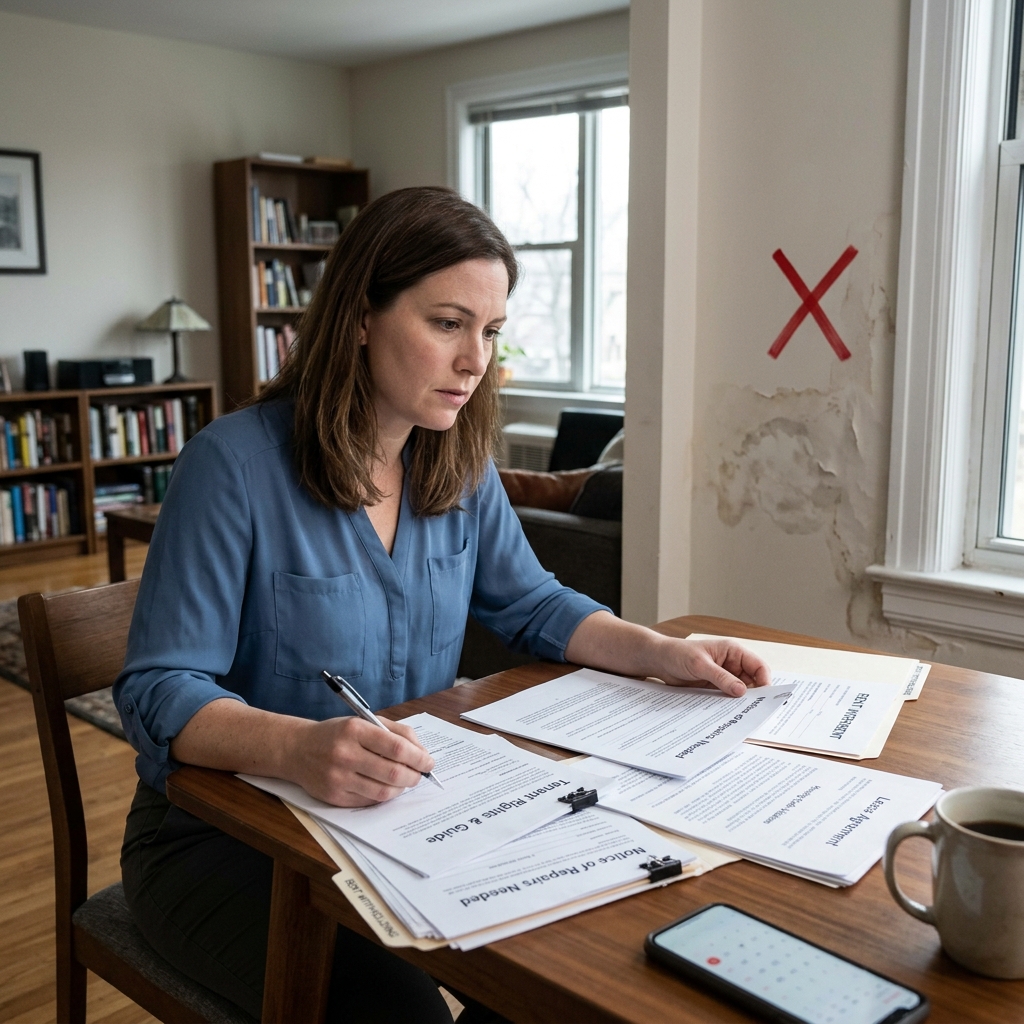
Withholding rent is one of the most powerful remedies a tenant can use when a landlord fails to maintain safe, livable housing. It is also one of the riskiest. If done incorrectly, a tenant can face eviction and serious financial consequences. This guide explains the legal concept of habitability, when rent withholding may be allowed, and the practical steps tenants should follow to use this remedy as safely as possible.
Understanding Habitability and Landlord Duties
In most U.S. states, residential leases include an implied warranty of habitability. This means landlords must provide and maintain housing that is fit to live in, even if the lease does not explicitly state those obligations.
Although details vary by state, habitability standards typically require that rental homes have:
- Functioning heat in cold weather and adequate protection from extreme temperatures
- Safe, reliable water and sanitation (e.g., plumbing that does not leak sewage, access to hot and cold water)
- Sound structural elements, such as stable floors, roofs, and stairways
- Working electrical systems that do not present fire or shock hazards
- Reasonable protection against infestations such as rats, cockroaches, or bedbugs, when the tenant did not cause the infestation
These requirements are often reflected in state housing codes or local building and health regulations. When a landlord fails to meet them, the home may be legally considered uninhabitable, opening the door to possible rent withholding or other remedies.
Major Problems vs. Minor Inconveniences
Rent withholding is generally allowed only for major defects that seriously affect health, safety, or basic use of the home. Cosmetic issues or minor annoyances almost never justify stopping rent payments.
| Examples that may justify withholding | Examples that usually do not justify withholding |
|---|---|
| Lack of heat in winter for an extended period | Peeling paint on interior walls |
| Serious plumbing leaks causing sewage backup or loss of water | Loose cabinet doors or worn carpeting |
| Structural defects that make the unit unsafe, such as a collapsing ceiling or unsafe stairway | Small cracks in the drywall |
| Widespread mold linked to leaks, affecting health | A single broken light fixture where other lighting works |
| Persistent pest infestation documented as a code violation | Need for repainting or minor cosmetic repairs |
For rent withholding to be legally defensible, the problem generally must:
- Violate a state or local housing or health code
- Pose a real risk to the tenant’s health or safety, or substantially reduce the normal use of the premises
- Not be caused by the tenant, a household member, or guest
Different State Approaches to Rent Withholding
There is no single national rule about withholding rent. Each state—and sometimes individual cities—handles this remedy differently. Some allow full withholding, some only partial reductions, and some do not allow rent withholding at all.
States that Permit Withholding Under Habitability Rules
Many states allow tenants to stop paying some or all of their rent if the landlord fails to correct serious habitability defects after proper notice. In these states, tenants must usually prove that:
- The defect is substantial and makes the home partly or completely unlivable
- The landlord was notified and given a reasonable opportunity to make repairs
- The tenant was current on rent and otherwise following the lease when withholding began
For example, official guidance from California explains that tenants may withhold rent when serious defects violate the implied warranty of habitability, and the landlord does not fix them within a reasonable time. Similarly, New Hampshire legal aid resources note that tenants may withhold rent for serious violations of state or local codes that threaten health or safety, but only if a series of legal steps are correctly followed.
States Emphasizing Partial Rent Reductions
Other states recognize that a unit may be partly habitable. In those jurisdictions, rent is often reduced rather than stopped completely, based on the degree of loss in use or safety.
Two common frameworks include:
- Percentage reduction in rent: The share of the home affected by the problem is estimated and that percentage of the rent is abated.
- Reasonable value approach: The rental value of the unit in its defective condition is calculated, and the tenant withholds the difference between that reduced value and the agreed rent.
Some legal aid materials advise tenants never to withhold 100% of rent while they still live in the unit, even in poor conditions, because the law only allows rent to abate to the extent the tenant is deprived of normal use.
States that Do Not Permit Rent Withholding
A number of states do not provide a statutory right to withhold rent for repairs. Indiana, for instance, expressly lacks a law allowing tenants to withhold rent or repair-and-deduct in most situations; tenants who stop paying rent are typically at risk of eviction.
In such states, tenants may instead need to:
- File a lawsuit asking the court to order repairs and award damages or attorney’s fees
- Report conditions to local code enforcement or health departments
- Explore negotiated solutions, such as temporary rent reductions agreed to in writing
Because of these differences, it is essential for tenants to check local law or consult an attorney before withholding rent.
Required Steps Before Withholding Rent
Even in states that permit rent withholding, tenants must follow specific procedures. Judges often look closely at whether the tenant gave proper notice, allowed time for repairs, and kept records. Skipping these steps can make a rent withholding defense fail even when the problem itself is serious.
1. Document the Problem Thoroughly
Evidence is critical. Tenants should gather proof from the moment they discover a serious defect. Useful documentation includes:
- Photographs or video showing the damage, dates, and progression of the problem
- Copies of any inspection reports or code violation notices from local authorities
- Medical or health records if the condition has caused illness (for example, severe mold exposure)
- Logs of when the problem was noticed, how it has affected daily living, and any communications with the landlord
2. Give Written Notice to the Landlord
Nearly all credible guidance emphasizes written notice. Tenants should send a letter or email that:
- Clearly describes the issue and its impact on health, safety, or use of the premises
- References any known code or habitability standards, if available
- Requests specific repairs within a reasonable time
- Is dated and kept on file by the tenant, with copies of any delivery receipts
Some resources recommend using certified mail with a return receipt or other trackable delivery method to show that the landlord received the notice.
3. Allow a Reasonable Time for Repairs
The landlord must be given an opportunity to fix the problem. What counts as “reasonable” depends on the severity of the issue and local law. For example, guidance in New Hampshire suggests that written notice must reach the landlord at least a set number of days before withholding begins, and the landlord then has time to attempt repairs.
Generally, a shorter repair window is appropriate for urgent hazards such as no heat in subfreezing temperatures, major leaks, or electrical risks. Less urgent defects may allow more time. In all cases, tenants should:
- Permit the landlord or repair technicians to access the unit at reasonable times
- Not obstruct repairs or refuse entry without good cause
4. Consider Escrow Instead of Simple Nonpayment
Even when the law allows tenants to stop paying rent directly to the landlord, many legal guides strongly recommend depositing the money into an escrow account or with the court instead of simply spending it elsewhere.
Using escrow helps demonstrate that:
- The tenant is not trying to avoid rent but to compel repairs
- The full amount of withheld rent is available if the court later orders payment
- Payments can resume quickly once repairs are made or a judge sets the proper amount
In some jurisdictions, courts require tenants to seek permission to withhold rent or to pay rent into court before the remedy is recognized.
Legal Risks and Common Pitfalls
Because failing to pay rent is a primary ground for eviction, tenants must treat withholding as a last-resort remedy and carefully assess the risks.
Potential Consequences of Improper Withholding
- Eviction for nonpayment: If a court finds that the defect did not justify withholding or that procedures were not followed, the tenant may lose their eviction case.
- Judgment for back rent: Tenants may be ordered to pay all withheld rent, potentially with fees, interest, and court costs.
- Loss of habitability defense: Without adequate documentation or proper notice, tenants may fail to prove their case.
- Limited remedies in some states: In states without rent withholding laws, attempting this remedy may simply expose the tenant to eviction.
Retaliation and Tenant Protections
Many state laws prohibit landlords from retaliating against tenants for asserting their legal rights, such as complaining to authorities or, in some places, lawfully withholding rent for serious conditions.
Common forms of prohibited retaliation can include:
- Evicting or threatening eviction solely because the tenant reported code violations
- Raising rent or cutting services immediately after a tenant complains about conditions
- Changing locks or denying access without a court order
When retaliation laws apply, tenants may have additional defenses or claims for damages. However, retaliation protections usually do not excuse rent withholding that violates state law or lease terms.
Alternatives to Withholding Rent
Given the risks, tenants should consider other options alongside or instead of withholding.
- Repair-and-deduct (where allowed): In some states, tenants can pay for essential repairs themselves and subtract the cost from rent, within legal limits.
- Administrative complaints: Contact local housing, building, or health authorities for inspections and enforcement actions.
- Civil lawsuits: Tenants may sue for damages, orders requiring repairs, or attorney’s fees, instead of or in addition to rent withholding.
- Negotiated rent reductions: Some landlords agree to temporary rent abatements or alternative accommodations, especially when faced with documented code violations.
Best Practices for Tenants Considering Rent Withholding
Tenants can improve their chances of a successful outcome by following a disciplined approach before, during, and after withholding.
- Stay current on rent until a lawyer or reputable legal aid organization confirms that withholding is legally available in your jurisdiction.
- Keep a dedicated folder or digital archive of photos, letters, inspection reports, emails, and texts related to the problem.
- Use written communication and avoid relying solely on verbal conversations with the landlord.
- Deposit withheld rent into a separate account or with the court, and never spend it on unrelated expenses.
- Seek legal advice promptly if the landlord files an eviction case or disputes your actions.
Frequently Asked Questions
Can I withhold rent for any problem with my apartment?
No. Rent withholding is normally limited to serious defects that make the home unsafe or unlivable, or that violate housing or health codes. Minor cosmetic issues do not qualify.
Do I have to notify my landlord before withholding rent?
Yes. Courts almost always require proof that the landlord was notified of the problem and given a reasonable chance to fix it. Written notice with documentation of delivery is strongly recommended.
Is it safe to stop paying 100% of my rent?
Not necessarily. Some state guidance warns tenants never to withhold all rent while they remain in the unit, because the law may only allow partial abatement proportionate to the loss in use or safety.
What if my state does not allow rent withholding?
In states without rent withholding statutes, tenants who stop paying rent may be evicted. Alternatives such as filing a lawsuit, seeking code enforcement, or negotiating a rent reduction may be more appropriate.
Should I talk to a lawyer before withholding rent?
Yes. Because rules are highly state-specific and the consequences of mistakes can be severe, consulting an attorney or legal aid organization before withholding rent is strongly advised in reputable guidance.
References
- Tenant’s Responsibility for Repairs — California Department of Real Estate. 2022-05-01. https://www.dre.ca.gov/publications/ResourceGuidebook/gb09_dealingwith.html
- Withholding Rent for Failing to Make Repairs — Justia. 2023-03-10. https://www.justia.com/real-estate/landlord-tenant/information-for-tenants/major-repairs-and-maintenance/withholding-rent-for-failing-to-make-repairs/
- To Withhold Rent Or Not To Withhold Rent – That Is The Question — 603 Legal Aid. 2021-07-15. https://www.603legalaid.org/to-withhold-rent-or-not-to-withhold-rent-that-is-the-question
- Can I Legally Withhold Rent in New Jersey? What Every Tenant Needs to Know — Semeraro Law. 2024-02-20. https://semerarolaw.com/blogs/news/can-i-legally-withhold-rent-in-new-jersey-what-every-tenant-needs-to-know
- But I Withheld, or Want to Withhold, Rent Because the Apartment is in Such Bad Condition — Wisconsin Legal Aid (WiLawHelp). 2023-09-01. https://www.wislawhelp.org/page/120/i-withheld-or-want-withhold-rent-because-apartment-such-bad-condition
- What Are Tenant Rights in Indiana? — Housing4Hoosiers. 2022-04-30. https://housing4hoosiers.org/know-your-rights/your-rental-rights/what-are-tenant-rights-in-indiana/
Similar Articles








Read full bio of Sneha Tete


