
When Snapchat Posts Can Lead to Criminal Charges
A practical legal guide to how your Snapchat activity can be investigated, used as evidence, and even result in arrest.
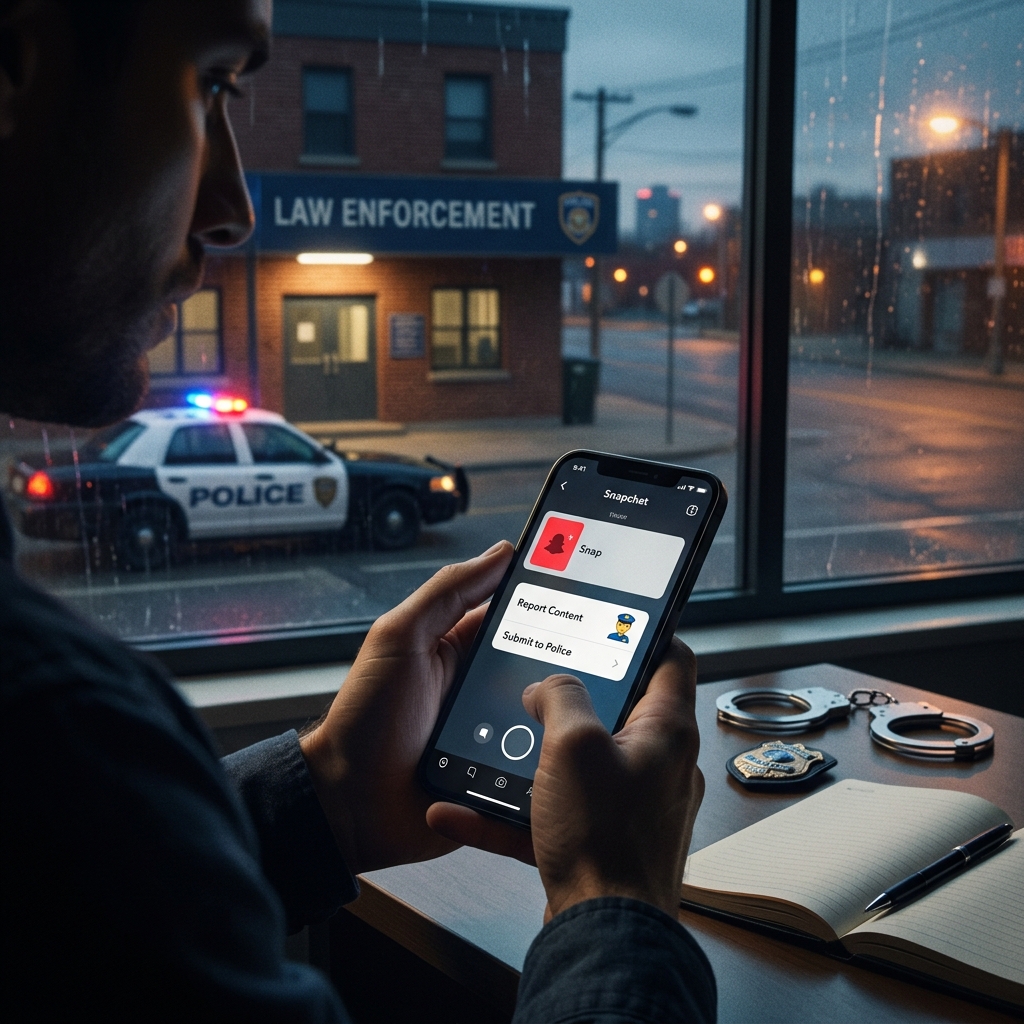
Snapchat built its popularity on ephemeral photos, short videos, and the idea that messages quickly disappear. Many users assume that once a Snap is gone, the legal risk is gone too. In reality, Snapchat activity can expose you to criminal investigation, arrest, and civil lawsuits, and content you believed was temporary can resurface in court.
This article explains how posts, stories, and direct messages can cross legal lines, how law enforcement and lawyers obtain Snapchat data, and what practical steps you can take to reduce your risk.
Why “Disappearing” Messages Are Not Legally Invisible
Snapchat’s design encourages informal, spur-of-the-moment communication. But legal systems focus on whether content exists and can be authenticated, not on how long it stays visible in an app.
Even though messages are designed to vanish from a user’s screen, data can still remain in multiple places:
- On Snapchat’s servers under retention policies, especially when requested by law enforcement with legal process.
- On the recipient’s device if they save, back up, or otherwise preserve the content.
- In the form of screenshots, screen recordings, or photos taken with another device.
- Within cloud backups or forensic extractions from phones or tablets.
Because of this, courts frequently admit Snapchat content as evidence in both criminal and civil proceedings, provided the evidence is properly authenticated and relevant to the case.
Common Snapchat Activities That Create Legal Risk
Not every questionable Snap is a crime. However, certain categories of content are closely associated with criminal charges or civil liability. Understanding these risk areas can help you avoid serious consequences.
1. Sexual Images and Sexting Involving Minors
Sharing sexually explicit material involving minors is one of the most legally dangerous areas of online communication. Many jurisdictions treat images of anyone under 18 engaged in sexual activity, or posed in a sexual manner, as illegal child sexual abuse material (CSAM), regardless of apparent consent.
Risky behaviors include:
- Sending explicit Snaps to someone you do not know well, who may turn out to be underage.
- Encouraging minors to send explicit photos or videos.
- Saving, forwarding, or screenshotting explicit content involving minors.
Law enforcement agencies can request data from Snapchat and other platforms when investigating suspected exploitation of children, and platforms may report certain content to authorities in appropriate cases. When CSAM is involved, investigations may include federal agencies and specialized child protection organizations.
2. Threats, Harassment, and Cyberbullying
Threatening someone with violence, serious harm, or death can be a crime even if the threat is made online. Courts increasingly treat social media threats the same way they treat threats delivered by letter, phone, or in person.
Examples that can lead to charges include:
- Direct messages describing planned violence or harm against a person, group, or institution.
- Story posts that tag or target an individual with threatening language.
- Repeated, targeted harassment that escalates in severity.
Judges look at whether a reasonable person would view the statement as a threat, and whether the speaker intended the words to be taken seriously. In serious cases, such online conduct can support charges linked to harassment, stalking, or even hate crimes when aimed at protected groups.
3. Invasion of Privacy and Non-Consensual Images
Posting images of other people without consent can create legal exposure, especially when the subject has a reasonable expectation of privacy. Many civil lawsuits and some criminal charges arise from secretly recording people in private spaces or sharing sensitive photos without permission.
Legal problems often arise when users:
- Record someone in a private home, bathroom, locker room, or other space where privacy is expected.
- Share intimate or compromising images of another person without their consent, sometimes referred to as non-consensual pornography.
- Use Snapchat to distribute images captured during private conversations or encounters.
If a court finds that recording or posting a photo was an objectionable intrusion on privacy, the subject may pursue legal remedies such as damages or restraining orders.
4. Showing Yourself Committing a Crime
Some Snapchat content does not just depict questionable behavior—it shows a crime being committed. Users who record themselves participating in illegal activity may inadvertently create direct evidence against themselves.
Examples include:
- Posting videos that show illegal drug use or distribution.
- Recording assaults, vandalism, or property damage.
- Displaying illegal weapons or contraband in a way that suggests possession or trafficking.
Investigators and prosecutors can use such content to establish elements of a crime, link a suspect to a location, or corroborate witness statements.
5. Violating Court Orders Via Social Media
Some people are subject to restraining orders, no-contact orders, or bail conditions that limit their communication with specific individuals. In many instances, these restrictions apply to all forms of contact, including social media platforms like Snapchat.
Potential violations include:
- Sending direct messages to a protected person.
- Posting stories designed for that person to see, even without direct tagging.
- Encouraging mutual friends to show the protected person your content.
Courts may treat social media posts as attempts to communicate with someone in violation of an order, especially if the content appears targeted or intentional. A violation can result in additional criminal charges, penalties, or revocation of bail.
How Snapchat Evidence Is Used in Court
When Snapchat content appears in court, it must meet standard evidentiary rules. Judges examine how the content was obtained, whether it is authentic, and how it relates to the facts in dispute.
Key Types of Snapchat Evidence
Attorneys and law enforcement often rely on several kinds of digital material from Snapchat accounts:
- Direct messages (DMs) exchanged between users, including text, images, and video.
- Snaps sent privately that recipients saved, screenshotted, or recorded.
- Stories that were visible publicly or to friends, often preserved via screenshots.
- Location data, such as Snap Map information, to place a user at a specific location.
- Metadata, including timestamps, account identifiers, and device or IP information.
Legal Requirements for Admissibility
For Snapchat content to be admitted as evidence, courts typically require:
| Requirement | What Courts Look For |
|---|---|
| Authentication | Proof that the content originated from a specific user or device, often through account data, timestamps, and technical logs. |
| Relevance | Evidence must relate directly to issues in the case, such as proving motive, timing, or involvement in an offense. |
| Proper collection | Content must be obtained lawfully, typically via search warrants, subpoenas, or consent; illegal collection can trigger challenges over privacy and rights. |
| Originality and integrity | Courts prefer unedited versions; screenshots and videos must be verified to ensure they have not been manipulated. |
How Law Enforcement Obtains Snapchat Data
Snap Inc. maintains procedures for responding to lawful requests from government agencies. As a U.S. company, it must follow federal privacy and communications laws when disclosing account records.
Legal Processes Used
Law enforcement agencies typically need one of the following to obtain Snapchat records:
- Subpoenas for basic subscriber information and certain non-content data.
- Court orders for more detailed records, depending on the jurisdiction and type of information sought.
- Search warrants for access to message content and other highly protected data, generally supported by probable cause.
Non-U.S. agencies often rely on treaty mechanisms or cross-border legal processes to request records from Snap.
Emergency Requests and Child Safety
In urgent situations involving imminent danger of serious harm or death, Snap may voluntarily disclose certain account records to law enforcement when presented with a valid emergency request from a sworn official.
When suspected child exploitation is detected or reported, information is commonly shared with child protection and law enforcement agencies through established reporting channels.
Practical Steps to Reduce Legal Risk on Snapchat
While you cannot fully eliminate legal risk on any social platform, you can significantly lower the likelihood of serious consequences by being proactive and cautious.
Think Like a Jury, Not Like a Friend Group
Before sending any Snap, ask yourself whether you would be comfortable with that image or message being shown to a judge and jury. If the answer is no, consider not sending it at all.
Concrete Risk-Reduction Tips
- Verify ages before sharing any sexual content; avoid explicit exchanges entirely if you are uncertain.
- Do not make threats, even jokingly, that describe violence or serious harm.
- Avoid recording private situations where others reasonably expect not to be filmed.
- Never document illegal activity in a way that identifies you or others.
- Follow all court orders strictly, including no-contact and protective orders.
- Review privacy settings and limit who can see your stories and contact you.
FAQs: Legal Issues and Snapchat
Can I be arrested based solely on Snapchat posts?
Yes. If your Snapchat content shows evidence of a crime, such as explicit material involving minors, credible threats, or footage of illegal activity, investigators may use that content to support charges. Arrest typically occurs when content is combined with other evidence and probable cause.
Do disappearing messages protect me from legal consequences?
No. Disappearing features may hide content from immediate view, but data can still be captured, saved, or retrieved by recipients, forensic tools, and in some cases platform archives. Courts focus on whether evidence exists and can be authenticated, not on whether it was designed to vanish.
Can Snapchat messages be retrieved after they are deleted?
In many cases, yes. Snapchat may retain certain metadata and content for a period of time and can disclose it when law enforcement follows proper legal procedures. Recipients may also preserve messages via screenshots or device backups, making deletion ineffective.
Can a public story violate a no-contact order?
It can, if the story is directed at or intended for a person protected by the order. Courts look at intent and effect; if a post is reasonably seen as communication toward that person, it may be treated as a violation.
Is it illegal to view someone’s Snapchat story?
Simply viewing a publicly available story is not usually a crime by itself. However, if you are bound by a court order that prohibits any contact, or if viewing leads to further unlawful actions like harassment, legal issues may arise. When in doubt, seek legal advice.
When to Contact a Lawyer
If you learn that your Snapchat content is part of an investigation, lawsuit, or dispute, speak with a qualified attorney as soon as possible. A lawyer can:
- Explain your rights concerning searches of your devices and accounts.
- Advise you on interacting with law enforcement or responding to subpoenas.
- Help you understand potential exposure from past posts and messages.
- Develop a strategy for addressing any evidence already collected.
Do not attempt to destroy evidence or alter your accounts once you know a legal matter is underway; such actions can lead to additional charges or sanctions.
References
- Information for Law Enforcement — Snap Inc. 2024-01-10. https://values.snap.com/safety/safety-enforcement
- How Snap Inc. Works with Law Enforcement — Snap Inc. 2023-11-15. https://help.snapchat.com/hc/en-us/articles/7012327251348-How-Snap-Inc-Works-with-Law-Enforcement
- Can Snapchat Evidence be Used in Court? — Herrman & Herrman, PLLC. 2024-03-08. https://www.herrmanandherrman.com/blog/can-snapchat-evidence-be-used-in-court/
- Can Snapchat or TikTok Be Used in Teen Criminal Cases? — Davis & Hoss, PC. 2023-09-21. https://www.davis-hoss.com/can-snapchat-messages-or-tiktok-comments-be-used-against-a-teen-in-court/
- Can Snapchat Posts Get You Arrested? — Neal Davis Law Firm. 2021-07-14. https://www.nealdavislaw.com/blog/criminal-defense/illegal-snapchat-activity/
- Snapchat Snafus Can Get You in Serious Trouble — Brett H. Pritchard, Attorney at Law. 2020-12-04. https://www.brettpritchardlaw.com/blog/2020/december/snapchat-snafus-can-get-you-in-serious-trouble/
- Does Snapchat Actually Report to the Police — Reddit (summarizing law enforcement reporting process). 2024-02-18. https://www.reddit.com/r/legaladvice/comments/1jtvngq/does_snapchat-actually-report-to-the-police/
Similar Articles








Read full bio of Sneha Tete




