
Undefined Protest Arrest Rights: Complete Legal Guide For 2025
A practical look at when protest arrests are protected expression and when they become lawful disorderly conduct.
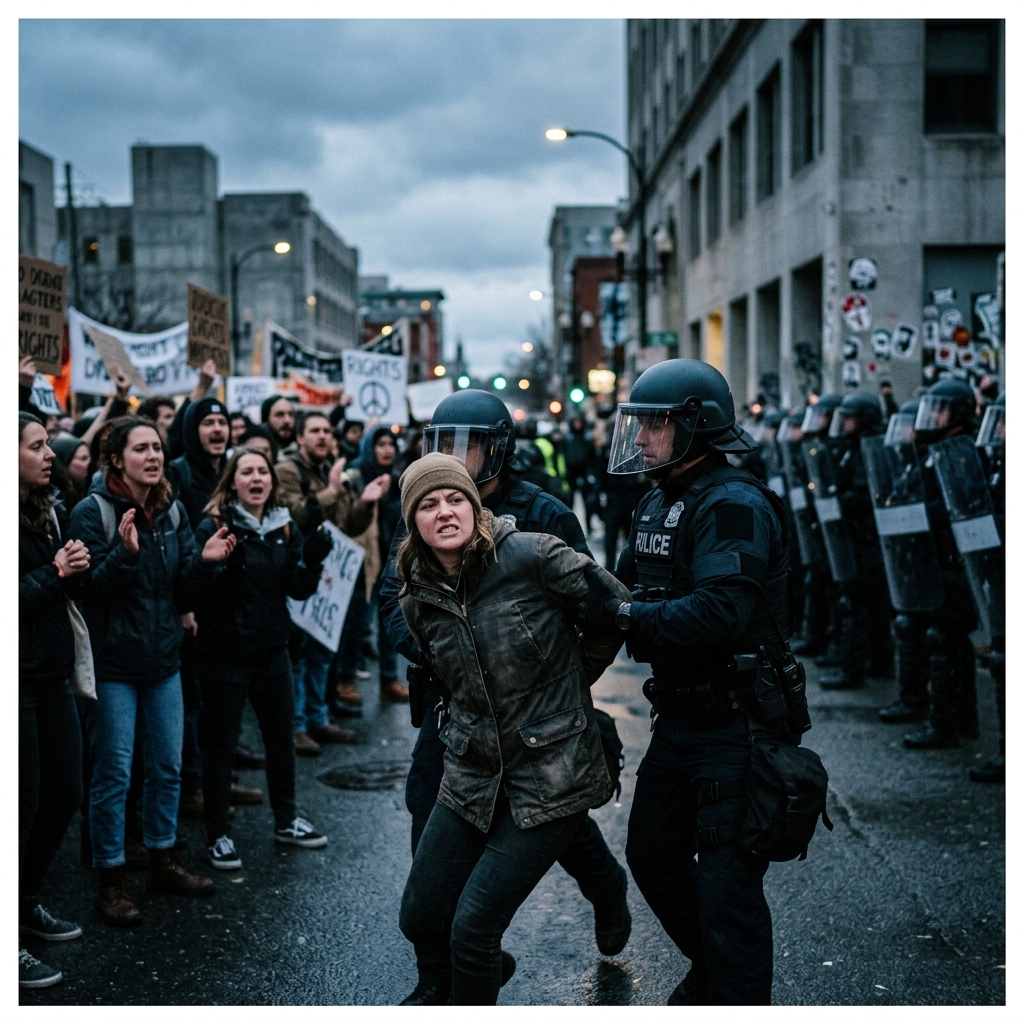
Public demonstrations sit at the center of American free speech law. The First Amendment protects the right to speak, assemble, and express dissent, but that protection is not unlimited. Police may arrest protesters when conduct moves beyond protected expression and into obstruction, violence, trespass, or other unlawful behavior.
The hard question is not whether a protest message is unpopular. The real issue is whether the government is responding to the message itself or to conduct that threatens public safety, access, or order. That distinction drives most disputes over protest arrests.
Speech Is Protected, but Conduct Still Has Rules
The Constitution shields political expression, including marches, pickets, chants, signs, and symbolic acts. Courts have repeatedly recognized that even offensive or provocative expression can be protected when it communicates an idea rather than causing unlawful harm. But the First Amendment does not erase traffic laws, trespass rules, public safety regulations, or laws against threats and violence.
This means that a protest may be fully lawful in its message while still creating criminal exposure if participants refuse to comply with neutral rules. A demonstration can become arrest-worthy when it blocks roads, interferes with emergency access, occupies private property without permission, or ignores lawful police orders.
- Protected: peaceful chanting on a public sidewalk.
- Potentially unlawful: standing in a street and stopping vehicles.
- Protected: carrying a sign criticizing the government.
- Potentially unlawful: entering a restricted building and refusing to leave.
Why Police Arrest Protesters
Arrests during demonstrations usually arise from conduct-based offenses rather than from the protest viewpoint. The most common reason is disorderly conduct, a broad category often used when a person’s behavior disturbs the peace, creates a safety risk, or interferes with others’ use of public space. Other charges may include trespass, obstruction, resisting an officer, vandalism, unlawful assembly, or failure to follow a lawful order.
From a legal standpoint, the key question is whether the arrest was based on content or conduct. If the same behavior would be prohibited regardless of the message being expressed, the government is usually on stronger constitutional ground. If authorities target protesters because they dislike the viewpoint being expressed, the arrest may raise serious First Amendment concerns.
Time, Place, and Manner Limits
One of the most important ideas in protest law is the government’s power to impose reasonable time, place, and manner restrictions. These rules regulate how speech occurs rather than what it says. A city may limit noise, require permits for large events, restrict demonstrations near sensitive facilities, or set rules for the use of public space, so long as the limits are content-neutral and leave open other ways to communicate.
Courts generally look for three things:
| Requirement | What it means |
|---|---|
| Content neutrality | The rule cannot target a message, viewpoint, or ideology. |
| Important government interest | The restriction must serve a real public purpose such as safety, access, or traffic flow. |
| Alternative channels | People must still have a meaningful way to communicate their message. |
These rules matter because many protest arrests happen after demonstrators refuse to move, ignore route limits, or continue a demonstration after police have lawfully imposed restrictions. When the restriction is valid, failing to comply can turn a protected event into a criminal matter.
Disorderly Conduct and Other Common Charges
Disorderly conduct laws vary by state and city, but they often cover conduct that provokes, alarms, obstructs, or disrupts public order. In the protest setting, these laws are frequently used when demonstrators create chaos rather than simply express dissent. The same is true for related offenses that arise from the physical realities of a march or rally.
Common protest-related charges may include:
- Blocking traffic or preventing emergency vehicles from passing.
- Trespassing on private or restricted property.
- Resisting or obstructing a police officer.
- Vandalism or property damage.
- Refusing a lawful order to disperse or move.
- Noise violations in areas with lawful limits.
The existence of a protest does not eliminate these offenses. If anything, protest settings often create a high-stakes environment where small acts of noncompliance can quickly lead to arrest. That is why protest planning often focuses as much on logistics and legal boundaries as on the message itself.
When an Arrest May Be Constitutionally Problematic
Not every protest arrest is lawful. A person may have a valid constitutional claim if police arrest them for expressive activity alone or apply laws selectively against one viewpoint. A protester may also challenge an arrest if the underlying ordinance is vague, overly broad, or enforced in a way that suppresses unpopular speech.
Examples of potentially problematic enforcement include arresting someone for simply holding a sign, detaining speakers because officers disagree with the viewpoint, or using minor infractions as a pretext to silence a demonstration. Courts pay close attention to whether the law was applied evenhandedly and whether protesters were given fair notice of what conduct was prohibited.
In some cases, a protester may be charged first and challenge the arrest later. That does not mean the arrest was automatically lawful. It means the constitutional issue will often be decided through motions, hearings, or civil claims after the fact.
The Difference Between Peaceful Protest and Unprotected Conduct
Peaceful protest is at the heart of democratic participation. But once conduct crosses into threats, coercion, violence, or serious interference with others’ rights, the law changes. The distinction is not always neat, especially in large public gatherings where emotions run high and police decisions must be made quickly.
To separate protected speech from unprotected conduct, consider these questions:
- Was the protest peaceful or did it involve force, threats, or destruction?
- Was the restriction applied because of the message or because of a neutral rule?
- Did demonstrators have another place or method to communicate?
- Were police orders lawful and clearly connected to safety or access?
If the answer points to safety concerns, obstruction, or noncompliance with a valid rule, an arrest is more likely to be upheld. If the answer points to viewpoint discrimination or suppression of expression, constitutional protections become much stronger.
How Courts Analyze Protest Arrest Cases
Courts typically examine both the law on the books and the facts on the ground. They ask whether the statute or ordinance is content-neutral, whether it was narrowly tailored, and whether it left open enough space for communication. They also review the specific conduct of the protesters, the officer’s orders, and the setting in which the arrest occurred.
That analysis can produce different outcomes even in similar protests. A march blocked from entering a courthouse may be treated differently from a rally on a sidewalk. A late-night noise complaint may be evaluated differently from an arrest made after protesters physically obstruct an entrance. The factual details matter because First Amendment law is closely tied to context.
Practical Guidance for Understanding Your Rights
People attending demonstrations often want to know what they can do without risking arrest. The safest answer is that peaceful expression in public forums is generally protected, but it must stay within lawful limits. Knowing those limits can reduce the chance of an encounter with police.
- Stay aware of permit rules and designated protest areas.
- Avoid blocking roads, doors, and emergency access routes.
- Do not enter private property without permission.
- Follow lawful dispersal orders and ask questions later if the order seems improper.
- Keep records of what happened if an arrest occurs.
Documentation matters because protest arrests are often disputed after the fact. Video, witness names, police badge numbers, and copies of orders or citations can all become important if a lawyer later reviews the incident.
What Happens After a Protest Arrest
After an arrest, a person may face charges, citation release, or a hearing date depending on local rules and the seriousness of the allegation. The case may be resolved through dismissal, plea negotiation, or litigation over whether the arrest violated constitutional rights. If the arrest was unlawful, the person may also have a civil claim for damages or injunctive relief.
Not every unlawful arrest leads to a successful lawsuit, but the First Amendment remains a powerful defense when speech is targeted rather than conduct. Legal counsel can help determine whether the police action was a valid enforcement of neutral rules or an improper response to protected expression.
Frequently Asked Questions
Can police arrest someone for protesting in public?
Yes, if the person’s conduct violates a valid law such as trespass, obstruction, vandalism, or disorderly conduct. Peaceful speech alone is generally protected, but the protection does not excuse unlawful behavior.
Is blocking traffic protected speech?
Usually not. Protesters may express themselves on public streets only subject to lawful restrictions, and physically obstructing traffic is commonly treated as unlawful conduct rather than protected expression.
Can officers move protesters to a different location?
Sometimes. Government officials may enforce content-neutral time, place, and manner rules if the restrictions serve an important public interest and leave open alternative ways to communicate.
What if the arrest seems motivated by disagreement with the message?
That can raise a First Amendment issue. Viewpoint-based enforcement is especially vulnerable to legal challenge, particularly if similarly situated speakers are treated differently.
Does a permit requirement violate free speech?
Not necessarily. Permit systems can be lawful if they are neutral, serve legitimate interests such as safety or crowd control, and do not give officials unchecked power to suppress speech.
Understanding protest arrests requires looking beyond slogans and focusing on conduct, context, and government justification. The same demonstration may be protected in one setting and unlawful in another, depending on whether participants respect the legal boundaries that surround public expression.
References
- Protesters’ Rights — American Civil Liberties Union. 2025-04-04. https://www.aclu.org/know-your-rights/protesters-rights
- When else can government regulate the time, place, and manner of protest? — ACLU of Illinois. 2024-01-01. https://www.aclu-il.org/news/when-else-can-government-regulate-time-place-and-manner-protest/
- Time, Place and Manner Restrictions — Middle Tennessee State University, First Amendment Encyclopedia. 2024-01-01. https://firstamendment.mtsu.edu/article/time-place-and-manner-restrictions/
- What Does Free Speech Mean? — United States Courts. 2024-01-01. https://www.uscourts.gov/about-federal-courts/educational-resources/about-educational-outreach/activity-resources/what-does-free-speech-mean
- Limits to Free Speech — Foundation for Individual Rights and Expression. 2024-01-01. https://www.fire.org/research-learn/limits-free-speech
Similar Articles








Read full bio of Sneha Tete




