
When Prosecutors’ Letterheads Cross the Line
How official-looking debt letters can mislead consumers and what the law says about them.
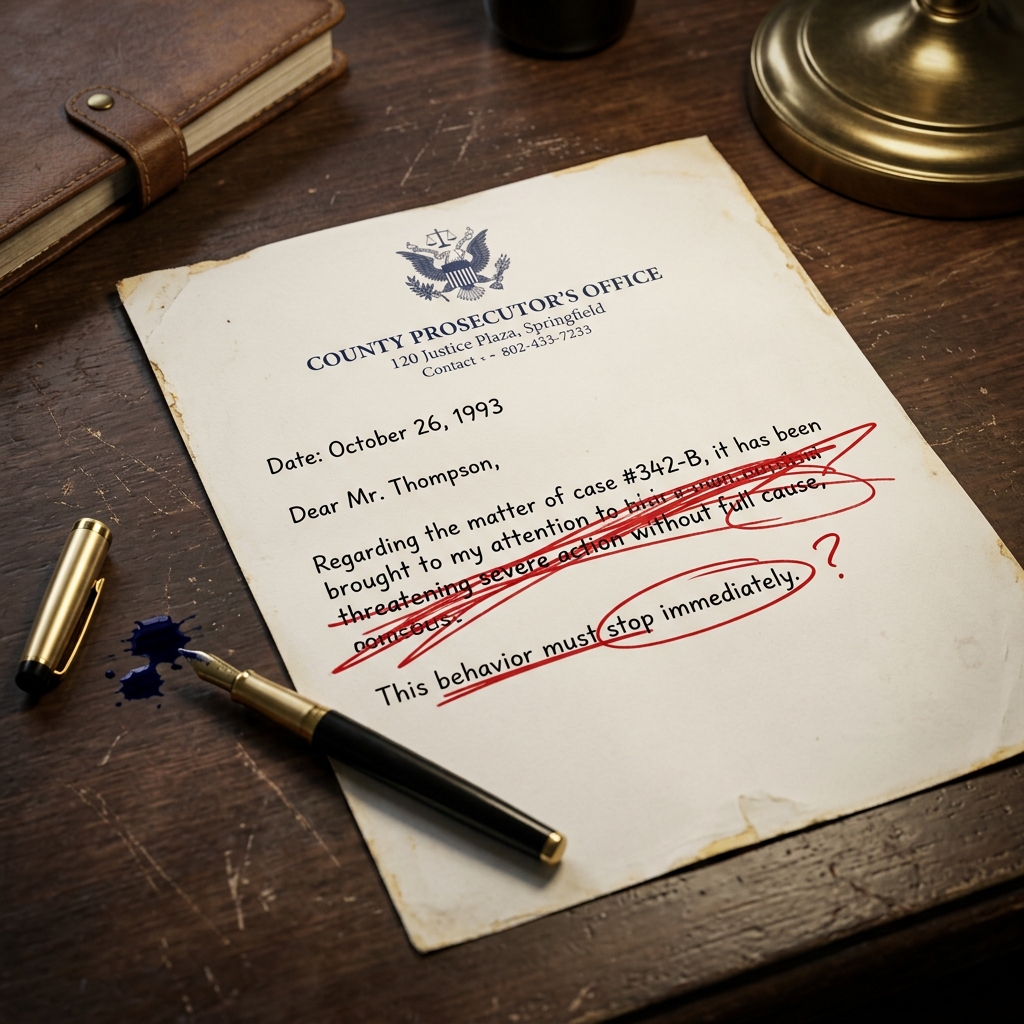
Debt collection becomes especially troubling when a letter appears to come from a prosecutor, district attorney, or attorney general but is actually prepared by a private collector. That kind of official-looking notice can blur the line between a civil debt and government enforcement, which is why courts and consumer protection agencies treat these practices with caution.
The central issue is not whether a debt can be collected. The issue is whether the collector is allowed to borrow the credibility of a public office in a way that may pressure people into paying quickly, even when the government has not personally reviewed the matter. Federal law and consumer guidance both make clear that misleading communications are a serious problem in debt collection.
Why official letterheads matter
A letter printed on government stationery can carry far more weight than a standard collection notice. Many readers naturally assume that a prosecutor, district attorney, or attorney general has directly investigated the account, confirmed the debt, and decided to act. That assumption is exactly why the use of public letterhead is legally sensitive.
In debt collection, the appearance of government involvement can create the impression that nonpayment could lead to criminal consequences, court action, or other immediate penalties. Consumer protection rules prohibit false or misleading representations, including messages that make a letter seem like it came from a government agency when it did not.
What the Supreme Court said about the practice
The most important modern case on this issue is Sheriff v. Gillie, where the Supreme Court considered whether special counsel hired by a state attorney general could use the attorney general’s letterhead while collecting state debts. The Court held that, in that setting, the letters did not violate the federal Fair Debt Collection Practices Act because the correspondence accurately showed that the lawyers were acting on behalf of the attorney general.
The Court emphasized two details: the letterhead identified the principal office, and the signature block identified the private lawyer acting as the agent. In the Court’s view, a reader’s impression that the letters were connected to the attorney general’s office was not materially false when the lawyers were actually authorized to act for that office.
That ruling did not give collectors a free pass to imitate government authority. It addressed a specific arrangement in which the state had authorized the use of its letterhead for state debt collection, and the Court treated that relationship as legally meaningful.
Why the issue still raises concern
Even when a court finds a technical basis for using a public office’s stationery, the broader concern remains the same: official branding can intimidate consumers into paying without understanding their rights. Ethics scholars have noted that prosecutors and attorneys general may lend the authority of their offices to others through letterhead use, often in debt collection settings.
That concern is especially strong when the letter creates confusion about who reviewed the file, whether the debt is valid, or whether the government has chosen to pursue the matter as a criminal or quasi-criminal enforcement action. The problem is not merely visual; it is about the message the letter sends.
How the Fair Debt Collection Practices Act protects consumers
The FDCPA prohibits debt collectors from using false, deceptive, or misleading representations in connection with collection activity. It also gives consumers the right to receive truthful validation information about the debt and to dispute it in writing.
California’s consumer guidance reflects the same principle: a collector cannot use words or symbols that falsely make a communication seem like it came from an attorney, court, or government agency. That rule matters because deception is often more effective than direct threats. A letter may never state, “Pay now or go to jail,” but if it is formatted to resemble a prosecutor’s official demand, the pressure can be just as strong.
Common warning signs in misleading debt letters
Not every letter on official-looking paper is unlawful, but several features can signal a problem. Consumers should pay attention to whether the correspondence appears to claim government involvement without explaining the relationship clearly.
- Use of a prosecutor, district attorney, or attorney general’s name without clear disclosure of a private collector’s role
- Language that suggests criminal enforcement when the matter is actually a civil debt
- Missing or vague information about the original creditor, the amount claimed, or how the debt was calculated
- Pressure to pay immediately without instructions on how to dispute the debt
- Formatting that closely resembles a government notice rather than a private collection letter
These signs do not prove illegality by themselves, but they can indicate that the sender is trying to borrow authority rather than communicate plainly.
How prosecutor-backed collection programs can function
Some local governments have worked with private companies to collect debts tied to bad checks or other obligations. In those arrangements, a collector may send notices that look like they originate from a prosecutor’s office, sometimes with the office’s seal or letterhead. Reports on these programs have described the practice as a way to disguise ordinary civil debt collection as law enforcement.
Supporters argue that such systems help recover public money and can deter unpaid obligations. Critics respond that the practice risks confusing residents into thinking they face criminal prosecution when they may simply owe a private or civil debt. That tension is part of why these cases attract legal and ethical scrutiny.
Why courts and regulators focus on disclosure
The key legal question is often whether the letter accurately describes who is speaking and on whose authority. If the relationship between the government office and the private collector is clearly disclosed, the communication is less likely to be misleading. If that relationship is hidden or exaggerated, the risk of violating consumer protection law rises sharply.
Disclosure matters because consumers need enough information to evaluate the debt and decide what to do next. A confusing letter can lead someone to pay a disputed balance, ignore the notice in panic, or give up rights they still have under the law.
What consumers should do after receiving an official-looking collection letter
If a debt letter appears to come from a government office, the safest response is to slow down and verify the claim before paying anything. State consumer guidance recommends disputing debts in writing when appropriate and asking for validation information within the required time frame.
- Read the letter carefully and identify who actually sent it.
- Look for the name of the private collector, law firm, or special counsel.
- Check whether the notice explains the debt, the original creditor, and how to dispute it.
- Save the envelope, letter, and any attachments in case the communication is later challenged.
- Contact the relevant government office directly using publicly available contact information, not the number printed on the letter, if you need confirmation.
If the letter is unclear or threatening, consumers may also file complaints with state or federal consumer protection authorities.
How to tell a real government notice from a borrowed one
One useful way to evaluate a letter is to separate the identity of the sender from the identity of the office whose name appears on the page. The following comparison highlights the difference between a properly disclosed communication and one that may be trying to exploit official authority.
| Feature | Clear communication | Problematic communication |
|---|---|---|
| Sender identity | Names the private collector and the government role | Hides the private collector or leaves it unclear |
| Purpose | Explains that the letter is about a civil collection matter | Suggests prosecution or criminal exposure without basis |
| Debt details | Lists the amount, creditor, and dispute instructions | Uses vague or intimidating language instead of details |
| Visual presentation | Uses ordinary business formatting | Closely imitates a government form or official notice |
Does a misleading letter automatically mean a lawsuit is available?
Not always, but it may. If a collector uses a government letterhead in a way that creates a false or deceptive impression, that conduct can support claims under the FDCPA and related state laws. In the litigation discussed in reporting on these practices, courts have been willing to allow claims to proceed where plaintiffs argue that the use of seals and letterheads was meant to trick recipients.
Any legal claim would depend on the exact wording of the letter, the degree of government involvement, and how a reasonable consumer would interpret the communication. The details matter because consumer-protection law often turns on whether the representation was materially misleading.
What this means for government offices
Public agencies that allow their names or letterheads to be used in debt collection should ensure that the arrangement is tightly controlled and fully disclosed. The Supreme Court’s approval of one specific setup in Sheriff v. Gillie does not eliminate the need for transparency in other contexts.
Ethics concerns arise when a public office’s reputation is used as a collection tool, particularly if the office did not independently review the account or if the arrangement confuses civil debt with criminal enforcement. Careful drafting, plain disclosure, and limited use are essential if agencies want to avoid misleading the public.
Questions consumers often ask
- Can a debt collector send a letter that looks like it came from a prosecutor?
- Only if the relationship is truthful and the communication does not mislead the recipient about who is actually sending it or what authority exists behind it.
- Does official-looking paper mean I have to pay immediately?
- No. You should verify the debt, review your rights, and dispute the claim in writing if necessary.
- Can a collector threaten jail over a civil debt?
- Generally no. Threats that imply criminal punishment for a civil debt can be false or deceptive under consumer law.
- What if the letter uses a seal or letterhead from a local government office?
- That may be lawful in a narrow, authorized setting, but it can also be misleading if the public office is not truly involved or if the disclosure is unclear.
Why clarity is the safest standard
The most defensible collection communication is the one that tells the truth plainly. If a private lawyer is acting for a public office, the letter should say so. If the matter is civil, it should not sound criminal. If the office has reviewed the file, that role should be described accurately. Clarity reduces confusion, protects consumers, and lowers the risk of violating the FDCPA.
For consumers, the practical lesson is simple: official-looking mail deserves careful reading, not automatic trust. A government-style envelope can be persuasive, but persuasion is not the same thing as lawful authority.
FAQs
Is every debt letter on government-style paper illegal?
No. Some arrangements are authorized and can be lawful if they accurately disclose who is sending the notice and on whose behalf it is sent.
What law protects me from deceptive collection notices?
The FDCPA prohibits false, deceptive, and misleading collection practices, and state consumer guidance echoes that prohibition.
Should I pay before confirming the debt?
No. Request validation, review the details, and dispute the debt in writing if the claim is inaccurate or unclear.
Can I complain if a letter seems to impersonate a prosecutor?
Yes. Consumers can report misleading collection practices to state and federal consumer protection authorities.
References
- Sheriff v. Gillie, 578 U.S. ___ (2016) — Supreme Court of the United States. 2016-05-16. https://supreme.justia.com/cases/federal/us/578/15-338/
- Misuse of Letterhead by Prosecutors and Attorneys General — Case Western Reserve University School of Law. n.d. https://scholarlycommons.law.case.edu/faculty_publications/1650/
- Debt Collectors | State of California – Department of Justice — California Department of Justice. n.d. https://oag.ca.gov/consumers/general/debt-collectors
- District Attorneys Sell Letterheads and Seals to Debt Collectors — AllGov. 2014-12-05. http://www.allgov.com/usa/ca/news/where-is-the-money-going/district-attorneys-sell-letterheads-and-seals-to-debt-collectors-141205?news=855013
- Debt Collectors Aren’t Prosecutors and Shouldn’t Pretend to Be — American Civil Liberties Union. 2014-11-25. https://www.aclu.org/news/national-security/debt-collectors-arent-prosecutors-and-shouldnt-pretend-be
Similar Articles








Read full bio of Sneha Tete




