
When Police May Lawfully Use Deadly Force
A clear, plain‑language guide to when officers can legally open fire, the constitutional standards that apply, and what it means for suspects and bystanders.
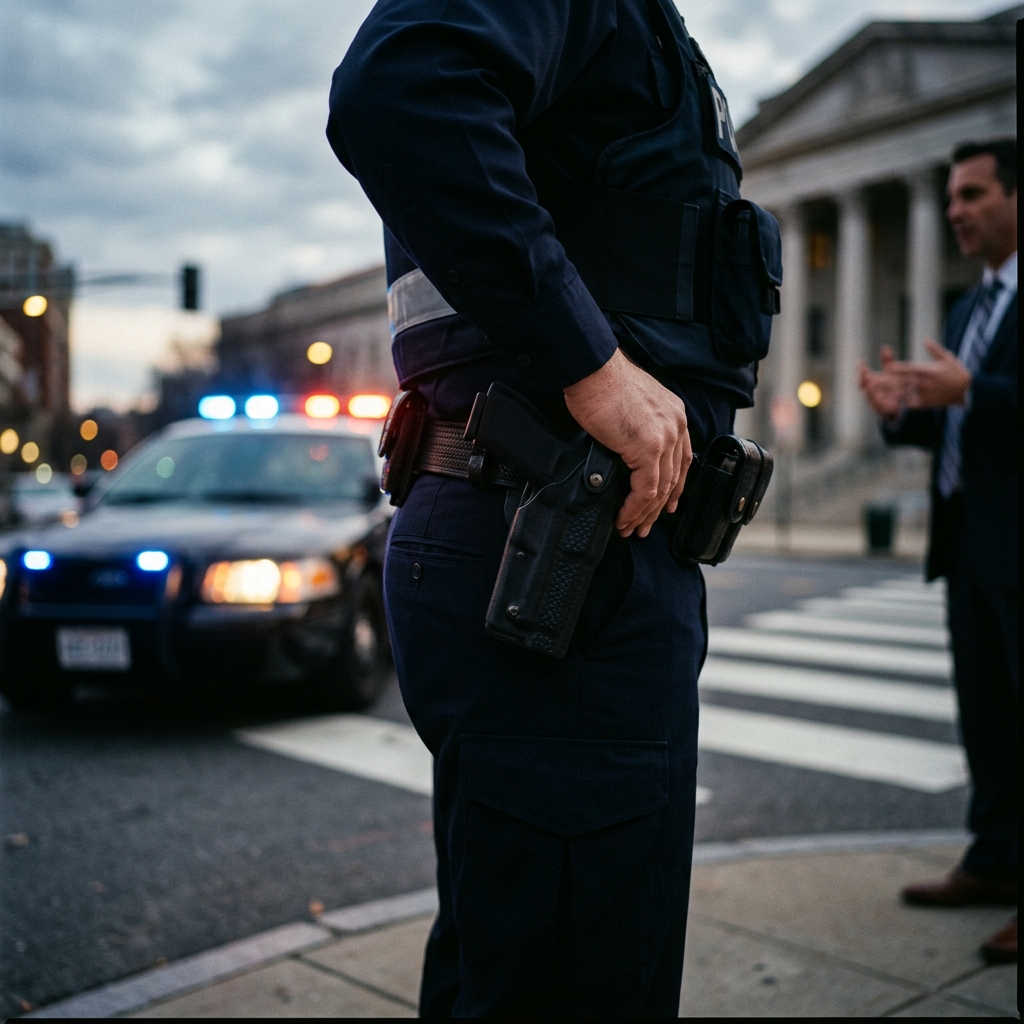
Deadly force by police is one of the most serious exercises of government power. When an officer opens fire, the result can be life‑altering for suspects, bystanders, and communities. Understanding when police are legally allowed to use deadly force is critical both for protecting civil rights and for evaluating whether a particular shooting was lawful.
This article explains the legal framework that governs police use of firearms, focusing on United States law. It draws on constitutional standards, federal policies, and typical local rules to show how courts and agencies decide whether an officer was justified in using deadly force.
What Is Considered Deadly Force?
Deadly force generally means any use of force that is likely to cause death or serious bodily injury. In practice, this includes most uses of firearms, but may also cover certain strikes, chokeholds, or other tactics when they are likely to produce catastrophic harm.
Official policies often define deadly force in similar terms. For example, federal guidance describes deadly force as force used when an officer reasonably believes a subject poses an imminent danger of death or serious physical injury. Some police department policies explicitly list firearms discharges and particular neck restraints as forms of deadly force.
Key features of deadly force definitions include:
- Likelihood of serious harm: The focus is not just on intent, but on whether the force is objectively likely to cause death or severe injury.
- Context and foreseeability: Officers are expected to understand when a particular tactic carries a substantial risk of lethal consequences.
- Policy linkage: Once an action is classified as deadly force, it triggers stricter legal and policy standards than lesser forms of force.
Constitutional Limits on Police Use of Deadly Force
In the United States, police conduct is constrained by the Constitution. Deadly force is primarily regulated under the Fourth Amendment, which prohibits unreasonable seizures, and is interpreted by the courts using an objective reasonableness standard.
The Fourth Amendment and Reasonableness
Any use of deadly force by an officer to stop, arrest, or detain a person is treated as a seizure under the Fourth Amendment. Courts ask whether the officers actions were objectively reasonable in light of the facts and circumstances, rather than reviewing the officers subjective motives.
Factors courts typically consider include:
- The severity of the suspected crime.
- Whether the suspect posed an immediate threat to officers or others.
- Whether the suspect was resisting or attempting to flee.
- The availability of reasonably safe alternatives to deadly force.
Tennessee v. Garner and Fleeing Suspects
A major Supreme Court case, often cited in discussions of police shootings, held that officers cannot use deadly force against an unarmed, non‑violent fleeing felon who does not pose a significant threat of serious harm. The Court allowed deadly force only where the officer has probable cause to believe the suspect poses an imminent danger of serious bodily injury or death, or has committed a violent felony and continues to present such a threat.
This ruling effectively rejected broad fleeing felon rules and forced agencies to narrow the circumstances under which officers could lawfully shoot fleeing suspects.
Core Legal Conditions for Using Deadly Force
Across federal guidelines and many modern police policies, deadly force is typically allowed only under two core conditions.
| Legal Condition | Typical Requirements |
|---|---|
| Imminent threat of death or serious injury | The officer reasonably believes a person poses an immediate and significant danger of killing or severely injuring the officer or another person. |
| Dangerous fleeing suspect | The officer has probable cause to believe the suspect has committed a violent felony involving serious injury or death and will seriously harm others if not immediately apprehended. |
Imminent Threat to Life
Most policies emphasize that deadly force may be used only when necessary to defend human life. This usually means:
- The threat is immediate, not speculative or based solely on past behavior.
- The officers belief in the threat is reasonable in light of all available facts and circumstances.
- No reasonably effective, safe, and feasible alternative appears to exist at the moment.
Examples commonly cited in training materials include suspects pointing firearms at officers or civilians, attempting to run people over with vehicles, or wielding weapons in a manner that signals an imminent attack.
Fleeing Suspects and Violent Felonies
Some policies still allow deadly force to prevent the escape of certain suspects when stringent conditions are met:
- The suspect is believed to have committed a felony involving serious bodily injury or death.
- The officer reasonably believes the suspect will seriously harm others if not stopped immediately.
- Deadly force is used to prevent an imminent, not speculative, risk to the public.
However, federal standards and a growing number of state laws bar deadly force for escape alone. They require a separate imminent threat of serious harm, even when the suspect is a felon.
Requirement of Necessity and Last Resort
Modern use‑of‑force standards do not merely ask whether deadly force would be legally permissible; they also require that it be necessary and used as a last resort.
Necessity Standard
Under Department of Justice policy, deadly force may be used only when necessary, meaning no reasonably effective, safe, and feasible alternative is apparent. Many local policies echo this requirement, directing officers to choose lesser levels of force whenever possible.
Common alternatives include:
- Verbal commands and de‑escalation techniques.
- Maintaining distance or using cover.
- Less‑lethal tools such as conducted energy devices, impact projectiles, or chemical agents.
- Calling additional units or specialized teams when time and safety allow.
Deadly Force as Last Resort
Many agencies explicitly state that deadly force must be reserved for the most extreme situations. This reflects both constitutional principles and community expectations. Officers are trained that they may not use deadly force simply because a suspect is difficult to control; they must be able to articulate why lesser options were ineffective, unavailable, or too dangerous.
Special Rules About Firing at Vehicles
Police shootings involving vehicles raise complex safety issues. As a result, numerous policies impose specific restrictions on discharging firearms at or from moving vehicles.
- Officers are often instructed not to shoot at vehicles unless someone inside is using deadly force by means other than the vehicle, or the vehicle itself is being used as a lethal weapon and no other reasonable means of protection exists.
- Officers are typically advised to move out of the vehicles path if possible rather than fire at it.
- Discharging a firearm from a moving police car is usually banned except in rare, exigent circumstances.
These rules are designed to reduce risks to bystanders and to avoid escalating danger by disabling drivers or causing uncontrolled vehicles in public spaces.
Warnings and Communication Before Deadly Force
Where feasible, officers are often required or strongly encouraged to issue a warning before using deadly force. Federal policy, for example, states that officers should give a verbal warning to submit to lawful authority if doing so will not increase danger to officers or others.
Such warnings serve multiple purposes:
- They give the suspect a final opportunity to comply and avoid harm.
- They clarify that the officer is asserting lawful authority and intends to use force if necessary.
- They help courts and investigators evaluate whether the officer attempted to minimize harm consistent with training and policy.
Limits on Deadly Force Against Self‑Harm or Property Damage
Most modern policies restrict deadly force when a persons actions threaten only themselves or property. Federal guidance states that deadly force should not be used against persons whose actions threaten solely themselves or property, unless there is an imminent danger of death or serious physical injury to officers or others nearby.
For instance, an individual attempting suicide in a manner that does not endanger others typically may not be lawfully shot solely to prevent self‑harm. Similarly, destructive acts against property, such as vandalism or arson in some contexts, may not justify deadly force unless they create an immediate risk of serious injury or death to people.
Department Policies and Objective Reasonableness
Beyond constitutional rules, each law enforcement agency usually has its own written use‑of‑force policy. These documents detail how officers must assess situations and what levels of force are acceptable.
Objective Reasonableness Standard
Many policies adopt an objective reasonableness standard: officers may use only the level of force that a reasonable officer in the same circumstances would use.
Agencies often emphasize:
- Considering the totality of circumstances, including environment, suspect behavior, and available resources.
- Using only the amount of force needed to safely bring an incident under control.
- Documenting the decision‑making process after incidents involving significant force.
Internal Investigation and Accountability
When officers open fire, shootings are typically reviewed through internal investigations, sometimes supplemented by external or civilian oversight. Investigators examine whether the officer followed department policy, applied proper judgment, and complied with constitutional requirements.
If a shooting violates policy or law, consequences may include discipline, civil liability, or criminal charges. For individuals facing charges related to an encounter with police, understanding these standards is vital to developing a defense strategy.
Practical Rights and Considerations for Civilians
While this article focuses on legal standards for officers, civilians can benefit from understanding how these rules operate in practice. Knowledge cannot guarantee safety, but it can help people recognize the seriousness of high‑risk situations.
- Compliance during armed confrontations: When officers reasonably perceive an imminent threat, they may be legally allowed to use deadly force. Sudden movements toward weapons or ignoring clear commands can increase perceived risk.
- Recording and reporting: In many jurisdictions, civilians may lawfully record police activity from a safe distance, which can be important if force is later challenged in court.
- Legal follow‑up: After any incident involving police use of force, consulting experienced criminal defense counsel or civil rights attorneys is critical to protecting legal interests and evaluating possible claims.
Frequently Asked Questions
Can police use deadly force simply because a suspect is fleeing?
Generally no. Under constitutional standards and many policies, officers cannot use deadly force solely to prevent escape. Deadly force may be allowed only if the fleeing suspect poses an imminent threat of serious bodily injury or death, often because they have committed a violent felony and continue to present a danger.
Do officers have to try lesser forms of force first?
Policies frequently require officers to use only the least amount of force reasonably necessary and to consider alternatives whenever safe and feasible. However, the law does not mandate a rigid sequence. If a situation suddenly escalates into an imminent threat to life, an officer may use deadly force without attempting every lesser option, provided the action is objectively reasonable.
Are verbal warnings required before officers open fire?
Where feasible and safe, federal guidelines call for a verbal warning to submit to authority before using deadly force. Many agencies adopt similar rules. But if giving a warning would increase danger or is impossible due to the speed of events, failure to warn does not automatically make the use of deadly force unlawful.
Can police shoot at a car that is driving toward them?
Policies are usually restrictive. Officers are often instructed to move out of the vehicles path if possible and may not fire at a vehicle unless it is being used in a manner that threatens to cause death or serious injury, and no other reasonable means of defense appears to exist. Shooting at vehicles is viewed as extremely risky to both occupants and bystanders.
Is deadly force allowed to stop self‑harm or property damage?
Deadly force is generally not authorized when a persons actions threaten only themselves or property, unless they create an imminent danger of death or serious injury to others nearby. Agencies encourage de‑escalation and specialized responses in situations involving mental health crises or suicidal individuals.
References
- When can police use deadly force? — TalksOnLaw. 2019-06-01. https://www.talksonlaw.com/briefs/when-can-police-use-deadly-force
- Policy on the Use of Force (Revised) — Los Angeles Police Department. 2022-08-01. https://www.lapdonline.org/newsroom/policy-on-the-use-of-force-revised/
- Use of Force Policy — University of Kansas Police Department. 2021-04-15. https://kupolice.ku.edu/use-force-policy
- Department of Justice Policy on Use of Force — U.S. Department of Justice. 2022-05-20. https://www.justice.gov/jm/1-16000-department-justice-policy-use-force
- Deadly force — Background overview based on cited primary sources. 2020-01-10. https://en.wikipedia.org/wiki/Deadly_force
- Understanding Use of Force — Baltimore Police Department. 2021-11-05. https://www.baltimorepolice.org/resources-and-reports/understanding-use-force
- Police Use of Deadly Force Standard — Everytown Research & Policy. 2023-02-14. https://everytownresearch.org/rankings/law/police-use-of-deadly-force-standard/
Similar Articles








Read full bio of Sneha Tete




