
When Pets Inherit: What Wills Can and Cannot Do
A practical look at pet inheritance, wills, trusts, and the legal limits of leaving assets to animals.
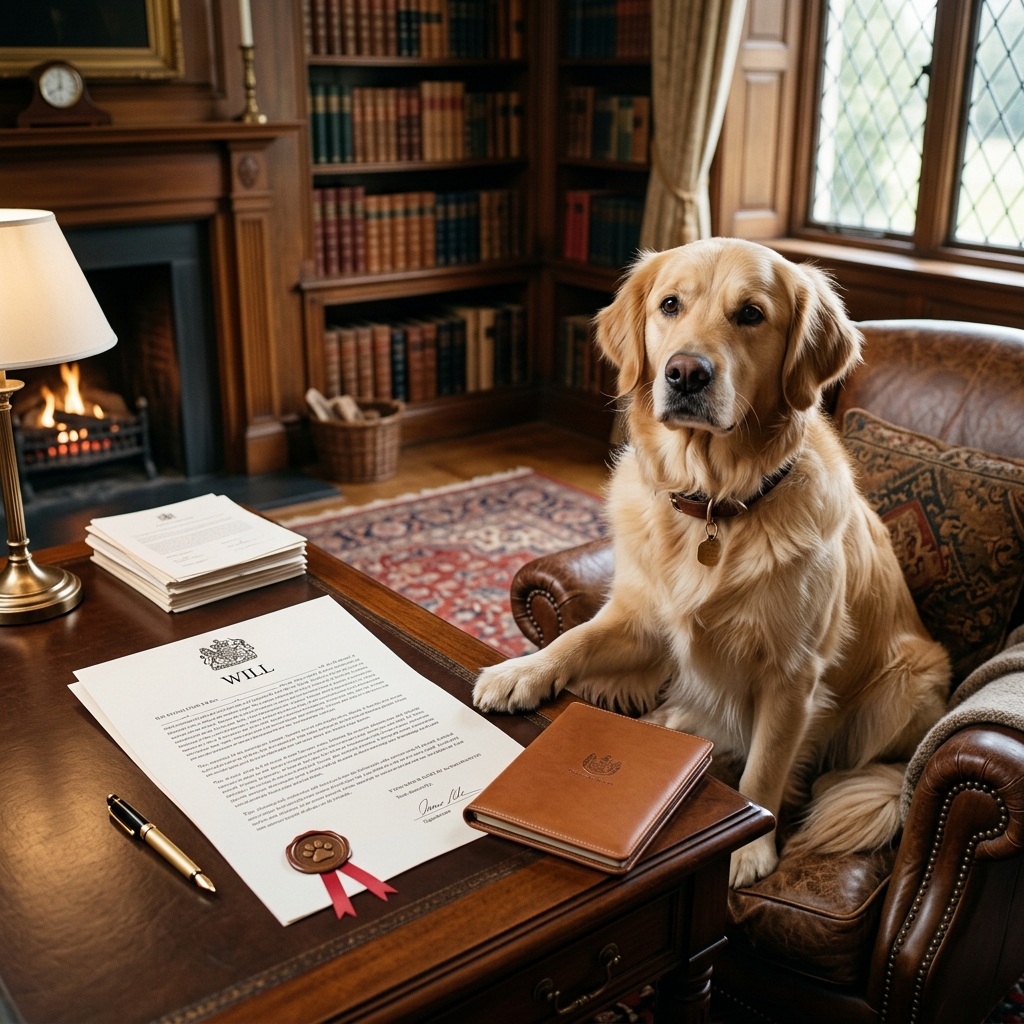
Stories about people leaving homes, savings, or even entire estates to cats and dogs tend to draw attention because they seem unusual. In reality, they point to a serious legal issue: people often want to make sure a beloved pet is cared for after they die, but a will alone is not always the best tool for that job. A properly drafted estate plan can provide for an animal’s food, medical care, and living arrangements while also reducing conflict among family members.
The central lesson is simple: pets are important, but the law usually treats them as property rather than heirs. That means a direct gift “to the cat” or “to the dog” is not the same as leaving money to a child or spouse. Instead, pet owners generally need a structure that names a human or institution to manage resources for the animal’s benefit.
Why pet inheritance stories keep making news
Cases in which a person leaves substantial assets to an animal often capture public interest because they combine emotion, wealth, and family tension. The headlines may focus on the pet itself, but the deeper question is what happens when an owner wants an animal to remain secure after the owner is gone. That question matters for ordinary households, not only wealthy ones.
Many pet owners live alone or have limited backup care arrangements. Others assume a relative will “figure it out” after death, only to discover that family members disagree about who should take the pet, who should pay for care, or whether the animal should be moved. An estate plan can reduce uncertainty by identifying both a caretaker and financial support.
- Pets need ongoing food, shelter, and veterinary care.
- Family members may not agree on who should assume responsibility.
- A clear plan can prevent the pet from ending up in a shelter.
- Financial instructions help avoid disputes over who pays for care.
The legal status of animals in estate planning
Under traditional property law, animals are generally not treated as legal persons who can inherit property directly. A will can name a beneficiary, but the beneficiary usually must be a person or a legally recognized entity capable of owning and managing assets. That is why many estate planners treat pet care as a management problem rather than a direct inheritance problem.
This does not mean pets cannot be protected. It means the owner must create an arrangement that routes resources through a person or trust. In practice, the pet becomes the intended recipient of care, while a human or trustee receives legal authority to use the money for the animal’s benefit.
| Issue | Common Legal Reality |
|---|---|
| Can a pet directly inherit money? | Usually no, because animals are not treated as legal heirs. |
| Can money be set aside for pet care? | Yes, commonly through a trust or similar arrangement. |
| Can a will mention a pet? | Yes, but it is usually better to pair the will with a care plan. |
| Can a caregiver be compensated? | Yes, if the plan authorizes payment for services and expenses. |
Why a will alone may not be enough
A will can be useful for identifying who should receive a pet and who should manage the owner’s remaining property, but it may not provide the day-to-day detail needed for an animal’s lifetime care. Probate can take time, and during that period the pet may need immediate support. If the will only says that a person should receive the animal, it may not explain how the pet’s expenses should be covered or what standards the new caregiver should follow.
Another issue is timing. A will generally takes effect only after death and probate administration begins. If there is a gap between the owner’s death and the final transfer of assets, the pet may need temporary care. A separate plan can address that gap by naming an emergency caretaker and giving that person access to funds.
- A will may identify the pet’s intended caretaker.
- Probate delays can create a gap in immediate care.
- Detailed instructions are often missing from a basic will.
- Temporary and long-term care should both be planned.
How a pet trust works
A pet trust is one of the most effective tools for making sure an animal is cared for after the owner’s death. In a typical pet trust, the owner sets aside money or property, appoints a trustee to manage the funds, and names a caregiver to provide the day-to-day care. The trustee then distributes money according to the trust terms, usually to reimburse expenses tied to the animal’s welfare.
That structure solves two problems at once. First, it gives legal authority to someone who can control money for the pet’s benefit. Second, it creates instructions that the caregiver must follow, which can include veterinary care, grooming, medications, preferred food, and living arrangements. A trust can also name a remainder beneficiary, meaning the person or charity that receives any unused funds after the pet dies.
Well-drafted pet trusts often answer practical questions such as:
- Who will care for the pet if the first choice cannot do it?
- How much money should be reserved for each year of care?
- What kinds of expenses are allowed?
- What should happen if the pet lives longer than expected?
- Who receives leftover funds when the trust ends?
Choosing the right amount to leave behind
One of the hardest parts of planning for a pet is deciding how much money to reserve. Too little may leave the caregiver unable to pay for food, boarding, grooming, or treatment. Too much can invite disputes or waste, especially if family members believe the amount is excessive compared with the pet’s actual needs.
A responsible plan should match the animal’s likely lifespan, medical profile, and living conditions. A senior dog with chronic health issues may require more support than a young healthy cat. At the same time, owners should avoid unrealistic assumptions. The point is not to create a windfall; it is to create a realistic care budget.
| Planning Factor | Why It Matters |
|---|---|
| Age of the pet | Older pets may have shorter remaining lifespans and higher medical needs. |
| Breed or species | Different animals have different care costs and life expectancy. |
| Health history | Chronic conditions can increase expenses significantly. |
| Caregiver location | Travel, housing, and boarding costs may vary by region. |
What to include in a complete pet care plan
A strong plan is more than just money. It should explain the pet’s routine and the owner’s expectations so that the new caregiver can preserve consistency. Animals often respond to changes in environment and routine, so clear instructions can reduce stress during a transition.
Owners should consider documenting diet, medications, favorite activities, behavioral quirks, and veterinary contacts. If the pet has special needs, the plan should say so plainly. The more specific the instructions, the easier it is for a caregiver to make decisions that reflect the owner’s wishes.
- Veterinary provider information.
- Feeding schedule and dietary restrictions.
- Medication instructions and emergency contacts.
- Training, exercise, and grooming preferences.
- Backup caregiver names and phone numbers.
Family communication can prevent conflict
Estate planning for pets is not only a legal exercise; it is also a family management task. If relatives are surprised to learn that a pet is receiving special treatment in the estate plan, resentment can follow. That tension becomes more serious when money is involved. Open communication can reduce the chance that loved ones interpret the plan as favoritism or extravagance.
Discussing the plan in advance also helps identify whether the chosen caregiver is willing and able to serve. A person may love the animal but lack the time, housing, or financial stability to provide care. In that case, it is better to know before the owner’s death than afterward.
- Tell the proposed caregiver in advance.
- Explain why the plan includes funds for the pet.
- Name backup caregivers in case circumstances change.
- Review the arrangement after major life events.
Common mistakes people make
Many pet owners mean well but rely on vague promises instead of formal instructions. That can create confusion at the worst possible time. The most common mistakes are easy to avoid with a little planning.
One mistake is assuming a verbal promise from a relative is enough. Another is leaving money to the pet without a legal framework for controlling it. Some people also forget to update their plan when the chosen caregiver moves away, develops health problems, or dies. Others underestimate the costs of long-term care and fail to name a backup beneficiary for unused funds.
- Relying on informal family promises.
- Leaving assets without a written care structure.
- Failing to update the plan over time.
- Not naming a second-choice caregiver.
- Ignoring what happens to leftover money.
Why courts generally favor clear instructions
When an estate plan is vague, courts and probate administrators may have to interpret the owner’s intent. That creates uncertainty and can lead to outcomes the owner never wanted. Clear documentation helps ensure that the animal is treated in accordance with the owner’s wishes and that the assets are used for care rather than lost in disputes.
Judges and fiduciaries usually prefer plans that are practical, specific, and legally valid. The more direct the instructions are, the easier it is to administer the estate efficiently. For the pet, that can mean less disruption and a quicker transition to a stable home.
Questions people ask most often
Can I leave money directly to my pet?
Usually no. Pets are generally not considered legal persons who can hold property in their own names, so the money should be directed through a trust or similar arrangement.
What is the safest way to provide for a pet after death?
A pet trust is often the most reliable option because it can name a caregiver, set aside funds, and spell out the terms of care.
Should I mention my pet in my will?
Yes, but a will works best when paired with a more detailed plan that identifies who will care for the animal and how the care will be funded.
What happens if the caregiver cannot keep the pet?
A well-written plan should include a backup caregiver or an instruction for the trustee to find a suitable replacement.
How often should I review my pet plan?
It is wise to revisit the plan after major changes such as a move, marriage, divorce, illness, or the death of a named caregiver.
Practical takeaways for pet owners
Anyone who wants to protect a companion animal after death should think beyond a simple sentence in a will. The goal is not only to leave affection in writing, but to leave a workable system that can support the pet’s daily life. That means identifying a trusted caregiver, setting aside funds in a legally valid way, and providing instructions that make sense in real life.
People who take these steps can reduce uncertainty and give their pets a better chance at stability. The most successful plans are usually not the most dramatic ones; they are the ones that are clear, realistic, and easy to carry out.
References
- Pet Trusts — American Bar Association. 2024-09-10. https://www.americanbar.org/groups/real_property_trust_estate/resources/estate_planning/pet_trusts/
- Uniform Probate Code, Section 2-907: Trust for Care of Animal — Uniform Law Commission. 2010-01-01. https://www.uniformlaws.org/committees/community-home?CommunityKey=bc1f2b3a-1b34-4c2f-8dc4-ec5f6d2f1d23
- Estate Planning for Your Pet — National Association of Estate Planners & Councils. 2023-11-15. https://www.naepc.org/
- Pet Trusts and Estate Planning — Cornell Law School, Legal Information Institute. 2024-02-20. https://www.law.cornell.edu/wex/pet_trust
- Estate Planning Basics — Internal Revenue Service. 2025-01-09. https://www.irs.gov/
Similar Articles








Read full bio of Sneha Tete


