
When Online Speech Becomes a Crime for Students
Exploring how North Carolina’s teacher cyberbullying law blurs the line between student free speech and criminal online harassment.
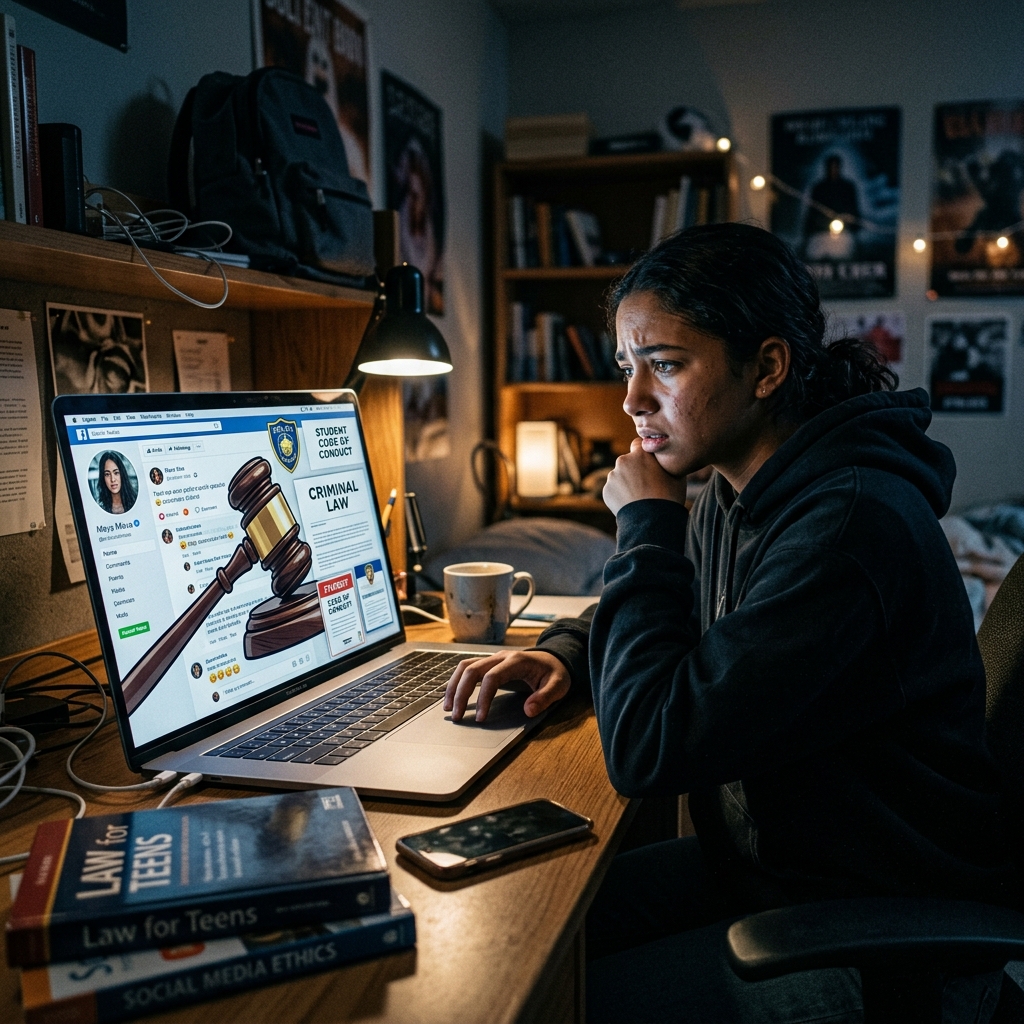
In recent years, schools have struggled to respond to online attacks against educators, ranging from crude insults to coordinated harassment campaigns. North Carolina is one of the first states to address this problem by expanding its anti-cyberbullying law to cover student conduct targeting teachers and other school employees. This shift raises hard questions: where does protected student speech end, and criminal online harassment begin?
From Playground Insults to Digital Harassment
Insults and rumors about teachers are not new. What has changed is the speed, scale, and permanence of those comments when they move online. Social media posts, fake profiles, and group chats can spread across a school community in minutes, potentially exposing educators to:
- Public humiliation and reputational damage
- Threats, stalking, or unwanted contact
- Loss of classroom authority and trust
- Emotional distress and professional burnout
North Carolina lawmakers responded to these harms by treating certain online behaviors toward school employees as a criminal matter rather than only a disciplinary issue. The result is a statute that tries to protect educators but also touches the core of student free speech rights.
Overview of North Carolina’s Teacher Cyberbullying Law
North Carolina originally adopted a cyberbullying law in 2009 that focused on protecting students and their parents or guardians from online harassment. In 2012, the state enacted the School Violence Prevention Act of 2012, extending those protections to school employees. The revised law makes it a Class 2 misdemeanor for a student to use a computer or computer network to engage in certain online activities directed at a school employee when done with the intent to intimidate or torment that employee.
Key features of the statute include:
- Covered persons: Any student and any school employee (including teachers, principals, and other staff).
- Covered technology: Computers, networks, websites, social media platforms, email, and instant messaging tools.
- Mental state: The student must act with the intent to intimidate or torment the employee.
- Penalty: Up to 60 days in jail and up to a $1,000 fine for violations, since Class 2 misdemeanors in North Carolina can carry these sanctions.
What Online Behaviors Can Trigger Criminal Liability?
The statute does not criminalize all rude or disrespectful comments about teachers. Instead, it targets a list of specific online actions that lawmakers considered especially harmful. According to legal analyses of the statute, examples of prohibited conduct include:
- Creating fake online profiles or websites that appear to belong to a teacher or other school employee, often used to embarrass or defame them.
- Posting private or sexual information about a school employee, including photos or details not meant for public view.
- Accessing or tampering with the employee’s data or accounts, such as breaking into email, gradebooks, or social media profiles.
- Signing a school employee up for pornographic websites or other exploitative online services without consent.
- Signing the employee up for junk email or instant messages to inundate them with spam and unwanted content.
- Posting statements—even if true—that are likely to provoke others to stalk, harass, or intimidate the employee.
It is the combination of the intent to torment or intimidate and the nature of these activities that brings them within the criminal sphere. Simple criticism of teaching methods or complaints about grading, even if harsh, generally would not qualify unless they cross into targeted harassment that fits the statute’s examples.
Penalties and Who Can Be Charged
Students in North Carolina can face criminal charges under this law starting at age 16, because state law generally treats 16-year-olds as adults for criminal purposes. That means:
- A high school junior who creates a fake profile mocking a teacher could be prosecuted in criminal court.
- Conviction can bring up to 60 days in jail and a $1,000 fine, along with a criminal record.
- Courts may also impose additional conditions, such as probation or requirements related to school discipline.
Because the offense is classified as a misdemeanor, it does not carry the same long-term consequences as a felony. However, even a misdemeanor record can affect college applications, military service eligibility, and some employment opportunities.
Criminal Law vs. School Discipline
North Carolina school districts already had policies against harassment, threats, and bullying, including online misconduct. The teacher cyberbullying law adds a separate state-level consequence. In practice, a student who violates the statute may face:
- School-level discipline such as suspension, expulsion, or loss of privileges
- Criminal prosecution in North Carolina courts under the statute
- Potential civil liability if the educator sues for defamation, invasion of privacy, or emotional distress
Supporters: Protecting Educators in a New Online Environment
Advocates of the law argue that standard school discipline is no longer sufficient in the era of social media. Teacher advocacy groups emphasized that repeated online targeting can seriously disrupt an educator’s ability to do their job. Public statements have stressed that:
- Some students ignore school rules until real legal consequences are possible.
- Teachers deserve protection comparable to what students receive in anti-bullying frameworks.
- Online harassment can be as damaging as physical threats, particularly when it affects safety perceptions, mental health, and reputation.
Supporters see the statute as filling a gap between traditional school discipline and more serious criminal offenses like stalking or making explicit threats.
Critics: Free Speech and Overbreadth Concerns
Civil liberties organizations and legal scholars have raised significant concerns about how broadly the North Carolina law sweeps. Commentators have pointed out that it punishes students for making statements that are “true or false” if those statements might provoke others to harass a teacher. This raises several issues:
- First Amendment concerns: Punishing true statements, or non-defamatory opinions, can conflict with free speech protections.
- Vague terms: Words like “torment” and “intimidate” are open to interpretation, which can chill student speech that criticizes school policies or staff.
- Overcriminalization: Behavior that might once have led to counseling or school suspension can now result in arrest and criminal prosecution.
Legal scholarship has argued that the statute may violate the First and Fourteenth Amendments because it is insufficiently tailored and risks criminalizing constitutionally protected expression. The concern is not that serious harassment should go unpunished, but rather that the law may reach beyond legitimately harmful conduct.
| Type of Conduct | Likely School Response | Possible Criminal Liability? |
|---|---|---|
| Rude opinion about a teacher’s skills (no threats) | School discipline under code of conduct; counseling | Unlikely, typically protected speech |
| Creating a fake profile that impersonates a teacher | Suspension, loss of technology privileges | Yes, if done with intent to torment or intimidate |
| Posting a teacher’s private photos without consent | Serious discipline, potential civil liability | Yes, especially if sexual or highly private in nature |
| Sharing true rumors that provoke others to harass a teacher | Discipline for harassment; school investigation | Possibly, because the statute covers true statements that incite harassment |
| Signing a teacher up for pornographic sites | Severe discipline and possible removal from school | Yes, explicitly contemplated as criminal conduct |
How This Law Fits into Broader Anti-Bullying Efforts
North Carolina’s teacher cyberbullying statute sits alongside a broader framework of laws and policies aimed at preventing bullying and harassment in schools. The state’s general anti-bullying provisions require school districts to develop policies addressing bullying among students, including electronic harassment. Federal guidance also emphasizes that schools must address harassment that creates a hostile environment for either students or staff.
At the same time, students who experience bullying themselves have rights. Legal aid materials in North Carolina highlight that students who report bullying must be protected against retaliation by both school staff and peers. Schools are expected to investigate, take steps to stop the bullying, and avoid punishing a student for coming forward.
In this context, the teacher cyberbullying law aims to balance:
- Protection of school employees from serious online abuse
- Protection of students from bullying and retaliatory conduct when they report it
- Respect for constitutional rights, particularly freedom of expression, which remains a central concern.
Practical Guidance for Students and Parents
Regardless of one’s view of the law, students and families need practical strategies to avoid crossing legal lines while still being able to communicate concerns or criticism.
Safe Ways to Raise Concerns About Teachers
- Use official channels: Talk to a counselor, administrator, or parent about classroom problems rather than attacking teachers online.
- Focus on behavior, not personal attacks: Describe what happened (“I think the grading was unfair”) instead of describing the teacher in insulting terms.
- Avoid sharing private information: Never post a teacher’s home address, phone number, private photos, or family details.
- Stay away from impersonation: Do not create accounts that pretend to be a teacher, even as a “joke.”
- Think about the audience: Posts in large group chats, public social media feeds, or anonymous sites can spread widely and become more harmful.
What Parents Can Do If a Child Is Accused
If a student is accused of violating the teacher cyberbullying law, parents should:
- Gather information: Ask to see the posts or messages in question and clarify how they were discovered.
- Understand the school’s response: Request a copy of the school’s bullying and technology policies and any incident reports.
- Consider legal advice: Because the conduct may be treated as a misdemeanor, speaking with an attorney experienced in education or juvenile law can be important.
- Support digital literacy: Use the incident—if it occurs—as a moment to reinforce responsible online behavior and the real-world consequences of online actions.
Frequently Asked Questions (FAQs)
Does this law apply to off-campus social media use?
Yes. North Carolina’s anti-cyberbullying laws explicitly cover online conduct using computers or networks, even when the activity occurs off school grounds. If the target is a school employee and the other elements of the law are met, off-campus posts can still lead to charges.
Can a student be punished for telling the truth about a teacher?
Under the teacher cyberbullying statute, a student can face criminal liability for making true statements if those statements are made with the intent to intimidate or torment a school employee and are likely to provoke others to harass them. This is one of the features that critics say raises serious free speech concerns.
Is every harsh comment about a teacher illegal?
No. The law targets specific kinds of conduct—such as impersonation, posting private or sexual information, or signing teachers up for pornography—with a harmful intent. General complaints or jokes that do not involve those behaviors and do not incite harassment are unlikely to fall under the statute, though they may still violate school rules.
What age of students can be charged under this law?
Students who are 16 or older can be treated as adults in North Carolina criminal court, meaning they can be directly charged with the misdemeanor offense. Younger students may still face school discipline or, in some circumstances, juvenile proceedings.
How does this law affect teachers?
For educators, the law offers an additional layer of protection and a formal avenue to seek criminal charges when online harassment becomes severe. It may also influence how teachers and administrators respond to online incidents, encouraging documentation and collaboration with law enforcement.
Looking Ahead: Balancing Safety and Speech
North Carolina’s approach to teacher cyberbullying illustrates the challenge of updating legal frameworks for a digital age. Lawmakers have attempted to protect educators from uniquely modern forms of harassment, but in doing so they have raised complex constitutional questions about student speech rights.
Schools, families, and students will need to navigate this landscape with care. Effective responses to harmful online behavior should combine:
- Clear policies about acceptable technology use
- Education on digital citizenship and respect for both peers and staff
- Awareness of legal boundaries around harassment and privacy
- Commitment to free expression that allows students to raise concerns without fear of criminalization
Ultimately, the goal is not only to prevent cyberbullying, but also to foster school environments where dialogue, accountability, and mutual respect can replace online hostility.
References
- Why North Carolina’s New Law Making It a Crime for Students to Bully Teachers Online Is Deeply Troubling From a First Amendment Standpoint — Justia Verdict. 2012-12-10. https://verdict.justia.com/2012/12/10/why-north-carolinas-new-law-making-it-a-crime-for-students-to-bully-teachers-online-is-deeply-troubling-from-a-first-amendment-standpoint
- N.C. Law Protects Educators From Online Harassment — Education Week. 2012-12-11. https://www.edweek.org/technology/n-c-law-protects-educators-from-online-harassment/2012/12
- North Carolina May Be 1st to Outlaw Student Cyberbullying of Teachers — Governing. 2012-11-26. https://www.governing.com/archive/mct-nc-cyberbullying-law-expansion.html
- Salvaging the North Carolina Teacher-Cyberbullying Statute — Campbell Law Review. 2015-01-01. https://scholarship.law.campbell.edu/cgi/viewcontent.cgi?article=1602&context=clr
- North Carolina Anti-Bullying Laws & Policies — StopBullying.gov (U.S. Department of Health and Human Services). 2021-05-01. https://www.stopbullying.gov/resources/laws/north-carolina
- Bullying & Discrimination — Legal Aid of North Carolina. 2023-03-15. https://legalaidnc.org/topic/education/education-1/bullying/
Similar Articles








Read full bio of Sneha Tete


