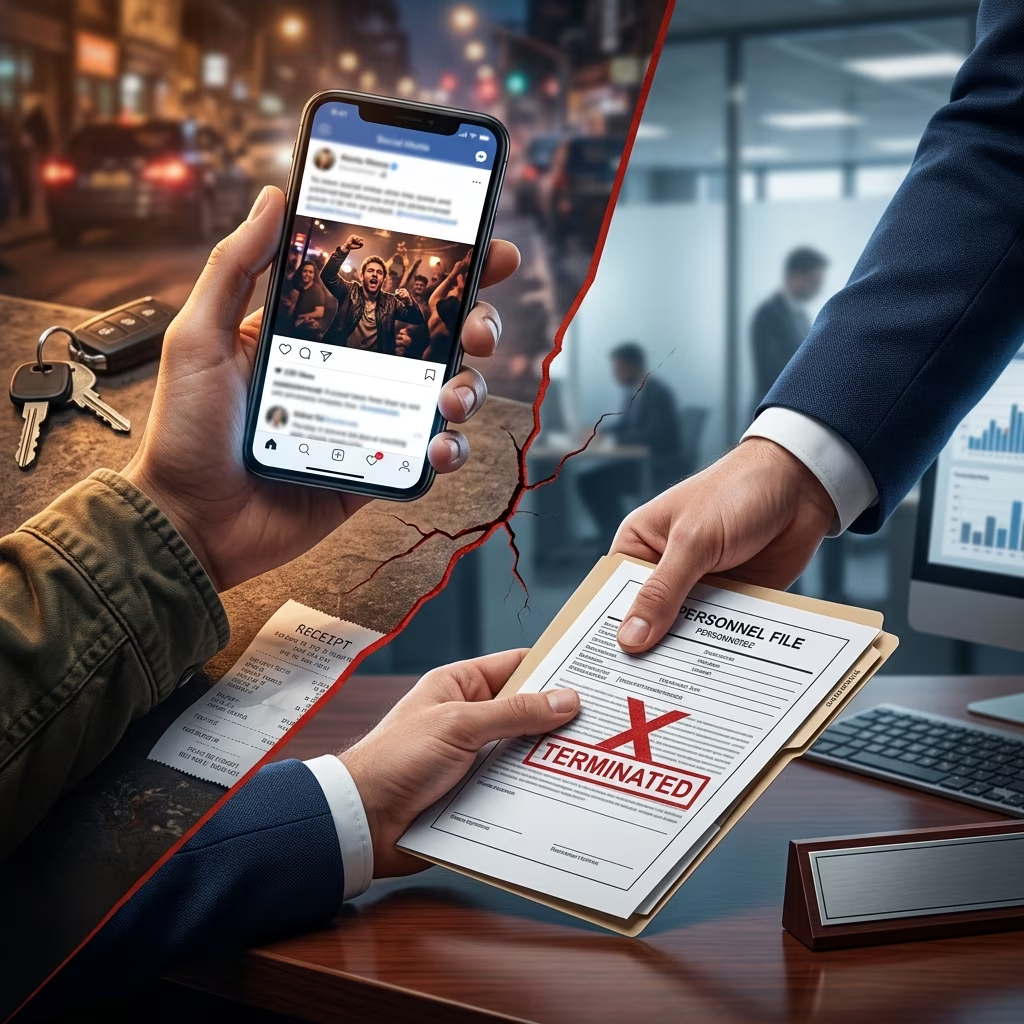
Employees do not lose all privacy simply because they are hired, but private behavior can sometimes create real workplace consequences. In most jobs, an employer cannot fire someone just because it dislikes a lawful activity outside working hours; however, off-duty conduct may still justify discipline when it affects business operations, workplace safety, reputation, or the employee’s ability to do the job.
The key question is not whether the behavior happened after hours. It is whether the conduct has a meaningful connection to the employment relationship. That connection may be direct, such as a criminal act that undermines trust, or indirect, such as behavior on social media that damages a company’s reputation or creates conflict among coworkers. The answer often turns on state law, company policy, the nature of the job, and whether the employee is covered by a union contract or another legal protection.
Understanding the basic rule
In many workplaces, employment is at will, which means either side may end the relationship unless a statute, contract, or public policy limit applies. That general rule gives employers broad discretion, but it does not give them unlimited power. Laws in some states restrict discipline based on lawful off-duty conduct, and federal law may also limit decisions tied to protected traits or protected activity.
For employers, the practical takeaway is simple: not every disappointing personal choice becomes a valid employment reason. For employees, the lesson is equally important: conduct outside the office may still matter if it affects job performance, trust, safety, or the employer’s legitimate business interests.
When off-duty behavior is more likely to matter
Not all after-hours behavior carries the same legal weight. The strongest cases for discipline usually involve a clear workplace connection. That connection can appear in several ways:
- The conduct harms the employer’s reputation.
- The conduct makes the employee unfit for the role.
- The conduct creates conflict or fear among coworkers.
- The conduct involves serious criminal activity.
- The conduct violates a written policy that is lawful and consistently enforced.
These factors do not automatically justify discharge in every jurisdiction, but they help explain why some off-duty incidents become employment issues while others do not. The more directly the behavior touches the employer’s operations, the stronger the argument for discipline.
Reputation, trust, and public confidence
One of the most common reasons an employer reacts to off-duty conduct is concern about public image. This is especially true for employees who represent the company in public, handle sensitive information, work with children, or occupy highly visible positions. A serious incident can lead customers, clients, or coworkers to question the organization’s judgment.
That said, a business cannot rely on vague discomfort alone. A firing decision is easier to defend when the employer can point to a specific and realistic reputational harm, not just disagreement with an employee’s private opinions or lifestyle. The more public and recognizable the employee is, the more likely the employer can show a genuine business concern.
When conduct affects job performance
Off-duty choices can become job issues when they interfere with attendance, concentration, or the ability to perform essential duties. An employee who spends time on a second job may run into scheduling conflicts, fatigue, or safety problems. A worker whose outside activities lead to constant conflict may also become ineffective in a team setting.
Performance concerns are often the easiest to document because they can be tied to attendance records, error rates, customer complaints, or missed deadlines. Employers should still be careful, though. A performance problem must be real and measurable, not just assumed because the employer disapproves of the employee’s personal conduct.
Coworker disruption and workplace safety
Sometimes an employee’s off-duty behavior causes coworkers to refuse to work with that person or creates a credible fear of harm. This can happen after an arrest, a threatening online post, or a public incident that makes colleagues uncomfortable. In a close-knit workplace, that disruption may make daily operations difficult or unsafe.
Employers are usually allowed to respond when the behavior creates a practical barrier to work, especially if the concern is reasonable and supported by facts. A company should not rely on rumor or prejudice, but it also does not have to wait until an actual incident occurs before taking preventive action if there is a legitimate safety risk.
Criminal conduct and arrests
Serious criminal conduct is often treated differently from ordinary private behavior. Many employers are permitted to discipline workers whose conduct reflects dishonesty, violence, theft, drug trafficking, fraud, or similar serious wrongdoing, especially when those actions undermine trust or raise safety concerns. In some jobs, a single incident may be enough to justify discharge.
An arrest alone is not always enough. A person can be arrested without being convicted, and many legal systems treat arrest records cautiously. Employers generally need to focus on the underlying conduct and its relevance to the job rather than using the fact of arrest as a shortcut to discipline. If the underlying behavior makes the employee unfit for the position, the employer may have a stronger basis for action.
State law can change the outcome
State rules vary widely. Some states protect employees from discipline for lawful activities outside working hours, while others allow broader employer discretion. That means the same conduct may lead to termination in one jurisdiction and legal risk in another.
Common examples of protected conduct may include lawful political activity, smoking, alcohol use outside of work, or other legal off-duty choices. Some states also provide special protection for medical marijuana users or political activity. Because these laws differ so much, employers should not assume that a policy that works in one state will work everywhere.
| Issue | Why it matters | Typical employer concern |
|---|---|---|
| Lawful off-duty activity | May be protected by state law | Risk of unlawful termination |
| Criminal conduct | Can undermine trust and safety | Reputation, liability, job fitness |
| Social media posts | May become public and traceable to employer | Customer reaction, internal morale |
| Second job or moonlighting | Can affect rest, attendance, or scheduling | Performance and overtime conflicts |
Social media makes private conduct more visible
Online activity has blurred the line between work and personal life. A post, comment, video, or photo can spread quickly and be linked to an employer within hours. That means behavior once seen by only a small circle can become a public issue with direct business consequences.
Even so, employers should avoid overreacting to ordinary personal expression. A prudent review asks whether the content is unlawful, threatening, discriminatory, harassing, or clearly damaging to the organization. Employers should also consider whether the worker was identified as a company representative and whether the post is likely to affect customers, coworkers, or business partners.
How employers should evaluate discipline
A careful process helps reduce legal risk and improve fairness. Before firing someone for off-duty behavior, employers should ask a few practical questions:
- Is the conduct legal or protected under state law?
- Does the behavior actually affect work performance, safety, or trust?
- Is there written policy support for discipline?
- Has the employer treated similar cases consistently?
- Would a lesser penalty solve the problem?
Answering these questions helps separate real business concerns from emotional reactions. It also creates a record that may be useful if the decision is later challenged as unfair or discriminatory.
Progressive discipline often makes sense
Not every off-duty problem deserves immediate termination. In many situations, a warning, suspension, coaching session, or final notice is a better first step. Progressive discipline gives the employee a chance to correct the problem while showing that the employer acted reasonably.
Immediate firing may still be appropriate for severe misconduct, especially where violence, theft, serious fraud, threats, or extreme reputational harm are involved. But in closer cases, a measured response is often more defensible than a rushed decision. Employers that use a predictable process also reduce claims that they acted inconsistently or unfairly.
Policies should be clear and lawful
A well-written handbook can help employers manage off-duty issues, but the policy must be specific enough to be meaningful and narrow enough to avoid overreach. Broad language that bans all conduct deemed “unprofessional” may be hard to apply consistently and may conflict with state law. Better policies identify the types of behavior that can lead to discipline, such as conduct that harms the company, threatens safety, or interferes with work.
Employers should also train managers not to promise outcomes they cannot legally deliver. A manager’s offhand comment can complicate a later termination decision if it suggests a personal grudge rather than a business reason.
Common questions about off-duty termination
Can an employer fire someone for legal activity outside work?
Sometimes, but not always. The answer depends on state law, the employee’s job duties, and whether the conduct has a real connection to the workplace.
Does an arrest automatically justify termination?
No. Employers should look at the behavior behind the arrest and whether it makes the employee unsuitable for the job.
Can a company discipline social media posts made off the clock?
Yes, if the post creates a legitimate workplace issue such as harassment, threats, reputational harm, or policy violations.
What if the employee has a good work record?
A strong work history may matter, but it does not erase serious misconduct or prevent discipline when the off-duty behavior clearly affects the job.
Should employers always use termination for off-duty conduct?
No. In many cases, counseling or a warning is enough. Termination is usually reserved for serious or repeated problems.
Practical takeaways for employers and employees
For employers, the safest approach is to focus on objective facts, legal limits, and business impact. A reaction to off-duty behavior should be tied to a documented workplace concern, not personal disapproval. For employees, the best protection is understanding that private conduct may have professional consequences when it becomes public, disrupts work, or violates a lawful policy.
In the end, the question is rarely whether a worker has a private life. The real issue is whether that private life creates a legitimate employment problem. When it does, discipline may be justified; when it does not, termination can create avoidable legal exposure.
References
- Handling Off-Duty Employee Misconduct — PowerDMS. 2025-01-01. https://www.powerdms.com/policy-learning-center/handling-off-duty-employee-misconduct
- Off-Duty Conduct Employee Rights — Workplace Fairness. 2023-01-01. https://www.workplacefairness.org/off-duty-conduct/
- 12 Things Everyone Should Know About Employment Law — Legal Aid at Work. 2024-01-01. https://legalaidatwork.org/factsheet/12-facts-about-employment-law/
- Can My Private Employer Fire Me For Bad Behavior Outside of the Office? — Berry Moorman. 2024-01-01. https://berrymoorman.com/can-my-private-employer-fire-me-for-bad-behavior-outside-of-the-office/
- Can employee conduct outside of work lead to termination? — YouTube. 2025-01-01. https://www.youtube.com/watch?v=l92cGF2fXdg